Wholesale China Products: Small Importer’s Guide [2026]
![Wholesale China Products: Small Importer’s Guide [2026]](https://goodcantrading.com/wp-content/uploads/2026/10/featured-wholesale-china-products-small-importer-guide.png)
Small importers can buy wholesale China products by starting with 10-30 unit trial orders through platforms like Alibaba or 1688, verifying supplier business licenses and transaction history, negotiating 30% deposit payment terms, requesting pre-production samples, and arranging third-party quality inspection before the final 70% balance clears. This staged approach lets you test product quality and supplier reliability without committing to full container volumes upfront.
📋 Table of Contents
- Executive Summary
- Which platform should you use to find wholesale China products?
- How do you verify a supplier before ordering?
- What terms should you negotiate as a small buyer?
- How do you handle samples and quality checks?
- What payment and shipping options work for small orders?
- Key Takeaways
- Frequently Asked Questions
Executive Summary
- Platform selection: Match your order size to the right marketplace-AliExpress and DHgate accept 10-unit orders, while Alibaba and 1688 typically start at 50-500 units depending on category.
- Supplier verification: Check business license scope, transaction volume, and repeat-buyer rate rather than relying solely on platform badges.
- Trial-order strategy: Place a 10-30 unit pilot batch to validate product quality and supplier communication before scaling to bulk volumes.
- Payment structure: Standard terms remain 30% deposit and 70% balance after pre-shipment inspection, protecting both parties during the transaction.
- Quality control: Third-party inspection before final payment catches specification drift between approved samples and bulk production.
Which platform should you use to find wholesale China products?
Platform choice depends on your minimum order quantity tolerance and whether you need customization. AliExpress and DHgate cater to retail-sized orders of 1-50 units with fixed pricing and no negotiation, making them suitable for testing product-market fit before committing to larger volumes. Alibaba.com serves wholesale buyers starting at 50-500 units per SKU, with room to negotiate price, packaging, and lead times. The domestic Chinese marketplace 1688.com offers the lowest factory-direct pricing but requires a trusted China sourcing agent to navigate Mandarin interfaces, verify sellers, and coordinate domestic shipping to an export consolidation warehouse.
AliExpress and DHgate for micro-batch testing
These platforms accept PayPal and credit cards, ship directly to your address, and list per-unit prices with no MOQ negotiation. Use them when you need 5-20 units to validate demand or photograph samples for your online store. Pricing runs 40-60% above factory-direct rates because sellers bundle shipping, platform fees, and retail margins into the listed price. Refund protection through the platform reduces fraud risk but limits your ability to customize packaging or request spec changes.
Alibaba.com for negotiable wholesale orders
Alibaba connects you with trading companies and factories willing to negotiate MOQ, unit price, and customization for orders starting at 50-500 units. Suppliers quote FOB prices that exclude international freight, so you arrange your own shipping or work with a freight forwarder. Payment moves through wire transfer or Alibaba Trade Assurance, which holds funds in escrow until you confirm shipment. Language barriers and unclear product specifications remain common pain points, often resulting in samples that pass inspection while bulk production drifts from the approved standard.
1688.com for lowest factory pricing
This domestic Chinese marketplace lists products at 20-50% below Alibaba export pricing because sellers target local buyers and avoid export compliance costs. The entire interface operates in Mandarin, sellers expect Alipay payment, and most will not ship internationally. Our Yiwu and Guangzhou sourcing desks handle 1688 supplier verification, translate technical specifications, negotiate terms, arrange domestic pickup, and consolidate multiple suppliers into a single export shipment. Buyers gain access to factory-direct pricing while avoiding the operational complexity of managing Chinese-language transactions and domestic logistics.
How do you verify a supplier before ordering?
Supplier verification separates real factories from trading companies reselling another manufacturer’s output, and identifies shell operations that disappear after receiving your deposit. Start by requesting the business license and confirming the registered scope matches the product category you intend to buy. A license listing “textile manufacturing” cannot legally produce electronics, signaling the seller is a trader sourcing from a third party. Check transaction volume, years active on the platform, and repeat-buyer percentage rather than focusing solely on the lowest quoted price.
Business license and scope verification
Every Chinese company holds a business license issued by the local Administration for Market Regulation, listing the exact production and trading activities the entity may legally perform. Request a photo of the license and verify the company name, registration number, and business scope. The scope section uses standardized phrases like “manufacturing of knitted garments” or “wholesale of household goods.” A mismatch between the license scope and the product being quoted indicates the seller is a trading company, not the factory. Trading companies add 15-30% margin and introduce a communication layer that slows sample revisions and quality issue resolution.
Transaction history and buyer feedback
Platform transaction volume and repeat-buyer rate reveal whether a supplier consistently delivers on quoted terms. A supplier with 200 transactions and 60% repeat buyers demonstrates reliable quality and communication. One with 15 transactions and 5% repeat rate suggests inconsistent performance or frequent disputes. Read negative reviews for patterns: complaints about changed MOQ after sample approval, unexpected packaging fees, or delayed shipping indicate the supplier adjusts terms after securing your commitment. Filter reviews by your target destination country to see how the supplier handles international logistics and customs documentation.
Factory audit for larger commitments
When your trial order succeeds and you plan to scale to container volumes, a factory audit verifies production capacity, quality systems, and labor compliance. Our quality control team visits the facility, photographs equipment, checks calibration records for testing instruments, and interviews production managers about lead-time capacity during peak season. The audit report documents whether the factory owns the machinery needed to produce your product or subcontracts critical steps to workshops you cannot inspect. Subcontracting introduces quality variance and makes it harder to enforce specifications during bulk production.
What terms should you negotiate as a small buyer?
Small importers often accept the first quote without realizing MOQ, unit price, packaging, and lead time are all negotiable. Suppliers quote higher MOQs and prices to first-time buyers because they assume you lack industry knowledge and will not push back. Negotiate a pilot batch at 50-60% of the stated MOQ by offering to accept stock colors or materials the factory already holds, paying a 10-15% price premium, and committing to a larger order if the trial batch meets specifications. Document every agreed term in a signed purchase order or proforma invoice before transferring any deposit.
MOQ reduction strategies
Factories set MOQs to cover material purchase minimums, machine setup time, and labor efficiency. Reduce MOQ by choosing stock materials, accepting the factory’s standard packaging, and ordering during the supplier’s low season when production lines have spare capacity. A garment factory quoting 500 units per color may accept 200 units if you select from their existing fabric inventory rather than requesting a custom dye lot. Offer to pay 10-15% above the quoted unit price to compensate for lower production efficiency on a smaller run. Frame the pilot batch as a test order with a written commitment to scale if quality and lead time meet expectations.
Tiered pricing and payment terms
Request a tiered price ladder showing unit cost at different order quantities: 100 units, 300 units, 500 units, 1,000 units. This transparency helps you plan cash flow and understand the price break points that justify larger orders. Standard payment terms remain 30% deposit to start production and 70% balance after pre-shipment inspection, protecting you from paying in full before confirming the goods match specifications. Suppliers sometimes push for 50% deposit or full payment before production; resist unless you have verified the factory through an audit and completed multiple successful orders. For qualifying buyers, our team offers 90-120 day open account terms on agreed orders, allowing you to receive and sell goods before the balance comes due.
Lead time and delivery penalties
Agree on a production lead time in writing and include a penalty clause for delays beyond 7-10 days of the confirmed ship date. A 2-3% price reduction per week of delay incentivizes the supplier to prioritize your order and compensates you for lost sales if the goods arrive after your planned launch date. Specify the delivery term (FOB, CIF, or DDP) so both parties understand who pays for freight, insurance, and customs clearance. FOB pricing gives you control over the freight forwarder and shipping route but requires you to arrange export customs clearance in China and import clearance at destination.
How do you handle samples and quality checks?
Requesting samples before bulk production lets you verify material quality, construction, and specifications match the supplier’s description. Pay for 2-3 samples plus courier shipping, which typically costs $30-80 depending on product size and destination. Approve one sample as the “golden sample” and require the supplier to match it exactly during bulk production. Conduct a pre-shipment inspection before releasing the final 70% payment to catch quality drift, incorrect packaging, or missing accessories that would otherwise arrive at your warehouse as a costly surprise.
Pre-production sample approval
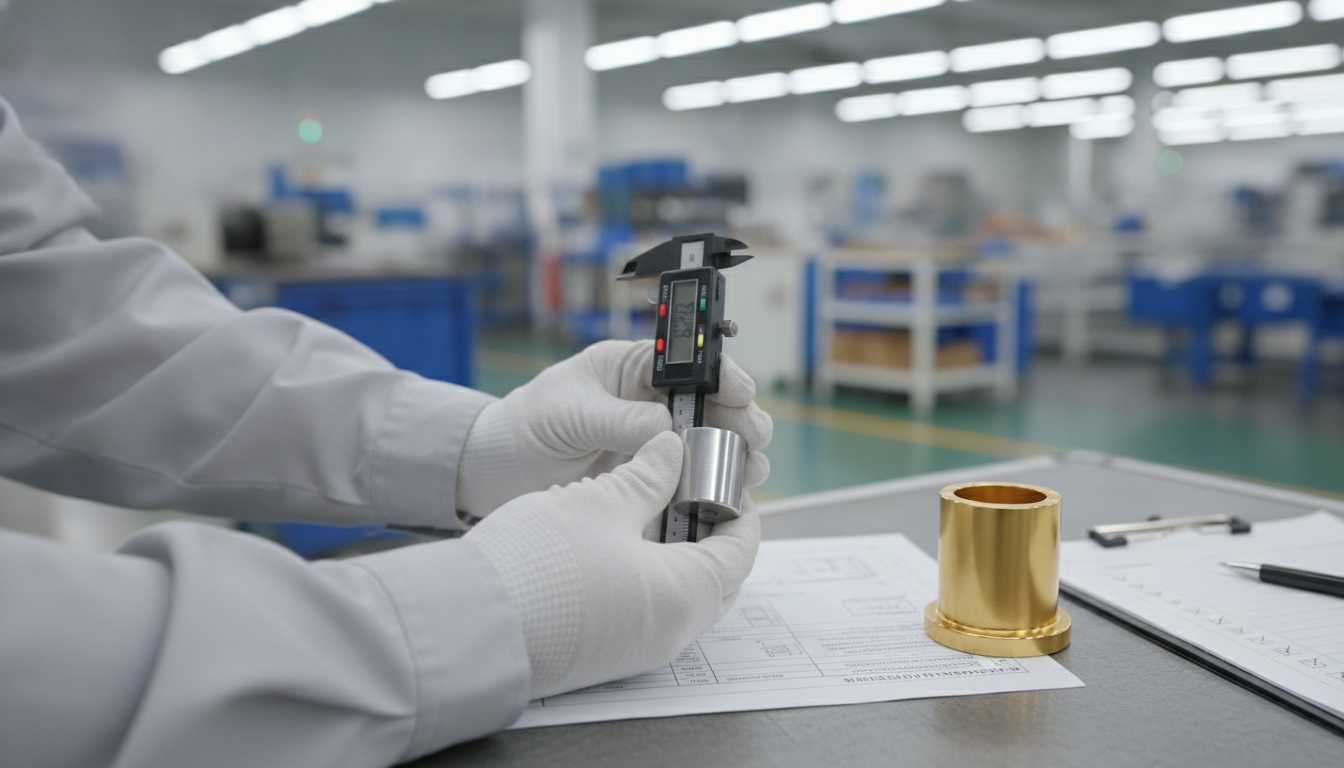
The pre-production sample represents the exact materials, colors, and construction the factory will use for your bulk order. Inspect it against your specification sheet: measure dimensions, weigh the product, test zippers and closures, and compare fabric hand-feel to your expectations. Photograph any defects or deviations and request revisions before approving the sample. Once you sign off, the factory uses this sample as the production standard. Keep the approved sample in your records so you can reference it if bulk goods arrive with different materials or construction.
During-production and pre-shipment inspection
A during-production inspection at 30-50% completion catches systemic issues early, when the factory can still adjust materials or processes without scrapping finished goods. The inspector pulls random samples from the production line, measures them against the golden sample, and photographs any deviations. A pre-shipment inspection happens when 100% of goods are finished and packed, before the container leaves the factory. The inspector checks 10-30% of cartons depending on order size, verifies product count, tests functionality, and confirms packaging matches your requirements. Our inspection team photographs defects, measures AQL pass/fail rates, and sends you a detailed report within 24 hours so you can decide whether to release the final payment or request rework.
What to do when inspection fails
When inspection reveals defects exceeding your agreed AQL level, you have three options: reject the shipment and request full rework, accept a price discount to compensate for the defects, or ask the factory to sort and replace defective units before shipping. Rework delays your delivery by 1-3 weeks but ensures goods meet specifications. A price discount of 10-30% compensates you for the cost of sorting and disposing of defective units at your warehouse. Sorting at the factory is fastest but relies on the supplier’s quality standards, which already failed once. Document the defect rate, photograph examples, and negotiate the remedy in writing before releasing any additional payment.
What payment and shipping options work for small orders?
Small importers face higher per-unit shipping costs because they lack the volume to fill a 20-foot container, and payment methods that protect buyers often carry higher fees or require the supplier to accept platform escrow. Air freight costs $4-8 per kilogram and delivers in 5-10 days, making it viable for lightweight high-value goods or urgent restocks. Sea freight costs $0.30-1.20 per kilogram but requires 25-45 days from factory to destination port, suitable for furniture, bulk apparel, or any product where lead time matters less than landed cost. Consolidators combine small shipments from multiple buyers into a single container, giving you sea-freight rates without needing to fill an entire container yourself.
Air freight for speed and small volumes
Air freight makes sense when your product weighs under 100 kilograms, has high per-unit value, or needs to reach customers within 2-3 weeks. Freight forwarders quote by volumetric weight (length × width × height ÷ 6,000) or actual weight, whichever is greater, so bulky lightweight items like pillows or plush toys pay for the space they occupy rather than their physical weight. Door-to-door air freight from China to Mexico City costs $6-9 per kilogram including customs clearance, while the same route by sea runs $0.80-1.50 per kilogram but adds 30-40 days to delivery time.
Sea freight and consolidation for cost efficiency
A 20-foot container holds roughly 28 cubic meters or 10,000-15,000 kilograms depending on product density. Small importers ordering 500-2,000 units rarely fill a full container, making consolidation the practical choice. Our Yiwu consolidation warehouse receives goods from multiple suppliers, inspects and repacks them into a single shipment, and arranges export customs clearance and ocean freight to your destination port. You pay only for the cubic meters your goods occupy, typically $80-150 per cubic meter to Latin American ports and $60-120 per cubic meter to European ports. Consolidation adds 3-7 days to lead time compared to direct factory-to-port shipping but cuts per-unit freight cost by 40-60% compared to air.
Payment methods and fraud protection
Wire transfer (T/T) remains the most common payment method for China wholesale purchases, with 30% sent as a deposit to start production and 70% released after pre-shipment inspection. Wire transfers are irreversible, so verify the supplier’s bank account name matches the business license company name before sending funds. Alibaba Trade Assurance holds your payment in escrow and releases it to the supplier only after you confirm shipment or the goods clear customs, adding a layer of protection for first-time orders. PayPal and credit cards work on AliExpress and DHgate but carry 3-5% transaction fees that suppliers often pass to the buyer through higher unit prices. For established buyers, we offer 90-120 day open account terms on qualifying orders, allowing you to receive and inspect goods before the balance comes due.
Key Takeaways
- Platform choice: Match your order size to the marketplace-AliExpress for 1-50 units, Alibaba for 50-500 units, and 1688 for factory-direct pricing through a sourcing agent.
- Supplier verification: Request the business license and confirm the registered scope matches your product category, separating real factories from trading companies that add margin and communication layers.
- Trial orders: Start with 10-30 units to validate product quality and supplier reliability before committing to container volumes, negotiating 50-60% of stated MOQ by accepting stock materials and paying a modest price premium.
- Payment protection: Use 30% deposit and 70% balance after pre-shipment inspection to retain until goods are verified, avoiding full prepayment until you complete a factory audit and multiple successful orders.
- Quality control: Conduct pre-shipment inspection before releasing final payment to catch specification drift, incorrect packaging, or defects that would otherwise arrive as costly surprises at your warehouse.
- Shipping strategy: Consolidate small orders through a warehouse to access sea-freight rates without filling a full container, cutting per-unit freight cost by 40-60% compared to air while adding only 3-7 days to lead time.
Frequently Asked Questions
Can I negotiate MOQ below the supplier’s stated minimum?
Yes, you can negotiate MOQ to 50-60% of the quoted minimum by accepting stock materials the factory already holds, choosing standard packaging instead of custom printing, and offering a 10-15% price premium to compensate for lower production efficiency. Frame the reduced quantity as a pilot batch and commit in writing to a larger order if the trial meets specifications. Factories are more willing to accommodate smaller runs during their low season when production lines have spare capacity.
How do I verify a supplier is a real factory and not a trading company?
Request a photo of the business license and check the registered scope section, which lists the exact production activities the company may legally perform. A scope stating “manufacturing of knitted garments” confirms factory status, while “wholesale of textiles” indicates a trading company. Visit the facility if possible or hire a third-party auditor to photograph equipment, verify the company name matches the license, and confirm the factory owns the machinery needed to produce your product rather than subcontracting to workshops you cannot inspect.
What should I do if the bulk order does not match the approved sample?
Conduct a pre-shipment inspection before releasing the final 70% payment to document defects and specification deviations. If inspection fails, negotiate one of three remedies: request full rework at the factory’s expense (adds 1-3 weeks), accept a 10-30% price discount to compensate for sorting and disposal costs at your warehouse, or ask the supplier to sort and replace defective units before shipping. Document the defect rate with photographs, reference the approved golden sample, and get the agreed remedy in writing before releasing any additional funds.
Buying wholesale China products as a small importer requires staged verification, negotiated trial batches, and inspection checkpoints that protect your investment without demanding full container commitments upfront. Our Yiwu-based sourcing team handles supplier verification, MOQ negotiation, quality inspection, and warehouse consolidation across 1000+ verified factories, giving you factory-direct pricing with multilingual support in English, Spanish, French, and Arabic.
Ready to source your first wholesale order from China with verified suppliers and transparent pricing?
Request a Free Supplier Audit →
Written by the Goodcantrading Sourcing Team.