Import Export Platform vs Agent: Which One You Need [2026]
![Import Export Platform vs Agent: Which One You Need [2026]](https://goodcantrading.com/wp-content/uploads/2026/10/featured-import-export-platform-vs-agent.png)
An import export platform gives you supplier listings and messaging tools, while a sourcing agent verifies factories, negotiates prices, inspects production, consolidates shipments, and handles export documentation on your behalf. Use a platform when you have supplier experience and simple products; use an agent when order complexity, verification risk, or customs friction justify the service fee.
📋 Table of Contents
Executive Summary
- Platform function: An import export platform connects you to supplier listings, provides messaging and payment rails, but does not verify factory legitimacy or production capacity before you pay.
- Agent function: A sourcing agent audits suppliers, negotiates pricing, monitors production, arranges pre-shipment inspection, consolidates orders, and handles export paperwork as your local representative.
- Cost structure: Platforms charge transaction fees or membership subscriptions; agents typically work on commission or flat project fees, with costs varying by order complexity and service scope.
- Decision trigger: Choose an agent when the cost of a defective shipment, customs rejection, or supplier fraud exceeds the agent fee, especially on first orders or multi-category consolidations.
- Hybrid approach: Many buyers use platforms for supplier discovery and price comparison, then shift to agents for factory verification, production management, and export logistics on actual orders.
Platform vs Agent: Core Capabilities Compared
An import export platform aggregates supplier listings, product catalogs, and contact information into a searchable database. Alibaba, Global Sources, and Made-in-China operate this model: you search by product keyword, filter by certification or minimum order quantity, and message suppliers directly through the platform interface.
What Platforms Provide
- Supplier directory: Searchable database of manufacturers and trading companies, organized by product category, location, and claimed certifications.
- Messaging system: Built-in chat or inquiry forms that route your questions to supplier sales teams, with translation tools for basic communication.
- Payment processing: Escrow or trade assurance programs that hold your deposit until shipment, reducing payment fraud risk on the platform itself.
- Logistics marketplace: Optional freight-forwarding quotes and shipping calculators, though most platforms do not handle customs clearance or final-mile delivery.
Platforms excel at discovery and initial contact. You can compare quoted prices across dozens of suppliers in hours, request samples, and negotiate terms without leaving your desk. According to nichesources.com (2026), 1688 list prices are often 15-40% below similar Alibaba listings, though export costs and agent fees can erase part of the gap.
However, platforms verify that a supplier account exists and may check business registration, but they do not audit production capacity, inspect factories for quality systems, or confirm that the listed company actually manufactures the product. A trading company can list itself as a factory, and the platform has no mechanism to catch that misrepresentation before you place an order.
Domestic Chinese platforms like 1688 and Pinduoduo offer lower wholesale prices than international-facing sites, but they require Chinese payment methods (Alipay, WeChat Pay) and lack English-language support or international shipping workflows.
What Agents Add Beyond Platform Features
A sourcing agent acts as your local representative in China, performing verification, negotiation, quality control, and logistics coordination that no import export platform automates. According to chinasourcingagent.com (2026), a full-service China sourcing workflow can cover 8 steps, from sourcing and sampling to logistics coordination and after-sales support.
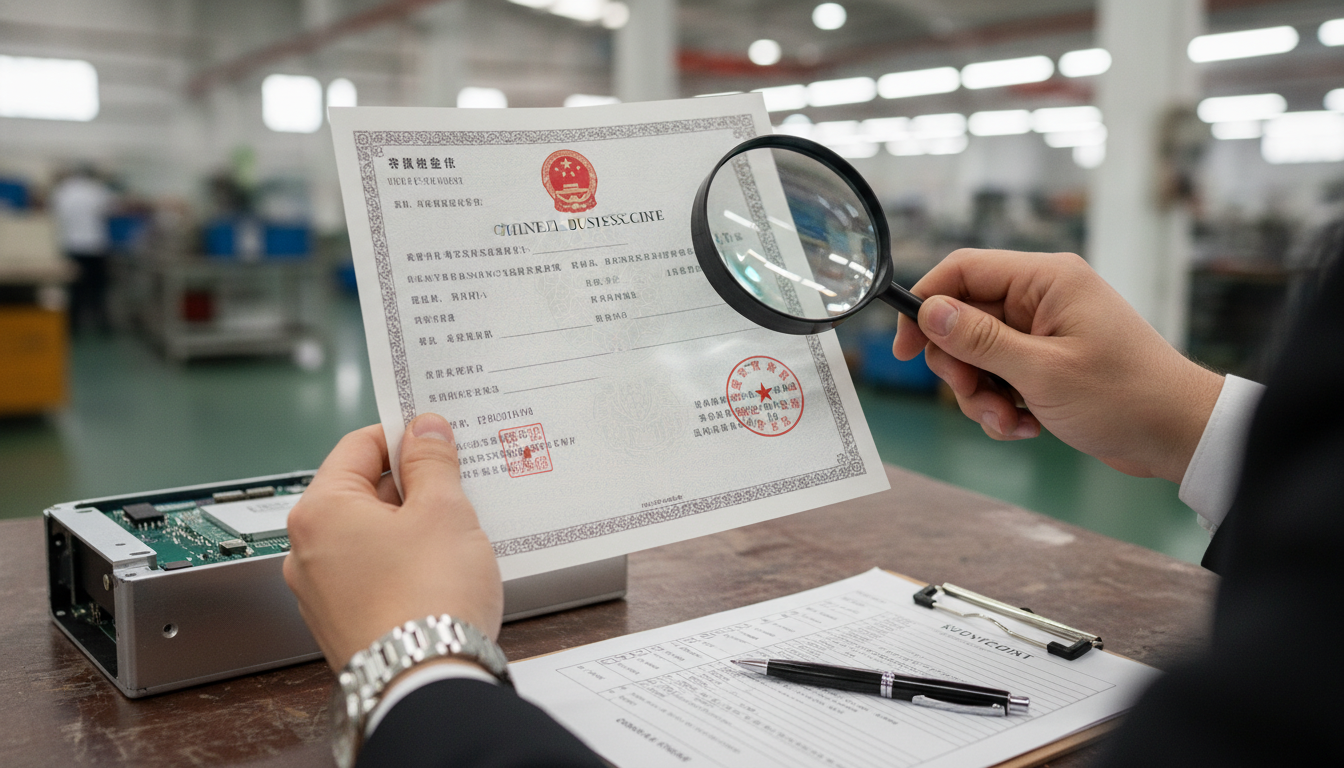
An agent visits the factory in person, checks business licenses against the product scope being quoted, photographs production lines, and verifies certifications with the issuing bodies. A business license lists the exact production scope a company is allowed to quote on. That legal document separates a real factory from a trading company reselling that factory’s output.
Common professional verification standards include ISO 9001, BSCI, and ISO 14001, along with third-party audits by SGS, Bureau Veritas, Intertek, TÜV, or QIMA. An agent requests audit reports directly from these bodies and cross-checks certificate numbers against the factory’s legal entity name.
Agents negotiate in Mandarin, understand regional pricing norms, and leverage their factory network to secure better terms than a first-time buyer can achieve alone. They also consolidate orders from multiple buyers to meet higher-volume MOQ thresholds, then split the shipment at their warehouse.
During production, an agent visits the factory, checks work-in-progress against your approved sample, confirms raw material quality, and documents each production stage with photos. Pre-shipment inspection happens before the goods leave the factory: the agent measures dimensions, tests functionality, checks packaging, and photographs defects for your approval or rejection.
Some buyers feel platform-only sourcing leaves them exposed to spec drift, sample mismatch, and weak quality control on complex products. An agent’s inspection report gives you the evidence needed to refuse shipment or claim a refund before the container sails.
Agents handle commercial invoices, packing lists, certificates of origin, and any product-specific export permits your destination country requires. They consolidate orders from multiple factories into a single container at their warehouse, repack for retail if needed, and coordinate pickup with your freight forwarder.
According to HiSourcing (2026), most agents’ core service stack includes supplier search, verification, negotiation, sample handling, production follow-up, inspection, consolidation, and export. Our Yiwu warehouse processes consolidation for buyers importing home goods, apparel, and general merchandise, with multilingual support in English, Spanish, French, and Arabic.
When Does a Platform Alone Work?
Use an import export platform without an agent when you have supplier experience, simple product specifications, and low order complexity. Three scenarios fit this profile.
Repeat Orders from Verified Suppliers
Once you have completed a successful order with a factory, verified their production quality, and established payment terms, a platform provides the communication and payment infrastructure for reorders. You already know the factory’s capabilities, so the verification step becomes redundant.
Simple, Standardized Products
Commodity items with industry-standard specifications carry lower quality risk. Plain cotton T-shirts, basic plastic housewares, and standard electronic accessories have well-defined specs that most factories can meet. The risk of spec drift or sample mismatch is lower than with custom or technical products.
Small Sample Orders
When you are ordering samples to test the market, the financial exposure is low enough that paying an agent fee does not make sense. Use the platform to request samples from multiple suppliers, evaluate quality yourself, and engage an agent only when you are ready to place a production order.
When Do You Need an Agent Instead?
Engage a trusted China sourcing agent when order complexity, verification risk, or customs friction justify the service fee. According to ForeignGo (2026), a buyer may need an agent when the cost of being wrong exceeds the cost of the agent, especially on complex-spec or multi-category orders.
First-Time Orders and New Suppliers
Without prior order history, you cannot verify a supplier’s production capacity, quality systems, or export compliance. An agent audits the factory, checks business licenses, and photographs production lines before you commit to a deposit. This verification step catches trading companies posing as factories, unlicensed workshops, and suppliers quoting products outside their registered business scope.
Custom or Technical Products
Products with tight tolerances, specific material requirements, or regulatory certifications need production monitoring and pre-shipment inspection. An agent visits the factory during production, verifies material quality against your approved sample, and documents each stage with photos. Pre-shipment inspection measures dimensions, tests functionality, and documents defects before the container sails.
Multi-Factory Consolidation
When you source different product categories from multiple factories, an agent consolidates orders at their warehouse, repacks for retail if needed, and coordinates a single pickup with your freight forwarder. This reduces shipping cost per unit and simplifies customs clearance at destination.
Language and Payment Barriers
Foreign buyers often use sourcing agents because 1688 and other domestic Chinese platforms require payment methods unavailable outside China and do not provide a built-in international shipping workflow. An agent places orders on your behalf, handles RMB payments, and arranges export documentation.
Customs Compliance and Import Regulations
Each destination country has specific import requirements: Mexico requires NOM certifications for electronics, Brazil demands INMETRO compliance for consumer goods, and the EU enforces CE marking and REACH restrictions. An agent verifies that your supplier holds the necessary certifications and prepares the documentation your customs broker needs to clear the shipment.
Our team coordinates quality control and supplier verification across 1000+ factories in the Yiwu and Guangzhou sourcing ecosystems, with 23+ years of export experience to Latin America and Europe.
How Much Does Each Model Actually Cost?
Buyers complain that low platform prices can disappear once agent fees, repacking, local delivery, and international freight are added. A transparent cost breakdown helps you decide which model fits your order.
Platform Cost Structure
- Transaction fees: Alibaba Trade Assurance charges a percentage of order value for payment protection; 1688 requires domestic payment methods with no built-in international fee.
- Membership subscriptions: Premium supplier listings and advanced search filters often require paid memberships, ranging from hundreds to thousands of dollars annually.
- Freight and customs: You arrange and pay for freight forwarding, customs clearance, and final-mile delivery separately, with no consolidation or repacking service.
- Quality risk: No pre-shipment inspection or production monitoring; defects discovered after arrival may require expensive returns or disposal.
Agent Cost Structure
- Commission or project fee: Agents typically charge 5-10% of order value or a flat fee per project, covering verification, negotiation, inspection, and export coordination.
- Inspection fees: Pre-shipment inspection and factory audits may be billed separately or included in the commission, depending on service tier.
- Consolidation and warehousing: Agents charge for warehouse storage, repacking, and consolidation when combining orders from multiple factories.
- Freight coordination: Some agents include freight forwarding in their service; others connect you to their logistics partners at negotiated rates.
Our warehouse and consolidation service processes multi-factory orders for buyers across Latin America and Europe, with transparent pricing published at our service-charge page.
Hybrid Approach: Platform for Discovery, Agent for Execution
Many experienced buyers use an import export platform to identify potential suppliers, compare quoted prices, and request initial samples. Once they narrow the field to two or three candidates, they engage an agent to audit factories, negotiate final terms, monitor production, and handle export logistics.
This hybrid model combines the discovery efficiency of platforms with the verification and quality control an agent provides. You pay platform fees only for the discovery phase, then shift to agent services for the production order where the financial and quality risks are highest.
Key Takeaways
- Platform role: connects you to supplier listings and provides messaging tools, but does not verify factory legitimacy, production capacity, or quality systems before you place an order.
- Agent role: audits suppliers in person, negotiates pricing in Mandarin, monitors production, arranges pre-shipment inspection, consolidates orders, and handles export documentation as your local representative.
- Cost tradeoff: platforms charge transaction fees or memberships, while agents work on 5-10% commission or project fees according to chinasourcingagent.com (2026). Choose based on whether the cost of a defective shipment or supplier fraud exceeds the agent fee.
- Verification gap: a business licence lists exact production scope. Platforms do not check this legal document; agents visit factories to photograph business licenses and verify production scope.
- Hybrid strategy: start with a platform to identify suppliers and compare prices, then hire an agent to verify top candidates, negotiate final terms, and manage production and logistics for container orders.
- Payment barriers: 1688 requires Alipay or WeChat Pay and provides no English-language support, which is why overseas buyers rely on agents to place orders and handle RMB payments on domestic Chinese platforms.
Frequently Asked Questions
Do I need a sourcing agent to buy from Alibaba?
You do not need an agent for repeat orders from verified suppliers on Alibaba, but first-time orders or custom products benefit from agent verification and quality inspection. Alibaba verifies that a supplier account exists but does not audit production capacity or inspect factories for quality systems. An agent visits the factory in person, checks business licenses, photographs production lines, and arranges pre-shipment inspection before the container sails.
What is the difference between a sourcing agent and a trading company?
A sourcing agent works for the buyer, auditing suppliers and negotiating on your behalf, while a trading company buys from factories and resells to you at a markup. Agents charge transparent commission or project fees; trading companies add hidden margin to the factory price. An agent’s business license will list consulting or agency services, while a trading company’s license lists import-export trade. Check the business license scope to confirm which model you are dealing with.
Can I use 1688 without a sourcing agent?
1688 requires domestic Chinese payment methods like Alipay or WeChat Pay, and the platform provides no English-language interface or international shipping workflow. Overseas buyers hire agents to place orders on 1688, handle RMB payments, arrange export documentation, and coordinate international freight. Without an agent, you cannot complete a 1688 transaction from outside China unless you hold a Chinese bank account and Mandarin fluency.
Ready to verify your suppliers and secure your next China order?
Request a Free Factory Audit →
Written by the Goodcantrading Sourcing Team.