How to Import Goods Online Without Flying to China [2026 Guide]
![How to Import Goods Online Without Flying to China [2026 Guide]](https://goodcantrading.com/wp-content/uploads/2026/10/featured-how-to-import-goods-online.png)
You can import goods online from China by working with a sourcing agent who handles supplier verification, quotation comparison, sampling, quality inspection, and shipping coordination entirely remotely. Send product specifications or marketplace links, and the agent manages factory selection, price negotiation, production monitoring, and consolidated shipping to your destination port-no flight required.
📋 Table of Contents
Executive Summary
- Remote sourcing workflow: Submit product briefs online, receive supplier shortlists with verified business licences and factory audit reports, approve samples, and track production through photo updates and third-party inspections.
- Supplier verification: A sourcing agent checks business-licence scope, export history, and production capacity through on-site factory visits, ensuring the entity quoting is the actual manufacturer.
- Quality control: Pre-production samples, during-production inspections, and pre-shipment final checks catch defects before goods leave China, reducing rejection risk at destination customs.
- Consolidation advantage: Combine orders from multiple suppliers into one container at a bonded warehouse in Yiwu or Guangzhou, cutting per-unit shipping costs and simplifying customs clearance.
- Payment and settlement: Escrow platforms, letter-of-credit arrangements, and 90-120 day open-account terms for qualifying buyers provide payment security without requiring upfront full deposits.
What Information Do You Need to Start?
To import goods online, you need a clear product specification, target quantity, quality requirements, and destination port. A trusted China sourcing agent uses this brief to shortlist factories, request quotations, and arrange samples. The more detail you provide upfront, the faster the agent can match you with the right supplier.
Product Specification Sheet
Include material composition, dimensions, color codes, packaging requirements, and any certification standards your market requires. For apparel, attach a tech pack with stitching diagrams and fabric-weight targets. For electronics, specify voltage, plug type, and safety marks. Vague descriptions delay the process because factories quote based on assumptions, leading to mismatched samples.
Target Order Quantity and Budget
State your minimum order quantity (MOQ) tolerance and per-unit budget ceiling. Factories set MOQs based on production-line efficiency; a 500-unit order may cost 30% more per piece than a 2,000-unit run. Sharing your budget range helps the agent filter suppliers whose pricing structure aligns with your margin targets, avoiding wasted quotation rounds.
Quality and Compliance Requirements
List mandatory certifications, testing standards, and labeling rules for your destination country. Mexico requires NOM marks for electrical goods, Brazil demands INMETRO registration for consumer products, and the EU enforces CE conformity. Communicating these upfront ensures the agent only shortlists factories with the necessary export licenses and testing infrastructure.
Destination Port and Incoterm Preference
Specify whether you want FOB (Free On Board), CIF (Cost, Insurance, Freight), or DDP (Delivered Duty Paid) pricing. FOB quotes stop at the Chinese port, leaving you to arrange ocean freight and customs clearance. DDP quotes include landed costs but require the supplier to handle import duties and last-mile delivery, which not all factories offer for Latin American destinations.
How Does Remote Supplier Verification Work?
Remote supplier verification combines digital document checks with on-site factory audits conducted by the sourcing agent’s local team. You receive a verification report with photos, business-licence scans, and production-capacity assessments before any deposit moves. This process separates legitimate manufacturers from trading companies reselling factory output at marked-up prices.
Business Licence and Scope Verification
A Chinese business licence states the exact production scope the company is legally allowed to quote on. A factory licensed for textile manufacturing cannot legally produce electronics, yet trading companies often quote across unrelated categories by outsourcing to third parties. The agent cross-checks the licence scope against your product category, ensuring the entity quoting has the legal authority to manufacture what you ordered.
Export History and Financial Stability
The agent requests customs-export records showing shipment volume, destination countries, and product categories over the past 12 months. A factory with consistent monthly exports to your region demonstrates logistics experience and financial stability. Sporadic export activity or a recent registration date signals higher risk of production delays or sudden closure mid-order.
On-Site Factory Audit
The sourcing team visits the factory floor, photographs production lines, checks worker count, and inspects raw-material storage. The audit report confirms the factory owns the equipment it claims and operates at the scale it advertises. Buyers often complain that some agents only work if you already know exactly what to order, but do not help much with supplier vetting or realistic market pricing. Our Yiwu and Guangzhou sourcing desks run factory audits across consumer-goods categories, verifying production capacity before quotations reach you.
Third-Party Certification and Test Reports
Request copies of ISO 9001 quality-management certificates, product-testing reports from SGS or Intertek, and any market-specific compliance documents. A factory that has already passed third-party audits for similar products reduces your own testing burden. Verify certificate validity by cross-checking the issuing body’s online registry; expired or forged certificates are common in unverified supplier lists.
What Happens During Sampling and Quotation?
Once suppliers are shortlisted, the agent requests quotations and arranges sample production. You compare pricing, lead times, and sample quality side by side, then select the supplier that best balances cost and reliability. Sampling fees typically range from $50 to $300 per item, depending on product complexity, and are often deducted from the bulk order if you proceed.
Quotation Comparison Table
The agent delivers a comparison table showing unit price, MOQ, lead time, payment terms, and included services for each shortlisted factory. This table highlights cost differences and reveals which suppliers offer better payment flexibility or faster turnaround. Transparent comparison prevents the common issue where buyers discover hidden costs only after deposits are paid.
Sample Evaluation Criteria
Evaluate samples for material accuracy, stitching quality, color consistency, and packaging integrity. Compare the sample against your specification sheet point by point. A common mistake is approving a sample based on appearance alone, then discovering the bulk order uses a cheaper material grade. Request a lab test report for the sample if your product category has strict material-composition requirements.
Negotiation and Final Terms
The agent negotiates unit price, payment schedule, and delivery timeline on your behalf. Factories often reduce pricing by 8-15% when the agent demonstrates you are comparing multiple quotations. Payment terms can shift from 50% deposit to 30% deposit with the remainder on inspection approval, reducing your upfront capital exposure. Our product sourcing team handles these negotiations, leveraging relationships built across 23+ years of export experience.
How Do You Ensure Quality Without Being There?
Quality control happens in three stages: pre-production sample approval, during-production inspection, and pre-shipment final check. Each stage catches defects at a different point, preventing costly rejections after goods arrive at your warehouse. Third-party inspection companies or the sourcing agent’s QC team conduct these checks and send photo reports within 24 hours.
Pre-Production Sample Approval
Before bulk production starts, the factory produces a golden sample using the exact materials, colors, and construction methods planned for the full order. You approve this sample in writing, and it becomes the quality benchmark for the entire production run. Any deviation from the approved sample during bulk production is grounds for rejection or price adjustment.
During-Production Inspection
When 30-50% of the order is complete, an inspector visits the factory floor to check material consistency, workmanship, and adherence to the approved sample. This mid-production check catches systemic issues early, allowing the factory to correct them before completing the remaining units. Skipping this step often leads to discovering defects only at the final inspection, when rework is expensive and delays shipment.
Pre-Shipment Final Inspection
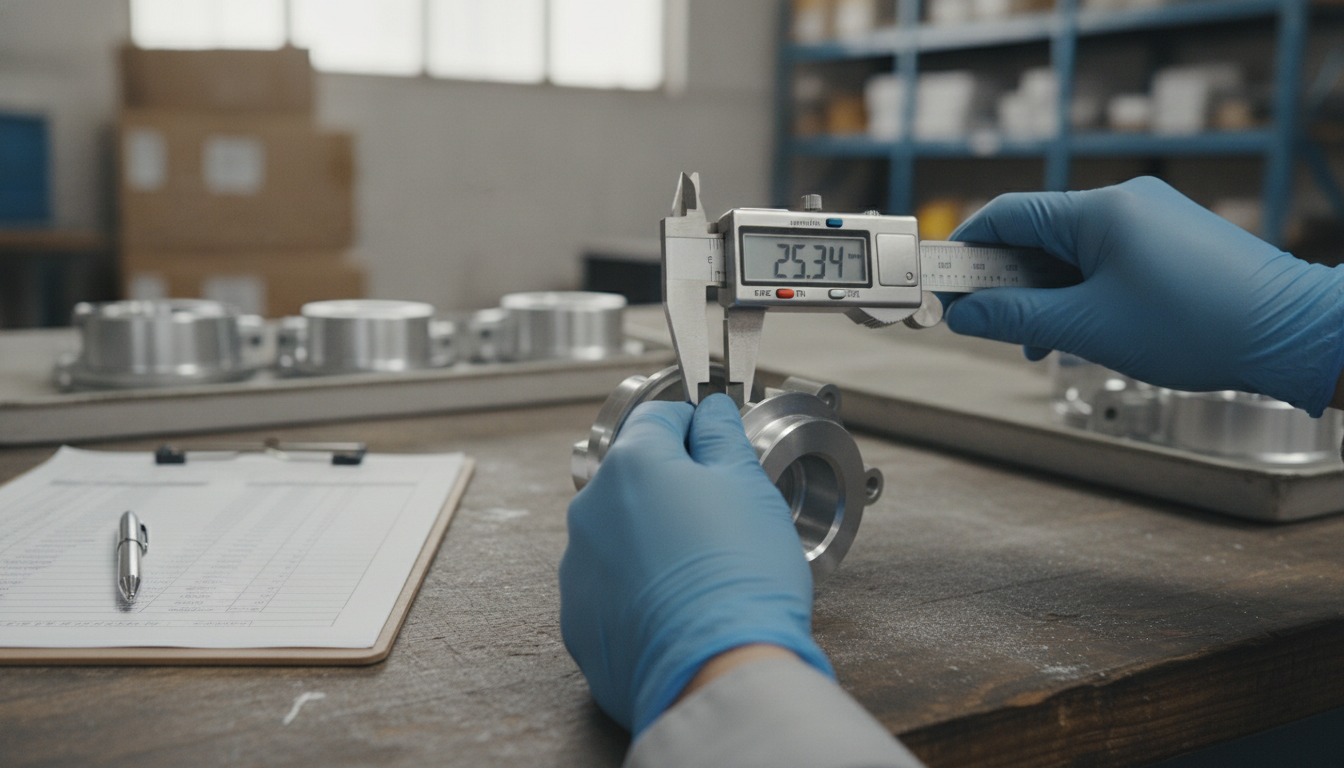
Once production is finished and goods are packed, the inspector conducts a final check on a statistically valid sample size, typically following AQL (Acceptable Quality Limit) standards. The report includes defect counts, measurement checks, packaging integrity, and carton-marking accuracy. You receive the report before the balance payment is due, giving you to demand corrections or negotiate a discount for minor defects.
Photo and Video Documentation
Inspectors provide timestamped photos of the production line, close-ups of defects, and videos of functionality tests. This visual evidence allows you to make informed decisions remotely. International buyers complain that Chinese marketplace listings are hard to understand, and they need help with payments and shipping setup. Our quality control team delivers inspection reports in English, Spanish, and French, with annotated photos showing exactly what passed and what failed.
What Shipping and Consolidation Options Exist?
Shipping options depend on order volume, urgency, and destination. Ocean freight is the most cost-effective for orders above 2 cubic meters, while air freight suits urgent small shipments. Consolidation combines multiple suppliers’ goods into one container, reducing per-unit shipping costs and simplifying customs clearance at the destination port.
Ocean Freight (FCL and LCL)
Full Container Load (FCL) is economical when your order fills at least 80% of a 20-foot or 40-foot container. Less than Container Load (LCL) shares container space with other shipments, suitable for orders between 2 and 15 cubic meters. Ocean freight from China to Mexico takes 18-25 days, to Colombia 28-35 days, and to Brazil 35-45 days, depending on the destination port and transshipment points.
Air Freight and Express Courier
Air freight delivers in 5-10 days but costs 4-6 times more than ocean freight per kilogram. Use air freight for high-value low-weight goods, urgent restocks, or sample shipments. Express couriers like DHL and FedEx handle customs clearance and door delivery, but their rates become prohibitive for shipments above 100 kilograms.
Warehouse Consolidation Process
When sourcing from multiple factories, the agent arranges delivery to a bonded warehouse in Yiwu or Guangzhou. The warehouse receives goods from each supplier, inspects carton counts, repackages if needed, and loads everything into one container. Users often say consolidation and packaging instructions are easy to miss, which can lead to oversized parcels and higher shipping costs. Our warehouse and consolidation service includes carton optimization, ensuring your shipment meets carrier size limits and avoids dimensional-weight surcharges.
Customs Clearance and Documentation
The agent prepares the commercial invoice, packing list, bill of lading, and certificate of origin. For products requiring import permits, the agent coordinates with your customs broker to ensure all documents are ready before the shipment arrives. Missing or incorrect paperwork causes port delays and storage fees, which accumulate daily once the container is offloaded.
Key Takeaways
- Start with a detailed product brief: Include material specs, target MOQ, quality standards, and destination-port requirements to receive accurate quotations and avoid mismatched samples.
- Verify supplier credentials before deposits: Cross-check business-licence scope against the product category, request export records, and insist on on-site factory audits to separate manufacturers from trading companies.
- Use three-stage quality control: Approve pre-production samples, conduct during-production inspections when 30-50% is complete, and run final pre-shipment checks before releasing balance payments.
- Consolidate multi-supplier orders: Combine goods from different factories at a bonded warehouse in Yiwu or Guangzhou to reduce per-unit shipping costs and simplify customs clearance.
- Choose the right shipping method: Ocean LCL works for 2-15 cubic meter orders, FCL for full containers, air freight for urgent shipments, and express couriers for samples under 100 kilograms.
- Prepare customs documentation early: Ensure commercial invoices, packing lists, bills of lading, and any required import permits are ready before the shipment arrives to avoid port delays and storage fees.
Frequently Asked Questions
Can I import from China without visiting the factory?
Yes, a sourcing agent conducts on-site factory audits, arranges samples, monitors production, and coordinates quality inspections on your behalf. You receive photo reports, business-licence scans, and inspection certificates remotely, allowing you to verify supplier credentials and product quality without traveling. Thousands of importers manage China sourcing entirely online, relying on third-party verification and transparent communication to reduce risk.
How do I avoid scams when importing online?
Verify the supplier’s business licence matches the product scope, request export records showing consistent shipment history, and insist on a factory audit before any deposit. Use escrow payment platforms or letter-of-credit arrangements that release funds only after inspection approval. Never pay full deposits upfront, and always cross-check company registration details through official government databases. A sourcing agent with local presence can visit the factory and confirm it exists at the registered address.
What documents do I need to import goods from China?
You need a commercial invoice, packing list, bill of lading, and certificate of origin for most shipments. Depending on your destination country and product category, additional documents may include import permits, product-testing certificates, sanitary certificates for food items, or conformity declarations for regulated goods. Mexico requires a tax ID (RFC) for customs clearance, Brazil demands INMETRO registration for many consumer products, and the EU enforces CE marking for electronics. Your sourcing agent or customs broker prepares these documents based on your destination requirements.
Ready to import goods online with full supplier verification, quality control, and shipping coordination?
Start Your Sourcing Project →
Written by the Goodcantrading Sourcing Team.