China Liquidation Wholesale: Worth Buying? [2026 Guide]
![China Liquidation Wholesale: Worth Buying? [2026 Guide]](https://goodcantrading.com/wp-content/uploads/2026/10/featured-china-liquidation-wholesale-worth-buying-2026-guide.png)
China liquidation wholesale is worth buying when you calculate landed cost after freight, duties, and defect rates-and verify the supplier’s business licence, lot manifest, and port of origin before payment. Advertised discounts of 50-90% off retail often compress to 30-55% after shipping and mixed-condition adjustments, according to Alibaba Seller Blog (2026). Start with manifested lots from fixed-price sellers to reduce risk, because product manifests, UPCs, and condition data improve buy-side visibility.
📋 Table of Contents
- Executive Summary
- What Is China Liquidation Wholesale?
- How to Calculate Landed Cost for Liquidation Lots
- How to Verify Supplier Legitimacy Before Ordering
- Which Liquidation Channels Are Safest for Cross-Border Buyers?
- What Are the Biggest Risks in China Liquidation Wholesale?
- How to Run Quality Control on Mixed-Condition Stock
- Key Takeaways
- Frequently Asked Questions
Executive Summary
- Effective discount range: Liquidation discounts advertised at 50-90% off retail compress to 30-55% after freight, duties, and defect rates are factored in.
- Manifested lots reduce risk: Starting with manifested lots from fixed-price sellers improves buy-side visibility through product manifests, UPCs, and condition data.
- Business licence verification: Matching a supplier’s business licence scope against the product being quoted separates real factories from trading companies reselling stock.
- Port and lead time: China-based liquidation suppliers ship direct from Nansha and Shenzhen ports with 7-14 day lead times for South American wholesalers.
- Resale certificate requirement: Direct-from-retailer liquidation platforms typically require a resale certificate or business documentation to access pricing.
What Is China Liquidation Wholesale?
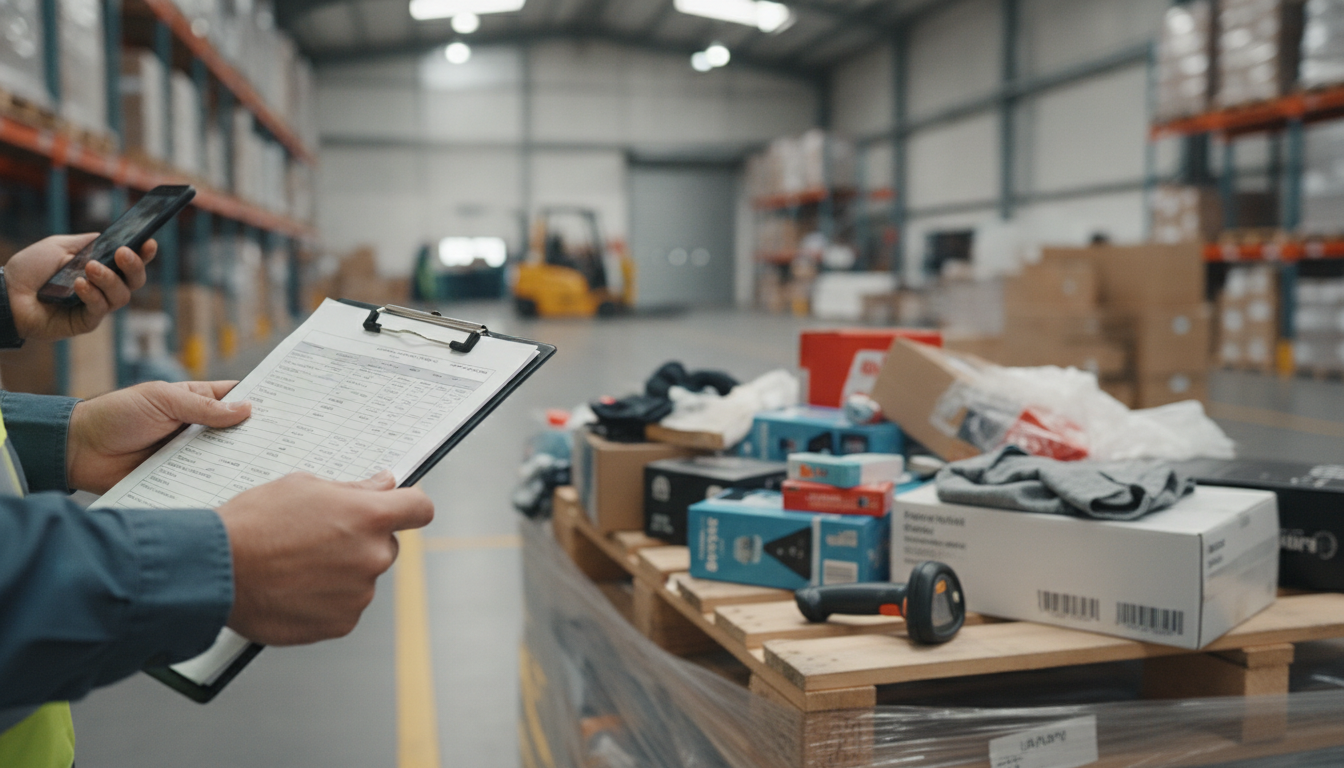
China liquidation wholesale refers to surplus, overstock, customer returns, and closeout merchandise sold in bulk lots by Chinese exporters, often at steep discounts compared to regular wholesale. These goods originate from cancelled orders, excess production runs, retail returns, or end-of-season inventory that factories and trading companies need to clear quickly. The stock is typically sold in mixed-condition pallets or containers, with varying levels of product documentation and quality assurance.
Overstock and Surplus Inventory
Overstock arises when a factory produces more units than the original buyer ordered, or when a retailer cancels an order mid-production. These goods are usually new and in original packaging, but the factory has no committed buyer. Surplus inventory is sold at a discount to recover production costs and free up warehouse space. Quality is generally higher than customer returns, but assortment can be unpredictable.
Customer Returns and Grade B Stock
Customer returns come from e-commerce platforms and retail chains that accept product returns within a certain window. These items may have minor cosmetic defects, missing accessories, or opened packaging. Grade B stock includes products that failed final inspection for minor issues but remain functional. Buyers must account for higher defect rates and potential resale restrictions when calculating margin.
Closeout and End-of-Season Merchandise
Closeout merchandise includes discontinued product lines, seasonal items past their peak selling window, and inventory from brands exiting a market. End-of-season goods are sold at deep discounts to make room for new collections. These lots often have predictable assortments and lower defect rates than returns, but resale velocity depends on market timing and regional demand.
How to Calculate Landed Cost for Liquidation Lots
Landed cost is the total expense to get liquidation stock from the supplier’s warehouse to your door, including product cost, freight, insurance, duties, taxes, and any inspection or processing fees. Calculating landed cost before bidding or ordering prevents margin erosion and ensures the effective discount justifies the risk. Many buyers focus only on the advertised per-unit price and discover too late that freight and customs eat the entire discount.
Freight and Insurance
Freight cost depends on shipment volume, origin port, destination port, and current shipping rates. A full container load from Shenzhen to Mexico City costs less per unit than a less-than-container-load shipment. Insurance typically adds a small percentage of the cargo value but protects against loss or damage in transit. Request a door-to-door quote that includes local delivery and customs clearance to avoid surprise charges.
Duties, Taxes, and HS Code Classification
Import duties and VAT are calculated based on the HS code assigned to each product category. Misclassification can trigger customs delays or penalty assessments. Liquidation lots with mixed product categories require multiple HS codes, which complicates customs documentation. Work with a freight forwarder who understands destination-country tariff schedules and can pre-calculate duty liability before you commit to a purchase.
Defect Rate and Unsellable Units
Defect rate is the percentage of units in a lot that cannot be resold at full price due to damage, missing parts, or functional failure. Customer-return lots often carry defect rates higher than overstock. Calculate your maximum bid by subtracting the estimated unsellable percentage from the total unit count, then dividing your target resale margin by the adjusted unit count. A lot advertised at a deep discount becomes unprofitable if half the units are unsellable.
How to Verify Supplier Legitimacy Before Ordering
Supplier verification prevents fraud, ensures the goods exist, and confirms the seller has legal authority to export the product category. Buyers report discovering too late that a supplier was a shell company with no warehouse, or that photos were stolen from another seller’s listing. Verification steps cost time and money upfront but eliminate the risk of losing the entire purchase price to a scam.
Business Licence and Scope Check
Every Chinese company holds a business licence issued by the local Administration for Industry and Commerce. The licence lists the exact business scope the company is permitted to operate within. A factory’s scope will include manufacturing and export of specific product categories. A trading company’s scope will list wholesale and import-export trade. Request a copy of the business licence and verify the scope matches the liquidation goods being offered. A mismatch signals the seller is a middleman reselling stock from an undisclosed source.
Warehouse and Inventory Inspection
A physical or video inspection of the warehouse confirms the goods exist and match the manifest. Request live video of the lot being opened, with visible product labels, packaging condition, and quantity count. Independent third-party inspection services can visit the warehouse, photograph the stock, and verify the manifest against physical inventory. Our quality control team conducts pre-shipment inspections across Yiwu, Guangzhou, and Shenzhen to confirm lot condition before payment clears.
Manifest and Documentation Review
A manifested lot includes a detailed product list with UPCs, SKUs, quantities, and condition grades. Manifests improve transparency and allow you to estimate resale value before committing. Request photos of product labels, packaging, and any visible defects. Verify the supplier can provide export documentation, including commercial invoice, packing list, and certificate of origin. Missing or incomplete documentation causes customs delays and can result in shipment rejection at the destination port.
Which Liquidation Channels Are Safest for Cross-Border Buyers?
Liquidation channels vary in transparency, buyer protection, and documentation quality. Direct-from-retailer platforms offer the highest visibility but require business credentials. Wholesale marketplaces provide broader selection but less vetting. Factory-direct liquidation offers the best pricing but demands stronger due diligence. Choosing the right channel depends on your risk tolerance, order volume, and ability to inspect goods before shipment.
Direct-from-Retailer Liquidation Platforms
Direct-from-retailer liquidation platforms such as B-Stock and Direct Liquidation typically require a resale certificate or business documentation to access pricing, according to Alibaba Seller Blog (2026). These platforms sell customer returns and overstock directly from major retail chains, with detailed manifests and condition grading. Buyer protection is stronger, but competition drives auction prices higher. Registration and vetting processes filter out casual buyers, reducing fraud risk but adding an approval step before you can bid.
Wholesale Marketplaces and Aggregators
Wholesale marketplaces aggregate liquidation lots from multiple suppliers, offering broader product selection and fixed-price purchasing. Transparency varies by platform, with some providing detailed manifests and others offering only category descriptions and estimated unit counts. Buyer reviews and seller ratings help identify reliable suppliers, but the platform itself rarely inspects goods before listing. Request sample photos and a partial manifest before committing to large orders.
Factory-Direct Liquidation Suppliers
Factory-direct liquidation suppliers sell overstock and cancelled orders directly from the production floor, bypassing intermediaries. Pricing is typically lower than marketplace listings, but documentation and condition grading may be minimal. A China-based liquidation supplier reported shipping direct from Nansha and Shenzhen ports with a 7-14 day lead time for South American wholesalers, according to Indetexx (2026). That same supplier said it serves wholesale buyers in more than 110 countries, showing the global reach of China liquidation and surplus channels. Verification steps become critical: confirm the factory’s business licence scope covers the product category, and arrange a pre-shipment inspection to verify lot condition and quantity.
What Are the Biggest Risks in China Liquidation Wholesale?
The biggest risks in china liquidation wholesale include hidden defects, misrepresented lot contents, freight cost overruns, customs classification disputes, and supplier fraud. Buyers often underestimate the defect rate in customer-return lots, or discover that advertised brand-name goods are actually unbranded overstock. Freight and duty costs can double the landed cost if the supplier quotes FOB pricing without explaining what that excludes. Fraud takes the form of fake business licences, stolen product photos, or advance-payment scams where the goods never ship.
Mixed Condition and Undisclosed Defects
Mixed-condition lots combine Grade A, Grade B, and unsellable units in unknown proportions. Sellers may advertise a lot as mostly Grade A but ship a higher percentage of damaged or incomplete items. Defect rates above the disclosed level erode resale margin and can leave you with unsellable inventory. Request a condition breakdown by grade and insist on a pre-shipment inspection that photographs a random sample of units across the lot.
Freight and Customs Cost Surprises
FOB pricing means the buyer pays all costs from the Chinese port onward, including ocean freight, destination port charges, customs duties, VAT, and inland delivery. Buyers unfamiliar with Incoterms often assume FOB includes door-to-door delivery, then receive a freight invoice that doubles the total cost. Request a DDP quote that includes all charges to your warehouse, or work with a trusted China sourcing agent who can consolidate shipments and negotiate freight rates on your behalf.
Supplier Fraud and Advance-Payment Scams
Buyers report discovering too late that a supplier’s business licence was fake, the warehouse address was a residential apartment, or the product photos were copied from another seller’s listing. Advance-payment scams involve a seller who collects full payment upfront, then disappears without shipping the goods. Importers are told to reverse-image-search the product on 1688 to find the real factory price and compare, a common tactic to uncover middlemen inflating prices. Mitigate fraud risk by verifying the supplier’s business licence with the local Administration for Industry and Commerce, conducting a video warehouse inspection, and using a payment method that offers buyer protection or escrow.
How to Run Quality Control on Mixed-Condition Stock
Quality control on mixed-condition stock requires sampling across the lot, documenting defects by grade, and verifying the manifest against physical inventory. Standard pre-shipment inspection protocols designed for new production runs do not capture the variability in liquidation lots. A tailored QC workflow photographs each condition grade, counts unsellable units, and flags discrepancies between the manifest and actual contents before the shipment leaves China.
Random Sampling and Defect Documentation
Random sampling selects units from different pallets or cartons across the lot to ensure the sample represents the overall condition distribution. Inspect each sampled unit for functional defects, cosmetic damage, missing accessories, and packaging condition. Document findings with photos and a written defect report that categorizes issues by severity. A high defect rate in the sample signals the need to renegotiate pricing or reject the lot before shipment.
Manifest Reconciliation and Unit Count Verification
Manifest reconciliation compares the supplier’s product list against the physical inventory in the warehouse. Count the total units, verify SKUs and UPCs match the manifest, and flag any missing or substituted items. Discrepancies between the manifest and actual contents indicate poor inventory control or intentional misrepresentation. Resolve discrepancies before payment clears to avoid receiving a shipment that does not match what you purchased.
Pre-Shipment Inspection and Photographic Evidence
A pre-shipment inspection conducted by an independent third party provides an unbiased assessment of lot condition and quantity. The inspector photographs the warehouse, the lot being opened, and a random sample of units across all condition grades. The inspection report includes defect counts, packaging condition, and any deviations from the manifest. This documentation supports insurance claims or supplier disputes if the shipment arrives damaged or short. Our supplier management process includes factory audits and pre-shipment inspections to verify lot condition before goods leave China.
Key Takeaways
- Calculate landed cost first: Add freight, duties, insurance, and estimated defect rates to the FOB price before deciding if a liquidation lot is profitable.
- Verify the business licence scope: Confirm the supplier’s registered business scope covers the product category being sold, which separates real factories from middlemen.
- Request manifested lots: Product manifests with UPCs, SKUs, and condition grades improve transparency and reduce the risk of undisclosed defects.
- Inspect before payment: Arrange a pre-shipment inspection that photographs the lot, counts units, and verifies the manifest against physical inventory.
- Account for defect rates: Customer-return lots carry higher defect rates than overstock, so adjust your maximum bid to reflect the percentage of unsellable units.
- Use DDP pricing for clarity: Request a delivered-duty-paid quote that includes all costs to your warehouse, or work with a freight forwarder who can pre-calculate duty liability.
Frequently Asked Questions
Is liquidation stock profitable for resellers?
Liquidation stock is profitable when you calculate landed cost after freight, duties, and defect rates, and when you verify the supplier and lot condition before payment. Advertised discounts compress significantly once shipping and mixed-condition adjustments are factored in. Start with manifested lots from fixed-price sellers to reduce risk, and arrange a pre-shipment inspection to confirm the lot matches the manifest. Profitability depends on accurate cost modeling and disciplined maximum-bid calculations.
How do I know if a liquidation lot is real?
Verify a liquidation lot is real by requesting a copy of the supplier’s business licence, conducting a video or in-person warehouse inspection, and reviewing a detailed manifest with UPCs and condition grades. Reverse-image-search product photos to confirm they are not stolen from another listing. Arrange a pre-shipment inspection by an independent third party who can photograph the lot, count units, and verify the manifest against physical inventory. Payment methods with buyer protection or escrow add another layer of security.
What is the difference between liquidation and wholesale?
Liquidation refers to surplus, overstock, customer returns, and closeout merchandise sold at steep discounts to clear inventory quickly, often in mixed-condition lots with varying documentation. Wholesale refers to new, first-quality goods purchased in bulk directly from manufacturers or authorized distributors at a standard discount off retail. Liquidation carries higher defect rates and less predictable assortment but offers deeper discounts. Wholesale offers consistent quality and documentation but narrower margins. The choice depends on your risk tolerance, quality-control capacity, and target resale margin.
Written by the Goodcantrading Sourcing Team.
Ready to verify a China liquidation supplier before you order?
Request a Free Supplier Audit →