Import Ceramic Planters China to Mexico Tariffs [2026 Guide]
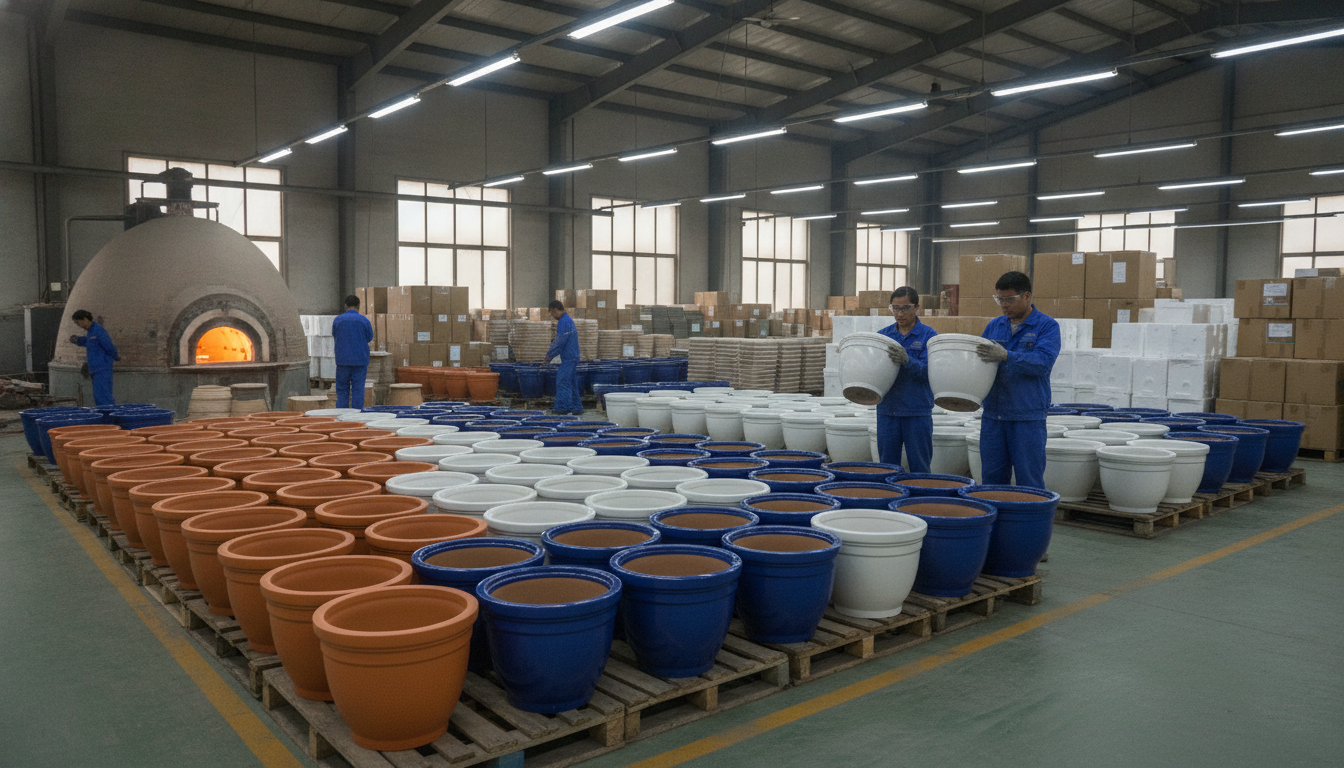
When you import ceramic planters China to Mexico tariffs depend on the exact eight-digit fracción arancelaria assigned to your product. According to QCADVISOR (2026), Mexico’s 2026 tariff reform increased duties on 1,463 tariff lines for goods from countries without a relevant free-trade agreement, including China. Ceramic planters typically fall under Chapter 69 of the TIGIE (Tarifa de la Ley de los Impuestos Generales de Importación y de Exportación), with IGI rates ranging from 20% to 35% depending on material composition-terracotta, stoneware, porcelain, glazed or unglazed-plus 16% IVA and 0.8% DTA. Your total landed cost includes customs value, freight, insurance, brokerage fees, and these three taxes.
📋 Table of Contents
- Executive Summary
- What Tariff Classification Applies to Ceramic Planters?
- How Much Is IGI Duty on Chinese Ceramic Planters in 2026?
- What Other Taxes Apply When You Import from China?
- Worked Landed-Cost Example for a Container Shipment
- Product-Specific Requirements: Permits, NOM, and Labeling
- Sourcing and Quality Control: Reducing Breakage and Fraud Risk
- Key Takeaways
- Frequently Asked Questions
Executive Summary
- 2026 tariff reform: Mexico increased IGI duties on 1,463 tariff lines from China, with most ceramic-planter categories now carrying 25% to 35% IGI rates.
- Classification is critical: The exact eight-digit fracción arancelaria determines your duty rate; terracotta, stoneware, porcelain, glazed and unglazed planters each map to different codes under Chapter 69.
- Total tax burden: IGI plus 16% IVA plus 0.8% DTA, all calculated on customs value (FOB price plus freight and insurance), not the supplier invoice alone.
- Customs broker mandate: Mexican law requires an agente aduanal authorized by SAT to clear any commercial import; you cannot self-clear ceramic planters.
- Breakage and packaging: Ceramic goods suffer high damage rates in ocean freight; factory palletization, moisture-proof wrapping, and pre-shipment inspection reduce claims and total landed cost.
What Tariff Classification Applies to Ceramic Planters?
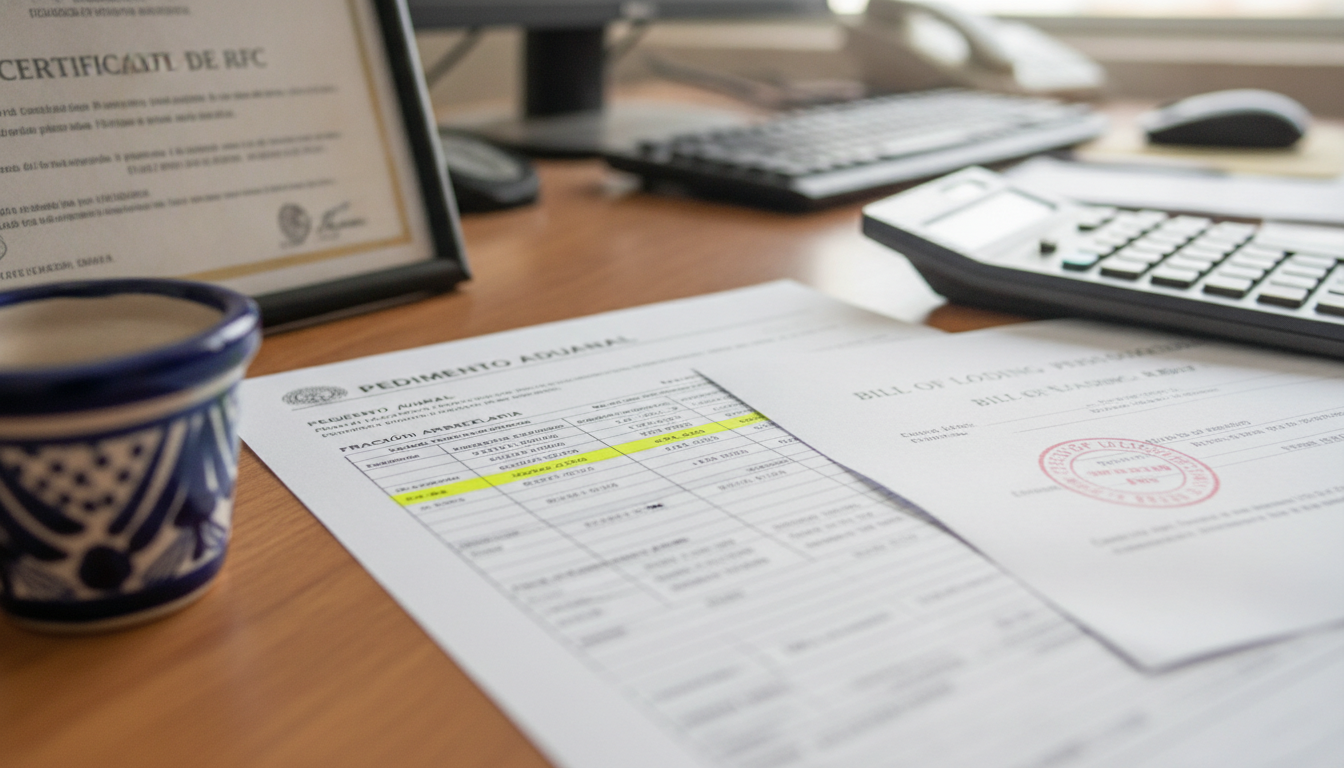
Ceramic planters imported from China fall under Chapter 69 of Mexico’s TIGIE, which covers ceramic articles. The exact eight-digit fracción arancelaria depends on the material and finish of your planter. Terracotta unglazed pots, stoneware planters, porcelain cachepots, and fully glazed decorative planters each carry different codes and different IGI rates. A single shipment mixing terracotta and porcelain planters will be split across two or more tariff lines at customs, each taxed separately.
Common Fracción Arancelaria Codes for Ceramic Planters
Why the Eight-Digit Code Matters
The TIGIE uses an eight-digit structure. The first six digits align with the international Harmonized System (HS), but the final two digits are Mexico-specific and determine the exact duty rate. A customs broker will verify the correct code by examining product samples, technical specifications, and material composition certificates from your supplier. Misclassification triggers penalties, delayed clearance, and retroactive duty adjustments. According to Xin Puente (2026), of the 1,463 affected tariff lines, 1,281, or 88%, carry a 25% or 35% duty, so most ceramic planters from China now fall into this higher-duty bracket.
How to Confirm Your Product’s Fracción Arancelaria
- Request a material certificate: Ask your Chinese supplier for a document stating clay type, firing temperature, glaze composition, and porosity percentage.
- Provide product photos and dimensions: Your customs broker needs clear images of the planter, wall thickness, drainage holes, and any decorative elements.
- Consult the TIGIE database: Mexico’s SAT publishes the full tariff schedule at www.sat.gob.mx, searchable by keyword and HS code.
- Pre-classify before ordering: Confirm the fracción arancelaria and IGI rate before you sign a purchase order, because the duty can swing your landed cost by 10 percentage points.
How Much Is IGI Duty on Chinese Ceramic Planters in 2026?
IGI (Impuesto General de Importación) is the customs duty Mexico charges on goods entering the country. For ceramic planters imported from China, the 2026 reform increased IGI rates to between 25% and 35% for most categories. According to Xin Puente (2026), the 2026 tariff increases range from 5% to 50%, but the majority of ceramic-goods codes fall into the 25% or 35% bands. The exact rate depends on the eight-digit fracción arancelaria assigned to your product.
2026 Tariff Reform Impact on Chinese Goods
Mexico’s 2026 tariff decree targeted goods from countries without a free-trade agreement, which includes China. The reform was designed to protect domestic manufacturing and reduce dependence on low-cost imports. Ceramic planters were among the affected categories because Mexico has a domestic ceramics industry in Guanajuato, Jalisco, and Puebla. Before 2026, many ceramic-planter codes carried 15% to 20% IGI; the new rates represent a 5 to 15 percentage-point increase.
How IGI Is Calculated
IGI is applied to the customs value, which is the sum of the FOB price (the supplier invoice amount), international freight, and insurance. The formula is:
Customs Value = FOB Price + Freight + Insurance
IGI = Customs Value × IGI Rate
For example, if your FOB invoice is USD 10,000, ocean freight to Veracruz is USD 1,200, and insurance is USD 150, your customs value is USD 11,350. At a 30% IGI rate, you pay USD 3,405 in import duty.
Countries with Lower or Zero IGI Rates
Mexico has free-trade agreements with 46 countries, including the United States, Canada, the European Union, Japan, and most of Latin America. Goods originating in these countries enter Mexico at reduced or zero IGI rates if they meet the agreement’s rules of origin. China is not party to any FTA with Mexico, so all Chinese-origin ceramic planters pay the full MFN (Most Favored Nation) rate, which is now 25% to 35% under the 2026 framework.
What Other Taxes Apply When You Import from China?
When you import ceramic planters China to Mexico tariffs include more than just IGI. You also pay IVA (Impuesto al Valor Agregado, Mexico’s value-added tax) and DTA (Derecho de Trámite Aduanero, the customs processing fee). Both are calculated on the customs value plus IGI, so they compound on top of the import duty.
IVA: 16% Value-Added Tax
According to Sorva (2026), Mexico’s standard import IVA is 16%. IVA is applied to the sum of customs value and IGI. Using the example above, if your customs value is USD 11,350 and IGI is USD 3,405, the IVA base is USD 14,755. IVA at 16% equals USD 2,361. IVA is a recoverable tax for registered Mexican businesses; you claim it back on your monthly SAT tax return if you have an RFC and are enrolled in the Padrón de Importadores.
DTA: Customs Processing Fee
According to Sorva (2026), the standard DTA for a definitive import operation is 0.8% of customs value, or 8 per thousand. DTA is a non-recoverable fee paid to Mexican customs for processing your shipment. In the example above, DTA is USD 11,350 × 0.008 = USD 90.80. DTA is small compared to IGI and IVA, but it still forms part of your total landed cost.
Total Tax Calculation Example
Prevalidación and Customs Broker Fees
Mexico requires electronic prevalidación (advance customs declaration) before your shipment arrives. Your customs broker submits the pedimento aduanal (customs declaration) to SAT’s electronic system, which validates the fracción arancelaria, customs value, and tax calculation. Broker fees typically range from USD 150 to USD 400 per shipment, depending on complexity and the number of tariff lines. Add this fee to your landed-cost calculation.
Worked Landed-Cost Example for a Container Shipment
A complete landed-cost calculation includes FOB price, freight, insurance, IGI, IVA, DTA, customs brokerage, and any product-specific costs such as breakage allowance and palletization. This example walks through a real-world scenario: a 20-foot container of glazed stoneware planters shipped from Foshan, Guangdong, to Mexico City.
Shipment Parameters
- Product: 2,400 glazed stoneware planters, 25 cm diameter, 1.2 kg each, packed 24 units per carton.
- FOB price: USD 4.80 per unit, total USD 11,520 for 2,400 units.
- Freight: 20-foot container, Foshan to Manzanillo port, USD 1,800 ocean freight plus USD 300 inland trucking to Mexico City, total USD 2,100.
- Insurance: 1.5% of FOB, USD 173.
- Fracción arancelaria: 6909.12.01 (stoneware planters, glazed), IGI 30%.
- Breakage allowance: 3% of units expected to arrive damaged, so effective sellable units 2,328.
Cost Breakdown
Key Observations
The FOB price was USD 4.80 per unit, but the landed cost per sellable unit is USD 9.21, nearly double. The 30% IGI alone added USD 1.72 per unit, and the compounded IVA and DTA added another USD 1.28. Freight and breakage each added roughly USD 0.90 per unit. This calculation shows why confirming the exact IGI rate before ordering is critical; a 5-percentage-point swing in duty changes your retail margin by 10% to 15%.
Product-Specific Requirements: Permits, NOM, and Labeling
Ceramic planters are generally classified as home-decoration goods, not food-contact items or regulated consumer products, so they do not require NOM (Norma Oficial Mexicana) certification in most cases. However, you must verify whether your specific product triggers any additional requirements.
Import Permits and Antidumping Duties
Mexico does not currently impose antidumping or compensatory duties on ceramic planters from China, but the situation can change. The Secretaría de Economía publishes a list of products subject to cuotas compensatorias (countervailing duties) and permiso previo (prior import permits). Before you place an order, ask your customs broker to check the current status of your fracción arancelaria. If a permit or compensatory duty is added after you order but before you ship, your clearance will be delayed or blocked.
Labeling and Country-of-Origin Marking
Mexican customs requires all imported goods to carry a country-of-origin label. For ceramic planters, the label must state “Hecho en China” or “Made in China” in permanent, legible form. The label can be printed, stamped, or molded into the ceramic body, but it must survive normal handling and not be removable. Stickers are acceptable only if they are tamper-evident and applied before the product leaves the factory. Missing or incorrect origin labels trigger customs holds and fines.
Food-Safe Certification for Planters Used as Tableware
If your ceramic planters are marketed as dual-use items (planter and serving bowl, for example), Mexican health authorities may require proof that the glaze is lead-free and food-safe. The relevant NOM is NOM-231-SSA1, which sets maximum lead and cadmium migration limits for ceramic tableware. Most decorative planters are exempt, but if your product description or packaging suggests food contact, budget for third-party lab testing and certification.
Sourcing and Quality Control: Reducing Breakage and Fraud Risk
Ceramic planters are fragile, heavy, and prone to moisture damage during ocean freight. Buyers report that breakage rates for poorly packed ceramic shipments can reach 10% to 15%, which destroys your margin. A trusted China sourcing agent verifies the supplier’s packing standards, runs pre-shipment inspection, and coordinates moisture-proof wrapping and palletization before the container is sealed.
Factory Verification and Business Licence Scope
A business licence in China lists the exact production scope a company is legally allowed to quote on. Matching that scope against the product being ordered separates a real factory from a trading company reselling another factory’s output. Trading companies add a markup, delay communication, and cannot control production quality because they do not own the workshop. Our supplier management team requests the business licence, cross-checks the registered address against the factory location, and visits the production floor to verify kiln capacity and glazing equipment.
Pre-Shipment Inspection for Ceramic Goods
Ceramic planters require a hands-on inspection before the container is loaded. An inspector checks:
- Glaze consistency: Color match across batches, no crazing or pinholes in the glaze surface.
- Dimensional tolerance: Diameter, height, and wall thickness within the agreed spec range, typically ±3%.
- Drainage holes: Clean, unobstructed, and positioned correctly if specified.
- Packing quality: Each planter wrapped in foam or bubble wrap, nested cartons reinforced with corner protectors, and pallets shrink-wrapped with moisture barrier.
- Carton drop test: Random cartons dropped from 60 cm to simulate handling; any breakage triggers a full re-pack.
Our quality control team runs AQL 2.5 sampling inspection at the factory, photographs defects, and holds the shipment until the supplier corrects packing failures.
Moisture Protection and Palletization
Ocean freight exposes containers to temperature swings and condensation, which can soften cartons and cause stacking collapse. Moisture-proof palletization adds USD 0.05 to USD 0.10 per unit but cuts breakage from 8% to 2%. The process includes:
- Pallet base: Heat-treated wood pallets (ISPM 15 compliant) or plastic pallets.
- Moisture barrier: Heavy-duty polyethylene sheeting under and over each pallet layer.
- Shrink wrap: Multiple layers of stretch film, applied with tension to lock cartons in place.
- Corner protectors: Cardboard or plastic angles on each pallet corner to prevent strap damage.
Factories in Foshan and Jingdezhen that specialize in export ceramics offer palletization as a standard service; smaller workshops may require explicit instruction and a line item in the purchase order.
Breakage Claims and Insurance
Marine cargo insurance covers breakage caused by rough handling, container collapse, or moisture intrusion, but it does not cover poor packing. The insurer will deny a claim if the surveyor finds inadequate cushioning or missing moisture barriers. Always specify packing standards in your purchase order, photograph the packing process during inspection, and retain those photos as evidence if you need to file a claim. Our team coordinates with freight forwarders to ensure the Bill of Lading notes any visible carton damage before the container leaves the port.
Key Takeaways
- Tariff classification drives duty: The eight-digit fracción arancelaria determines whether you pay 25%, 30%, or 35% IGI; terracotta, stoneware, and porcelain planters each map to different codes under Chapter 69 of the TIGIE.
- Total tax burden is compounded: IGI is calculated on customs value (FOB plus freight plus insurance), then IVA and DTA are calculated on customs value plus IGI, so the effective tax rate exceeds the nominal IGI percentage.
- Customs broker is mandatory: Mexican law requires an agente aduanal authorized by SAT to clear any commercial import; you cannot self-clear ceramic planters, and broker fees range from USD 150 to USD 400 per shipment.
- Breakage can destroy margin: Poorly packed ceramic shipments suffer 10% to 15% breakage; moisture-proof palletization, foam wrapping, and pre-shipment inspection reduce breakage to 2% to 3% and protect your landed-cost calculation.
- Verify the supplier before ordering: A business licence states the exact production scope a company is allowed to quote on; matching that scope against the product separates a real factory from a trading company reselling another factory’s output.
- Confirm the fracción arancelaria before payment: A 5-percentage-point swing in IGI changes your retail margin by 10% to 15%; request a pre-classification ruling from your customs broker before you sign the purchase order.
Frequently Asked Questions
Do I need to register with SAT before I can import ceramic planters from China?
Yes. Mexican customs requires every commercial importer to hold an RFC (Registro Federal de Contribuyentes) tax ID and be enrolled in the Padrón de Importadores, a registry maintained by SAT. You cannot clear a commercial shipment without both. The registration process takes two to four weeks and requires proof of business activity, a Mexican bank account, and a digital signature (e.firma). Your customs broker can guide you through the application, but the RFC and Padrón enrollment must be in your company’s name, not the broker’s.
Can I recover the 16% IVA I pay on imports?
Yes, if you are a registered Mexican business with an RFC and you file monthly IVA returns with SAT. The IVA you pay on imports is treated as input tax (IVA acreditable) and can be offset against the IVA you collect on your domestic sales. If your input IVA exceeds your output IVA in a given month, you can carry the balance forward or request a refund from SAT. Individuals and foreign companies without a Mexican tax presence cannot recover IVA.
What happens if my ceramic planters arrive damaged?
If breakage is visible when the container is opened, document it immediately with photos and a written statement signed by the trucking company or warehouse receiving clerk. File a claim with your marine cargo insurer within 72 hours, providing the Bill of Lading, packing list, commercial invoice, and photographic evidence. The insurer will appoint a surveyor to inspect the damage and determine whether it resulted from poor packing (not covered) or rough handling during transit (covered). Claims take four to eight weeks to settle, so budget a breakage allowance into your landed-cost calculation and order 3% to 5% extra units to cover expected losses.
Written by the Goodcantrading Sourcing Team.
Ready to import ceramic planters China to Mexico tariffs calculated correctly and breakage minimized?
Request a Landed-Cost Quote →