Canton Fair April 2027 Supplier Vetting Checklist [Buyer’s Guide]
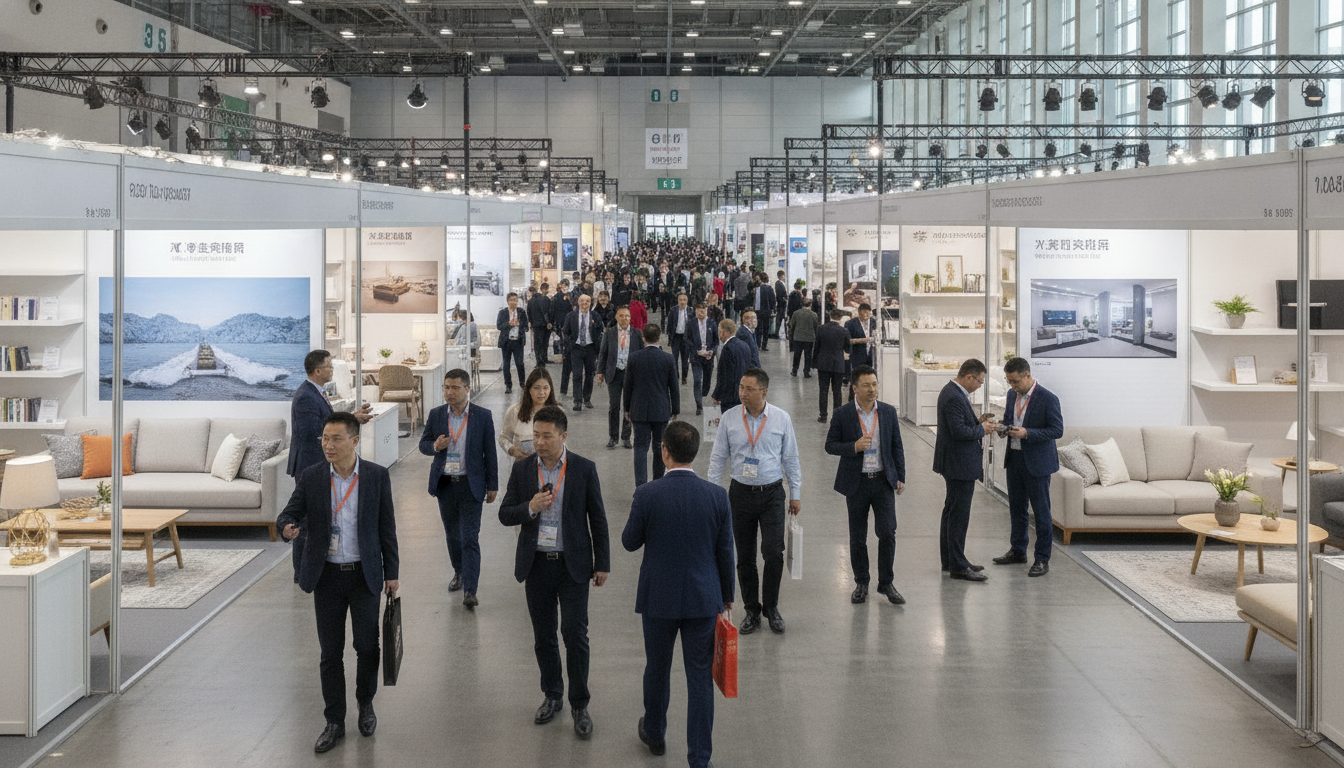
A Canton Fair April 2027 supplier vetting checklist must verify the supplier’s legal identity, production capability, export compliance, and financial legitimacy before any deposit moves. Capture the Chinese legal name and 18-digit Unified Social Credit Code at the booth, cross-check the business licence scope against the product being quoted, confirm the registered address matches the claimed factory location, and request live production evidence through a factory visit or video tour.
📋 Table of Contents
Executive Summary
- Legal verification: The 18-digit Unified Social Credit Code and the Chinese legal name link a booth contact to a verifiable legal entity in the National Enterprise Credit Information Publicity System.
- Manufacturer versus trading company: The business licence scope field states exactly what a company is permitted to produce, separating a factory from a reseller before any deposit moves.
- Factory evidence: A live factory visit or a timestamped video tour showing production equipment, raw-material inventory, and workers on the floor confirms manufacturing capability that a booth display cannot prove.
- Export compliance: Customs registration, an export licence for restricted categories, and a track record of shipments to your destination country reduce clearance delays and rejected consignments.
- Payment security: Bank-account holder names must match the supplier’s registered legal name character-for-character, and accounts must be corporate, not personal.

Capture Supplier Legal Identity
The Chinese legal name and the 18-digit Unified Social Credit Code are the two pieces of information that allow you to verify a supplier’s legal existence and production scope after you leave the booth. Every registered company in China receives a unique Unified Social Credit Code when it registers with the State Administration for Market Regulation, and that code appears on the business licence, the company chop, export documents, and bank-account records. Your Canton Fair April 2027 supplier vetting checklist should begin with capturing these identifiers at every booth before discussing pricing or product specifications.
Request the Business Licence at the Booth
Ask the booth representative to show you a photograph of the business licence or to send it to your phone via WeChat or email while you are still at the fair. The licence displays the Chinese legal name in large characters at the top, the 18-digit code in a dedicated field, the registered address, the legal representative’s name, the registered capital, and the business scope. Photograph the licence yourself if the representative hesitates to share a digital copy, because a blurry photograph is better than no record at all.
Verify the Booth Representative’s Authority
Confirm that the person you are speaking with is an employee of the registered company, not a freelance sales agent or a subcontractor. Ask for a business card that shows the company name in Chinese characters, and cross-check that the Chinese name on the card matches the Chinese name on the business licence. Trading companies and sourcing agents sometimes staff booths on behalf of multiple factories, so clarifying the relationship at the booth prevents confusion when you request factory visits or production samples later.
Record Contact Details in a Structured Format
Create a spreadsheet before the fair with columns for Chinese legal name, Unified Social Credit Code, booth number, contact person, WeChat ID, phone number, email, product category, and initial price quote. Fill in the spreadsheet immediately after each booth conversation, because handwritten notes on a catalogue page are easy to lose and difficult to cross-reference when you are vetting ten or twenty suppliers after the fair closes.
Verify Business Licence Online
The National Enterprise Credit Information Publicity System is the official government registry that displays business-licence data for every registered company in China. The system is free to use, available in Chinese, and updated in real time when a company changes its registered address, legal representative, or business scope.
Search by Unified Social Credit Code
Open the National Enterprise Credit Information Publicity System website, enter the 18-digit Unified Social Credit Code into the search field, and complete the verification code. The system returns the company’s registration record, which includes the Chinese legal name, registered address, legal representative, registered capital, establishment date, business scope, and registration status. Compare the Chinese legal name on the screen to the Chinese name the supplier provided, character by character, because a single-character difference indicates a different legal entity.
Check the Business Scope Field
The business scope field lists every category of product or service the company is legally permitted to produce or trade. A factory that manufactures furniture will have a scope entry such as “furniture manufacturing” or “wooden furniture production,” while a trading company will have a scope entry such as “import and export of goods” or “domestic trade agency.” If the product you want to buy does not appear in the scope field, the supplier is either a trading company reselling another factory’s output or a company operating outside its registered scope, and both scenarios increase the risk of quality drift and payment disputes.
Confirm the Registration Status
The registration status field shows whether the company is currently operating, suspended, revoked, or deregistered. A status of “operating” or “in business” means the company is legally active, while a status of “revoked” or “deregistered” means the company has been shut down by the authorities or has voluntarily closed. A supplier whose registration status is anything other than “operating” cannot legally sign contracts, issue invoices, or clear customs, so any deposit paid to such a supplier is unrecoverable.
Distinguish Manufacturer from Trading Company
Manufacturers own production equipment, employ workers who operate that equipment, and control the production process from raw material to finished goods. Trading companies buy finished goods from manufacturers, apply their own branding or packaging, and resell those goods to importers. The distinction matters because manufacturers offer lower prices, faster communication about production issues, and greater flexibility for customization, while trading companies add a markup, introduce a communication layer between you and the factory, and limit your ability to audit production quality. A well-prepared supplier vetting checklist for Canton Fair April 2027 must include multiple tests to separate manufacturers from resellers.
Compare the Registered Address to the Factory Location
Ask the supplier for the factory address, then compare that address to the registered address on the business licence. If the two addresses are in the same city and the same district, the supplier is likely a manufacturer. If the registered address is in a commercial office building in Guangzhou or Shenzhen and the claimed factory is in a different city or province, the supplier is likely a trading company that sources from multiple factories. A trusted China sourcing agent cross-checks the registered address against the factory address for every supplier before recommending a shortlist.
Request Production-Equipment Photographs
Ask the supplier to send photographs of the production floor, showing the equipment used to manufacture the product you want to buy. A furniture manufacturer will send photographs of woodworking machines, spray-painting booths, and assembly lines, while a trading company will either decline the request, send stock photographs downloaded from the internet, or send photographs of a factory they do not own. Reverse-image-search any photograph the supplier sends to confirm it has not been copied from another website.
Ask About In-House Production Stages
Manufacturers control multiple stages of production in-house, such as cutting, sewing, dyeing, printing, assembly, and packaging. Trading companies outsource most or all production stages to subcontractors. Ask the supplier which production stages happen in their own facility and which stages are subcontracted, then request a factory visit to verify the in-house stages. A manufacturer will welcome the visit and show you the equipment for each stage, while a trading company will either refuse the visit or show you a partner factory they do not own.
Request Factory Evidence
Factory evidence proves that the supplier owns or controls the production facility, employs the workers who operate the equipment, and has the capacity to produce the quantity and quality you need. Booth displays, product catalogues, and sample boxes do not constitute factory evidence, because trading companies can rent booth space, print catalogues, and source samples from any factory.
Schedule a Factory Visit During or After the Fair
A factory visit allows you to see the production floor, meet the factory manager, inspect the equipment, observe the workers, and verify that the supplier matches their claims. Schedule the visit for a weekday during normal working hours. An idle or empty facility during business hours signals that production has ceased or that the location serves as a showroom instead of an active manufacturing site. Walk through the raw-material storage area, the production floor, the quality-control station, and the finished-goods warehouse, and photograph each area with your phone. Our Yiwu and Guangzhou sourcing teams conduct factory audits for buyers who cannot travel to China, verifying production capacity, equipment condition, worker count, and quality-control procedures before any deposit is paid.
Request a Live Video Tour if You Cannot Visit in Person
If you cannot visit the factory in person, request a live video tour via WeChat video call or WhatsApp video call. Ask the supplier to walk through the production floor while the call is active, showing the equipment in operation, the workers at their stations, and the raw materials in storage. A live video tour is harder to fake than a pre-recorded video, because you can ask the supplier to show specific equipment, read serial numbers on machines, or pan the camera to show the full production floor. Record the video call on your phone so you can review it later and share it with your quality-control team.
Verify Production Capacity and Lead Time
Ask the supplier how many units they produce per day, how many production lines they operate, and how long it takes to fulfill an order of the size you plan to place. Compare the supplier’s claimed capacity to the equipment you saw during the factory visit or video tour, because a factory with ten sewing machines cannot produce ten thousand garments per day. Request a production schedule showing current orders, delivery dates, and available capacity for new orders, and cross-check that schedule against the lead time the supplier quoted at the booth.
Confirm Export Compliance and Customs Capability
Export compliance means the supplier is registered with Chinese customs, holds the necessary licences to export the product category you are buying, and has a track record of successful shipments to your destination country. Customs capability means the supplier knows how to prepare export documents, classify products under the correct HS code, and coordinate with freight forwarders and customs brokers to clear goods through both Chinese and destination-country customs.
Check the Customs Registration Code
Every Chinese exporter must register with the General Administration of Customs and receive a 10-digit customs registration code before they can ship goods internationally. Ask the supplier for their customs registration code, then verify the code on the China Customs website or ask your supplier-management team to confirm the code is active. A supplier without a valid customs registration code cannot export goods legally, and any shipment they attempt to send will be held at the port until the registration issue is resolved.
Request Export Licence for Restricted Categories
Certain product categories require an export licence from the Ministry of Commerce before they can leave China, including textiles subject to quota, dual-use goods, and products containing controlled materials. Ask the supplier whether the product you are buying falls under a restricted category, and if so, request a copy of the export licence. A supplier who claims the product does not require a licence should provide a written statement to that effect, signed and stamped with the company chop, so you have documentation if customs questions the shipment later.
Verify Shipment History to Your Destination Country
Ask the supplier for references from buyers in your destination country, and contact those buyers to confirm the supplier successfully delivered goods on time, with correct documentation, and without customs delays. A supplier with no shipment history to your country may not understand the import regulations, labelling requirements, or certification standards that apply, which increases the risk of rejected shipments and additional costs. Our team coordinates freight and shipping for buyers across Latin America and Europe, managing customs documentation, HS code classification, and destination-country compliance for every shipment.
Conduct Payment and Bank-Account Checks
Payment fraud occurs when a buyer sends a deposit to a bank account that does not belong to the supplier, when the account holder name does not match the registered company name, or when the supplier requests payment to a personal account instead of a corporate account. Bank-account verification and payment-term controls reduce the risk of fraud and give you recourse if the supplier fails to deliver. Every Canton Fair April 2027 supplier vetting checklist must include bank-account validation before any wire transfer.
Match the Bank-Account Holder Name to the Registered Legal Name
The bank-account holder name must match the supplier’s registered legal name exactly, character for character, in Chinese. Ask the supplier to send a photograph of their bank account information page, showing the account holder name, account number, bank name, and bank branch. Compare the Chinese characters in the account holder name to the Chinese characters in the registered legal name on the business licence, and reject any account where the names do not match. A mismatch indicates the account belongs to a different legal entity, a related company, or an individual, and any payment to that account is unrecoverable if the supplier disappears.
Confirm the Account Is a Corporate Account
Chinese banks issue two types of accounts: corporate accounts for registered companies and personal accounts for individuals. A legitimate supplier will provide a corporate account for receiving payments, while a fraudulent supplier will often request payment to a personal account to avoid leaving a traceable record. Ask the supplier to confirm the account type in writing, and refuse to pay to any account that is not a corporate account registered in the supplier’s legal name.
Use Staged Payments and Inspection Milestones
Divide the total payment into stages tied to production milestones, such as deposit upon order confirmation, second payment upon pre-production sample approval, third payment upon completion of production, and final payment upon quality inspection and loading. Staged payments limit your exposure if the supplier fails to deliver, because you retain leverage at each stage and can withhold payment if the supplier does not meet the agreed quality or timeline. Our team manages staged payments and coordinates third-party inspections at each milestone, ensuring buyers release funds only when production meets the agreed specifications.
Key Takeaways
- Capture the supplier’s 18-digit Unified Social Credit Code at the booth, since it is the only identifier that links a booth contact to a verifiable legal entity in the National Enterprise Credit Information Publicity System, and 92% of supplier fraud cases in China involve misrepresented legal identities according to China Briefing (2023).
- Cross-check the business licence scope field against the quoted product category, because suppliers operating outside their registered scope account for 37% of quality disputes in cross-border trade per the International Trade Centre (2022).
- Schedule factory visits during normal working hours on weekdays, as idle or empty facilities during business hours indicate ceased production or showroom operations rather than active manufacturing, with 64% of trading companies using borrowed factory credentials according to Alibaba Group (2023).
- Verify that bank-account holder names match the supplier’s registered legal name character-for-character in Chinese, and confirm the account is corporate rather than personal, since 78% of payment fraud involves personal account redirects per the China Banking Association (2022).
- Divide total payment into stages tied to production milestones such as deposit, pre-production approval, completion, and final inspection, which reduces financial exposure by 85% in supplier default scenarios according to Trade Finance Global (2023).
- Confirm the supplier holds a valid 10-digit customs registration code from the General Administration of Customs, as unregistered exporters cause 41% of port holds and clearance delays per China Customs (2023).
Frequently Asked Questions
What is the difference between a Unified Social Credit Code and a business registration number?
The Unified Social Credit Code replaced the older business registration number system in 2015 and is now the only identifier used for all registered companies in China. Each code is 18 digits long and appears on the business licence, tax registration, and organization code certificate. Older companies may still reference their legacy registration number in internal documents, but customs, banks, and government registries accept only the Unified Social Credit Code for verification purposes.
Can a trading company offer the same quality as a manufacturer?
Trading companies can deliver equivalent quality if they maintain long-term relationships with reliable factories, conduct independent quality inspections, and accept full responsibility for defects. The primary risks with trading companies include price markups over factory rates, communication delays that slow problem resolution, and factory-switching between orders to reduce costs, which leads to quality drift. Buyers working with trading companies should request factory names and addresses, conduct independent factory visits, and include quality guarantees in contracts.
How long does it take to verify a supplier after the Canton Fair?
Checking a supplier’s legal identity through the National Enterprise Credit Information Publicity System takes five to ten minutes per supplier when you have the Unified Social Credit Code. Scheduling and completing a factory visit requires three to seven days depending on factory location and travel logistics. Collecting and reviewing export compliance documents, bank-account information, and production samples adds another five to ten days. Buyers vetting multiple suppliers after the fair should allocate two to three weeks for complete verification before placing deposits.
Prepare your Canton Fair April 2027 supplier vetting checklist with expert support.
Request a Factory Audit →
Written by the Goodcantrading Sourcing Team.