Canton Fair April 2027 First Time Buyer Checklist [Complete Guide]
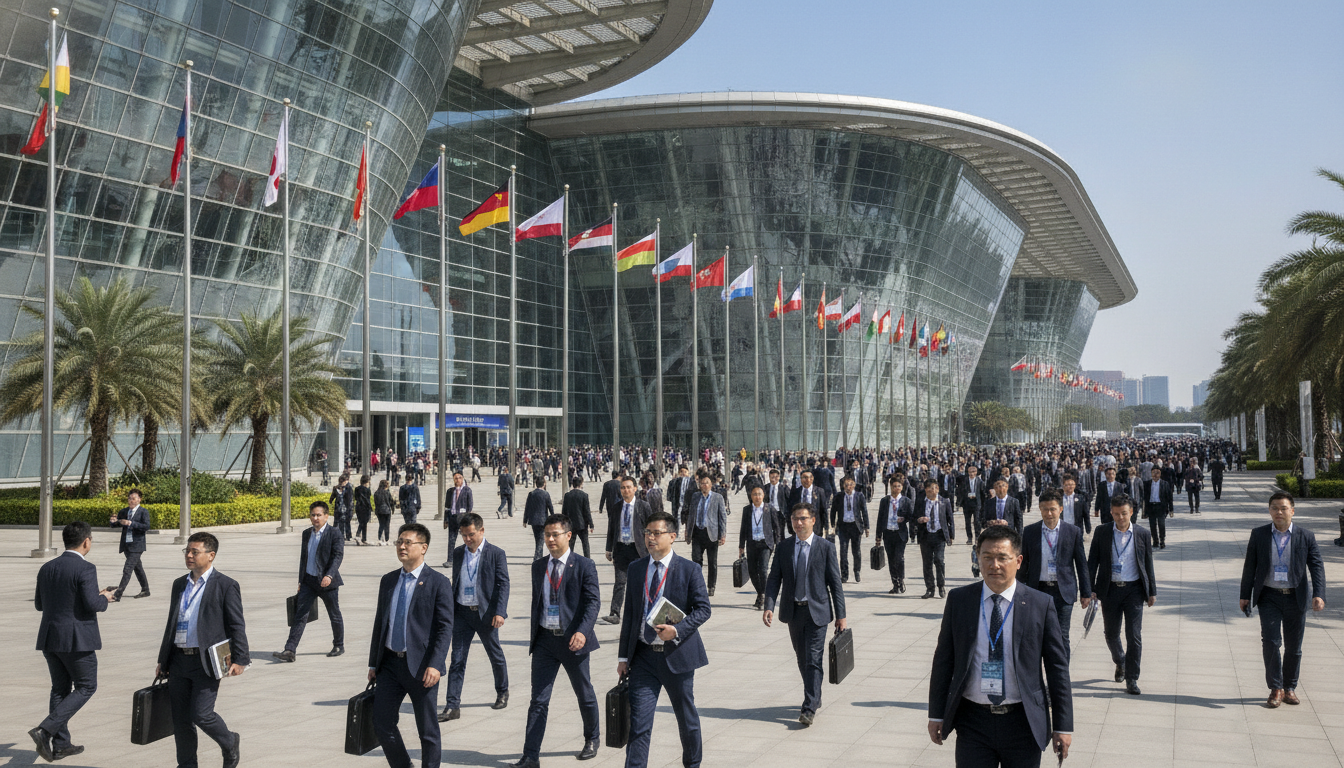
The Canton Fair April 2027 first time buyer checklist covers five critical preparation areas: pre-registration and overseas buyer badge application (starting 60 days before the fair), China visa or visa-free transit arrangements, product category hall planning across the three phases (April 15-19, April 23-27, May 1-5), supplier verification tools including business licence checks and factory audit scheduling, and a post-fair follow-up protocol for samples, quotations, and payment terms. First-time buyers who skip pre-registration face 2-3 hour queues at the venue, and those who arrive without a supplier screening framework often return with unverified trading companies instead of factories.
📋 Table of Contents
- Executive Summary
- How Do You Pre-Register and Get Your Overseas Buyer Badge?
- What Are the China Visa and Entry Requirements for April 2027?
- What Are the April 2027 Dates, Phases, and How Do You Plan Your Hall Route?
- How Do You Verify Suppliers and Distinguish Factories from Trading Companies?
- What Should You Bring to the Canton Fair?
- What Is Your Post-Fair Follow-Up and Execution Plan?
- Key Takeaways
- Frequently Asked Questions
Executive Summary
- Pre-registration opens 60 days before Phase One: Upload passport and company registration to the official buyer service system, receive a QR code, and bypass on-site queues at overseas buyer badge collection.
- Three phases cover distinct product categories: Phase One (April 15-19) covers electronics, machinery, and building materials; Phase Two (April 23-27) covers consumer goods, gifts, and home decoration; Phase Three (May 1-5) covers textiles, garments, and office supplies.
- Business licence scope verification separates factories from traders: A supplier’s business licence lists the exact production scope it is legally permitted to quote on, which is the primary document that distinguishes a manufacturing entity from a trading company reselling factory output.
- Visa-free transit applies to select nationalities: Citizens of certain countries may enter Guangdong province visa-free for up to 144 hours when holding an onward ticket to a third country, but most buyers require a standard China business visa applied for 30-45 days before travel.
- Post-fair sample and quotation follow-up determines order success: Buyers who request detailed quotations including Incoterms, production lead time, payment terms, and carton dimensions within 72 hours of the fair closing secure better pricing and faster sample turnaround than those who delay contact.
How Do You Pre-Register and Get Your Overseas Buyer Badge?
Pre-registration through the official Canton Fair buyer service system opens approximately 60 days before Phase One and closes 7 days before the fair starts. You upload a scanned passport bio page, company business registration certificate, and a business card or company letterhead. The system generates a QR code confirmation receipt that you present at the overseas buyer badge collection counter inside the Pazhou Complex entrance hall. Buyers who complete pre-registration collect their badge in under 10 minutes, while walk-in registrations without pre-approval face queues that extend 2-3 hours during peak morning arrival times.
Required Documents for Pre-Registration
- Passport bio page: Clear colour scan showing full name, passport number, nationality, and expiry date; passport must be valid for at least six months beyond your planned departure date from China.
- Company business registration: Certificate of incorporation, business licence, or tax registration document proving your company is a legally registered commercial entity; sole proprietors submit tax ID or equivalent proof.
- Business card or letterhead: Physical business card photographed clearly, or company letterhead PDF showing your name, title, company name, and contact details; this confirms your role as a buyer rather than a supplier.
QR Code Collection and Badge Pickup
After the system approves your documents (usually within 24-48 hours), you receive a QR code confirmation via email. Save this QR code to your phone and print a backup copy. At the Pazhou Complex, follow signage to the Overseas Buyer Badge Collection counter, scan your QR code, and collect your printed badge. The badge grants access to all three phases and all 16 exhibition halls. Keep the badge visible on a lanyard at all times; security checks the badge at every hall entrance and re-entry point.
What Happens If You Arrive Without Pre-Registration?
Walk-in registration is available at the venue but requires the same documents in physical form. You queue at the on-site registration desk, submit passport, business registration, and business card, wait for manual verification, and receive your badge. During peak days (the first two days of each phase), walk-in queues extend 2-3 hours. Buyers from Mexico, Colombia, Argentina, Chile, and Brazil report longer processing times when business registration documents are in Spanish or Portuguese without an English translation, so carry a notarised English translation or a certified translation if your home-country registration is not in English or Chinese.
What Are the China Visa and Entry Requirements for April 2027?
Most buyers require a China business visa (M visa) applied for at the Chinese embassy or consulate in their home country 30-45 days before travel. The application requires a valid passport, completed visa application form, recent passport photo, confirmed flight and hotel bookings, and an invitation letter from either the Canton Fair organiser or a Chinese supplier. The Canton Fair organiser issues invitation letters to pre-registered buyers upon request through the buyer service system. Processing time is typically 4-7 business days for standard service, or 2-3 business days for expedited service at higher cost.
Visa-Free Transit for Select Nationalities
Citizens of certain countries may enter Guangdong province visa-free for up to 144 hours (6 days) when transiting through Guangzhou Baiyun International Airport with an onward ticket to a third country. This transit policy applies to passport holders from the European Union, the United Kingdom, and several other nations, but does not currently extend to most Latin American countries. Buyers using visa-free transit must enter and exit through the same designated port (Guangzhou airport or Shenzhen airport) and remain within Guangdong province. Verify your nationality’s eligibility on the official China immigration website before relying on this option, as the list changes periodically.
Invitation Letter from Canton Fair Organiser
Pre-registered buyers request an invitation letter through the buyer service system after uploading their documents and receiving QR code confirmation. The system generates a PDF invitation letter addressed to the Chinese embassy in your country, stating your purpose of visit (attending the Canton Fair), your company details, and the fair dates. Print this letter and submit it with your visa application. The invitation letter does not guarantee visa approval, but it is a required supporting document for the M visa application. Buyers who also plan factory visits outside Guangzhou may request a multiple-entry visa and list additional cities (Yiwu, Shenzhen, Foshan) in their visa application itinerary.
What Are the April 2027 Dates, Phases, and How Do You Plan Your Hall Route?
The 141st Canton Fair runs from April 15 to May 5, 2027, split into three five-day phases. Phase One (April 15-19) covers electronics, household electrical appliances, machinery, building materials, and vehicles. Phase Two (April 23-27) covers consumer goods, gifts, home decoration, and outdoor products. Phase Three (May 1-5) covers textiles, garments, shoes, office supplies, and bags. Each phase operates in different exhibition halls within the Pazhou Complex, and your overseas buyer badge grants access to all phases. First-time buyers preparing their Canton Fair April 2027 first time buyer checklist should plan which phase matches their product category and allocate 2-3 full days per phase to cover the relevant halls thoroughly.
How to Plan Your Hall Route
Download the official Canton Fair floor plan PDF from the buyer service system after pre-registration. The floor plan shows booth numbers, product subcategories, and hall layouts. Identify the 3-5 product subcategories most relevant to your sourcing needs and highlight the corresponding hall sections on your printed floor plan. Allocate one full day per major hall (Halls 9.1 through 16.1 in Phase Three are the largest and require the most time). Start each day at the hall entrance closest to your hotel or metro station, walk one direction systematically (left to right or front to back), and mark visited booths on your floor plan to avoid backtracking.
Peak Hours and Crowd Management
The fair opens at 9:00 AM and closes at 6:00 PM daily. Peak crowd hours are 10:00 AM to 12:00 PM and 2:00 PM to 4:00 PM. Arrive at 9:00 AM to cover high-priority booths before crowds build, or arrive at 4:30 PM for quieter browsing and longer one-on-one supplier conversations. Lunch breaks (12:00 PM to 1:30 PM) see reduced booth staffing, so use this window for note-taking, photo review, and planning your afternoon route rather than attempting detailed supplier discussions.
How Do You Verify Suppliers and Distinguish Factories from Trading Companies?
The single most common sourcing mistake first-time Canton Fair buyers make is collecting business cards from trading companies that present themselves as factories. A trading company sources from a factory, adds a markup, and resells to you. The factory is the entity that controls production quality, lead time, and customization capability. Verification starts at the booth: ask for the supplier’s business licence, check the registered business scope, and request the factory address. A genuine factory’s business licence lists manufacturing or production in its scope; a trading company’s licence lists trade, import-export, or consulting.
Business Licence Scope Check
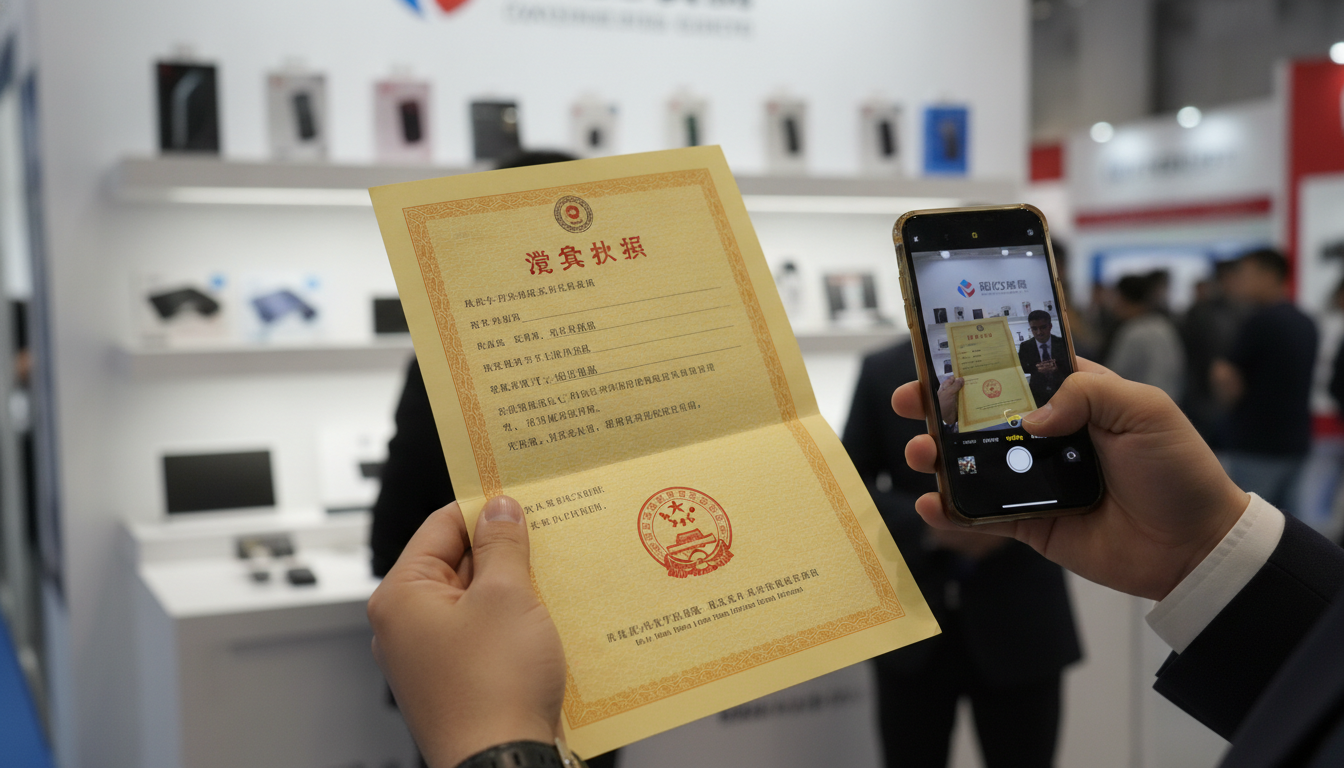
- Request the business licence at the booth: Ask the booth representative to show you their company’s business licence (营业执照). Legitimate suppliers carry a printed copy or display it at the booth. Photograph the licence with your phone.
- Check the registered business scope: The licence lists the company’s permitted business activities in Chinese. Look for keywords like 生产 (production), 制造 (manufacturing), or 加工 (processing). If the scope only lists 贸易 (trade), 进出口 (import-export), or 咨询 (consulting), the company is a trading company, not a factory.
- Verify the registered address: The business licence shows the company’s registered address. Cross-check this address against the factory address the supplier provides. If the registered address is a commercial office building in downtown Guangzhou and the claimed factory is in Foshan or Dongguan, request additional proof of factory ownership or a lease agreement.
Factory Audit Scheduling
Schedule factory visits for the day after the fair phase closes or during the gap between phases. Reputable factories welcome buyer visits and provide their full address, contact person, and directions. Trading companies either refuse factory visits or arrange a visit to a partner factory they do not own. Our Guangzhou sourcing desk coordinates factory audits that verify production equipment, worker count, quality control processes, and export history. A factory audit covers business licence verification, production line inspection, raw material storage check, finished goods warehouse review, and export documentation sampling.
Questions to Ask at the Booth
- Are you the factory or a trading company? Direct question; note the response and cross-check against the business licence scope.
- What is your factory address and can I visit? A factory provides a specific street address and welcomes visits; a trading company gives vague answers or claims the factory is too far or not open to visitors.
- How many production lines do you operate? A factory states a specific number (e.g., three injection moulding lines, five sewing lines); a trading company gives generic answers or defers the question.
- What is your monthly production capacity for this product? A factory quotes capacity in units per month (e.g., 50,000 units per month); a trading company often cannot answer or provides an unrealistic range.
- Do you handle OEM or ODM orders? Factories with design and mould-making capability confirm ODM capability and show previous custom projects; trading companies typically handle OEM only and source designs from buyers.
What Should You Bring to the Canton Fair?
Your Canton Fair April 2027 first time buyer checklist packing list covers documentation, business materials, technology, comfort items, and sourcing tools. First-time buyers who arrive without product specification sheets or a clear MOQ range waste time collecting generic quotations that cannot be compared. Bring printed product briefs, sample photos, target price ranges, and a structured supplier evaluation form to standardise the information you collect from each booth.
Documentation and Business Materials
- Passport and visa: Carry your passport at all times; hotels, SIM card vendors, and some suppliers require passport presentation for registration or invoicing.
- Printed QR code confirmation: Backup copy of your pre-registration QR code in case your phone battery dies or the email is inaccessible.
- Business cards: Bring 200-300 business cards printed in English and Chinese; suppliers exchange cards at every booth visit, and running out of cards limits your networking capacity.
- Product specification sheets: One-page PDF or printed sheet per product category showing target specs, materials, dimensions, packaging requirements, and acceptable quality standards; this ensures every supplier quotes on the same specification.
- Company introduction: One-page company profile in English and Chinese stating your business type (importer, wholesaler, Amazon seller), primary markets, and annual import volume; this establishes credibility and helps suppliers assess your order potential.
Technology and Connectivity
- Unlocked smartphone: Purchase a China SIM card at Guangzhou Baiyun Airport arrivals hall (China Mobile or China Unicom, 7-day data plans available) to access WeChat, Alipay, and Google services via VPN.
- Portable power bank: 10,000-20,000 mAh capacity; you will use your phone continuously for photos, WeChat contact exchange, translation apps, and note-taking, draining the battery by midday.
- VPN app installed before arrival: Google, WhatsApp, and many Western websites are blocked in China; install a reliable VPN app (ExpressVPN, NordVPN, or Astrill) on your phone and laptop before departure, as VPN websites are also blocked inside China.
- Translation app: Google Translate (via VPN) or Pleco offline dictionary; many booth staff speak limited English, and translating product names, materials, and technical terms in real time speeds up communication.
- WeChat installed and registered: WeChat is the primary business communication tool in China; suppliers exchange WeChat contacts at the booth and send quotations, factory photos, and sample updates via WeChat rather than email.
Comfort and Practical Items
- Comfortable walking shoes: You will walk 15,000-25,000 steps per day across concrete floors; wear cushioned walking shoes or running shoes, not dress shoes.
- Lightweight backpack or shoulder bag: Carry water, snacks, power bank, notebook, and collected catalogues; avoid wheeled luggage, as the exhibition halls have stairs and crowded aisles.
- Reusable water bottle: Water fountains and vending machines are available in the halls, but queues form during peak hours; carry your own water to stay hydrated.
- Notebook and pen: Take handwritten notes at each booth (supplier name, booth number, product details, quoted MOQ and price, follow-up action); phone notes are slower and drain battery.
- Small calculator: Convert quoted RMB prices to your home currency on the spot; this helps you compare pricing across booths in real time without relying on phone apps.
What Is Your Post-Fair Follow-Up and Execution Plan?
Your post-fair execution plan covers quotation requests, sample ordering, factory audits, payment term negotiation, and purchase contract review. Buyers who delay follow-up lose negotiating leverage, as suppliers prioritise buyers who request quotations and samples within 72 hours of the fair closing. Working with a trusted China sourcing agent based in Yiwu or Guangzhou streamlines supplier verification, price negotiation, quality inspections, and shipping documentation management.
Quotation Request Within 72 Hours
Send a detailed quotation request via WeChat or email to your shortlisted suppliers within 72 hours of collecting their contact. The request should specify product name and model number, target order quantity (MOQ and first-order volume), required Incoterms (FOB, CIF, or DDP), packaging requirements (neutral packaging, custom branding, or retail-ready), payment terms you can accept (T/T deposit and balance, L/C, or open account), required certifications (CE, FCC, RoHS, or country-specific), and requested delivery timeline. Suppliers respond faster and with more accurate pricing when your request is specific rather than a generic “please send me your best price” message.
Sample Ordering and Testing
- Request samples from 3-5 suppliers per product: Order samples from multiple suppliers to compare quality, packaging, and actual specifications against the booth claims.
- Clarify sample cost and shipping: Most suppliers charge for samples (typically 2-3 times the unit price) and shipping (DHL or FedEx, 3-5 days to Latin America or Europe); confirm total cost before ordering.
- Test samples against your specifications: Measure dimensions, test functionality, check material quality, and compare against the product brief you provided; document any deviations.
- Request lab testing for regulated products: Products requiring CE, FCC, or country-specific certifications should be lab-tested before placing bulk orders; our quality control team coordinates third-party lab testing in Guangzhou and Shenzhen.
Factory Audit Before Deposit Payment
Schedule a factory audit before paying any deposit. The audit verifies the supplier is a genuine factory, confirms production capacity matches the quoted lead time, checks quality control processes, and reviews export documentation. Our Guangzhou sourcing desk conducts on-site factory audits covering business licence verification, production equipment inspection, worker count and shift patterns, raw material supplier list, finished goods warehouse capacity, and export history review. A factory audit report includes photos, capacity assessment, and a risk rating that informs your supplier selection decision.
Payment Terms and Purchase Contract
Negotiate payment terms that balance supplier risk and buyer protection. Standard terms for first-time orders are 30% T/T deposit and 70% balance before shipment. Buyers with established trading history may negotiate 90-120 day open account terms, subject to order value and credit assessment. The purchase contract should specify product specifications, order quantity, unit price and total value, Incoterms, packaging and labelling requirements, quality standards and inspection protocol, production lead time and shipment deadline, payment terms and currency, and dispute resolution mechanism. Our supplier management service reviews purchase contracts and flags unfavourable clauses before you sign.
Quality Inspection and Shipping Coordination
Schedule a pre-shipment inspection when production reaches 80% completion. The inspection checks product specifications, functionality, packaging, labelling, and carton marking against the purchase contract. Inspection reports include detailed photos, measurement data, defect counts, and a pass/fail recommendation. Buyers who skip pre-shipment inspection discover quality issues only after the container arrives, when rework or returns are prohibitively expensive. Our Yiwu and Guangzhou teams coordinate quality inspections, arrange warehouse consolidation for multi-supplier orders, and manage freight and shipping to Latin America and Europe.
Key Takeaways
- Pre-register for the Canton Fair 60 days in advance by uploading passport and business registration documents to the official buyer service system, receiving a QR code that bypasses on-site queues and grants direct badge collection at the Pazhou Complex entrance hall.
- Canton Fair Phase One (April 15-19, 2027) covers electronics and machinery, Phase Two (April 23-27) covers consumer goods and home decoration, Phase Three (May 1-5) covers textiles and garments; download the official floor plan and allocate 2-3 full days per relevant phase.
- Request a supplier’s business licence at their Canton Fair booth to verify manufacturing scope: production or manufacturing keywords indicate a factory, while trade or import-export keywords indicate a trading company reselling factory output.
- Bring 200-300 bilingual business cards, printed product specification sheets for every target category, a portable power bank (10,000-20,000 mAh), and a structured supplier evaluation form to standardise quotation data collection across booths.
- Send detailed quotation requests to shortlisted suppliers within 72 hours of fair closing, and schedule an on-site factory audit before paying your deposit to verify production capacity, quality control processes, and export history.
- Coordinate pre-shipment inspection when production reaches 80% completion to catch quality issues before your shipment departs, and work with a Guangzhou or Yiwu-based agent to manage supplier communication, inspection scheduling, and freight coordination.
Frequently Asked Questions
Can I attend all three phases of the Canton Fair with one overseas buyer badge?
Yes, your overseas buyer badge grants access to all three phases (April 15-19, April 23-27, May 1-5, 2027) and all 16 exhibition halls. You do not need to register separately for each phase. Keep your badge visible on a lanyard at all times, as security checks the badge at every hall entrance and re-entry point. If you lose your badge during the fair, return to the overseas buyer badge collection counter with your passport and QR code confirmation to request a replacement.
How do I pay suppliers at the Canton Fair, and should I pay deposits on-site?
Do not pay deposits or place orders on-site at the Canton Fair. Collect supplier contact details, product catalogues, and initial quotations at the booth, then follow up after the event with detailed quotation requests, sample orders, and factory audits. Legitimate suppliers do not pressure buyers to pay deposits at the booth. If a supplier insists on immediate payment or offers a steep discount for on-site payment, treat it as a red flag. Payment for bulk orders should occur only after you verify the supplier’s factory status, review the purchase contract, and confirm production capacity through a factory audit.
What is the difference between FOB, CIF, and DDP pricing, and which should I request?
FOB (Free On Board) pricing covers the product cost and delivery to the departure port in China; you arrange and pay for ocean freight, insurance, and import customs clearance. CIF (Cost, Insurance, Freight) pricing includes the product cost, ocean freight to your destination port, and marine insurance; you arrange and pay for import customs clearance and inland transport. DDP (Delivered Duty Paid) pricing covers everything including import duties, customs clearance, and delivery to your warehouse. First-time buyers often request CIF pricing for transparency, then arrange customs clearance through a local customs broker. Experienced buyers request FOB pricing and negotiate freight separately to control shipping costs and timelines.
Written by the Goodcantrading Sourcing Team.
Prepare for the Canton Fair April 2027 with expert supplier verification, factory audits, and post-fair execution support.
Request Your Sourcing Plan →