What Is Minimum Order Value for Alibaba Suppliers [2026 Guide]
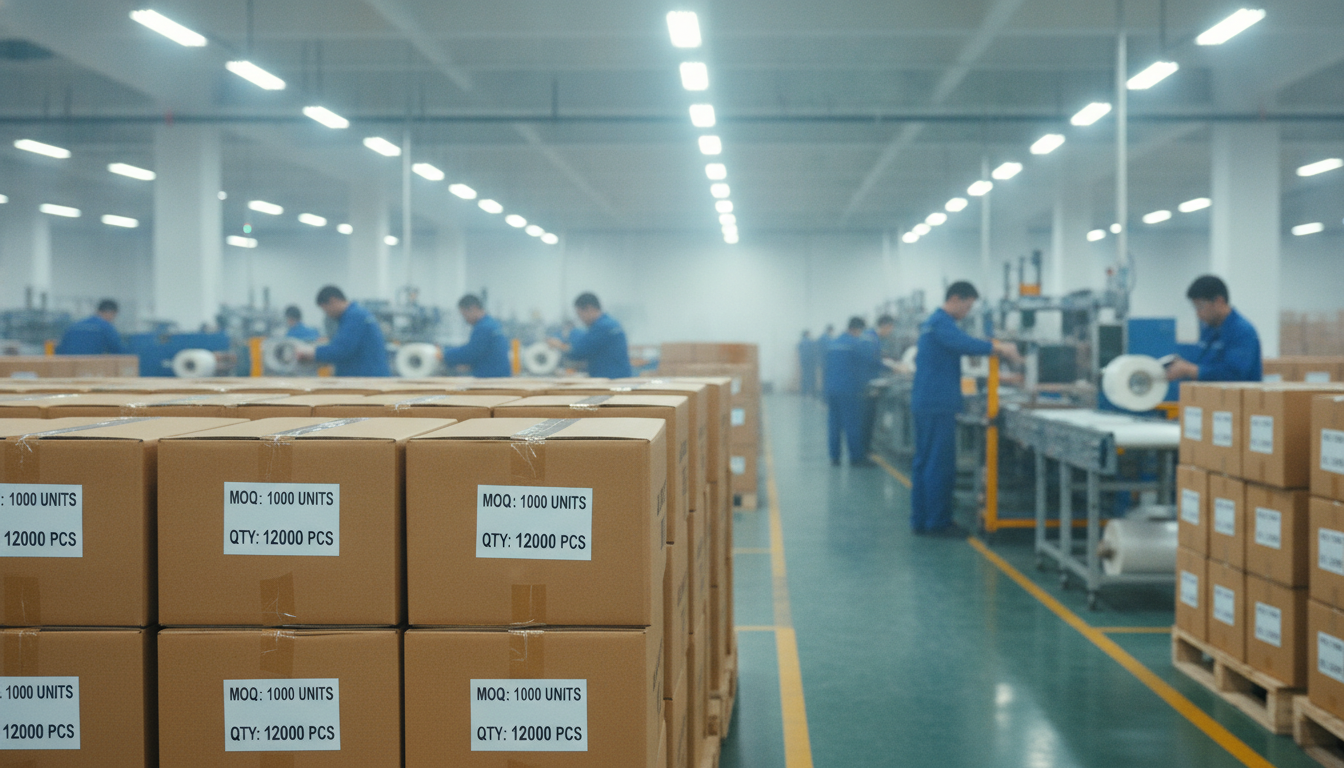
Alibaba does not impose a universal minimum order value across its platform. Understanding what is minimum order value for Alibaba suppliers requires recognizing that individual suppliers set their own minimum order quantities (MOQs) expressed in units, cartons, or pieces rather than a fixed dollar amount. Ready-to-Ship products may have MOQs from 1 to 50 units, while customized goods commonly range from 50 to 500 units per Alibaba.com (2026). The total order value depends on the unit price multiplied by the MOQ, plus freight, duties, VAT, and payment fees that vary by destination country.
📋 Table of Contents
- Executive Summary
- What Is the Difference Between MOQ and Minimum Order Value?
- What Are Typical MOQ Ranges by Product Type?
- How Do You Calculate Total Landed Cost for Your Market?
- Can You Negotiate MOQ with Alibaba Suppliers?
- What Budget Should You Prepare for Different Order Types?
- Key Takeaways
- Frequently Asked Questions
Executive Summary
- No platform-wide threshold: Alibaba does not enforce a universal minimum order value; each supplier sets unit-based MOQs that vary by product category, customization level, and factory capacity.
- Ready-to-Ship vs. custom manufacturing: Ready-to-Ship listings can offer minimums as low as 1-5 pieces for small retailers, while custom manufacturing typically requires 50 to 500 units or more per Alibaba.com (2026).
- Landed cost calculation: Total budget must include unit price, international freight, import duties, VAT, customs brokerage, and payment processing fees, which differ significantly across Mexico, Brazil, Argentina, Chile, and EU markets.
- Negotiation leverage: Suppliers often reduce MOQ in exchange for a higher unit price, advance payment, or removal of customization options, making the advertised wholesale price conditional on meeting the full MOQ.
- Verification before commitment: Direct negotiation reveals the real acceptable quantity, as advertised MOQs may not reflect the actual supplier requirement or wholesale price threshold.
What Is the Difference Between MOQ and Minimum Order Value?
Minimum order quantity (MOQ) specifies the smallest number of units a supplier will produce or ship in a single transaction, expressed as pieces, cartons, cases, or sets. Minimum order value, by contrast, is a dollar-denominated threshold that some suppliers impose at the transaction level. According to Alibaba.com (2026), $150 is an example of a transaction-level order minimum, distinguishing it from a unit-based MOQ. Buyers commonly confuse the two, which can cause unexpected capital requirements at checkout or during supplier negotiations.
Unit-Based MOQ
A supplier listing a product with an MOQ of 100 pieces requires you to purchase at least 100 units in one order. If the unit price is $8.50, the product subtotal is $850 before freight and duties. The supplier does not accept orders for 50 or 75 units at that price tier. This structure protects factory setup costs and ensures production efficiency for batch manufacturing.
Dollar-Value Minimum
Some suppliers impose a minimum order value regardless of unit count. A factory might require a $500 minimum order value, allowing you to mix multiple SKUs as long as the combined subtotal exceeds $500. This approach suits trading companies and wholesalers who stock diverse product lines and prefer flexible assortment orders over single-SKU bulk purchases.
Opening Order vs. Reorder Minimum
First-time buyers often face higher MOQs than returning customers. A supplier may require 500 units for an opening order to offset sample development and tooling costs, then reduce the reorder minimum to 200 units once the buyer has demonstrated consistent demand. Our supplier management team verifies these tiered thresholds during initial RFQ negotiations to prevent misunderstandings at the payment stage.
What Are Typical MOQ Ranges by Product Type?
MOQ requirements vary widely across product categories, customization levels, and supplier types. Understanding these ranges helps you budget accurately and select suppliers whose minimums align with your cash flow and inventory capacity. A China-sourcing guide (Branvas, 2026) identifies typical custom-manufacturing MOQs of 50 to more than 1,000 units, depending on product category and factory.
Ready-to-Ship and Stock Items
Suppliers who maintain finished-goods inventory can fulfill orders as small as 1 to 5 units. These listings appear under Alibaba’s Ready-to-Ship filter and suit small retailers testing new products or Amazon FBA sellers launching a pilot SKU. Unit prices are higher than custom-manufacturing quotes because the supplier absorbs inventory holding costs and cannot amortize setup expenses across a large batch.
Private-Label and Light Customization
Adding your logo, changing packaging, or selecting custom colorways typically raises the MOQ to 50-200 units. According to UnionCargo (2026), standard products may have an MOQ of 10 units, while customized shapes can reach 1,000 units. Factories incur tooling, screen-printing setup, and sample-approval cycles that become economical only at moderate volumes. Our customized service desk negotiates these thresholds by bundling multiple SKUs under one production run, reducing per-item setup costs.
Full Custom Manufacturing and OEM
Original equipment manufacturing (OEM) orders with proprietary molds, custom formulations, or unique component specifications commonly require 500 to 2,000 units. A furniture supplier producing a custom-designed chair may set a 1,000-unit MOQ to justify mold fabrication and prototype iteration. Alibaba product listings may show MOQs from 10 to 1,000 units (AI Store Generator, 2026), but direct RFQ discussions often reveal higher practical minimums once technical drawings and material specifications are finalized.
How Do You Calculate Total Landed Cost for Your Market?
What is minimum order value for Alibaba suppliers becomes a meaningful question only when you calculate the total landed cost in your destination country. The unit price quoted on Alibaba is an FOB price (free on board) or EXW (ex-works) figure that excludes international freight, import duties, VAT, customs brokerage, and payment processing fees. These additional costs can add 30-60% to the FOB subtotal, varying significantly across Mexico, Brazil, Argentina, Chile, and EU markets.
Freight and Logistics
Ocean freight from China to Mexico’s Pacific ports (Manzanillo, Lázaro Cárdenas) takes 18-25 days and costs approximately $800-$1,200 per cubic meter for LCL (less than container load) shipments. Air freight to Mexico City reduces transit to 5-7 days but costs $4.50-$6.50 per kilogram. Our freight and shipping team consolidates multiple buyers’ orders in our Yiwu warehouse to achieve full-container-load (FCL) rates, reducing per-unit freight cost by 40-55% compared to individual LCL bookings.
Import Duties and VAT by Country
Mexico applies a general import duty of 0-20% depending on HS code classification, plus 16% IVA (value-added tax) calculated on the CIF (cost, insurance, freight) value. Brazil imposes one of the highest duty burdens globally, with import tax (II) ranging from 10-35%, plus IPI (industrialized products tax) of 0-15%, PIS/COFINS federal taxes totaling 11.75%, and ICMS state tax of 17-18%. Argentina requires prior import licenses (SIRA) and applies duties of 0-35% plus 21% IVA. Chile maintains a flat 6% duty on most goods plus 19% IVA. EU member states apply a common external tariff of 0-12% on most consumer goods plus country-specific VAT rates (Spain 21%, France 20%, Germany 19%).
Customs Brokerage and Compliance
Customs clearance in Mexico requires an RFC tax ID, a pedimento (customs declaration), and a licensed customs broker (agente aduanal). Brokerage fees range from $150-$400 per shipment depending on HS code complexity and document volume. Brazil’s Siscomex electronic clearance system requires a RADAR import license and incurs brokerage fees of $200-$600 per shipment. EU customs clearance is relatively streamlined, with brokerage fees of €80-€200 per shipment, but EORI registration and VAT deferment arrangements vary by member state.
Can You Negotiate MOQ with Alibaba Suppliers?
MOQ is often negotiable through direct messaging, usually in exchange for a higher unit price, advance payment, or fewer customization options. Understanding what is minimum order value for Alibaba suppliers helps buyers recognize that advertised wholesale prices typically apply only when meeting the full MOQ. Understanding the factory’s cost structure and production constraints helps you propose a realistic compromise that protects both parties’ margins.
Offering a Higher Unit Price
A supplier quoting $12.00 per unit at 500-piece MOQ may accept 200 pieces at $14.50 per unit. The factory recovers its fixed setup costs through the higher margin rather than volume. This approach works best for private-label orders where tooling and screen-printing setup represent significant one-time expenses. Request a tiered pricing table showing unit cost at 100, 200, 500, and 1,000 pieces to identify the break-even threshold.
Advance Payment and Production Scheduling
Factories prioritize orders with 50-100% advance payment because cash flow certainty reduces working-capital risk. A supplier may reduce MOQ from 1,000 to 500 units if you pay the full order value upfront, allowing the factory to purchase raw materials and schedule production without credit exposure. Our team structures these arrangements with milestone-based Trade Assurance escrow to protect buyer funds while meeting the supplier’s cash-flow requirements.
Removing Customization to Lower MOQ
Accepting the factory’s standard colorway, packaging, or component specification eliminates tooling and sample-approval cycles, reducing MOQ by 40-60%. A furniture supplier requiring 1,000 units for a custom-upholstered chair may accept 300 units if you select from their existing fabric library. This trade-off suits buyers testing market demand before committing to full custom development.
What Budget Should You Prepare for Different Order Types?
Total budget requirements depend on product category, customization level, destination market, and payment terms. When evaluating what is minimum order value for Alibaba suppliers, buyers must account for all landed-cost components. According to Alibaba.com (2026), sample orders for custom sourcing commonly cost $50-$200 per sample including shipping. A Ready-to-Ship trial order of 10-20 units may require $300-$800 landed cost, while a private-label opening order of 200-500 units typically demands $3,000-$12,000 including freight, duties, and brokerage.
Sample and Prototype Budget
Pre-production samples cost $50-$200 per unit including DHL or FedEx express shipping to your destination. Complex products requiring mold fabrication or custom formulation may incur $300-$800 per prototype. Suppliers typically deduct sample costs from the bulk order payment once you confirm production, but this refund applies only if the bulk order meets the agreed MOQ. Budget for 2-3 sample rounds to account for specification adjustments and quality iterations.
Ready-to-Ship Trial Order
A 10-unit Ready-to-Ship order at $25 per unit costs $250 FOB, plus approximately $120-$180 for air freight to Mexico City, $40-$80 for customs clearance, and $50-$70 for import duties and IVA. Total landed cost reaches $460-$580, or $46-$58 per unit. This budget tier suits Amazon FBA sellers testing a new ASIN or small retailers validating customer demand before committing to bulk inventory.
Private-Label Opening Order
A 200-unit private-label order at $18 per unit costs $3,600 FOB. Ocean freight LCL to Manzanillo adds $600-$900, customs brokerage $200-$300, and Mexico import duties plus IVA approximately $800-$1,100. Total landed cost reaches $5,200-$5,900, or $26-$29.50 per unit. Our trusted China sourcing agent service consolidates your order with other buyers’ shipments to reduce per-unit freight cost and provides pre-shipment QC inspection to prevent bulk defects.
Full Custom Manufacturing Order
A 1,000-unit OEM order with custom molds at $22 per unit costs $22,000 FOB, plus $2,800-$3,500 for 40-foot container ocean freight, $400-$600 for customs brokerage, and $4,200-$5,800 for duties and VAT. Total landed cost reaches $29,400-$31,900, or $29.40-$31.90 per unit. Factories typically require a 30% deposit to begin mold fabrication, 40% upon pre-production sample approval, and 30% before shipment. Qualifying buyers may access 90-120 day open account terms, with conditions agreed per order.
Key Takeaways
- Does Alibaba enforce a universal minimum order value? No. Alibaba does not impose a platform-wide minimum order value; each of the 200,000+ suppliers sets unit-based MOQs per Alibaba.com (2026) that vary by product type, customization level, and factory production capacity.
- How do Ready-to-Ship MOQs differ from custom manufacturing? Stock items support MOQs as low as 1-5 units, while custom manufacturing typically requires 50-500 units per Alibaba.com (2026), though unit prices are higher for Ready-to-Ship because suppliers absorb inventory holding costs.
- What percentage do freight and duties add to FOB pricing? International freight, import duties, VAT, and customs brokerage together add 30-60% to the quoted FOB unit price depending on destination country, with Brazil incurring the highest burden at up to 60% per Branvas (2026).
- Can suppliers reduce MOQ below advertised minimums? Yes. Suppliers often reduce MOQ by 40-60% per UnionCargo (2026) in exchange for a higher unit price of 15-25%, full advance payment, or removal of customization options that eliminate tooling costs.
- What happens when a supplier lists a 10-unit MOQ? A supplier listing 10-unit MOQ may require 100 units at the quoted wholesale price, making direct negotiation essential to discover the real acceptable quantity and applicable pricing tier before paying deposits.
- How do you verify a supplier’s production scope? Check the supplier’s business licence, which states the exact production scope it is legally allowed to manufacture, separating real factories from trading companies reselling output and helping buyers avoid deposit losses on unverifiable suppliers per Alibaba.com (2026) verification guidelines.
Frequently Asked Questions
Can I buy just one item from Alibaba to test quality?
Ready-to-Ship listings and some dropshipping-oriented suppliers support single-unit orders, though the unit price is significantly higher than bulk wholesale rates. For custom manufacturing, suppliers typically require you to purchase a pre-production sample at $50-$200 including shipping before committing to the bulk MOQ. Samples allow you to verify material quality, construction, and finish before placing a larger order. Request detailed photos and a specification sheet alongside the physical sample to document the agreed quality standard.
How much money do I need to start importing from Alibaba?
A realistic starting budget depends on product category and order type. Sample orders cost $150-$600 including shipping. Ready-to-Ship trial orders of 10-20 units require $460-$1,200 landed cost in Mexico. Private-label opening orders of 200-500 units typically demand $5,200-$14,800 including freight, duties, and customs clearance. Budget an additional 15-20% contingency for currency fluctuations, unexpected customs inspections, or quality issues requiring rework. Consolidating shipments through a sourcing agent reduces per-unit freight cost by 40-55% compared to individual LCL bookings.
What payment terms do Alibaba suppliers accept for small orders?
Most suppliers require 30% deposit and 70% balance before shipment for opening orders below $10,000. Trade Assurance escrow protects deposits by releasing funds to suppliers only after you confirm shipment or product quality. Suppliers may offer 50-100% advance payment terms in exchange for a reduced MOQ or faster production scheduling. Qualifying buyers with established trading history may access 90-120 day open account settlement terms, with conditions agreed per order. Payment methods include wire transfer (T/T), PayPal for amounts under $3,000, and letter of credit (L/C) for orders above $50,000.
Ready to calculate your exact landed cost and negotiate supplier MOQs with confidence?
Request a Free Supplier Audit →
Written by the Goodcantrading Sourcing Team.