China Furniture Market: 2026 Buyer’s Guide to Foshan & Lecong
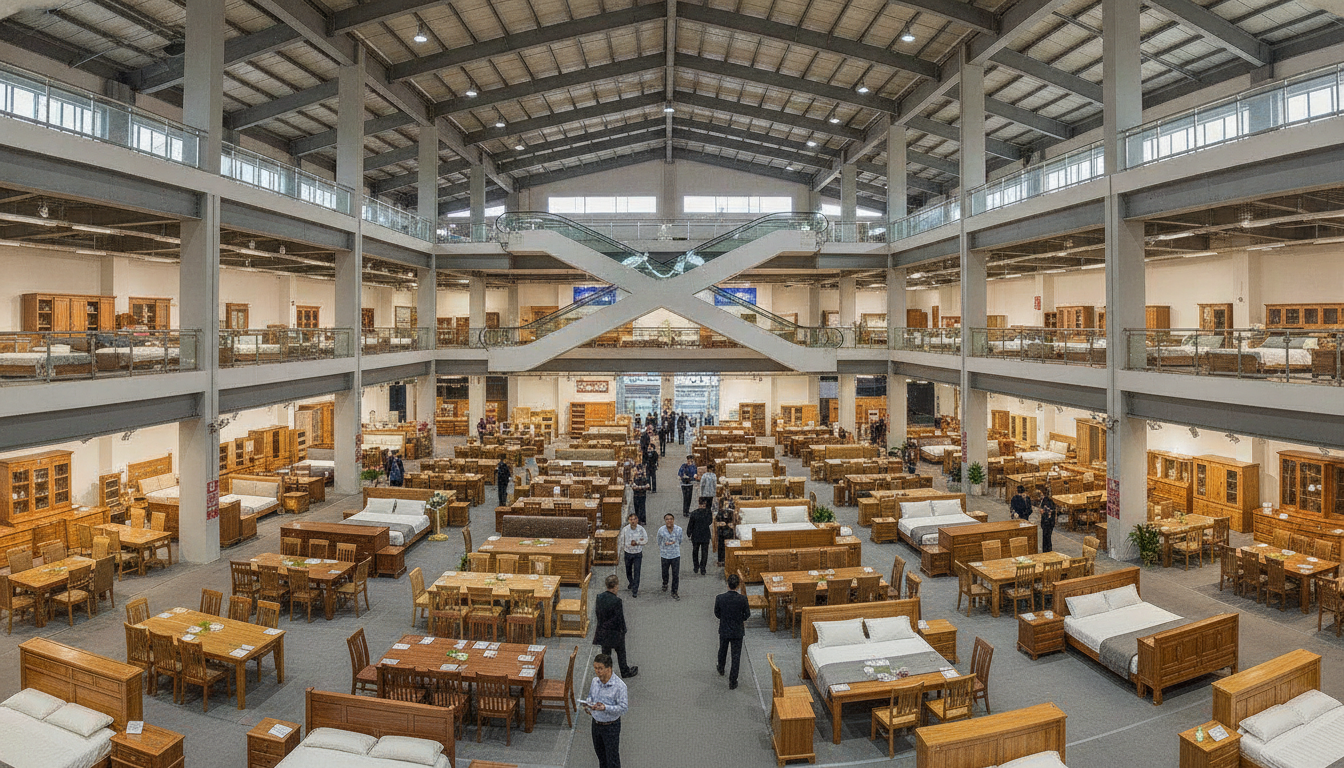
The china furniture market is concentrated in Foshan, Guangdong, where the Lecong furniture district spans ten miles of showroom malls, wholesale halls, and factory outlets. Buyers source finished furniture from Lecong’s Louvre International, Sunlink North, and Red Star Macalline centers, while Longjiang specializes in made-to-order upholstery and hotel FF&E packages. Export-ready suppliers operate across both zones, though showroom displays often represent factories located elsewhere in the cluster.
📋 Table of Contents
- Executive Summary
- Which Foshan district matches your order type?
- How do Lecong showroom malls differ by price tier?
- When should you buy from Longjiang instead of Lecong?
- What verification steps separate showrooms from real factories?
- How do you calculate landed cost for your destination?
- What export logistics support do you need?
- Key Takeaways
- Frequently Asked Questions
Executive Summary
- Primary sourcing hub: Foshan Lecong hosts over 3,000 furniture showrooms across Louvre, Sunlink North, Sunlink South, Red Star Macalline, Empire, and Dongheng centers, each serving different price and quality tiers.
- Order-type segmentation: Lecong suits finished-furniture comparison and container-load orders, while Longjiang handles custom upholstery, hotel packages, and made-to-order manufacturing with lower display density but direct factory access.
- Showroom versus factory: Many Lecong displays are sales fronts for factories located elsewhere in the Shunde and Nanhai districts, requiring business-licence verification and factory-audit visits to confirm production capacity and ownership.
- Export execution gap: Large furniture malls primarily serve domestic buyers, meaning overseas customers face challenges with export packing, fumigation, documentation, and international freight unless working with an export-experienced intermediary.
- Landed-cost variables: FOB prices in Lecong represent only the starting point; actual buyer cost includes container loading, port fees, ocean freight, destination customs duties, VAT, fumigation, and final-mile delivery to warehouse.
Which Foshan district matches your order type?
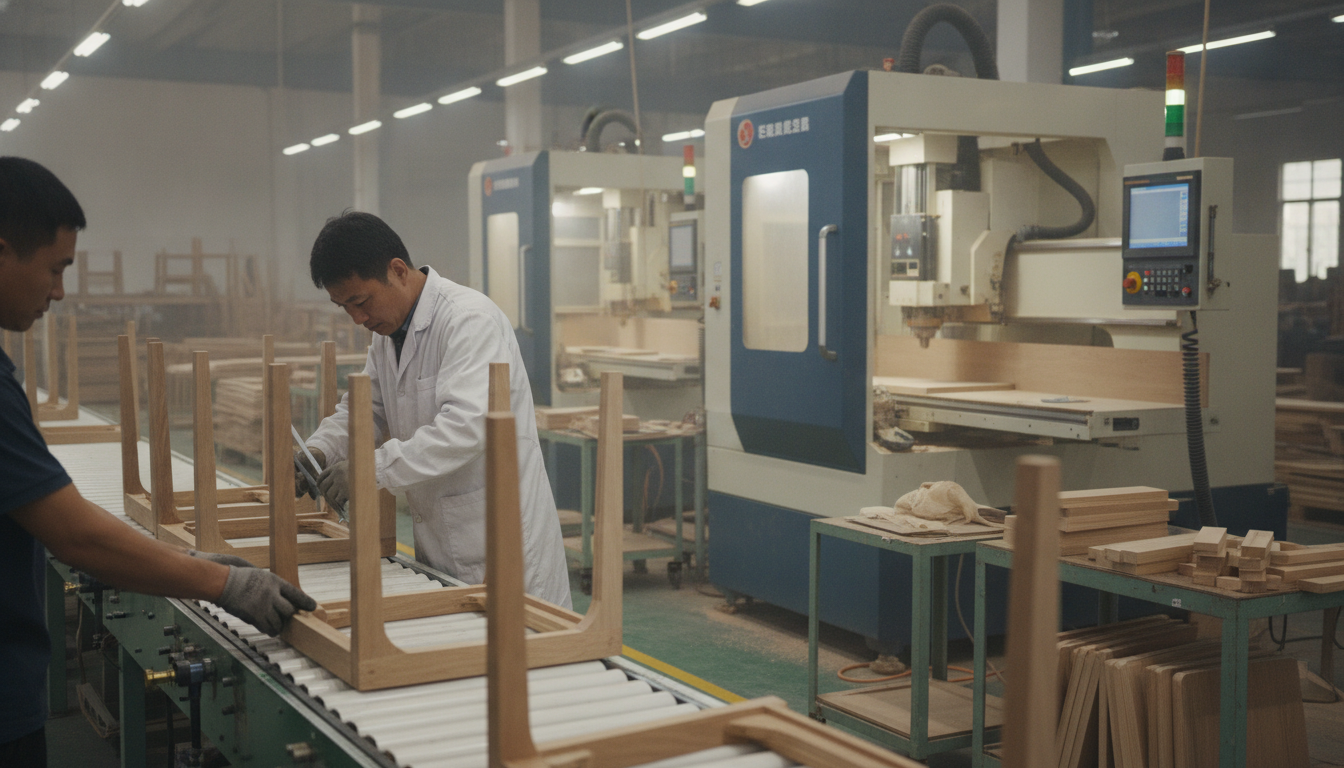
Foshan furniture production spans three main districts within Shunde and Nanhai, each optimized for different buyer needs. Lecong concentrates finished-furniture showrooms suitable for comparing styles, finishes, and pricing across multiple suppliers in a compact area. Longjiang focuses on upholstery manufacturing and custom orders where buyers specify fabric, foam density, frame construction, and dimensions. Nanhai hosts specialist categories including metal furniture, aluminum outdoor sets, lighting, and mattress factories.
Lecong finished-furniture district
Lecong operates as a ten-mile furniture strip with over 3,000 showrooms organized into mall complexes. Buyers walk through Louvre International, Sunlink North, Sunlink South, Red Star Macalline, Empire, and Dongheng centers to compare dining sets, bedroom suites, sofas, coffee tables, and office furniture from competing suppliers. Each showroom displays sample pieces, price lists, and finish options, allowing side-by-side comparison within a single day. The district suits buyers who need to evaluate multiple suppliers quickly, compare quality tiers, and negotiate pricing based on visible samples.
Longjiang upholstery cluster
Longjiang concentrates on made-to-order upholstery production, with factories accepting custom specifications for sofas, sectionals, dining chairs, and hotel seating. Buyers provide fabric selections, foam-density requirements, frame materials, and dimensional drawings. Factories produce samples for approval before entering bulk production. The cluster suits hotel FF&E projects, contract furniture orders, and buyers who need specific dimensions or branded fabric integration rather than off-the-shelf designs.
Nanhai specialist categories
Nanhai district hosts factories producing metal furniture frames, powder-coated aluminum outdoor sets, LED lighting fixtures, and mattress manufacturing. Buyers sourcing patio furniture, commercial lighting, or bedding products find concentrated supplier options here. The area operates with lower showroom density than Lecong, requiring factory visits by appointment rather than walk-through comparison shopping.
How do Lecong showroom malls differ by price tier?
Lecong’s furniture malls segment by price positioning and target buyer, with each complex attracting suppliers at different quality and cost levels. Understanding which mall matches your price tier prevents wasted comparison time and aligns supplier expectations with your budget.
Louvre International luxury positioning
Louvre International Furniture Exhibition Center targets high-end buyers with showrooms displaying solid-wood construction, Italian leather upholstery, hand-carved details, and premium finishes. Suppliers here maintain higher factory standards, offer detailed material certifications, and accept custom finish requests. Pricing reflects the quality tier, with dining sets and bedroom suites positioned for luxury retail channels. Minimum order quantities typically require full-container commitments per product line.
Red Star Macalline mid-to-upper range
Red Star Macalline occupies the mid-to-upper price segment, attracting suppliers who balance quality construction with competitive pricing. Showrooms display engineered-wood frames with veneer finishes, bonded-leather upholstery options, and contemporary designs suitable for furniture-chain retail. Suppliers accept mixed-container orders, allowing buyers to combine dining, bedroom, and living-room pieces in a single shipment.
Sunlink North and South value tiers
Sunlink North serves the mid-range value segment, with suppliers offering particle-board construction, PVC finishes, and fabric upholstery at prices suitable for online sellers and volume wholesalers. Sunlink South positions lower on the price spectrum, focusing on budget-conscious buyers who prioritize cost over material grade. Both complexes accommodate flexible MOQ structures, with some suppliers accepting per-item minimums rather than container-load requirements.
When should you buy from Longjiang instead of Lecong?
Longjiang suits buyers who need custom upholstery specifications, hotel FF&E packages, or direct factory relationships rather than showroom comparison shopping. The district operates with lower display density but higher manufacturing concentration, meaning buyers visit factories by appointment rather than walking through mall corridors.
Custom upholstery and fabric integration
Longjiang factories specialize in made-to-order upholstery where buyers specify frame construction, foam density, spring systems, and fabric selections. Buyers provide their own fabric or select from factory-stocked options, with samples produced for approval before bulk production begins. This model suits buyers who need branded fabric integration, specific dimensional requirements, or custom colorways not available in Lecong’s off-the-shelf showroom inventory.
Hotel and contract furniture projects
Hotel FF&E procurement benefits from Longjiang’s project-management capabilities, where factories coordinate bedroom suites, lobby seating, restaurant chairs, and banquet furniture within a single production timeline. Factories accept technical drawings, fire-safety specifications, and commercial-grade construction requirements that exceed residential furniture standards. Project minimums typically start at full-floor or full-property orders rather than per-piece quantities.
Direct factory access and pricing
Longjiang’s factory-direct model eliminates the showroom markup present in Lecong’s mall-based system. Buyers negotiate directly with production managers, review manufacturing processes on-site, and verify capacity before placing orders. This transparency suits buyers concerned about showroom fronts representing factories they cannot visit or verify.
What verification steps separate showrooms from real factories?
Many Lecong showrooms operate as sales fronts for factories located elsewhere in the Foshan cluster, creating traceability and quality-control challenges for overseas buyers. Verification steps confirm whether a supplier owns production facilities or resells another factory’s output.
Business licence scope matching
A Chinese business licence lists the exact production scope a company is legally permitted to operate. Furniture manufacturing requires specific licence categories covering woodworking, upholstery, or metal fabrication. Requesting a copy of the business licence and comparing the listed scope against the products being quoted reveals whether the showroom holds manufacturing authorization or operates as a trading company. Trading companies source from third-party factories, adding a markup layer and reducing buyer control over production quality.
Factory-visit verification
Scheduling a factory visit confirms physical production capacity, equipment ownership, and workforce presence. Buyers inspect woodworking machinery, upholstery workstations, finishing booths, and warehouse inventory to verify the supplier operates manufacturing facilities rather than renting showroom space alone. Our supplier verification process includes on-site factory audits covering business-licence validation, production-capacity assessment, and quality-system documentation before any buyer commitment.
Export history and documentation
Requesting past export records, shipping documentation, and overseas client references separates experienced exporters from domestic-only suppliers. Export-ready factories maintain fumigation certificates, understand container-loading requirements, and provide proper commercial invoices and packing lists. Domestic suppliers lack this infrastructure, requiring buyers to arrange export services separately or risk documentation errors that delay customs clearance.
How do you calculate landed cost for your destination?
FOB prices quoted in the china furniture market represent only the factory gate cost. Actual landed cost includes ocean freight, destination port fees, customs duties, VAT, fumigation charges, and inland delivery to your warehouse. Each destination country applies different duty rates and compliance requirements that affect total buyer cost.
Mexico import duties and compliance
Mexico applies customs duties ranging from zero percent under USMCA-equivalent rules for certain furniture categories to standard MFN rates for non-qualifying goods. VAT adds sixteen percent to the CIF value. Fumigation certificates are mandatory for wooden furniture, with treatment costs added at origin or destination. Buyers register an RFC tax ID before clearing shipments, and customs valuation follows invoice-declared values unless undervaluation is suspected.
Colombia and South American markets
Colombia imposes customs duties on furniture imports with rates varying by HS code classification, plus nineteen percent VAT on landed value. Fumigation requirements apply to solid-wood products, and labeling must include Spanish-language care instructions and country-of-origin markings. Argentina adds import licensing requirements and pre-shipment inspection mandates for certain furniture categories, extending clearance timelines beyond standard port processing.
European Union compliance layers
EU furniture imports face customs duties based on HS code, VAT rates varying by member state, and REACH compliance for chemical substances in finishes and adhesives. Fire-safety standards apply to upholstered furniture sold in the UK and certain EU markets, requiring test reports from accredited laboratories. Our quality inspection service coordinates pre-shipment testing for destination-specific compliance requirements before goods leave China.
What export logistics support do you need?
Furniture shipments require specialized packing, container loading, and documentation that many domestic-focused suppliers cannot provide. Export logistics support covers the gap between factory production and destination port clearance.
Export packing and container loading
Furniture requires protective packing to prevent damage during ocean transit, with corner guards, foam wrapping, and carton reinforcement for fragile components. Flat-pack furniture maximizes container utilization but requires assembly instructions and hardware kits packed per unit. Assembled furniture consumes more cubic space, reducing the piece count per container but eliminating destination assembly labor. Container loading follows weight-distribution rules to prevent shifting during transport, with heavier items placed low and lighter pieces stacked above.
Fumigation and phytosanitary compliance
Wooden furniture exported to most markets requires fumigation treatment to eliminate pests, with ISPM 15 certification for wooden packing materials. Treatment occurs before container loading, with certificates issued by accredited facilities. Buyers verify fumigation documentation matches the container seal number to prevent customs rejection at destination. Our freight coordination service arranges fumigation, export documentation, and container booking from our Yiwu and Guangzhou offices, ensuring compliance before goods leave China.
Customs documentation accuracy
Commercial invoices must declare accurate HS codes, unit values, and product descriptions to prevent customs delays or valuation disputes. Packing lists detail piece counts, dimensions, and gross weights per carton, matching the physical container load. Certificate-of-origin documents support preferential duty treatment under trade agreements where applicable. Documentation errors trigger customs holds, inspection fees, and clearance delays that add cost and extend delivery timelines.
Consolidation for mixed-SKU orders
Buyers sourcing from multiple Lecong or Longjiang suppliers benefit from warehouse consolidation, where goods from different factories arrive at a central facility for combined container loading. Consolidation reduces per-unit freight cost compared to shipping partial containers from each supplier separately. Our Yiwu consolidation warehouse receives furniture shipments from Foshan suppliers, inspects piece counts and condition, and loads mixed-SKU containers for single-destination delivery.
Key Takeaways
- Market concentration: The china furniture market centers on Foshan’s Lecong and Longjiang districts, where over 3,000 showrooms and factories serve different price tiers, order types, and buyer profiles within a compact geographic area.
- Showroom verification: A supplier’s business licence lists the exact production scope it is legally permitted to operate, which is what separates a real factory from a trading company reselling another manufacturer’s output.
- Price-tier alignment: Louvre International targets luxury buyers with solid-wood construction and premium finishes, while Sunlink North and South serve mid-range and budget segments with engineered materials and flexible MOQ structures.
- Custom versus off-the-shelf: Lecong suits buyers comparing finished furniture across multiple suppliers in a single trip, while Longjiang handles made-to-order upholstery, hotel FF&E packages, and custom specifications requiring factory-direct relationships.
- Landed-cost calculation: FOB prices represent only the factory gate cost; actual buyer expense includes ocean freight, destination customs duties, VAT, fumigation, and final-mile delivery, with rates varying significantly by destination country.
- Export logistics gap: Many Lecong showrooms serve domestic buyers and lack export-packing infrastructure, fumigation coordination, and documentation expertise, requiring buyers to arrange these services separately or work with a trusted China sourcing agent who manages the full export process.
Frequently Asked Questions
Is Foshan or Yiwu better for buying furniture?
Foshan specializes in full-size furniture including dining sets, bedroom suites, sofas, and office furniture, with concentrated supplier density in Lecong and Longjiang allowing side-by-side comparison. Yiwu focuses on small home-decor items, accessories, and mixed-SKU orders rather than large furniture pieces. Buyers sourcing container-load furniture orders choose Foshan for product breadth and factory access, while Yiwu suits buyers combining furniture accessories with other consumer goods in consolidated shipments.
What is the minimum order quantity for Lecong furniture suppliers?
Minimum order quantities vary by supplier tier and product category. Luxury suppliers in Louvre International typically require full-container commitments per product line, while mid-range suppliers in Sunlink North accept mixed-container orders combining multiple SKUs. Budget-tier suppliers in Sunlink South offer flexible per-item minimums, though per-unit pricing decreases with volume. Custom upholstery orders in Longjiang start at project minimums suitable for hotel floors or contract installations rather than per-piece quantities.
How do you verify a Lecong showroom actually owns a factory?
Request a copy of the business licence and verify the listed production scope matches the products being quoted. Schedule a factory visit to inspect manufacturing equipment, workforce presence, and production capacity. Review export history and shipping documentation to confirm the supplier handles international orders rather than domestic sales only. Cross-check the factory address on the business licence against the physical location you visit, as showrooms and factories often operate at different addresses within the Foshan cluster.
Written by the Goodcantrading Sourcing Team.
Ready to source furniture from verified Foshan factories with full export support?
Request a supplier audit and quote →