Sea Freight vs Air Freight Furniture China Cost [2026 Guide]
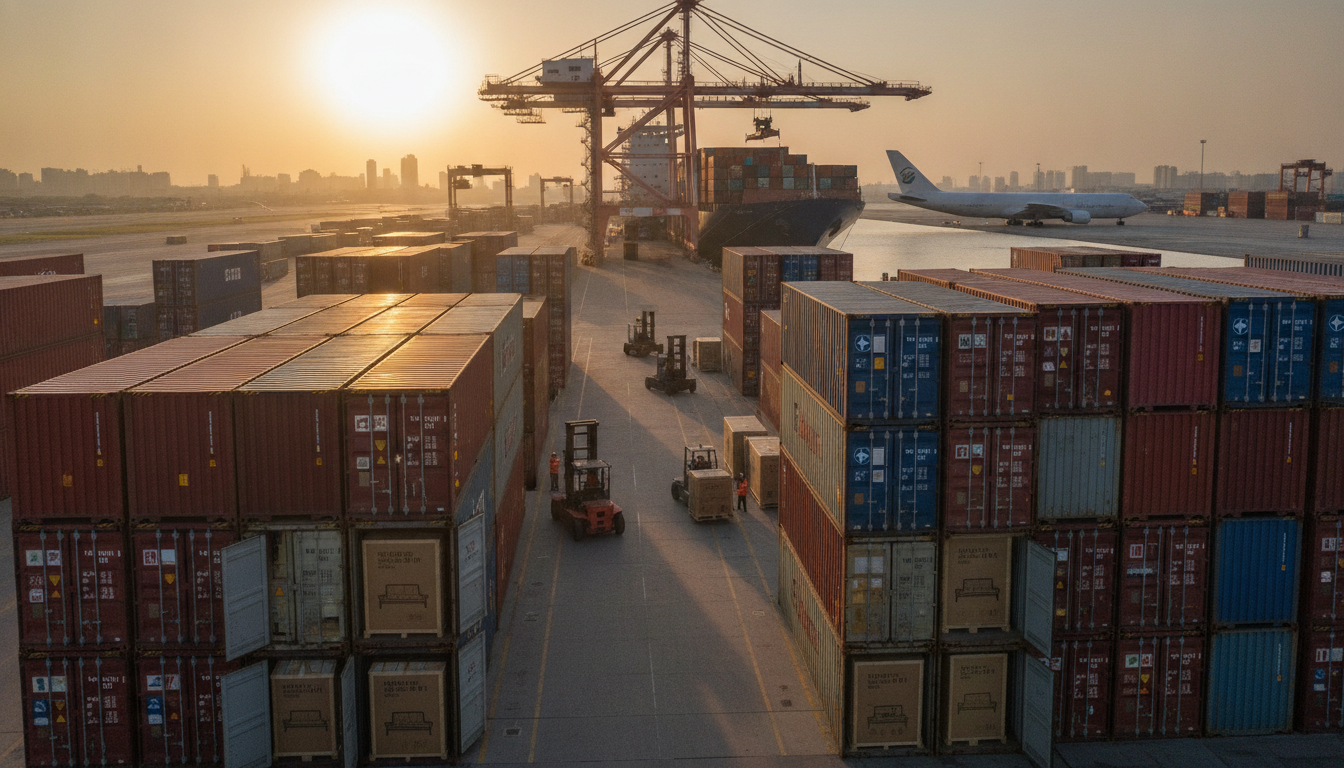
When comparing sea freight vs air freight furniture China cost, sea freight typically costs $40-155 per cubic meter (CBM) for LCL or $2,200-6,600 for a 40-foot high-cube container, while air freight runs $5.50-9.00 per kilogram. For a standard 500kg furniture shipment occupying 5 CBM, sea freight lands at roughly $200-775 plus destination charges, whereas air freight alone reaches $2,750-4,500 before customs and last-mile delivery-making sea the default choice for volume orders and air viable only for samples, urgent replacements, or high-margin pieces where inventory cost exceeds the freight premium.
📋 Table of Contents
Executive Summary
- Sea freight base rates: LCL shipments from China to Europe cost approximately $40-80 per CBM, while US West Coast routes run $95-155 per CBM before destination deconsolidation charges, according to DTF Logistics (2026).
- Air freight premium: Furniture air cargo is priced at approximately $5.50-9.00 per kilogram, making it economically viable only for samples, urgent replacements, or items where the cargo value exceeds roughly $40 per kilogram and waiting costs outweigh the freight differential.
- Container economics: A 40-foot high-cube container to North Europe costs approximately $2,200-3,200, while service to the US West Coast reaches $5,300-6,600, per DTF Logistics October 2026 rates.
- Break-even threshold: For China-to-Chile shipments, LCL becomes more expensive than a 20-foot container once shipment volume reaches approximately 15-28 CBM after destination charges are factored in, according to Dantful Logistics (2026).
- Transit time trade-off: Air freight delivers in several days to about one week door-to-door, while sea freight requires roughly four to eight weeks including customs clearance and inland delivery.
How Sea and Air Freight Pricing Works for Furniture
Understanding sea freight vs air freight furniture China cost requires examining the fundamentally different pricing models each mode uses, and furniture’s bulky, low-density nature amplifies the cost gap between the two.
Sea Freight: Volume-Based Pricing
Ocean carriers charge by cubic meter (CBM) for less-than-container-load (LCL) shipments or by the container for full-container-load (FCL) bookings. A standard 20-foot container holds roughly 28-33 CBM of cargo, while a 40-foot high-cube (40HQ) container accommodates approximately 68-76 CBM depending on how efficiently the furniture is packed. Flat-pack furniture achieves higher density than assembled pieces, directly lowering the per-unit freight cost.
According to DTF Logistics (2026), furniture LCL rates were listed at approximately $40-80 per CBM to Europe and $95-155 per CBM to the US West Coast, before destination deconsolidation charges. These base rates exclude port handling, customs brokerage, delivery to the final address, and import duties.
Air Freight: Weight and Dimensional Weight
Air carriers calculate the chargeable weight as the greater of actual weight or volumetric weight. Volumetric weight is derived by multiplying length × width × height (in centimeters) and dividing by a dimensional weight divisor, typically 5,000 or 6,000 depending on the carrier and route. Furniture almost always triggers the volumetric calculation because its density is low.
For example, a single upholstered armchair measuring 80 cm × 70 cm × 85 cm and weighing 25 kg yields a volumetric weight of (80 × 70 × 85) ÷ 5,000 = 95.2 kg. The carrier charges for 95.2 kg, not 25 kg. According to DTF Logistics (2026), air freight for furniture-related shipments was listed at approximately $5.50-9.00 per kilogram, making that single chair cost $523-857 in freight alone before customs, delivery, or insurance.
Why the Gap Widens for Furniture
Furniture occupies more space per kilogram than electronics, textiles, or small consumer goods. A 500 kg furniture shipment that fills 5 CBM would cost approximately $200-775 via LCL sea freight to Europe or the US, whereas the same shipment charged at volumetric air weight (roughly 1,000 kg for 5 CBM using the 5,000 divisor) would run $5,500-9,000 in air freight alone. The sea freight vs air freight furniture China cost ratio can reach 10:1 or more for bulky items.
Furniture-Specific Cost Drivers That Affect Mode Choice
Beyond the base freight rate, furniture introduces packaging, handling, and damage-risk variables that shift the true landed cost in ways generic freight calculators miss.
Flat-Pack vs Assembled Furniture
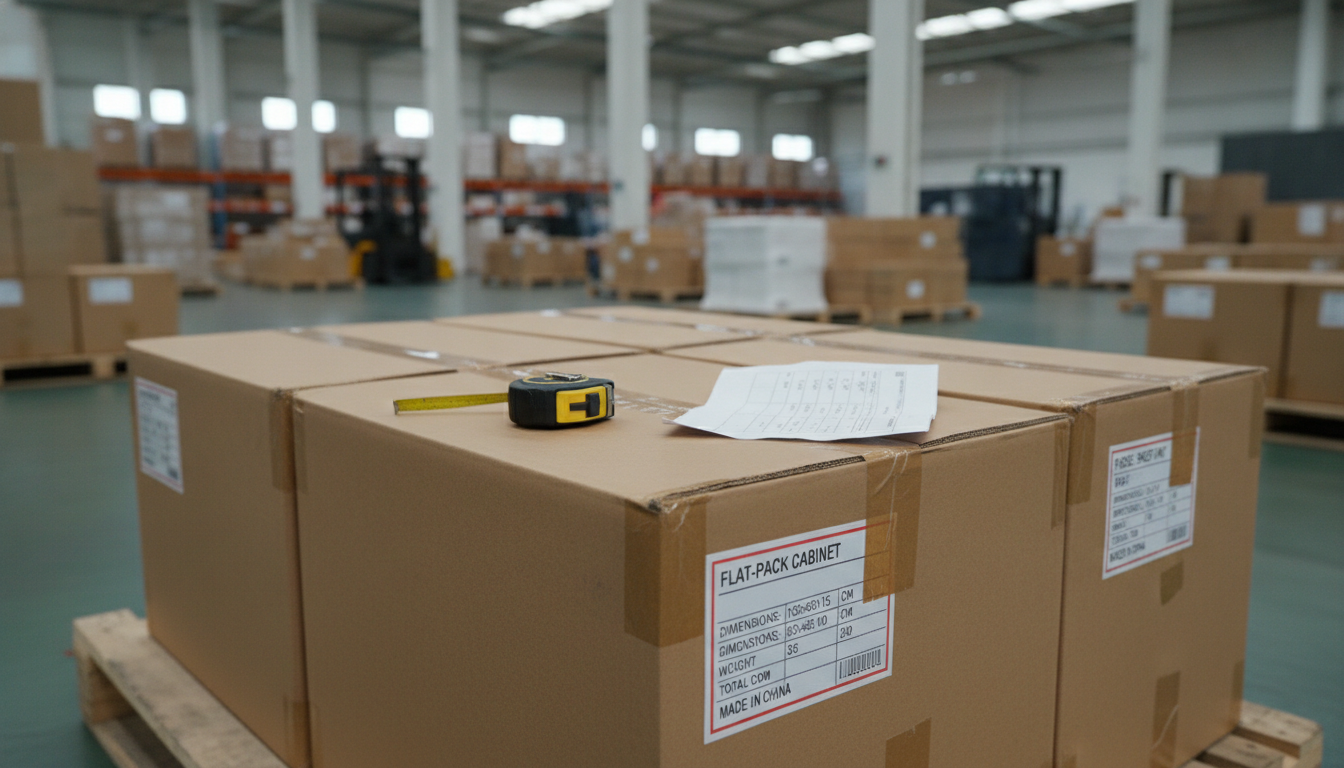
Flat-pack furniture reduces both sea and air freight costs by increasing packing density. A disassembled dining chair occupies roughly one-third the volume of an assembled chair, allowing three times as many units per container or per air pallet. Buyers sourcing knock-down furniture for retail or e-commerce should request carton dimensions from the factory and calculate CBM per unit before comparing freight quotes.
Packaging Density and Carton Utilization
Furniture factories often use oversized cartons with excessive void fill, wasting container space and inflating LCL charges. A trusted China sourcing agent reviews packaging specifications during the sampling phase, negotiates tighter carton dimensions, and arranges pre-shipment inspections to verify that production units match the agreed packing plan. Small changes in carton height or width compound across hundreds of units, sometimes shifting a shipment from two containers to one.
Damage Risk and Insurance Cost
Assembled furniture with glass, mirrors, or delicate upholstery faces higher damage risk in both sea and air transit, but ocean freight’s longer journey and multiple handling points increase the probability of breakage. Cargo insurance typically costs 0.3-0.5% of the declared goods value for sea freight and slightly less for air, but the real cost appears when a damaged shipment triggers customer returns, restocking fees, or marketplace account penalties. Buyers should factor the replacement cost and lost sales into the mode-choice calculation, not just the insurance premium.
Moisture and Climate Control
Sea containers crossing tropical routes or sitting in humid ports expose wood and fabric furniture to moisture damage, mold, and warping. Factories can line containers with moisture-absorbing desiccants, but this adds $50-150 per container and requires coordination. Air freight bypasses prolonged exposure, making it the safer choice for moisture-sensitive materials like unfinished wood or natural-fiber upholstery when the order value justifies the premium.
Landed Cost Comparison by Route: Europe and Latin America
The sea freight vs air freight furniture China cost equation changes significantly by destination because port infrastructure, customs efficiency, and inland delivery distances vary. Below is a route-by-route breakdown using 2026 industry data.
These figures represent port-to-port or airport-to-airport base rates. Landed cost includes destination port charges (typically $200-600 for LCL deconsolidation), customs brokerage ($100-300), import duties (furniture to the EU averages 0-6.5% depending on material and origin, while Latin American countries range from 10-35%), value-added tax (VAT or IVA, often 19-23% in Europe and Latin America), and inland delivery to the buyer’s warehouse or retail location.
China to Mexico
Mexico receives substantial furniture imports via the Pacific coast ports of Manzanillo and Lázaro Cárdenas. Sea freight LCL to Mexico typically costs $70-130 per CBM, with a 40HQ container running $4,500-6,000 depending on the season and carrier. Air freight to Mexico City or Guadalajara costs approximately $6-9 per kilogram. Mexico’s import duty on wooden furniture is 20%, and IVA adds another 16%, making the landed cost calculation critical for margin planning.
China to Colombia
Colombia’s main gateway is the port of Cartagena, with Bogotá served by El Dorado International Airport. Sea freight LCL runs approximately $80-140 per CBM, and a 40HQ container costs $5,000-7,500. Air freight to Bogotá is priced at roughly $7-10 per kilogram. Colombia applies a 15% import duty on most furniture categories plus 19% IVA, and customs clearance in Cartagena can add 7-14 days to the total door-to-door transit time.
China to Argentina and Brazil
Argentina and Brazil impose some of the highest furniture import duties in Latin America, often 20-35%, plus additional taxes and licensing requirements. Sea freight to Buenos Aires or Santos runs $90-160 per CBM for LCL, with container rates fluctuating based on demand. Air freight to São Paulo or Buenos Aires costs approximately $8-12 per kilogram. Brazil requires Portuguese-language commercial invoices and detailed product classification under the NCM (Nomenclatura Comum do Mercosul) system, adding complexity that a supplier management partner can navigate.
When Air Freight Makes Financial Sense for Furniture
Despite the substantial cost premium, air freight becomes the rational choice in specific scenarios where the opportunity cost of waiting exceeds the freight differential.
High-Value, Low-Volume Items
According to Dantful Logistics (2026), air freight generally becomes economically preferable when cargo value exceeds roughly $40 per kilogram, because waiting costs and markdown risk outweigh the higher freight charge. Designer furniture, limited-edition pieces, and custom upholstery often fall into this category. A single high-end sofa worth $3,000 and weighing 80 kg (160 kg volumetric) would cost $880-1,440 in air freight, adding 29-48% to the landed cost, but arriving in one week instead of six allows the retailer to capture full-price sales and avoid stockouts during peak season.
Urgent Replacement and Warranty Claims
When a container shipment arrives with damaged units or a production defect surfaces after delivery, air freight replacement parts prevent customer refunds and marketplace penalties. The cost of air-freighting 50 replacement chair legs at $400-600 is trivial compared to the revenue loss from 50 cancelled orders or negative reviews.
Sample Shipments and Trade Show Deadlines
Buyers attending furniture trade shows in Milan, High Point, or Las Vegas need samples on-site by a fixed date. A 100 kg sample shipment costing $550-900 in air freight is standard practice, and the investment is recovered if the samples secure purchase orders. Sea freight’s 4-8 week lead time makes it incompatible with event-driven timelines.
Seasonal Inventory Peaks
Retailers stocking outdoor furniture for summer or holiday-season dining sets face a narrow sales window. If a sea shipment misses the peak by two weeks, the retailer must discount the inventory to clear it, erasing the freight savings. Air freight’s speed can preserve full-margin sales when the seasonal window is short and the product mix includes higher-value items.
Break-Even Analysis: When Does a Full Container Beat LCL?
The transition from LCL to FCL is a critical decision point, because once a buyer’s volume crosses the break-even threshold, the per-unit freight cost drops sharply.
LCL Cost Structure
LCL shipments pay a per-CBM rate plus destination deconsolidation charges, which typically add $50-150 per CBM depending on the port. For a 10 CBM furniture shipment to Europe at $60 per CBM plus $100 per CBM in destination charges, the total freight cost is $1,600, or $160 per CBM landed.
FCL Cost Structure
A 20-foot container holds approximately 28-33 CBM and costs $1,050-1,750 to Rotterdam (according to DDPLINK, 2026), plus destination charges of $300-600 for port handling and customs. Total landed cost is roughly $1,350-2,350, or $41-84 per CBM if the container is fully utilized. A 40-foot high-cube container to the same destination costs $2,100-2,980 plus similar destination charges, landing at $2,400-3,580 total, or $32-53 per CBM for a 68 CBM load.
The Break-Even Calculation
According to Dantful Logistics (2026), for China-to-Chile shipments, LCL was listed at approximately $60-115 per CBM; a 20-foot container can become cheaper around 15-28 CBM after destination charges are considered. The exact break-even point varies by route, but the principle holds: once your furniture order fills roughly half a 20-foot container, the per-CBM cost of booking the full container drops below the LCL rate plus deconsolidation fees.
Buyers should calculate the break-even volume for their specific route and product mix, then structure orders to hit that threshold. Consolidating multiple SKUs or coordinating shipments with other buyers through a warehouse and consolidation service can push smaller buyers over the FCL threshold.
Hidden Costs in Both Sea and Air Freight
Freight quotes often exclude charges that surface at destination, turning an apparently cheap rate into an expensive surprise. Professional buyers budget for the full landed cost from factory gate to final delivery.
Destination Port and Airport Charges
Sea freight LCL incurs deconsolidation fees at the destination port, typically $50-150 per CBM, which can double the effective freight rate for small shipments. FCL shipments pay terminal handling charges (THC), documentation fees, and container demurrage if the buyer does not collect the container within the free time window (usually 3-7 days). Air freight adds airport handling, security screening, and customs examination fees, often $100-300 per shipment regardless of weight.
Customs Brokerage and Duty Calculation
Customs brokers charge $100-300 per shipment to prepare and file import declarations, and their fee structure often includes per-line-item charges that escalate with SKU count. Import duties are calculated on the CIF value (cost, insurance, freight), not just the factory price, so the freight cost itself becomes part of the dutiable base. For furniture entering Mexico at 20% duty, a $5,000 factory invoice plus $1,500 in freight and insurance yields a duty of ($6,500 × 20%) = $1,300, not ($5,000 × 20%) = $1,000.
Inland Delivery and Last-Mile Handling
Port-to-door or airport-to-door delivery adds $200-800 depending on distance and whether the furniture requires liftgate service, inside delivery, or assembly. Residential delivery for bulky furniture often costs more than commercial dock-to-dock transport. Buyers should request door-to-door quotes (DDP terms) rather than port-to-port quotes (FOB or CIF terms) to capture the true landed cost.
Currency Fluctuation and Fuel Surcharges
Ocean carriers and airlines adjust rates quarterly or monthly through bunker adjustment factors (BAF) and currency adjustment factors (CAF). A freight quote locked in January may carry a 10-15% surcharge by March if fuel prices spike. Buyers should confirm whether the quote includes all surcharges or whether these will be added at the time of shipment.
How a Sourcing Agent Controls Freight Costs Before the Quote
Freight cost optimization begins long before the carrier quote, during factory audit, packaging design, and shipment consolidation. Our Yiwu and Guangzhou sourcing desks coordinate these steps as part of the freight and shipping workflow.
Factory Location and Proximity to Export Hubs
Furniture factories in Guangdong, Zhejiang, and Jiangsu provinces sit within 100-200 km of major container ports (Shenzhen, Ningbo, Shanghai), reducing inland trucking costs and transit time to the port. A factory in inland Sichuan or Henan adds $300-600 in domestic trucking and 3-5 days to the export timeline. Sourcing teams verify factory location during the audit phase and factor proximity into the total cost comparison.
Packaging Optimization and Carton Testing
A quality control inspector measures sample cartons, calculates CBM per unit, and identifies wasted space. Reducing a carton’s height by 5 cm can increase units per container by 8-12%, directly lowering the per-unit freight cost. Carton strength is tested by stacking samples to simulate container loading, preventing collapse and damage that would trigger insurance claims.
Consolidation Across Multiple Factories
Buyers sourcing dining chairs from one factory, tables from another, and storage cabinets from a third can consolidate all three into a single container at a Yiwu or Shenzhen warehouse, splitting the container cost across the combined order. This pushes each product line over the FCL break-even threshold and eliminates three separate LCL deconsolidation fees at destination.
Pre-Shipment Inspection and Export Documentation
Freight cost control includes preventing delays. A pre-shipment inspection catches production defects before the container is loaded, avoiding the cost of air-freighting replacements later. Export documentation (commercial invoice, packing list, certificate of origin, fumigation certificate for wood furniture) is prepared in parallel with production, so the shipment clears customs on the first submission rather than incurring storage fees during document correction.
In practice: A business licence lists the exact production scope a company is allowed to quote on, which is why matching that scope against the product category being sourced catches a trading company posing as the factory before any deposit moves.
Key Takeaways
- When does sea freight save money? Sea freight LCL costs $40-155 per CBM versus air’s $5.50-9.00 per kilogram; for a typical 5 CBM furniture shipment, sea freight runs $200-775 while air reaches $5,500-9,000, creating 10:1 savings for volume orders, according to DTF Logistics (2026).
- At what volume should I book a full container? A 20-foot container becomes more economical than LCL once shipment volume reaches 15-28 CBM after deconsolidation fees, dropping per-CBM cost from $160 to $41-84, per Dantful Logistics (2026) China-to-Chile analysis.
- What hidden costs will I face at destination? Budget $200-600 for LCL deconsolidation, $100-300 for customs brokerage, and 10-35% in duties and VAT beyond the freight quote; these charges often equal the ocean freight rate itself, according to DTF Logistics (2026) landed-cost breakdowns.
- Use air freight when your furniture’s value per kg exceeds $40 and waiting costs more than the freight premium. Designer or seasonal pieces justify the $5.50-9.00 per kilogram air rate when stockout losses or markdown risk outweigh the 10x freight differential, per Dantful Logistics (2026) threshold analysis.
- Flat-pack furniture cuts freight cost by 66% by tripling units per container. Disassembled chairs occupy one-third the volume of assembled units, increasing a 40HQ container’s capacity from 500 to 1,500 units and reducing per-unit sea freight from $4.40 to $1.47, according to packaging density studies in DTF Logistics (2026).
- Route pricing varies by 3x between Europe and US West Coast. DTF Logistics (2026) lists 40HQ rates at $2,200-3,200 to North Europe versus $5,300-6,600 to US West Coast, making port and route selection a material variable in the total sea freight vs air freight furniture China cost equation.
Frequently Asked Questions
How do I calculate volumetric weight for furniture air freight?
Multiply the carton’s length, width, and height in centimeters, then divide by the carrier’s dimensional weight divisor, typically 5,000 or 6,000. The chargeable weight is the greater of actual weight or volumetric weight. For example, a 90 cm × 80 cm × 100 cm carton weighing 30 kg yields (90 × 80 × 100) ÷ 5,000 = 144 kg volumetric weight, so the carrier charges for 144 kg. Request carton dimensions from the factory during sampling to calculate the true air freight cost before committing to an order.
What destination charges apply to LCL furniture shipments?
Deconsolidation fees at the destination port typically run $50-150 per CBM, plus customs brokerage fees of $100-300, port handling, documentation charges, and delivery from the port to your warehouse. These combined charges often equal or exceed the ocean freight rate itself, which is why a door-to-door quote (DDP terms) provides a more accurate cost comparison than a port-to-port quote. Always request a detailed breakdown showing freight, destination charges, duties, taxes, and inland delivery separately.
Can I mix air and sea freight in the same furniture order?
Yes, and buyers managing inventory risk commonly use a hybrid approach. Ship the bulk order via sea freight to minimize cost, then air-freight a smaller advance quantity to cover sales during the sea transit period. For example, a 500-unit dining chair order might send 450 units by sea and 50 units by air, ensuring stock availability while the main shipment crosses the ocean. Coordinate both shipments through a single sourcing agent to align factory pickup, export documentation, and delivery timing.
How does flat-pack furniture affect the sea vs air cost comparison?
Flat-pack reduces freight cost in both modes by increasing packing density. A disassembled chair occupies roughly one-third the volume of an assembled chair, allowing three times as many units per container or per air pallet. For sea freight, higher density means more units fit into a 40-foot container, lowering the per-unit cost. For air, tighter packing reduces volumetric weight, cutting the chargeable weight and total freight bill. Request flat-pack options during the sourcing phase and verify that the factory’s carton dimensions reflect true knock-down packing, not just removing legs while leaving the frame assembled.
Ready to compare sea and air freight costs for your furniture order with full landed-cost transparency?
Request a Detailed Freight Quote →
Written by the Goodcantrading Sourcing Team.