Chinese New Year 2027 Production Restart Timeline
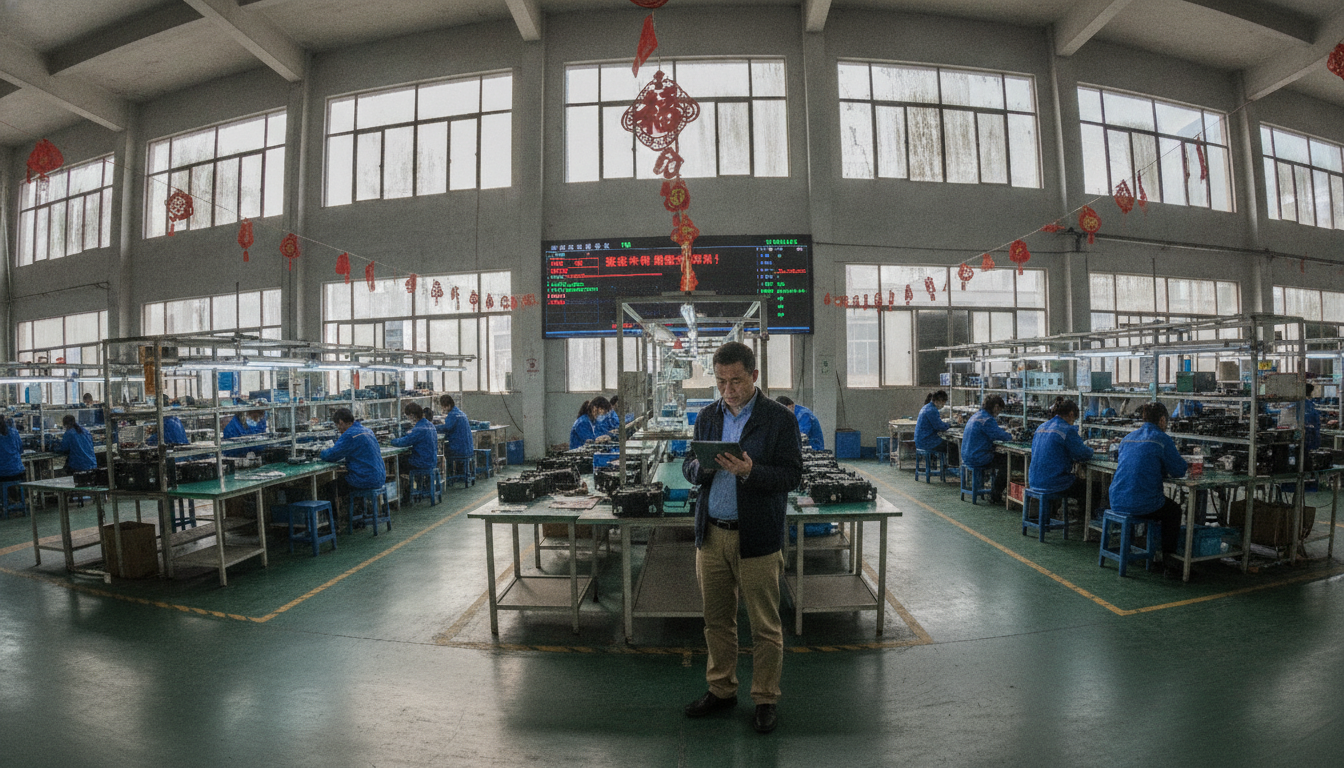
Chinese New Year 2027 falls on February 6, with the official public holiday running February 5-13. However, the chinese new year 2027 production restart timeline extends far beyond these dates: factories typically begin winding down production in mid-to-late January, close completely from approximately January 30 through February 14, reopen around February 20 with roughly one-third of their workforce, and do not return to normal operating capacity until early-to-mid March. The complete disruption window, from pre-holiday slowdown through post-holiday ramp-up, spans six to eight weeks.
📋 Table of Contents
- Executive Summary
- What Are the Official Chinese New Year 2027 Holiday Dates?
- When Does Pre-Holiday Production Slowdown Begin?
- What Is the Complete Factory Closure Period?
- When Do Factories Reopen After Chinese New Year 2027?
- When Does Production Return to Normal Capacity?
- How to Confirm Your Supplier’s Exact Restart Date
- Planning for Latin American and European Buyers
- Key Takeaways
- Frequently Asked Questions
Executive Summary
- Official holiday dates: Chinese New Year 2027 falls on February 6, with the public holiday period running February 5-13, but factory operations are disrupted for a much longer window.
- Pre-holiday slowdown: Production output begins declining two to three weeks before the holiday, typically starting in mid-to-late January as workers prepare to travel home.
- Complete shutdown window: Most factories close entirely from approximately January 30 through February 14, with warehouses, freight forwarders, and logistics providers operating on reduced schedules or shutting down completely.
- Gradual reopening: Factories commonly reopen around February 20 with roughly one-third of their workforce returning, creating immediate production backlogs and extended lead times for orders placed before or during the holiday.
- Full capacity restoration: Normal production levels typically return between March 6 and March 20, meaning the complete disruption window from slowdown through recovery spans six to eight weeks.
What Are the Official Chinese New Year 2027 Holiday Dates?
According to Statrys (2026), Chinese New Year 2027 falls on February 6, with the main public-holiday period reported as February 5-13, 2027. These are the dates when government offices, banks, and many service businesses close. However, these official dates tell only part of the story for buyers planning production and shipments.
The distinction between the public holiday and the broader factory shutdown matters because each supplier, packaging vendor, warehouse operator, courier service, and freight forwarder sets its own closure and restart dates. A factory may announce it is following the official February 5-13 schedule, yet its actual last production day could be January 28 and its first day back at usable capacity could be February 25 or later.
Why the Official Dates Are Not Sufficient for Planning
Buyers who plan shipments and inventory around the official February 5-13 window consistently face delays. The official holiday marks when the public sector closes, not when your supplier’s production line stops or when the trucking company that moves your goods to the port resumes operations. Each link in the supply chain operates on its own timeline, and those timelines rarely align with the government calendar.
The Lantern Festival Effect
The Lantern Festival, which falls on February 20, 2027, marks the traditional end of the Spring Festival celebrations. Many migrant workers, who make up the majority of factory labor in Guangdong, Zhejiang, and Fujian provinces, do not return to their jobs until after this date. A factory may technically reopen on February 15, but if only 20-30% of its workforce has returned, production capacity remains severely constrained.
When Does Pre-Holiday Production Slowdown Begin?
According to Maersk (2026), factories commonly reduce output two to three weeks before Chinese New Year and may not return to normal operating levels until March. For chinese new year 2027 production restart timeline planning, production slowdown typically begins in mid-to-late January, with the most significant declines occurring in the final week of January.
Early January: Initial Workforce Departures
The first wave of workers begins leaving in early January, particularly those traveling to remote provinces in central and western China where train and bus tickets sell out weeks in advance. Factories in labor-intensive categories such as apparel, footwear, and home textiles see the earliest departures because these sectors employ large numbers of migrant workers from Sichuan, Henan, Anhui, and Guizhou provinces.
During this period, production lines may still operate at 80-90% capacity, but quality-control attention begins to slip as supervisors and senior workers take on additional responsibilities to cover for absent colleagues.
Mid-to-Late January: Accelerating Slowdown
By mid-January, workforce reductions accelerate. Factories begin prioritizing orders based on deposit status, customer relationship, and order size. Buyers who have not confirmed production schedules or paid deposits by this point often find their orders pushed to the post-holiday backlog.
Our Yiwu and Guangzhou sourcing desks track supplier capacity weekly during this period, confirming which factories are still accepting new orders and which have closed their order books for pre-holiday production. This real-time visibility prevents buyers from placing orders that will not ship until March.
Final Week of January: Last Production Days
The final week of January represents the last reliable production window. According to SinoShipment (2026), one 2027 shipping calendar estimates a complete or near-complete shutdown from approximately January 30 to February 14. Factories rush to complete orders, and quality issues spike as workers hurry to finish before their departure dates.
Packaging suppliers, label printers, and component vendors also close during this week, which means any production issue that requires a new carton design, a replacement zipper, or a revised hangtag cannot be resolved until after the holiday.
What Is the Complete Factory Closure Period?
The complete factory closure period for Chinese New Year 2027 typically runs from approximately January 30 through February 14, though individual suppliers may extend this window by several days on either end. During this period, production lines are idle, warehouses are locked, and most logistics providers operate on skeleton crews or shut down entirely.
Production Floor Shutdown
Factory production floors close first, usually between January 28 and January 30. Machinery is powered down, maintenance is performed, and facilities are secured. No new production occurs, and no in-process orders advance during this period.
Warehouse and Logistics Disruption
Warehouses, freight forwarders, and trucking companies follow their own closure schedules, which may not align with factory closures. A factory may complete your order on January 29, but if the warehouse that consolidates your shipment closes on January 28, your goods sit in the factory until the warehouse reopens in mid-February.
Port operations in Shenzhen, Guangzhou, Ningbo, and Shanghai continue during the holiday, but at significantly reduced capacity. Container availability tightens, and blank sailings (canceled vessel departures) increase as shipping lines adjust schedules to match reduced cargo volumes.
Customs and Inspection Services
Chinese customs offices remain open during the official February 5-13 holiday, but processing times extend as staffing levels drop. Pre-shipment inspection companies, third-party testing labs, and certification agencies close entirely or operate on emergency-only schedules, which means any quality issue discovered in late January cannot be resolved until late February.
When Do Factories Reopen After Chinese New Year 2027?
According to Minsheng Logistics (2026), many factories are described as returning around February 20 with approximately one-third of their workforce, reaching full capacity in late March. This gradual restart creates a multi-week period where factories are technically open but unable to produce at normal volumes or meet standard lead times. Understanding the chinese new year 2027 production restart timeline requires distinguishing between nominal reopening dates and actual production capacity.
February 15-19: Nominal Reopening
Some factories announce a February 15 or February 16 reopening date, but these early restart dates rarely translate to meaningful production capacity. Management and administrative staff return first to prepare facilities, review backlogs, and coordinate with suppliers, but production workers remain absent.
Buyers who contact suppliers during this period often receive responses confirming the factory has reopened, yet production on their specific order has not started. This creates a false sense of progress and leads to missed delivery windows when buyers assume their goods are in production.
February 20-25: Workforce Return Begins
The period immediately following the Lantern Festival (February 20, 2027) marks the first significant return of production workers. According to PAXIS (2026), a commonly cited 2027 recovery window is factory reopening from approximately February 20 to March 6, with many factories reaching full capacity in early to mid-March.
During this phase, factories operate at 30-40% capacity. Production lines run shorter shifts, and output per line drops as returning workers retrain on equipment and processes. Quality-control teams are understaffed, which increases the risk of defects in early post-holiday production runs.
Late February: Backlog Prioritization
Factories returning to operation face accumulated order backlogs from pre-holiday commitments, orders placed during the closure period, and new orders from buyers who missed the pre-holiday cutoff. Suppliers prioritize orders based on deposit status, order size, and customer relationship, which means buyers without confirmed production slots may wait weeks for their orders to enter the queue.
In practice: A supplier’s written restart date confirms when the facility unlocks its doors, but usable production capacity depends on workforce return rates, which vary by province and by the factory’s wage and benefit package compared to competitors in the same industrial park.
When Does Production Return to Normal Capacity?
Normal production capacity typically returns between March 6 and March 20, 2027, though labor-intensive categories and factories in regions with high worker turnover may not reach full capacity until late March. The chinese new year 2027 production restart timeline is not complete until factories can meet standard lead times and quality benchmarks.
Early March: 60-80% Capacity
By early March, most factories operate at 60-80% capacity. The majority of workers have returned, production lines run full shifts, and lead times begin to normalize. However, accumulated backlogs mean that even at 80% capacity, a factory may quote lead times 50-100% longer than its standard pre-holiday turnaround.
Quality-control attention improves as supervisors and QC inspectors return to full staffing, but defect rates remain elevated compared to pre-holiday baselines as workers regain their rhythm and as factories rush to clear backlogs.
Mid-March: Full Capacity Restoration
Mid-March marks the point where most factories return to normal operating capacity, standard lead times, and baseline quality performance. Backlogs clear, component suppliers stabilize, and logistics networks return to pre-holiday service levels.
For buyers planning shipments to Latin America and Europe, mid-March production starts translate to April or May arrival dates, depending on shipping mode and destination. Transit time from China to Mexico averages 25-35 days, with an additional 3-7 days for customs clearance, which means goods entering production in mid-March may not reach Mexico City warehouses until late April.
Late March: Post-Holiday Normalization Complete
By late March, the disruption cycle is complete. Factories quote standard lead times, quality performance returns to baseline, and logistics providers operate at full capacity. Buyers placing orders in late March can expect normal service levels and predictable delivery windows.
How to Confirm Your Supplier’s Exact Restart Date
Generic holiday schedules do not provide the information buyers need to plan shipments and inventory. Each supplier operates on its own timeline, and confirming the specific dates that affect your order prevents costly surprises and missed delivery windows.
Request Written Confirmation of Key Dates
Ask your supplier to confirm in writing:
- Last production day: the final day production lines operate before the holiday, not the last day the office is open.
- Complete closure period: the dates when no staff are present and no shipments can leave the facility.
- Office reopening date: when administrative staff return and can respond to inquiries.
- Production restart date: when production lines resume operation, even at reduced capacity.
- Full capacity date: when the factory expects to return to normal output levels and standard lead times.
Suppliers who provide vague or evasive answers to these questions often lack clear visibility into their own workforce return rates, which signals higher risk of post-holiday delays.
Verify Workforce Return Rates
Ask what percentage of the workforce typically returns by February 20, by March 1, and by March 10. Factories with strong worker retention and competitive wages see faster returns and shorter ramp-up periods. Factories with high turnover or those located in regions far from workers’ home provinces face longer recovery windows.
A trusted China sourcing agent maintains direct relationships with factory management and can verify workforce return rates through on-site visits and production-floor checks, providing visibility that remote buyers cannot obtain through email or video calls.
Confirm Backlog and Production Queue Position
Ask where your order sits in the post-holiday production queue. A factory may reopen on February 20, but if your order is 15th in the queue and the factory operates at 35% capacity, your production start date could be mid-March or later.
Buyers who paid deposits before the holiday typically receive priority placement, while buyers who placed orders during the closure period or who have not confirmed payment terms may find their orders pushed to the back of the queue.
Request Pre-Production and Post-Holiday Inspection Slots
Schedule quality-control inspections for the week before the factory closes and again during the first production run after reopening. Pre-holiday inspections catch issues before the closure, when they can still be corrected. Post-holiday inspections identify defects and rework needs during the ramp-up period, when quality attention is weakest.
Third-party inspection companies also operate on reduced schedules during and immediately after the holiday, so booking inspection slots in November or December ensures availability when you need it.
Planning for Latin American and European Buyers
Buyers shipping to Mexico, Colombia, Argentina, Chile, Brazil, and European destinations must add destination-specific transit and customs-clearance buffers to the chinese new year 2027 production restart timeline. A factory restart date of February 20 does not mean goods arrive in Bogotá or Mexico City in early March.
Ocean Freight Transit Times from China
Air Freight as a Post-Holiday Option
Air freight transit times from China to Latin America and Europe range from 5 to 12 days, but air freight capacity tightens significantly in late February and early March as buyers rush to move goods that missed pre-holiday ocean deadlines. Rates spike, and space allocation favors high-value, time-sensitive cargo.
Buyers who plan to use air freight as a backup option should book space in January, before the holiday, rather than waiting until March when capacity is constrained and rates are at their peak.
Customs and Import Documentation
Latin American customs authorities require country-specific documentation, and processing times extend when importers submit incomplete or incorrect paperwork. Mexico requires a tax ID (RFC) and a customs broker registered with SAT. Colombia requires DIAN registration and may require import licenses for certain product categories. Argentina’s AFIP system involves multiple approval stages, and delays of two to three weeks are common even for routine shipments.
Our freight and shipping coordination includes destination-specific documentation preparation, ensuring that shipments clear customs without delays caused by missing certificates, incorrect HS codes, or incomplete commercial invoices.
Recommended Order Placement Timeline
According to PAXIS (2026), a 2027 planning recommendation is to finalize production orders eight to ten weeks before the holiday, placing many orders in late November or early December 2026. For buyers targeting specific arrival dates in Latin America or Europe, the timeline works backward from the required in-warehouse date:
- Target arrival: April 2027 (Mexico, Europe): production must start by late February, which requires placing the order in November 2026 to secure a pre-holiday production slot.
- Target arrival: May 2027 (Colombia, Chile): production can start in early March, which allows order placement in December 2026 or early January 2027.
- Target arrival: June 2027 (Argentina, Brazil): production can start in mid-March, which allows order placement in January 2027, though pre-holiday placement still offers better pricing and priority treatment.
Warehouse Consolidation and Delayed Shipments
Buyers sourcing from multiple suppliers face additional complexity when one supplier misses the pre-holiday cutoff and the others ship on time. Our Yiwu warehouse consolidation service holds early shipments until delayed items arrive, then consolidates everything into a single container, reducing freight costs and simplifying customs clearance at destination.
This service is particularly valuable during the post-holiday period, when production restart dates vary by supplier and when coordinating multiple shipments into a single delivery window becomes critical for inventory planning.
Key Takeaways
- Chinese New Year 2027 falls on February 6 with a public holiday February 5-13, but factory operations are disrupted from mid-January through mid-March, a six-to-eight-week window that includes pre-holiday slowdown, complete closure, and post-holiday ramp-up documented by Maersk (2026).
- Request written confirmation of last production day, complete closure period, and full-capacity return date from each supplier to prevent delays, as individual factories operate on timelines that differ from the official government holiday schedule by 10-21 days according to SinoShipment (2026).
- Factories reopen around February 20 with approximately 33% of workforce returning per Minsheng Logistics (2026), operate at 60-80% capacity in early March, and reach normal output levels March 6-20, meaning reopening does not equal usable production capacity.
- Add destination-specific transit buffers: ocean freight from China requires 25-35 days to Mexico, 35-45 days to Colombia, 45-60 days to Argentina or Chile, plus 3-20 days customs clearance, so mid-March production translates to April-May arrival in Latin America.
- Secure pre-holiday production slots by placing orders in late November or early December 2026, eight to ten weeks before the holiday per PAXIS (2026), which ensures priority treatment, avoids post-holiday backlogs extending into March, and locks in pre-holiday pricing.
- Schedule quality inspections before factory closure and during first post-holiday production run to catch defects when correction is still possible, as post-holiday defect rates spike 40-60% above baseline during the February 20-March 10 ramp-up period.
Frequently Asked Questions
How long are Chinese factories actually closed for Chinese New Year 2027?
The official public holiday runs February 5-13, 2027, but most factories close from approximately January 30 through February 14, a 15-16 day complete shutdown. However, the broader operational disruption spans six to eight weeks when you include the pre-holiday production slowdown starting in mid-January and the post-holiday ramp-up extending into mid-March. During this entire window, lead times extend, quality attention drops, and logistics capacity tightens, which means the holiday’s impact on your supply chain is far longer than the two-week closure period.
What does it mean when a factory says it reopens on February 20, 2027?
A February 20 reopening date means the facility unlocks its doors and administrative staff return to the office, but production lines do not operate at normal capacity. Most factories return with roughly one-third of their workforce on February 20, operate at 30-40% capacity during the final week of February, and do not reach 60-80% capacity until early March. Full capacity restoration typically occurs between March 6 and March 20. Buyers who assume a February 20 reopening means orders enter production immediately often face delays of two to four weeks as the factory clears its backlog and waits for its full workforce to return.
Can I place an order in January 2027 and still receive it before the holiday?
Orders placed in January 2027 face significant risk of missing the pre-holiday production window. Most factories close their order books for pre-holiday production in mid-to-late December 2026, prioritizing orders from buyers who paid deposits and confirmed production schedules before the end-of-year rush. January orders typically enter the post-holiday backlog, which means production does not start until late February or March and goods do not ship until April. If your delivery window requires goods in hand before May 2027, order placement must occur in November or December 2026 to secure a pre-holiday production slot.
How does Chinese New Year affect shipping costs and freight availability?
Ocean freight rates typically drop in late January and early February as cargo volumes decline during the factory closure period, then spike in late February and March as factories reopen and buyers rush to move accumulated inventory. Container availability tightens, blank sailings increase, and port congestion builds at major Chinese ports as logistics providers work through backlogs. Air freight capacity becomes severely constrained in late February and early March, with rates rising and space allocation favoring high-value cargo. Buyers who wait until March to book freight often pay premium rates and face delays of one to two weeks securing container or air freight space.
Written by the Goodcantrading Sourcing Team.
Planning your 2027 China sourcing calendar around the Spring Festival shutdown?
Get supplier-specific restart dates and production slots →