Wire Transfer Safety China Suppliers Argentina Banks [2026 Guide]

Wire transfer safety China suppliers Argentina banks requires three non-negotiable controls: verify that the beneficiary name on the wire instruction matches the supplier’s business licence exactly, confirm any bank-detail change through a separate phone call to a number you already have, and never release the full payment before a pre-shipment inspection clears. Argentine importers use SWIFT or CBU/CVU rails to send payments; both are irreversible once the receiving bank accepts the funds, which is why verification before you click ‘send’ is the only fraud gate that works.
📋 Table of Contents
- Executive Summary
- How Wire Transfers Work Between Argentina and China
- Verify Beneficiary Name Against Business Licence
- Confirm Bank Details Through a Separate Channel
- Stage Payments Around Inspection Milestones
- What to Do After Fraud: Incident Response Workflow
- Key Takeaways
- Frequently Asked Questions
Executive Summary
- Irreversibility: Wire transfers to China cannot be cancelled once the beneficiary bank accepts the funds, which typically happens within minutes on major SWIFT routes.
- Beneficiary verification: The account holder name must match the supplier’s registered business licence character for character; any mismatch signals a trading company, shell entity, or compromised account.
- Business-email compromise: Last-minute requests to change bank details are a recurring fraud vector; confirm every change using a phone number you already have on file, never one provided in the email.
- Payment staging: Release deposits after sample approval, and release the balance after a third-party pre-shipment inspection confirms quantity, quality, and packaging meet the purchase order.
- Argentine rails: SWIFT transfers from Argentine banks typically settle in one to two business days; CBU/CVU domestic transfers are instant but require the Chinese supplier to hold an Argentine account, which few do.
How Wire Transfers Work Between Argentina and China
Argentine importers send international payments to Chinese suppliers through two primary rails: SWIFT (Society for Worldwide Interbank Financial Telecommunication) for cross-border transfers, and occasionally CBU or CVU accounts when the supplier maintains an Argentine bank account. SWIFT is the dominant method because most Chinese exporters bank domestically and provide only a Chinese yuan (CNY) or US dollar (USD) account. Your Argentine bank converts your pesos (ARS) to the settlement currency, routes the payment through one or more correspondent banks, and the funds arrive at the supplier’s bank in China.
SWIFT Settlement Speed and Finality
According to SWIFT (2026), 75% of payments reach the destination bank within ten minutes across more than 40,000 routes and over 53 million FIN messages per day. Once the receiving bank credits the beneficiary account, the transfer is final. Argentine banks cannot recall funds that have already been accepted by the Chinese bank, which is why every verification step must happen before you authorize the payment.
CBU and CVU Accounts for Argentine Settlements
CBU (Clave Bancaria Uniforme) and CVU (Clave Virtual Uniforme) are Argentine domestic account identifiers. A Chinese supplier would need to open an account with an Argentine bank or a fintech provider licensed in Argentina to receive payments via these rails. Few Chinese manufacturers do this, so SWIFT remains the standard route. When a supplier does offer an Argentine CBU or CVU, verify that the account holder name matches the business licence and that the entity is registered with AFIP (Administración Federal de Ingresos Públicos) under the same legal name.
Correspondent Banks and Fee Deductions
SWIFT payments often pass through one or two correspondent banks between your Argentine bank and the supplier’s Chinese bank. Each correspondent may deduct a handling fee, typically USD 10 to USD 40 per intermediary. Buyers raise concerns that an apparently acceptable payment route can still create unexpected fee deductions or underpayment disputes. To avoid shortfalls, select the ‘OUR’ fee option (sender pays all charges) on the wire instruction, so the supplier receives the exact invoiced amount and you absorb the correspondent fees upfront.
Verify Beneficiary Name Against Business Licence
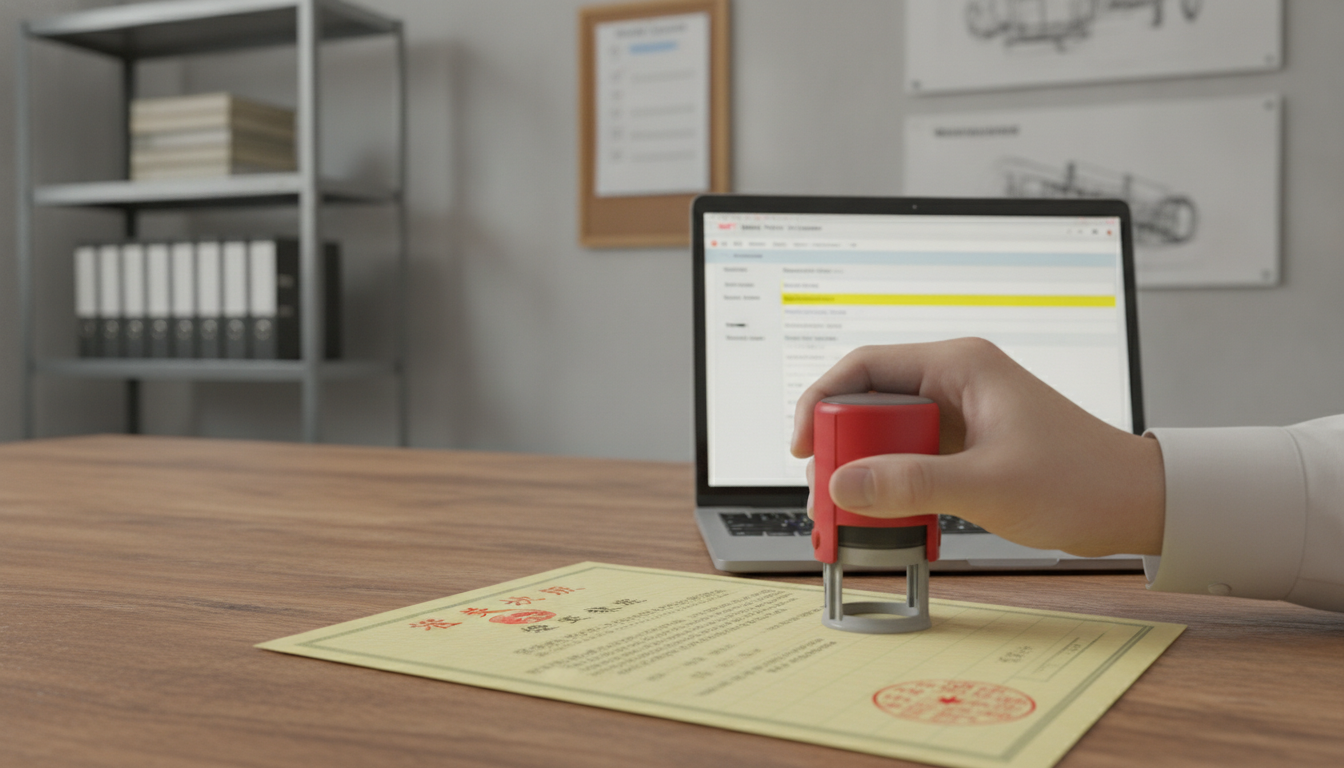
The beneficiary name on the supplier’s wire instruction must match the legal entity name on the Chinese business licence exactly. A mismatch means you are paying a different company, which is either a trading intermediary reselling factory output, a shell company set up for fraud, or a compromised account controlled by a third party. Chinese business licences are public records searchable on the National Enterprise Credit Information Publicity System (GSXT), and the registered name appears in simplified Chinese characters. Request a scanned copy of the business licence and compare the name field to the beneficiary name your bank shows on the wire preview screen.
How to Obtain and Read a Chinese Business Licence
Ask the supplier to provide a colour scan or photo of their business licence (营业执照). The document displays the company’s unified social credit code (18 digits), registered legal name, registered address, legal representative, business scope, and registration date. The legal name is the entity that may legally enter into contracts and receive payments. Cross-reference this name with the beneficiary name on the proforma invoice, the purchase contract, and the wire instruction. If the supplier sends a different account holder name and explains it as a ‘finance department account’ or ‘group treasury account,’ request documentation proving the relationship between the two entities, such as a shareholding structure chart or a parent-subsidiary registration record.
Trading Companies Versus Factories
A business licence lists the exact scope a company may produce, which is what separates a real factory from a trading company reselling that factory’s output. If the business scope includes only ‘import and export of goods’ or ‘sales of textiles’ but does not mention manufacturing or production, the entity is a trading company. Trading companies add a margin, may source from multiple factories without your knowledge, and introduce an additional counterparty risk. When you need factory-direct pricing and quality control, verify that the business scope explicitly includes production or manufacturing of the product category you are buying.
Confirm Bank Details Through a Separate Channel
A recurring buyer pain point is receiving a last-minute request to change bank details and having no reliable way to determine whether the request came from the supplier or a compromised email account. Business-email compromise (BEC) attackers monitor email threads between buyers and suppliers, wait until a deposit or balance payment is due, then send a message from a spoofed or hacked email address with updated wire instructions. The new account typically belongs to a shell company or an individual mule account, and once you send the payment the funds disappear within hours. Wire transfer safety China suppliers Argentina banks improves when you verify every detail change through independent channels.
Dual-Channel Verification Protocol
Every time you receive bank details or a request to change bank details, confirm the information through a separate communication channel that the attacker does not control. Call the supplier using a phone number you obtained during the initial negotiation or from the company’s verified website, never a number provided in the email containing the new bank details. Ask to speak with the contact person you have been working with and verbally confirm the account holder name, bank name, SWIFT code, and account number. If the supplier cannot be reached by phone, use WeChat, WhatsApp, or another messaging app where you have an established conversation history, and ask the contact to send a photo of the bank account information on company letterhead or to confirm the details via voice message.
Test Transfers Before Full Payment
Send a small test transfer of USD 50 to USD 100 to the new account and ask the supplier to confirm receipt and the exact amount credited. This step verifies that the account is active, that the beneficiary name matches, and that the routing path works. Wait for written confirmation before releasing the full deposit or balance. Test transfers add one to two days to the payment timeline but eliminate the risk of sending tens of thousands of dollars to a fraudulent account.
Red Flags in Bank-Detail Change Requests
- Urgency language: Messages claiming ‘our bank account was frozen, please send to this new account immediately’ or ‘we changed banks, wire today to avoid production delays’ are high-probability fraud attempts.
- Personal accounts: A beneficiary name that is an individual’s name rather than a company name, or an account held at a rural credit cooperative or an obscure regional bank, signals a mule account.
- Mismatched email domain: The sender address uses a free email provider (Gmail, Outlook, QQ) or a domain with a small typo (goodcantradlng.com instead of goodcantrading.com).
- No phone confirmation: The supplier becomes unreachable by phone or provides a new phone number that was not previously on file.
Stage Payments Around Inspection Milestones
Wire transfer safety China suppliers Argentina banks improves dramatically when you tie payment releases to verified production milestones rather than calendar dates. A common payment structure is 30% deposit upon order confirmation, 70% balance before shipment. This structure gives the supplier your money before you have proof that the goods meet your specifications. A safer structure is 30% deposit after sample approval, 65% balance after pre-shipment inspection passes, and 5% final payment after you receive and inspect the goods at destination. The final 5% retention is difficult to enforce for small orders, so the critical gate is the pre-shipment inspection before the 65% balance.
Pre-Shipment Inspection as a Payment Gate
A pre-shipment inspection (PSI) is a third-party check conducted at the supplier’s factory or warehouse after production is complete and before the goods are loaded into containers. The inspector verifies that the quantity, specifications, quality, and packaging match the purchase order and approved sample. The inspection report includes photos, measurements, and a pass/fail conclusion. Release the balance payment only after you receive a passing inspection report. If the inspection fails, the supplier must rework or replace the defective units before you authorize the wire transfer. Our quality control team coordinates pre-shipment inspections across Yiwu, Guangzhou, and Foshan production zones, and the inspection report is delivered within 24 hours of the factory visit.
Sample Approval Before Deposit
Request a pre-production sample or a golden sample before you send the deposit. The sample confirms that the supplier understands your specifications and has the capability to produce the product. Approve the sample in writing, then reference that approval in the purchase contract and the wire instruction. If the bulk production deviates from the approved sample, you have documented evidence to withhold the balance or demand corrections.
Escrow and Payment Platforms
Escrow services hold the buyer’s payment in a neutral account and release funds to the supplier only after the buyer confirms receipt and acceptance of the goods. Alibaba Trade Assurance and similar platforms offer escrow for orders placed through their marketplaces. For direct factory orders outside a platform, third-party escrow providers exist but add cost and complexity. Escrow is most practical for first-time orders with unverified suppliers; established relationships typically move to staged wire transfers with inspection gates because escrow fees (often 2% to 5% of order value) become prohibitive on repeat orders.
What to Do After Fraud: Incident Response Workflow
If you discover that you sent a wire transfer to a fraudulent account, speed is the only variable you control. The funds may still be in transit or sitting in the beneficiary account for a few hours before the fraudster moves them to a secondary account or converts them to cryptocurrency. Implementing wire transfer safety China suppliers Argentina banks protocols after fraud is too late, but rapid response can still improve recovery odds.
Step 1: Contact Your Bank Immediately
Call your Argentine bank’s international wire department and request an immediate payment recall. Provide the SWIFT reference number, the amount, the beneficiary name, and the beneficiary bank. Ask the bank to send a SWIFT recall message marked urgent. Do not wait for email responses; phone calls and in-person branch visits move faster.
Step 2: File a Police Report
Go to your local police station or the cybercrime unit (Policía Federal Argentina, División Delitos Tecnológicos) and file a formal complaint (denuncia). Bring printed copies of the wire instruction, the email thread, the proforma invoice, and any other documentation showing the fraudulent bank-detail change. The police report number is required by most banks before they will escalate a recall request, and it is necessary if you later pursue legal action or insurance claims.
Step 3: Notify the Supplier
Contact the legitimate supplier through a verified phone number or messaging app and inform them that you received a fraudulent bank-detail change. Ask if their email account was compromised and request that they check their sent-mail folder for messages they did not send. The supplier may be able to contact the beneficiary bank in China or provide additional evidence that the account is fraudulent.
Step 4: Preserve Evidence
Take screenshots of the email thread, the wire confirmation from your bank, the fraudulent wire instruction, and any chat or phone logs. Export emails as PDF files with full headers showing the sender’s IP address and routing information. This evidence is required for police investigations, bank disputes, and potential civil litigation.
Step 5: Report to Cybercrime Authorities
File a report with the Argentine cybercrime reporting portal (Ministerio de Seguridad, Cibercrimen) and, if the supplier is in China, with the Chinese Ministry of Public Security’s online fraud reporting system. Cross-border fraud investigations are slow and rarely result in fund recovery, but the reports create an official record and may help authorities identify patterns or shut down mule accounts.
Step 6: Consult Legal Counsel
If the transfer amount is large enough to justify legal fees, consult an attorney who specializes in international trade fraud. Legal options include filing a civil claim against the fraudulent account holder (if their identity can be determined), pursuing the supplier for negligence if their email security was inadequate, or making an insurance claim if you carry trade-credit or cyber-fraud insurance.
Why Argentine Banks Rarely Recover Fraudulent Transfers
According to the Federal Reserve Bank (2025), fewer than 4% of international wire fraud cases result in full fund recovery once the beneficiary bank credits the payee account. The window for successful SWIFT recalls closes within 24 hours for most Argentina-to-China routes, and Chinese banks require voluntary cooperation from the account holder to return funds. Most fraudsters empty mule accounts within hours of receiving a transfer.
Key Takeaways
- Wire transfers become irreversible once the Chinese beneficiary bank credits the supplier account, a process that SWIFT (2026) reports completes within 10 minutes for 75% of cross-border payments, making pre-authorization verification the only effective fraud control.
- Send a USD 50 to USD 100 test payment to new supplier accounts before releasing full order value, waiting for written confirmation of receipt and exact credited amount to verify account ownership and routing accuracy.
- Confirm bank-detail changes using a phone number you obtained during initial negotiations or from the supplier’s verified website, never using contact information provided in the change-request email, because the FBI IC3 (2025) attributes 68% of international trade fraud to business-email compromise.
- Release deposits after approving pre-production samples in writing, then release 65% to 70% balance only after receiving a passing third-party pre-shipment inspection report documenting that quantity, specifications, and packaging meet purchase-order requirements.
- Beneficiary names must match the supplier’s registered legal entity on the Chinese business licence character-for-character; the National Enterprise Credit Information Publicity System (GSXT) allows free online verification of any mainland China company registration within seconds.
- Contact your Argentine bank within 60 minutes of discovering fraudulent transfers to request urgent SWIFT recall, file a police report (denuncia) immediately, and preserve all email headers and transaction records, though Federal Reserve Bank (2025) data shows only 4% of international wire fraud results in recovery.
Frequently Asked Questions
Can a wire transfer to China be cancelled after I send it?
Your bank can request a SWIFT recall only if the beneficiary bank has not yet posted the payment to the supplier’s ledger. After the Chinese bank credits the funds, the transfer becomes final and your Argentine bank cannot force a return. The account holder must voluntarily agree to send the money back. Recall requests succeed when you contact your bank within minutes of authorizing the payment and the funds remain in transit or awaiting manual processing at the destination institution.
How do I verify a Chinese supplier’s bank account before paying?
Obtain a scanned copy of the supplier’s business licence and cross-check the registered legal name against the beneficiary name shown on the wire instruction; both must match exactly. Search the company on the National Enterprise Credit Information Publicity System (GSXT) to confirm the licence is genuine and the entity holds active registration status. Telephone the supplier using contact information you secured independently during initial negotiations and verbally confirm account holder name, bank name, SWIFT code, and full account number.
What should I do if the supplier asks me to pay a personal account?
Decline to send funds to any account where the beneficiary name is an individual rather than the company name on the business licence and purchase contract. Personal accounts, accounts at rural credit cooperatives, and accounts held by unrelated third parties are common fraud vectors. Legitimate suppliers provide corporate bank accounts in the company’s registered legal name. If a supplier insists on using a personal account and claims tax or regulatory justification, that indicates unacceptable risk and you should source from a different factory.
Wire transfer safety China suppliers Argentina banks depends on verification steps you take before the payment leaves your account, not on recall procedures afterward. Our supplier management process includes business-licence verification, bank-account cross-checks, and dual-channel confirmation of every wire instruction, so you know the entity receiving your deposit is the factory you negotiated with. We coordinate pre-shipment inspections across Yiwu, Guangzhou, and Foshan production zones and release balance payments only after the inspection report confirms that your order meets specifications.
Protect your payments with verified suppliers and inspection-gated releases.
Request Supplier Verification →
Written by the Goodcantrading Sourcing Team.