Product Design Theft Prevention China Suppliers [2026 Guide]
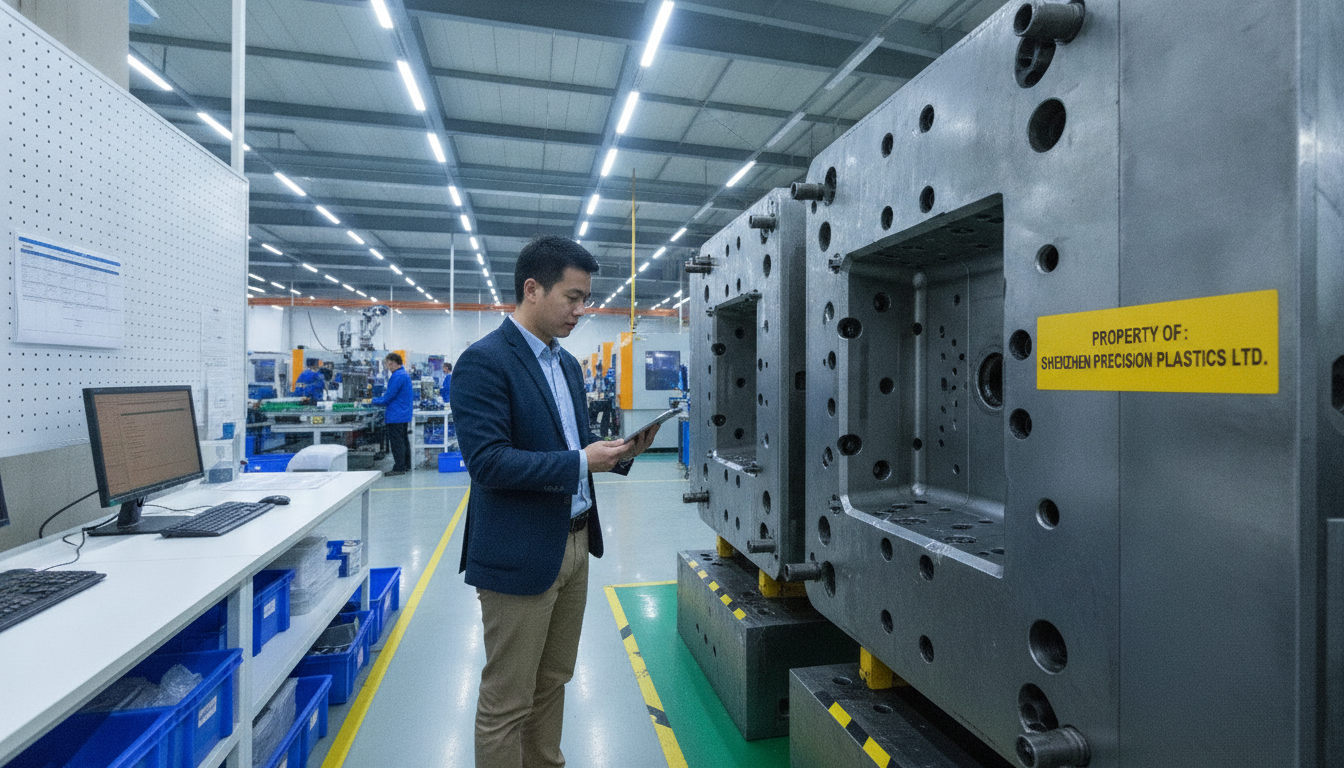
Product design theft prevention China suppliers requires a layered approach combining China-specific legal agreements, controlled information sharing, and physical custody of production tooling. A conventional NDA does not prohibit a Chinese manufacturer from using your design to produce similar goods for other buyers, which is why importers rely on a China NNN agreement that adds non-use and non-circumvention clauses, register their design patents and trademarks in China before sharing CAD files, and maintain contractual ownership of molds and tooling to prevent unauthorized production runs.
📋 Table of Contents
- Executive Summary
- Why Conventional NDAs Fail in China
- What Is a China NNN Agreement?
- Register IP in China Before Production
- Control Technical Information Sharing
- Tooling Custody and Contractual Ownership
- Compartmentalize Production Across Suppliers
- Enforcement When a Supplier Copies Your Design
- Key Takeaways
- Frequently Asked Questions
Executive Summary
- China NNN agreement: Adds non-use and non-circumvention clauses to a conventional non-disclosure agreement, prohibiting the supplier from manufacturing substantially similar products for any buyer during and after your engagement.
- China IP registration: Design patents, utility models, and trademarks registered with China’s National Intellectual Property Administration create enforceable rights inside China, where foreign registrations carry no weight.
- Controlled file sharing: Provide simplified STEP files rather than native CAD models, watermark all drawings with version codes and recipient identifiers, and maintain access logs that record who received which document version.
- Tooling ownership: Purchase orders and manufacturing agreements must state that molds, dies, jigs, and fixtures remain your property, stored separately with access restricted to authorized production runs you approve in writing.
- Enforcement economics: Chinese courts, customs recordation, and e-commerce platform takedown procedures are commercially viable when you hold a China-registered design patent or trademark; settlement negotiations often resolve disputes faster than litigation.

Why Conventional NDAs Fail in China
A standard non-disclosure agreement drafted under U.S. or European law prohibits the recipient from sharing your confidential information with third parties. It does not prevent the Chinese manufacturer from using that information internally to produce similar goods for other customers. Buyers discover this gap when a supplier launches a lookalike product under a different brand name six months after the first shipment, technically complying with the NDA because no external disclosure occurred.
The Non-Use Gap
Conventional NDAs focus on secrecy, not application. A factory that signs a Western-style NDA can legally study your design, adapt it for another buyer’s order, and argue that no confidential information left the building. The agreement did not prohibit internal use, only external sharing.
Jurisdiction and Enforceability
An NDA governed by California or German law requires enforcement in a California or German court. Winning a judgment abroad does not compel a Chinese entity to comply, and cross-border enforcement through the Hague Convention or bilateral treaties is slow and expensive. Chinese courts will enforce a contract governed by Chinese law and written in Mandarin far more readily than a foreign judgment.
What Buyers Experience
Importers report uncertainty over who can access design files, who receives samples, and who controls molds after production, creating fear of unauthorized reuse. A business licence lists the exact production scope a company may quote on, which is what separates a real factory from a trading company reselling that factory’s output, yet many buyers skip this verification step and discover the supplier was never the manufacturer.
What Is a China NNN Agreement?
A China NNN agreement combines three prohibitions: non-disclosure, non-use, and non-circumvention. It is drafted in Mandarin, governed by Chinese law, and specifies a Chinese court or arbitration venue. The non-use clause prevents the supplier from manufacturing substantially similar products for any buyer, and the non-circumvention clause prohibits the supplier from contacting your customers, distributors, or component suppliers directly.
Non-Disclosure Clause
This clause mirrors a conventional NDA, prohibiting the supplier from sharing your technical drawings, specifications, samples, pricing, and business plans with any third party. It covers employees, subcontractors, and affiliated companies.
Non-Use Clause
The non-use provision states that the supplier may not use your confidential information to produce goods for itself or for any other customer, even if those goods are sold under a different brand. This clause closes the internal-use loophole that conventional NDAs leave open.
Non-Circumvention Clause
Non-circumvention prohibits the supplier from bypassing you to deal directly with your customers, sales channels, or raw-material vendors. It protects your commercial relationships and prevents the supplier from offering your design to your competitors at a lower price.
Drafting and Language Requirements
The agreement must be written in Mandarin and governed by the laws of the People’s Republic of China. A bilingual version with English and Mandarin side by side is acceptable, but the Mandarin text controls in case of conflict. Specify a Chinese court in the supplier’s province or a China International Economic and Trade Arbitration Commission venue.
Register IP in China Before Production
China operates a first-to-file intellectual property system. A design patent, utility model patent, or trademark belongs to whoever files the application first, regardless of who invented the design or used the brand first in another country. Foreign registrations carry no legal weight inside China.
Design Patent Registration
A Chinese design patent protects the ornamental appearance of a product for ten years from the filing date. The application requires six orthogonal views and an isometric view, and examination typically completes within six to eight months. Filing before you share CAD files with a supplier prevents the supplier from registering the design under its own name.
Utility Model Patent
Utility model patents cover functional features and mechanical structures, offering ten years of protection with faster examination than invention patents. They are well-suited to product improvements, fastening mechanisms, and assembly methods that do not meet the novelty threshold for an invention patent.
Trademark Registration
Registering your brand name and logo with China’s National Intellectual Property Administration creates enforceable rights against counterfeit goods and unauthorized use on e-commerce platforms. Trademark squatters monitor foreign brands entering the Chinese market and file defensive registrations to extract settlement payments, so early filing is critical.
Trade Secret Protection
Information that cannot be patented, such as supplier lists, pricing formulas, and customer databases, qualifies as a trade secret under Chinese law if you take reasonable steps to keep it confidential. The China NNN agreement, access controls, and employee confidentiality clauses establish that you treated the information as secret, which is a prerequisite for trade-secret enforcement.
Control Technical Information Sharing
Limiting the technical detail you provide to manufacturers reduces the risk that a supplier can replicate your product independently. Buyers who share native SolidWorks or Fusion 360 files give the supplier full parametric control, enabling easy modification and resale.
Simplified STEP Files
Export CAD models as STEP or IGES files, which preserve geometry but strip parametric history and design intent. The supplier receives the shapes needed for tooling and production but cannot easily adjust dimensions or reverse-engineer the original design logic.
Digital Watermarking and Version Control
Embed a unique identifier in every drawing and specification you send, combining the recipient’s name, the document version, and the issue date. Watermarks help trace leaks when a design appears on an unauthorized platform, and version logs record who received which file revision.
Access Logs and Recipient Approval
Maintain a spreadsheet recording the date, recipient name, file name, and version number for every document you send. Require the supplier to confirm in writing which employees and subcontractors will access your files, and prohibit forwarding to unapproved parties.
Sample Control
Physical samples reveal material composition, construction methods, and finishing techniques. Request that samples be returned or destroyed after approval, and prohibit the supplier from retaining samples for its own reference library. Our quality control team verifies sample custody terms during pre-production meetings.
Tooling Custody and Contractual Ownership
Molds, dies, jigs, and fixtures are the physical assets that enable mass production. A supplier that owns your tooling can run unauthorized production batches whenever factory capacity is idle, selling the output through parallel channels.
Purchase Tooling Outright
Pay the full tooling cost upfront and specify in the purchase order that molds, dies, and fixtures remain your property. The supplier holds them as a bailee, responsible for maintenance and storage but prohibited from using them for any order you did not authorize in writing.
Tooling Storage and Access Control
Require the supplier to store your tooling separately from general factory assets, marked with your company name and a unique identifier. Access should be restricted to production runs you approve via a signed work order, and the supplier must provide photographic evidence of storage conditions upon request.
Tooling Custody Clauses in Contracts
Manufacturing agreements should state that unauthorized use of your tooling constitutes breach of contract and theft of property, entitling you to immediate return of the tooling, damages, and injunctive relief. Specify liquidated damages per unauthorized unit produced, which simplifies enforcement by eliminating the need to prove actual harm.
Tooling Retrieval and Transfer
If you switch suppliers, the contract must permit you to retrieve your tooling within a defined notice period, typically 30 days. The supplier may not withhold tooling as for unpaid invoices unrelated to the tooling itself, and you should budget for shipping and customs clearance when moving tooling between factories.
Compartmentalize Production Across Suppliers
Splitting production across multiple suppliers so that no single factory sees the complete design reduces the risk that any one supplier can replicate your product independently. This strategy works best for products with distinct subassemblies or components that can be manufactured separately and assembled in-house or at a final-assembly partner.
Component-Level Splitting
Assign different suppliers to produce the housing, the internal mechanism, the electronics, and the packaging. Each supplier receives only the drawings and specifications for its own component, with no visibility into how the parts integrate. Final assembly occurs at your warehouse or at a consolidation facility you control.
Process-Level Splitting
For products that cannot be split into independent components, divide the manufacturing process across suppliers. One factory handles injection molding, a second performs painting and finishing, and a third applies branding and packaging. No single supplier possesses the complete process knowledge needed to produce the finished good.
Trade-Offs and Complexity
Multi-supplier production increases coordination overhead, shipping costs, and quality-control complexity. You must manage separate purchase orders, track component lead times, and ensure that parts from different suppliers fit together correctly. This approach makes sense for high-value products where design theft would cause significant commercial harm, but it may not be cost-effective for low-margin commodity goods.
Sourcing Agent Coordination
A trusted China sourcing agent can coordinate multi-supplier production, managing component orders, consolidating shipments, and conducting quality inspections at each stage without exposing your full design to any single factory. Our Yiwu and Guangzhou sourcing teams structure compartmentalized production for buyers who need design-theft protection without the overhead of managing multiple suppliers directly.
Enforcement When a Supplier Copies Your Design
Discovering that a Chinese supplier has copied your design and is selling lookalike products under a different brand requires immediate action. Enforcement options range from cease-and-desist letters to Chinese court litigation, with the best path depending on whether you hold a China-registered design patent or trademark.
Cease-and-Desist Letter
A formal demand letter sent by a Chinese law firm, written in Mandarin and citing your China-registered IP rights, often prompts the supplier to halt production and negotiate a settlement. The letter should specify the infringing product, attach evidence of your registration, and demand that the supplier stop manufacturing, destroy remaining inventory, and disclose the quantity already sold.
E-Commerce Platform Takedown
Alibaba, Taobao, JD.com, and Amazon have intellectual property protection programs that allow rights holders to report infringing listings. A valid takedown request requires proof of your China-registered design patent or trademark, screenshots of the infringing listing, and a statement that the seller did not obtain your authorization. Platforms typically remove listings within 48 to 72 hours of a complete submission.
Customs Recordation
Recording your design patent or trademark with China Customs enables border enforcement. Customs officers can detain shipments of infringing goods at the port, preventing them from reaching international buyers. Recordation is valid for ten years and costs a modest administrative fee, making it one of the most cost-effective enforcement tools for exporters.
Chinese Court Litigation
Filing a lawsuit in a Chinese court is commercially viable when you hold a China-registered design patent and can prove that the supplier manufactured infringing goods. Chinese courts have become more favorable to foreign plaintiffs in recent years, and damages awards, while lower than in the United States or Europe, often exceed the cost of litigation. Cases typically resolve within 12 to 18 months.
Settlement Negotiations
Most design-theft disputes settle before trial. The supplier agrees to stop production, destroy tooling, pay a lump sum to compensate for past sales, and sign a binding agreement not to manufacture similar products in the future. Settlement is faster and cheaper than litigation, and it avoids the risk that a court judgment cannot be collected.
Evidence Preservation
Collect screenshots, purchase receipts, product samples, and shipping records as soon as you discover the infringement. Chinese courts require clear evidence that the defendant manufactured or sold the infringing goods, and platform takedown requests are rejected if the evidence is vague or incomplete.
Key Takeaways
- China NNN agreement: A conventional NDA does not prohibit a Chinese supplier from using your design internally to produce goods for other buyers, which is why importers use a China NNN agreement that adds non-use and non-circumvention clauses and is governed by Chinese law.
- First-to-file IP system: China awards design patents, utility model patents, and trademarks to whoever files the application first, regardless of prior use abroad, so register your IP in China before sharing production files with any supplier.
- Simplified file formats: Provide STEP or IGES files instead of native CAD models, watermark every drawing with a unique recipient identifier and version code, and maintain access logs that record who received which document revision.
- Tooling ownership: Purchase molds, dies, and fixtures outright, specify in the contract that they remain your property, and require the supplier to store them separately with access restricted to production runs you authorize in writing.
- Compartmentalized production: Splitting manufacturing across multiple suppliers so that no single factory sees the complete design reduces the risk of independent replication, though it increases coordination overhead and shipping costs.
- Enforcement economics: Cease-and-desist letters, e-commerce platform takedowns, and customs recordation are low-cost enforcement tools that work when you hold a China-registered design patent or trademark, while Chinese court litigation and settlement negotiations are viable for high-value disputes.
Frequently Asked Questions
Can I enforce a U.S. or European design patent in China?
No. China operates an independent intellectual property system, and foreign design patents, utility model patents, and trademarks carry no legal weight inside China. You must file a separate application with China’s National Intellectual Property Administration to obtain enforceable rights. A U.S. design patent protects your product in the United States but does not prevent a Chinese supplier from manufacturing and selling the same design within China or exporting it to third countries.
What happens if I share CAD files before registering a design patent in China?
Sharing CAD files or samples with a Chinese supplier before filing a design patent application can trigger a public-disclosure bar that prevents you from obtaining a valid patent. China grants design patents on a first-to-file basis, and if the supplier or a third party files an application based on your design before you do, that party becomes the legal owner. Even if the supplier does not file, public disclosure of the design through sales or online listings can invalidate your own application if you file more than six months after the disclosure.
How do I verify that a supplier has not registered my design under its own name?
Search the China National Intellectual Property Administration database using the product category and key design features. The database is public and searchable in Mandarin and English. If you discover that a supplier has filed a design patent application for your product, you can file an invalidation petition within three months of the patent grant, arguing that the supplier was not the true inventor and that you disclosed the design to the supplier under a confidentiality agreement. Invalidation proceedings require legal representation and evidence of prior ownership.
Product design theft prevention China suppliers starts with a China NNN agreement, early IP registration, controlled file sharing, and contractual tooling ownership. Importers who skip these steps discover unauthorized copies on Alibaba or Amazon months after their first shipment, facing enforcement costs that exceed the profit from the original order. Our supplier management process includes NNN agreement review, business licence verification, and tooling custody clauses in every manufacturing contract, protecting buyers across Latin America and Europe from design theft before production begins.
Protect your product design with verified suppliers, enforceable contracts, and controlled production.
Request Supplier Verification →
Written by the Goodcantrading Sourcing Team.