True Cost Importing Pet Accessories China to Argentina [2026 Guide]
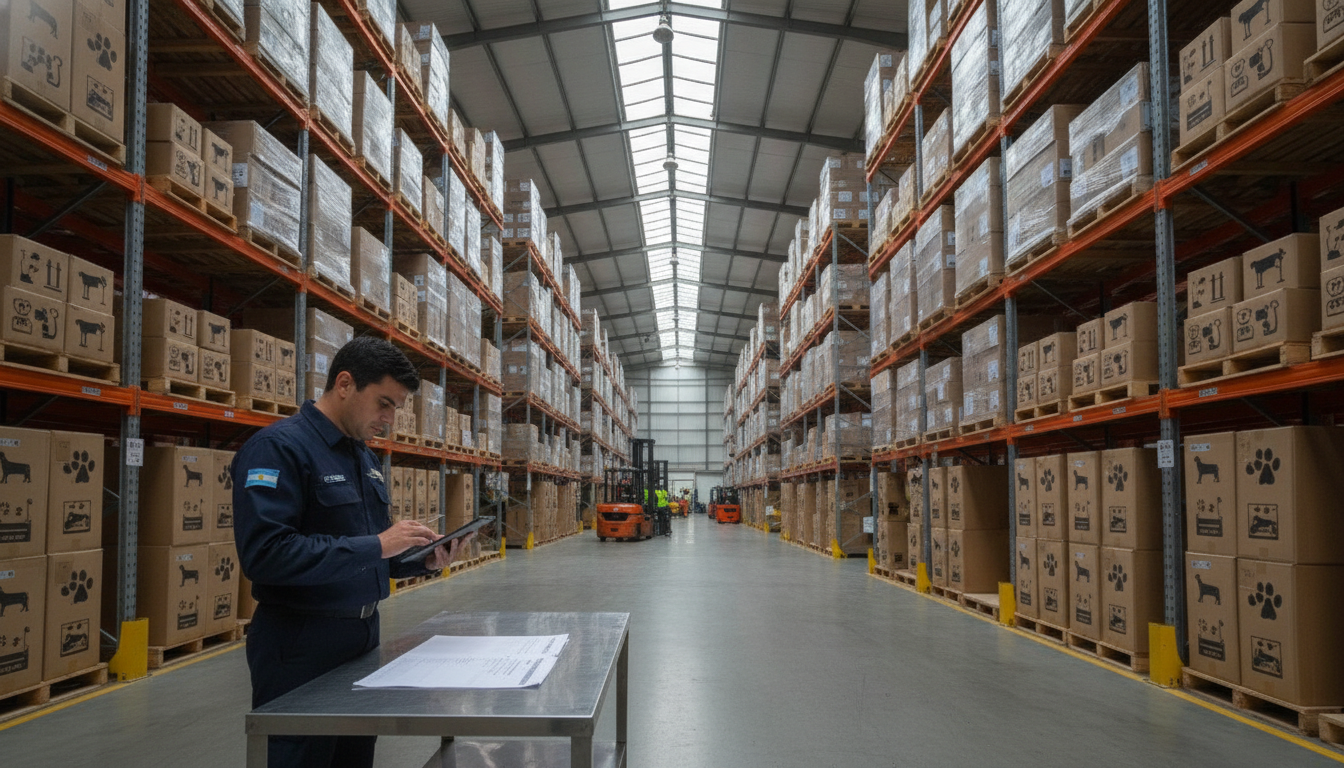
The true cost importing pet accessories China to Argentina extends far beyond the factory invoice. Your landed cost includes the FOB price, ocean or air freight (approximately USD 95-280 per cubic meter for LCL shipments in 2026), import duty ranging from 12% to 35% depending on NCM classification, a 21% standard VAT, statistical fees, customs brokerage, port handling, inland delivery, and currency-conversion charges. A collar shipment quoted at USD 2,000 FOB can land at USD 3,400-3,800 after all charges, making accurate cost modeling essential before you commit to an order.
📋 Table of Contents
- Executive Summary
- What Charges Make Up Your Landed Cost?
- How NCM Classification Affects Your Duty Rate
- Freight Options and Real 2026 Costs
- Argentine Taxes, Fees, and Withholdings
- Hidden Costs Most Buyers Miss
- Worked Example: 500-Unit Collar Shipment
- Compliance Requirements for Pet Products
- When to Use Courier Versus Commercial Import
- How a Sourcing Agent Reduces Your Landed Cost
- Key Takeaways
- Frequently Asked Questions
Executive Summary
- Landed cost structure: FOB price plus freight, insurance, import duty (12-35%), VAT (21%), statistical fee, brokerage, port handling, inland delivery, and currency conversion.
- 2026 freight benchmarks: LCL ocean freight runs approximately USD 95-280 per cubic meter, air freight USD 5-9 per kilogram, and a 20-foot container USD 7,100-8,600 port-to-port.
- NCM classification: Collars, harnesses, beds, toys, grooming items, and apparel each carry distinct tariff codes with duty rates from 12% to 35% depending on material composition.
- Courier threshold: Argentine regulations cap courier imports to a maximum of USD 3,000 FOB, 50 kilograms per package, and three units of the same type, limiting commercial-scale orders.
- Compliance gaps: Material safety, labeling in Spanish, packaging standards, and potential SENASA involvement for animal-contact products require verification before shipment.

What Charges Make Up Your Landed Cost?
Understanding the true cost importing pet accessories China to Argentina begins with identifying every charge layer. Your total landed expense separates into origin charges in China, international freight and insurance, Argentine import duties and VAT, destination handling fees, brokerage, inland delivery, and currency-conversion costs. Missing any component produces an inaccurate budget and erodes your margin before the first sale.
Origin Charges in China
Your supplier quotes an FOB price, which covers the product, domestic Chinese transport to the port, and loading onto the vessel. Additional origin costs include export documentation, fumigation certificates if required for wooden packaging, and quality inspection fees if you arrange pre-shipment checks. A trusted China sourcing agent consolidates these steps and often secures factory pricing 15-25% below Alibaba published rates through direct relationships.
International Freight and Insurance
Freight depends on shipment size, mode, and routing. LCL ocean freight from China to Argentina is approximately USD 95-280 per cubic meter according to DTFulogistics (2026), while air freight runs USD 5-9 per chargeable kilogram with an estimated transit time of 5-8 days. A 20-foot container is quoted at approximately USD 7,100-8,600 port-to-port. Cargo insurance typically adds 0.3-0.5% of the CIF value and protects against loss or damage in transit.
Argentine Import Duties and Taxes
Duty is calculated ad valorem on the CIF customs value (FOB price plus freight plus insurance). According to the World Bank WITS (2023), Argentina’s simple average applied tariff was 12.04%, while individual tariff lines can reach 35%. Pet accessories span multiple NCM codes, each with its own rate. VAT follows duty assessment: according to ARCA (2026), Argentina’s standard import VAT rate is 21%, with reduced and increased rates of 10.5% and 27% applying to some categories. A statistical fee of approximately 0.5% and possible tax prepayments or withholdings add further layers.
Destination Handling and Delivery
Port charges include terminal handling, customs brokerage, storage if clearance delays, and inland delivery to your warehouse. Brokerage fees vary by shipment complexity and broker, typically ranging from USD 150 to USD 400 for standard commercial shipments. Storage accrues daily if documentation is incomplete or if ARCA requests physical inspection.
How NCM Classification Affects Your Duty Rate
The Nomenclatura Común del Mercosur (NCM) code determines your duty rate, VAT category, and any non-automatic import license requirements. Pet accessories fall under multiple chapters, and misclassification triggers penalties, shipment holds, or forced reclassification at a higher rate.
Common NCM Codes for Pet Accessories
Duty ranges are indicative and subject to change. Always verify the current tariff schedule with your customs broker or through the ARCA SIM system before finalizing an order.
Material Composition and Tariff Splits
A collar with leather exterior and nylon webbing may be classified under leather goods or textile goods depending on which material predominates by weight or value. Your supplier’s commercial invoice must break down material composition and unit value to support correct classification. Ambiguity invites reclassification at the higher rate.
Why Misclassification Costs You
ARCA cross-references declared NCM codes against product descriptions, material lists, and images. A mismatch triggers physical inspection, delays clearance by 7-14 days, and may result in forced reclassification, back-duty assessment, and penalties. Correct classification at the outset avoids these costs and keeps your shipment moving.
Freight Options and Real 2026 Costs
Freight mode determines transit time, cost per kilogram or cubic meter, and minimum shipment size. Pet accessories are typically lightweight relative to volume, making dimensional weight a critical factor for air freight and LCL ocean pricing.
LCL Ocean Freight
Less-than-container-load (LCL) shipments share container space with other cargo and are priced per cubic meter. Indicative LCL ocean freight from China to Argentina ranges from USD 95 to USD 280 per cubic meter according to DTFulogistics (2026). Transit time averages 35-45 days port-to-port, plus inland delivery and customs clearance. LCL suits orders of 2-10 cubic meters where a full container is not justified.
FCL Ocean Freight
A 20-foot container from China to Argentina is quoted at approximately USD 7,100-8,600 port-to-port, with an estimated landed total of USD 11,500-14,500 including destination charges, according to DTFulogistics (2026). A 40-foot container costs proportionally more but reduces per-unit freight cost for larger orders. FCL makes sense when your shipment exceeds 12-15 cubic meters or when you want exclusive container control to minimize handling damage.
Air Freight
Air freight is priced per chargeable kilogram, which is the greater of actual weight or volumetric weight (length × width × height in cm ÷ 6,000 for most carriers). Indicative air freight ranges from USD 5 to USD 9 per chargeable kilogram according to DTFulogistics (2026), with an estimated transit time of 5-8 days. A 100-kilogram shipment of plush pet beds measuring 1.2 cubic meters would be charged on 200 kilograms volumetric weight, making air freight expensive for bulky, lightweight goods.
DDP Shipping
Delivered Duty Paid (DDP) service bundles freight, insurance, duty, VAT, brokerage, and delivery into one quoted rate. Indicative DDP shipping ranges from USD 210 to USD 480 per cubic meter or USD 6.50 to USD 13.50 per kilogram according to DTFulogistics (2026), depending on the shipment basis and service. DDP simplifies budgeting and transfers customs-clearance risk to the forwarder, but the all-in rate may exceed the sum of itemized charges if you arrange each component separately.
Argentine Taxes, Fees, and Withholdings
Argentine import taxation operates in layers, each calculated on a different base and administered through the ARCA SIM electronic declaration system. Understanding the sequence prevents budget surprises.
Import Duty Calculation
Duty is assessed ad valorem on the CIF customs value. For a shipment with FOB USD 2,000, freight USD 300, and insurance USD 12, the CIF value is USD 2,312. At a 20% duty rate, duty equals USD 462.40. This amount is paid before the shipment clears customs.
VAT on Imports
VAT is calculated on the sum of CIF value plus duty. Continuing the example above, the VAT base is USD 2,312 + USD 462.40 = USD 2,774.40. At the standard 21% rate, VAT equals USD 582.62. Some pet products may qualify for reduced or increased VAT rates depending on classification and end use, so verify with your broker.
Statistical Fee and Other Charges
A statistical fee of approximately 0.5% of the CIF value funds customs data collection and trade statistics. On a USD 2,312 CIF shipment, this adds roughly USD 11.56. Additional charges may include sanitary or phytosanitary inspection fees if SENASA involvement is triggered, though most pet accessories avoid these costs unless they contain animal-derived materials or make health claims.
Tax Prepayments and Withholdings
Argentina applies advance income-tax and VAT withholdings on some imports, which are later credited against your annual tax return if you are a registered taxpayer. Rates and applicability depend on your CUIT registration status and the product category. Your customs broker calculates these at clearance and includes them in the total payment demand.
Hidden Costs Most Buyers Miss
Published freight and duty rates capture the majority of landed cost, but several smaller charges accumulate and can add 8-15% to your budget if not anticipated.
Currency Conversion and Bank Fees
Payments to Chinese suppliers, freight forwarders, and Argentine customs brokers involve multiple currency conversions. Banks and payment processors charge 1.5-3% spreads on the mid-market exchange rate, and wire-transfer fees add USD 25-50 per transaction. A shipment requiring five separate payments can incur USD 200-400 in conversion and transfer costs.
Storage and Demurrage
Free storage at Argentine ports typically expires 5-7 days after vessel arrival. If your customs broker has not cleared the shipment by then, storage fees accrue daily, ranging from USD 15 to USD 50 per day depending on shipment size and terminal. Demurrage on containers follows a similar schedule. Delays caused by incomplete documentation, ARCA inspection requests, or payment processing can add USD 300-800 in storage before clearance.
Inspection and Sampling Costs
ARCA may request physical inspection or laboratory testing of your shipment, particularly for first-time importers or product categories flagged for compliance review. Inspection fees range from USD 100 to USD 500, and testing for material safety or labeling compliance can add USD 200-600 per sample. These costs are non-negotiable and must be paid before clearance proceeds.
Inland Delivery and Handling
Quoted freight rates typically cover port-to-port movement. Delivery from the port to your Buenos Aires or Rosario warehouse adds USD 150-400 depending on distance, shipment size, and whether liftgate or inside-delivery service is required. Bulky pet beds or heavy grooming-tool shipments may incur additional handling charges.
Returns, Defects, and Warranty Claims
A percentage of any shipment arrives damaged or defective. Without a pre-shipment inspection, defect rates can reach 5-12% on first orders from unverified suppliers. Returning goods to China for replacement or refund is prohibitively expensive, so most buyers absorb the loss. A quality inspection before shipment catches defects while the supplier can still correct them, avoiding the cost of unsellable inventory.
Worked Example: 500-Unit Collar Shipment
A concrete example illustrates how the true cost importing pet accessories China to Argentina compounds across each layer. A 500-unit order of nylon dog collars with metal buckles, shipped LCL ocean freight from Guangzhou to Buenos Aires, demonstrates typical cost escalation.
Product and Supplier Pricing
- Product: Adjustable nylon dog collar, medium size, metal buckle, printed logo
- Factory FOB price: USD 4.00 per unit
- Order quantity: 500 units
- Total FOB value: USD 2,000
- Carton dimensions: 60 cm × 40 cm × 50 cm per carton, 100 units per carton, 5 cartons total
- Total volume: 0.6 cubic meters
- Total weight: 85 kilograms
Freight and Insurance
- LCL ocean freight: USD 180 per cubic meter × 0.6 m³ = USD 108 (minimum charge often applies, assume USD 150)
- Cargo insurance: 0.4% of CIF value, estimated USD 9
- Total freight and insurance: USD 159
- CIF customs value: USD 2,000 + USD 150 + USD 9 = USD 2,159
Argentine Import Duty and Taxes
- NCM classification: 6307.90.90 (other made-up textile articles), assumed duty rate 20%
- Import duty: USD 2,159 × 20% = USD 431.80
- VAT base: USD 2,159 + USD 431.80 = USD 2,590.80
- VAT (21%): USD 2,590.80 × 21% = USD 544.07
- Statistical fee (0.5%): USD 2,159 × 0.5% = USD 10.80
- Total taxes and fees: USD 986.67
Destination Handling and Delivery
- Customs brokerage: USD 200
- Port terminal handling: USD 80
- Inland delivery to Buenos Aires warehouse: USD 120
- Total destination charges: USD 400
Landed Cost Summary
The FOB price of USD 4.00 per collar becomes USD 7.09 landed, a 77% increase. Such margin compression is typical for small LCL shipments to Argentina and underscores the importance of accurate cost modeling before committing to an order.
Compliance Requirements for Pet Products
Argentine regulations govern material safety, labeling, packaging, and product claims for goods sold to consumers. Pet accessories face fewer barriers than food or pharmaceuticals, but several compliance points require attention before shipment.
Material Safety and Restricted Substances
Textile and plastic components must comply with Argentine consumer-product safety standards, which restrict lead, cadmium, phthalates, and azo dyes. While Argentina has not adopted the EU REACH regulation, ARCA may request laboratory certificates demonstrating compliance with similar limits. Your supplier should provide material-safety data sheets (MSDS) and test reports for dyes, coatings, and metal hardware.
Labeling and Language Requirements
Consumer products sold in Argentina must carry labels in Spanish stating the product name, material composition, country of origin, importer name and CUIT, care instructions where applicable, and any safety warnings. Labels must be permanently affixed or sewn into the product, not applied as removable stickers. Missing or non-compliant labels trigger clearance delays and may require relabeling at the port, adding cost and time.
Packaging Standards
Wooden packaging materials (pallets, crates) require fumigation and an ISPM-15 stamp certifying heat treatment or methyl-bromide treatment to prevent pest introduction. Cardboard cartons and plastic packaging do not require special treatment but must be marked with recycling symbols and material codes if the product will be sold at retail.
SENASA and Animal-Contact Products
The Servicio Nacional de Sanidad y Calidad Agroalimentaria (SENASA) regulates products that contact animals or make health, hygiene, or therapeutic claims. Standard pet collars, beds, and toys typically do not require SENASA approval, but grooming tools claiming antibacterial properties or flea-repellent collars may trigger registration requirements. Verify with your customs broker whether your specific product falls under SENASA jurisdiction before shipping.
When to Use Courier Versus Commercial Import?
Argentina offers a simplified courier regime for small shipments, but strict thresholds limit its use for commercial importing. Understanding when each route applies prevents costly mistakes.
Courier Regime Limits
The Argentine courier small-shipment regime generally limits packages to USD 3,000 FOB value, 50 kilograms maximum weight, and three units of the same type according to ARCA (2026). An importer may receive up to five courier shipments per calendar year under these rules. Shipments exceeding any threshold must clear through the commercial import process, requiring a CUIT, a licensed customs broker, and full duty and VAT payment.
When Courier Works
Courier import suits product samples, initial test orders, or low-volume restocks where speed and simplicity outweigh per-unit cost. A 20-unit collar sample shipment valued at USD 200 FOB can clear via courier in 3-5 days with minimal paperwork, allowing you to test the market before committing to a commercial order.
When Commercial Import Is Required
Any order exceeding USD 3,000 FOB, 50 kilograms per package, or three units of the same type must use the commercial import process. A 500-unit collar order valued at USD 2,000 FOB exceeds the three-unit limit and requires commercial clearance even though the value is below USD 3,000. Commercial import involves longer transit times, higher brokerage fees, and full tax liability, but it is the only legal route for ongoing business.
Hidden Costs in Courier Quotations
Courier companies often quote DDP rates that appear all-inclusive but exclude Argentine VAT, statistical fees, or destination handling. A quoted rate of USD 15 per kilogram may become USD 22 per kilogram after ARCA applies VAT and the courier adds clearance and delivery surcharges. Always request an itemized breakdown showing which Argentine taxes and fees are included in the quoted rate.
How a Sourcing Agent Reduces Your Landed Cost
A sourcing agent’s value extends beyond finding suppliers. Experienced agents reduce landed cost through better factory pricing, optimized logistics, compliance verification, and defect prevention.
Factory Pricing and Negotiation
Direct factory relationships built over years allow agents to secure pricing 15-25% below Alibaba published rates. Our Yiwu and Guangzhou sourcing desks work with a network of 1000+ verified factories across consumer-goods categories, negotiating volume discounts and payment terms that individual buyers cannot access. Lower FOB pricing reduces every downstream cost calculated as a percentage of value, including duty, VAT, and insurance.
Freight Consolidation and Routing
Combining orders from multiple suppliers into a single container reduces per-unit freight cost and simplifies customs clearance. Our warehouse and consolidation service in Yiwu receives goods from multiple factories, inspects and repackages them, and ships a single consolidated container to Buenos Aires. Consolidation cuts freight cost by 20-35% compared to separate shipments from each factory.
Compliance and Documentation Accuracy
Incorrect NCM classification, missing certificates, or non-compliant labeling delay clearance and trigger penalties. Our team verifies material composition, arranges laboratory testing where required, and ensures commercial invoices, packing lists, and certificates of origin match ARCA requirements before shipment. Accurate documentation prevents the inspection delays and reclassification costs that add weeks and hundreds of dollars to clearance.
Quality Inspection and Defect Prevention
A pre-shipment inspection catches defects, incorrect specifications, and packaging errors while the supplier can still correct them. Our quality inspection team checks random samples against your approved specifications, photographs defects, and issues a detailed report within 24 hours. Catching a 10% defect rate before shipment saves the cost of unsellable inventory and protects your brand reputation.
Payment Terms and Cash-Flow Management
Standard factory terms require 30% deposit and 70% balance before shipment, tying up cash for 30-45 days. Goodcantrading offers 90-120 day Open Account settlement terms to qualifying buyers, allowing you to receive and sell goods before payment is due. Conditions are agreed per order, improving cash flow for established importers managing multiple product lines.
Key Takeaways
- What duty rate will I pay? Import duty ranges 12-35% depending on NCM code; textile collars pay 20-26%, leather 18-20%, pet apparel 26-35% (ARCA 2026).
- How much does LCL freight cost? Ocean freight from China runs USD 95-280 per cubic meter, transit 35-45 days (DTFulogistics 2026).
- What hidden fees should I budget for? Currency conversion, port storage, inspection, and inland delivery add 8-15% to your total landed cost (industry average 2026).
- Can I use courier for commercial orders? Courier regime caps shipments at USD 3,000 FOB, 50 kg, and three units; exceeding requires full commercial clearance (ARCA 2026).
- How does a sourcing agent reduce costs? Factory relationships secure pricing 15-25% below Alibaba; consolidation cuts freight 20-35%; pre-shipment inspection prevents 5-12% defect losses (Goodcantrading client data 2024-2026).
- What compliance documents do I need? Spanish-language labels, material-safety certificates, ISPM-15 for wood, possible SENASA for health-claim products (Argentine consumer-product regulations 2026).
Frequently Asked Questions
Can I import commercial quantities of pet accessories through courier to avoid customs brokerage fees?
No. The Argentine courier regime caps shipments at USD 3,000 FOB, 50 kilograms per package, and three units of the same type, with a maximum of five shipments per year. Exceeding any threshold requires commercial clearance with a licensed customs broker, full duty and VAT payment, and CUIT registration. Attempting to split a commercial order into multiple courier shipments to evade limits violates customs regulations and risks seizure, penalties, and loss of the goods.
How do I verify the NCM code my supplier declares is correct for my pet product?
Request a detailed material breakdown from your supplier showing the percentage composition by weight of each component (nylon webbing, metal buckle, foam padding, etc.). Cross-reference material percentages against NCM chapter descriptions in the Argentine tariff schedule, available through the ARCA website or your customs broker. For ambiguous cases where a product could fall under multiple codes, consult your broker before finalizing the commercial invoice. ARCA cross-checks declared codes against product descriptions and images; mismatches trigger physical inspection and potential reclassification at a higher duty rate.
What happens if my shipment arrives with non-compliant labeling or missing Spanish-language care instructions?
ARCA may hold the shipment and require relabeling before clearance. Port storage fees accrue while you arrange compliant labels, and a local service provider will charge USD 1-3 per unit to apply new labels or sew in care tags. Relabeling adds 7-14 days to clearance and USD 300-800 in unplanned costs for a 500-unit order. Preventing delays requires verifying label content and placement with your supplier before production, providing Spanish-language artwork, and conducting a pre-shipment inspection to confirm compliance before the goods leave China.
Ready to calculate your exact landed cost and source pet accessories with transparent pricing and verified suppliers?
Request Your Free Sourcing Quote →
Written by the Goodcantrading Sourcing Team.