Customs Broker Selection Guide Colombia China Imports [2026]
![Customs Broker Selection Guide Colombia China Imports [2026]](https://goodcantrading.com/wp-content/uploads/2026/09/featured-customs-broker-selection-guide-colombia-china-imports.png)
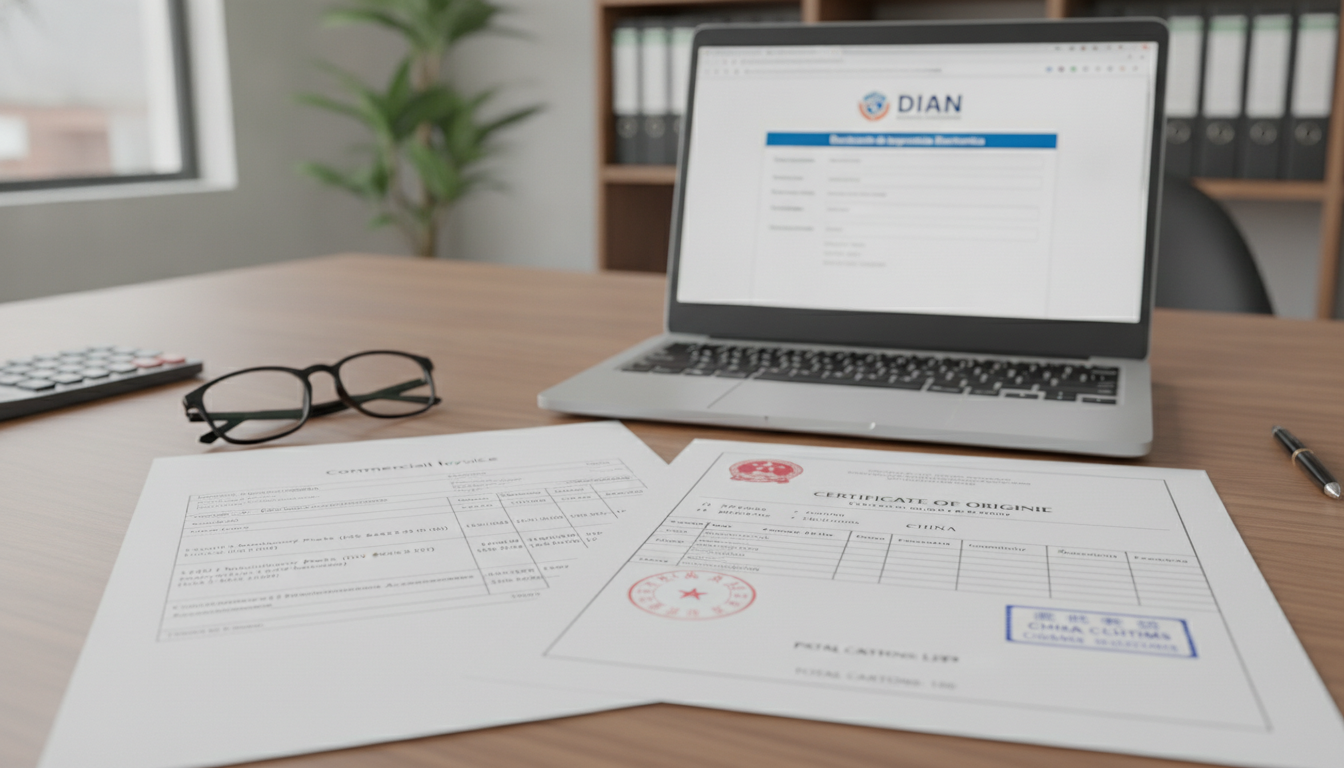
A customs broker selection guide Colombia China imports requires verifying the agente aduanero holds a valid DIAN license, confirming their experience with China-origin documentation including certificate of origin and commercial invoice, and ensuring transparent fee disclosure that separates customs filing from freight and storage charges. Colombia formal imports above approximately USD 1,000 FOB require a licensed customs broker to file the import declaration, and brokers familiar with China shipments reduce holds caused by missing origin paperwork.
📋 Table of Contents
- Executive Summary
- How do you verify a broker’s DIAN license and legal entity?
- What China-origin documentation experience should the broker demonstrate?
- How do you assess HS classification and valuation accuracy?
- What fee transparency and cost structure should you expect?
- How should the broker coordinate with your sourcing agent and forwarder?
- Key Takeaways
- Frequently Asked Questions
Executive Summary
- License verification: Confirm the agente aduanero holds a current DIAN license and a registered NIT, both searchable in Colombia’s public registry, before sharing any shipment data.
- China documentation fluency: The broker must request certificate of origin, commercial invoice with HS codes, packing list, and bill of lading up front, because missing China-origin paperwork is the most common cause of customs holds.
- HS classification process: Ask the broker to explain how they classify your product at the 10-digit level and calculate the combined duty plus 19% VAT, and request a written tariff breakdown before the first shipment clears.
- Fee disclosure: Demand a line-item quote that separates customs filing, storage, inspection escort, and any per-document charges, because bundled quotes hide exclusions that create surprise fees later.
- Cross-border coordination: The broker should communicate directly with your China sourcing agent and freight forwarder to resolve documentation gaps before the shipment arrives, reducing handoff delays.
How do you verify a broker’s DIAN license and legal entity?
Every customs broker operating in Colombia must hold a valid agente aduanero license issued by DIAN, the national tax and customs authority. This license is the legal authority to file import declarations on behalf of third parties, and operating without one is a criminal offense. Before you share shipment details or sign a power of attorney, verify the broker’s license status and registered legal entity through DIAN’s public registry.
Check the DIAN public registry
DIAN maintains an online registry of licensed customs brokers, searchable by company name or NIT number. The registry shows the license issue date, current status, and any suspensions or sanctions. A broker who hesitates to provide their NIT or whose license does not appear in the registry should be excluded immediately. The registry also lists the broker’s registered office address, which you can cross-check against the address on their quote or website.
Confirm NIT and RUT registration
The broker’s NIT is their tax identification number, and the RUT is the unified tax registry certificate that lists their authorized activities. Request a copy of the RUT and verify that customs brokerage services appear under the registered activities section. A trading company or freight forwarder whose RUT does not list customs brokerage cannot legally file your import declaration, even if they claim to have a partner broker.
Review professional liability insurance
Licensed brokers in Colombia are required to carry professional liability insurance that covers errors in classification, valuation, or documentation that result in fines or penalties. Ask for proof of current insurance coverage and confirm the policy limit is sufficient to cover the value of your typical shipment. A broker without valid insurance exposes you to personal liability if a filing error triggers a DIAN audit or penalty.
What China-origin documentation experience should the broker demonstrate?
Shipments from China require origin-specific documentation that differs from imports originating in the Americas or Europe, and brokers unfamiliar with China paperwork cause avoidable customs holds. A broker experienced in Colombia China imports will request the complete document set up front and flag missing items before the shipment departs the Chinese port.
Certificate of origin requirements
China-origin shipments may qualify for preferential tariff treatment under bilateral or multilateral trade agreements, but only if accompanied by a valid certificate of origin issued by a Chinese authority such as the China Council for the Promotion of International Trade. The broker should ask whether your shipment qualifies for preferential treatment and, if so, request the certificate before filing. A certificate issued after the shipment arrives cannot be applied retroactively, and you will pay the full ordinary duty rate.
Commercial invoice and HS code accuracy
The commercial invoice from your Chinese supplier must include a detailed product description, unit price, quantity, and the supplier’s proposed HS code. Brokers working with China suppliers complain that vague product descriptions such as “household goods” or “plastic items” make accurate classification impossible, which leads to filing by guesswork and increases the risk of a DIAN query or reclassification penalty. The broker should review the invoice against the actual product and request clarification from the supplier if the description is insufficient.
Packing list and container seal verification
The packing list must match the commercial invoice line by line, showing carton count, gross weight, net weight, and dimensions. Discrepancies between the packing list and the bill of lading trigger physical inspections that delay release. The broker should also verify the container seal number on the bill of lading matches the seal number recorded at the port of loading, because a broken or mismatched seal requires a full container inspection before DIAN will release the shipment.
In practice: A commercial invoice listed “textile fabric” without fiber content or weight per square meter, which forced the broker to request a revised invoice from the Chinese supplier after the container had already arrived at Cartagena, adding eight days to the release time.
How do you assess HS classification and valuation accuracy?
Incorrect HS classification is the leading cause of DIAN audits, penalties, and shipment holds, and the financial exposure increases when the broker classifies by guesswork rather than product knowledge. A competent broker will explain their classification methodology, provide a written tariff breakdown, and flag any ambiguity that requires a binding ruling before the first shipment clears.
Request a classification walkthrough
Ask the broker to explain how they arrived at the 10-digit HS code for your product, walking through the chapter, heading, subheading, and national-level digits. The broker should reference the product’s material composition, intended use, and any relevant DIAN interpretative notes. A broker who cannot explain the classification logic or who relies solely on the supplier’s suggested code is filing blind, and you will bear the penalty if DIAN reclassifies the shipment.
Verify duty and VAT calculation
Colombia applies a combined duty structure: the ordinary customs duty rate varies by HS code, and a 19% VAT is applied to the CIF value plus duty. The broker should provide a line-item breakdown showing the CIF value, the duty rate and amount, the VAT base, and the total landed cost. According to Union Chance, Colombia import guides commonly cite a 19% VAT for imported goods. If the broker quotes a single “all-in” percentage without showing the calculation, you cannot verify accuracy or compare quotes from other brokers.
Check for anti-dumping and safeguard duties
Certain products from China are subject to anti-dumping duties or safeguard measures imposed by Colombia to protect domestic industries. The broker should check the current list of affected HS codes and confirm whether your product is subject to additional duties beyond the ordinary rate. A broker who fails to disclose anti-dumping exposure before filing leaves you liable for the additional duty plus interest and penalties when DIAN discovers the omission.
Ask about binding tariff rulings
If your product’s classification is ambiguous or if you plan to import the same product repeatedly, request that the broker obtain a binding tariff ruling from DIAN before the first shipment. A binding ruling locks in the HS code and duty rate for future shipments, eliminating reclassification risk. The ruling process takes several weeks, so initiate it during the product development or sampling phase rather than waiting until the first container is ready to ship.
What fee transparency and cost structure should you expect?
Importers report that bundled quotes hide exclusions and create surprise fees when the shipment clears, and the lack of line-item disclosure makes it impossible to compare brokers on equal terms. A transparent broker provides a written fee schedule that separates every service and discloses what is excluded, allowing you to budget accurately and negotiate based on actual cost drivers.
Demand a line-item fee breakdown
The broker’s quote should list each service as a separate line: customs filing fee, storage per day, inspection escort fee, document courier fee, and any per-amendment charges. The quote should also state whether fees are per shipment, per container, or per declaration, because a “per shipment” fee applied to a multi-container shipment can triple the expected cost. Refuse to accept a single “customs clearance” fee without a breakdown, because that structure hides what is included and what will be billed separately later.
Clarify what is excluded from the base fee
Most brokers exclude certain costs from their base fee, and these exclusions vary widely. Common exclusions include storage beyond the first free days, physical inspection costs if DIAN selects the shipment for examination, and fees for amendments or corrections to the original declaration. The broker should provide a written list of exclusions and the associated charges, so you can compare total cost across brokers rather than base fee alone.
Review payment terms and currency
Brokers in Colombia typically invoice in Colombian pesos, but some quote in US dollars and convert at the time of payment. Confirm the currency, the exchange rate methodology if applicable, and the payment terms. Some brokers require prepayment before filing, while others invoice after release. Prepayment reduces your if the broker performs poorly, so negotiate payment on release or within a short credit period if your shipment volume justifies it.
- Customs filing fee: The broker’s charge to prepare and submit the import declaration to DIAN, typically quoted per declaration or per container.
- Storage charges: Port or warehouse storage fees that accrue after the free days expire, often excluded from the broker’s base quote and billed separately.
- Inspection escort: The broker’s fee to accompany a DIAN officer during a physical inspection, required when DIAN selects the shipment for examination.
- Document courier: Fees to retrieve or deliver original documents such as the bill of lading or certificate of origin, often charged per trip.
- Amendment fee: Charge to correct or amend the import declaration after filing, triggered by errors in the original submission or changes requested by DIAN.
Our freight and shipping coordination team works directly with customs brokers in Colombia to ensure document handoff is seamless and that all China-origin paperwork is complete before the shipment departs Yiwu or Guangzhou, reducing amendment fees and storage charges.
How should the broker coordinate with your sourcing agent and forwarder?
Latin American importers report that too many handoffs between the sourcing agent, freight forwarder, and customs broker create accountability gaps, and shipments get stuck when one party assumes another has handled a document or notification. A well-coordinated broker establishes direct communication with your sourcing agent and forwarder, resolves documentation gaps before the shipment arrives, and provides real-time status updates that eliminate the need for you to chase three separate parties.
Establish a three-party communication protocol
Before the first shipment, arrange a call or email thread that includes your sourcing agent in China, your freight forwarder, and your customs broker in Colombia. Agree on who is responsible for each document, who notifies whom when the shipment departs and arrives, and how exceptions or missing documents will be escalated. A written protocol prevents the “I thought you were handling that” failures that cause customs holds.
Broker should request documents directly from the sourcing agent
Rather than relying on you to forward documents from the sourcing agent to the broker, the broker should request the certificate of origin, commercial invoice, and packing list directly from the agent as soon as the shipment is booked. This direct handoff reduces the risk that a document is lost in email or that you forward an outdated version. The broker can also flag missing or incomplete documents while the shipment is still in transit, giving the agent time to obtain corrections before the container arrives.
Real-time entry tracking and release notifications
The broker should provide a tracking link or portal that shows the import declaration status in real time: filed, under review, inspection selected, released. You should not need to email or call the broker to ask for status updates. The broker should also send automatic notifications when the shipment is released and when storage free days are about to expire, so you can arrange pickup before additional charges accrue.
Escalation workflow for customs holds
If DIAN places the shipment on hold for additional documentation or a physical inspection, the broker should notify you and your sourcing agent within hours, not days, and provide a clear list of what is needed to resolve the hold. The broker should also coordinate with the forwarder to ensure the container remains accessible for inspection and that any required documents are couriered to the port or customs office immediately.
Our team at Goodcantrading operates with a network of 1000+ verified factories across China and maintains direct relationships with freight forwarders and customs brokers in Latin America and Europe. When you work with our supplier management service, we coordinate the entire document flow from factory to customs clearance, ensuring your broker in Colombia receives complete China-origin paperwork before the shipment departs Yiwu or Guangzhou.
Key Takeaways
- Verify the agente aduanero holds a current DIAN license and a registered NIT by searching Colombia’s public customs broker registry before sharing any shipment information or signing a power of attorney.
- The broker must request certificate of origin, commercial invoice with detailed product description and HS code, packing list, and bill of lading up front, because missing China-origin documents are the most common cause of customs holds in Colombia.
- Ask the broker to explain their HS classification methodology at the 10-digit level and provide a written breakdown showing the ordinary duty rate, the 19% VAT calculation, and any anti-dumping or safeguard duties that apply to your product.
- Demand a line-item fee quote that separates customs filing, storage, inspection escort, and document courier charges, and request a written list of exclusions so you can compare total cost across brokers rather than base fee alone.
- Establish a three-party communication protocol that connects your sourcing agent in China, your freight forwarder, and your customs broker in Colombia, with clear responsibility for each document and a defined escalation workflow for customs holds.
- The broker should provide real-time entry tracking and automatic release notifications, eliminating the need for you to chase status updates and ensuring you can arrange pickup before storage free days expire.
Frequently Asked Questions
Can a freight forwarder also act as a customs broker in Colombia?
A freight forwarder can act as a customs broker only if the forwarder holds a separate DIAN-issued agente aduanero license and the license is listed in the public registry. Many forwarders partner with licensed brokers but do not hold the license themselves, which means they cannot legally file your import declaration. Always verify the forwarder’s DIAN license status and confirm their NIT appears in the customs broker registry before allowing them to file on your behalf, because using an unlicensed broker exposes you to penalties and voids any liability protection.
What happens if the broker misclassifies my product and DIAN audits the shipment?
If DIAN reclassifies your product to a higher duty rate during an audit, you are liable for the additional duty, interest calculated from the original clearance date, and a penalty that can reach 200% of the unpaid duty. The broker’s professional liability insurance may cover the penalty if the misclassification resulted from the broker’s error rather than incomplete information you provided, but you must file a claim and prove the broker was at fault. To reduce this risk, request a binding tariff ruling from DIAN before the first shipment, provide the broker with complete product specifications and samples, and review the proposed HS code before filing.
How long does customs clearance take for China imports into Colombia?
Customs clearance for China imports into Colombia typically takes two to five business days from the time the broker files the import declaration, assuming all documents are complete and DIAN does not select the shipment for physical inspection. If DIAN selects the shipment for inspection, add three to seven days for the inspection to be scheduled, conducted, and the results reviewed. Delays beyond this range are usually caused by missing or incomplete China-origin documents such as the certificate of origin or a commercial invoice with insufficient product description, which is why the broker should request and review all documents before the shipment arrives at the Colombian port.
Ready to streamline your Colombia China imports with coordinated document flow and vetted factory sourcing?
Contact our sourcing team today →
Written by the Goodcantrading Sourcing Team.