Product Safety Testing China Toys Europe Requirements [2026 Guide]
![Product Safety Testing China Toys Europe Requirements [2026 Guide]](https://goodcantrading.com/wp-content/uploads/2026/09/featured-product-safety-testing-china-toys-europe-requirements.png)
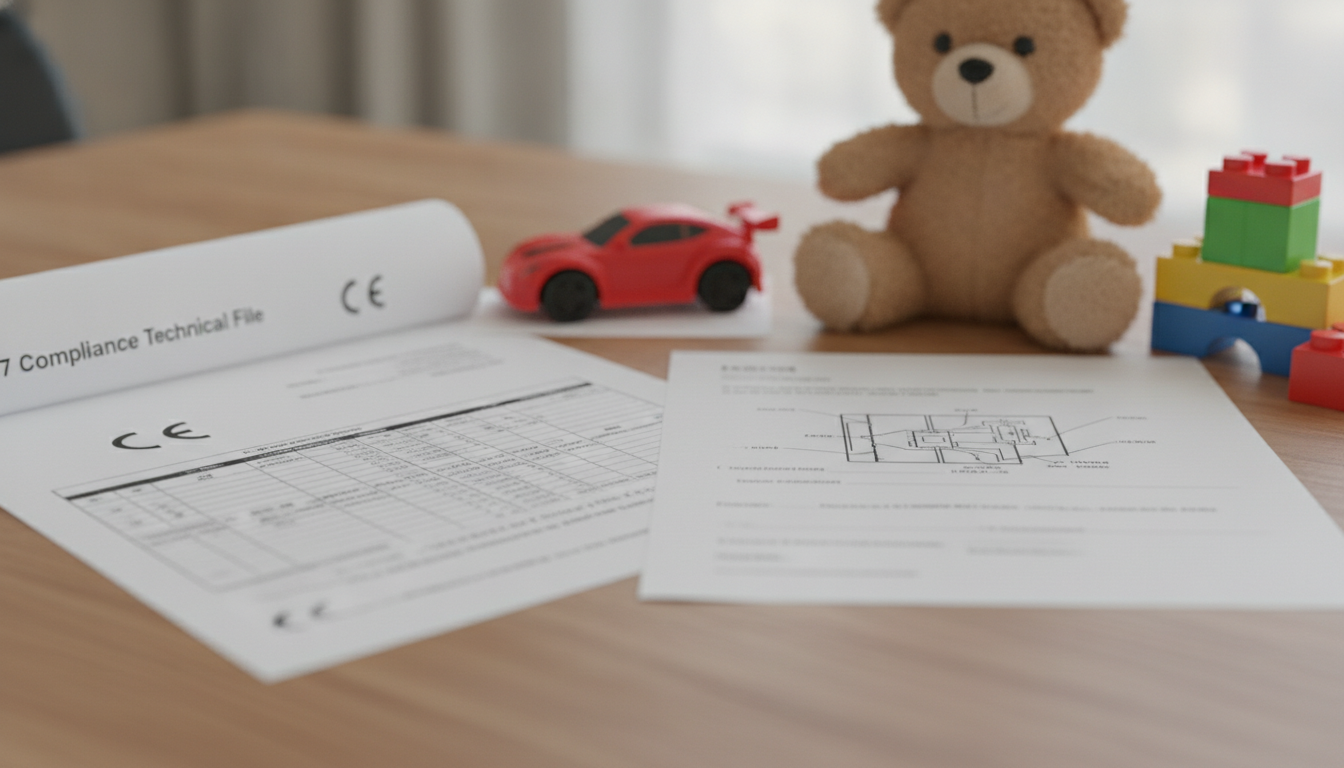
Product safety testing China toys Europe requirements center on EN 71 mechanical and physical testing, EN 71-3 chemical migration limits, REACH Annex XVII restrictions, CE marking, and a complete technical file naming the exact SKU, material composition, and test results from an ISO 17025 accredited laboratory. Chinese GB 6675 testing alone does not satisfy EU importer obligations, and buyers must specify EN 71 and REACH compliance upfront with the supplier to avoid customs holds and marketplace rejections.
📋 Table of Contents
- Executive Summary
- Why China GB 6675 Does Not Satisfy EU Toy Requirements
- Mandatory EN 71 Testing Modules for Europe
- REACH and Chemical Compliance for Toys
- Technical File and Declaration of Conformity
- CE Marking and Labeling Requirements
- Supplier Coordination and Pre-Shipment Testing
- Cost and Timeline Benchmarks by Toy Category
- Key Takeaways
- Frequently Asked Questions
Executive Summary
- Standard mismatch: GB 6675 is China’s domestic toy safety framework; EN 71 and REACH Annex XVII govern EU market access, and GB 6675 and EN 71 are not interchangeable.
- Mandatory testing scope: EN 71-1 mechanical and physical properties, EN 71-2 flammability, EN 71-3 migration of certain elements, and EN 71-9 organic chemical compounds apply to most toy categories entering Europe.
- Chemical restrictions: REACH Annex XVII limits phthalates, BPA, and other substances in toys, and the EU candidate list for SVHCs continues to expand.
- Documentation burden: Every toy placed on the EU market requires a technical file, a Declaration of Conformity, and test reports that name the exact SKU, colorway, and material mix.
- Supplier coordination: Specifying EN 71 and REACH compliance during the RFQ stage prevents rework after production locks, and pre-shipment sample testing catches failures before bulk ships.
Why China GB 6675 Does Not Satisfy EU Toy Requirements
Suppliers often present GB 6675 test reports as proof of compliance, but EU customs and marketplace platforms reject these documents because GB 6675 is China’s domestic standard, not an EU-recognized framework. Importers discover this mismatch only after samples are made or bulk production begins, creating rework costs and shipment delays.
GB 6675-2025 Update and Scope
According to SGS (2026), China’s updated toy safety framework GB 6675.1-2025 introduces mandatory chamber-emission testing across finished toys. According to WinSome Toys (2026), China’s GB 6675-2025 takes effect on 1 November 2026, with a 12-month transition for existing inventory. While this update tightens VOC limits for the Chinese market, it does not address EN 71 mechanical testing protocols, REACH phthalate restrictions, or the EU technical-file requirement.
EN 71 and Toy Safety Directive 2009/48/EC
The EU Toy Safety Directive requires conformity to harmonized standards, primarily the EN 71 series. A GB 6675 report may cover some overlapping chemical limits, but it does not test small-parts choking hazards under EN 71-1, flammability under EN 71-2, or migration limits for elements like lead and cadmium under EN 71-3. Buyers must request EN 71 testing explicitly in the purchase order and verify that the laboratory holds ISO 17025 accreditation recognized by EU notified bodies.
Importer Liability Under GPSR
According to Sorva Trade (2026), the General Product Safety Regulation has applied since 13 December 2024. This regulation places direct liability on the economic operator placing the toy on the EU market, meaning the importer cannot rely on a supplier’s assurance of compliance without verifiable EN 71 and REACH documentation. A GB 6675 certificate does not shield the importer from recall or enforcement action if the toy fails EU requirements.
Mandatory EN 71 Testing Modules for Europe
Product safety testing China toys Europe requirements demand that importers specify which EN 71 parts apply to their product category. Testing scope varies by toy type, age grading, and material composition, and omitting a required module triggers customs holds or marketplace rejections.
Small Parts and Choking Hazard Testing
EN 71-1 uses a small-parts cylinder to determine whether a component, after torque and tension testing, can fit entirely within the gauge. Toys marketed for children under 36 months must not release small parts under normal use or abuse testing. Suppliers sometimes skip this module when quoting, assuming visual inspection suffices, but EU customs and Amazon require documented cylinder-test results.
Migration Limits for Heavy Metals
EN 71-3 specifies migration limits for 19 elements across three material categories: scraped-off material, liquid material, and dry/brittle/powder material. Lead migration limits range from 2.0 mg/kg for scraped-off material to 23 mg/kg for dry material, far stricter than many domestic Chinese limits. Paint, ink, and coating suppliers must provide material safety data confirming compliance before production begins.
Flammability Testing for Textiles and Disguises
EN 71-2 applies flame-contact and flame-spread tests to disguise costumes, masks, wigs, and plush toys with hair. A toy that ignites or sustains flame beyond the specified rate fails the test and cannot carry CE marking. Buyers sourcing Halloween costumes, dress-up sets, or character plush with synthetic hair must confirm EN 71-2 testing during the sampling phase.
REACH and Chemical Compliance for Toys
REACH Annex XVII restricts specific substances in toys independently of the Toy Safety Directive, and importers must verify compliance with both frameworks. Chemical failures trigger marketplace suspensions, customs seizures, and recall notices, making upfront material screening a non-negotiable step.
Phthalate Restrictions
REACH Annex XVII Entry 51 bans DEHP, DBP, BBP, DINP, DIDP, and DNOP above 0.1% in childcare articles. Soft PVC components, grips, and flexible parts often contain phthalates as plasticizers, and suppliers must substitute compliant alternatives or provide test reports confirming levels below the threshold. A single non-compliant component contaminates the entire SKU.
SVHC Candidate List
According to Dongguan 0119027 (2026), the EU candidate list for REACH SVHCs had reached 250 substances by 2025 in the cited importer guidance. Substances of Very High Concern include certain flame retardants, colorants, and preservatives found in toy materials. While SVHC presence above 0.1% triggers notification obligations rather than an outright ban, marketplace platforms and large retailers often reject toys containing any listed substance.
BPA and Bisphenol Restrictions
REACH restricts BPA in thermal paper and certain polycarbonate articles, and the EU Toy Safety Directive prohibits BPA in toys intended for children under 36 months. Teething rings, rattles, and bath toys require BPA-free certification, and suppliers must document the polymer type and any coating or lining materials used.
Material Declaration and Supplier Coordination
Importers should request a full bill of materials from the supplier, listing every plastic resin, textile fiber, dye, coating, adhesive, and fastener. Each material supplier then provides a declaration of REACH and RoHS compliance, and the testing laboratory uses this data to design the chemical-screening protocol. Waiting until pre-production samples arrive to request material data creates a three-week delay while the supplier chases subcontractors for documentation.
Technical File and Declaration of Conformity
According to WinSome Toys (2026), the EU Toy Safety Directive requires a technical file for every toy placed on the EU market. The technical file must remain accessible for ten years and include design drawings, material specifications, risk assessments, test reports, and manufacturing process descriptions. Importers who cannot produce a complete technical file during a market-surveillance audit face fines and product withdrawal orders.
Contents of the Technical File
- Product description and intended use: age grading, play pattern, and any warnings required by EN 71-1 Annex B.
- Design and manufacturing information: CAD drawings, material specifications, assembly instructions, and supplier contact details.
- Risk assessment: identification of hazards (mechanical, chemical, electrical, flammability) and mitigation measures implemented in the design.
- Test reports: EN 71-1, EN 71-2, EN 71-3, EN 71-9, REACH Annex XVII, and any additional tests relevant to the toy category, all from ISO 17025 accredited laboratories.
- Declaration of Conformity: signed statement from the manufacturer or importer affirming compliance with the Toy Safety Directive and listing the harmonized standards applied.
SKU-Specific Documentation
Importers report that compliance paperwork is incomplete when the test report does not name the exact SKU, colorway, or material mix, making the document unusable for customs or marketplace review. A single test report covering a product family is acceptable only if every variant shares identical materials, dimensions, and construction. When a supplier offers the same plush toy in five fabric colors, each color requires either a separate test or a documented material-equivalence statement from the laboratory.
Declaration of Conformity Template
The Declaration of Conformity must identify the economic operator (name, address, contact), describe the toy (model number, batch, photo), list the directives and standards applied (Toy Safety Directive 2009/48/EC, EN 71-1:2014+A1:2018, EN 71-3:2019, REACH Regulation 1907/2006), and bear the signature and date of the responsible person. Generic templates downloaded from the internet fail when they omit the specific EN 71 part numbers or list outdated standard versions.
CE Marking and Labeling Requirements
CE marking is the manufacturer’s declaration that the toy meets all applicable EU directives, and affixing the mark without proper testing and documentation constitutes fraud. The mark must be visible, legible, and indelible, and it must appear on the toy itself or, when size or nature prevents this, on the packaging and accompanying documents.
CE Mark Dimensions and Placement
The CE mark must be at least 5 mm in height, and the two letters must maintain the proportions specified in the EU regulation. Suppliers sometimes print undersized or distorted marks, and customs officers trained in conformity assessment flag these errors during clearance. The mark should appear on the toy, the retail packaging, and the instruction sheet.
Warnings and Age Grading
EN 71-1 Annex B specifies mandatory warnings for toys presenting certain hazards: small parts, long cords, functional sharp points, and others. The warning text must appear in the language of the country where the toy is sold, meaning importers serving Spanish-speaking markets must provide warnings in Spanish, and those serving French-speaking markets must provide warnings in French. Buyers complain about being told only at the end of sourcing that warnings and instructions must be in the language of sale, creating rework for multilingual markets.
Importer and Manufacturer Identification
The toy packaging must display the name, registered trade name or trademark, and contact address of the manufacturer and the importer. When the manufacturer is located outside the EU, the importer’s details must be clearly visible. Omitting this information or listing only a generic email address violates the Toy Safety Directive and triggers enforcement action.
Traceability: Batch and Serial Numbers
Every toy must carry a type, batch, serial, or model number that allows traceability back to the production run. This number links the physical product to the technical file and test reports, enabling rapid recall if a safety issue emerges. Suppliers who reuse the same model number across multiple material revisions break traceability and expose the importer to liability.
Supplier Coordination and Pre-Shipment Testing
Product safety testing China toys Europe requirements must be embedded into the sourcing workflow from the RFQ stage, not treated as a final checklist item. Buyers report that toy sellers treat testing as a final step instead of a design requirement, then fail on chemical limits, emission limits, or label warnings after production is locked.
RFQ and Quotation Stage
The request for quotation should specify EN 71-1, EN 71-2, EN 71-3, EN 71-9, and REACH Annex XVII compliance as mandatory requirements, and the supplier must confirm which tests have already been completed and which will be conducted on the buyer’s SKU. Suppliers who quote a price without accounting for testing costs often add these fees later, inflating the landed cost by 8-15% after the buyer has committed to the order.
Pre-Production Sample Testing
Pre-production samples should be sent to an ISO 17025 accredited laboratory for full EN 71 and REACH testing before bulk production begins. This step catches material non-compliance, design flaws, and labeling errors while changes are still inexpensive. Testing a pre-production sample costs the same as testing a bulk sample, but it prevents the need to scrap or rework thousands of units.
During-Production and Pre-Shipment Inspection
A quality control inspection during production verifies that the factory is using the same materials and construction methods as the tested sample. Inspectors check raw-material labels, compare fabric swatches and plastic resin codes against the approved bill of materials, and confirm that CE marking, warnings, and importer details are printed correctly. Pre-shipment inspection includes a random sample pull for visual and functional checks, and a final sample can be sent for abbreviated testing if any production change occurred.
Laboratory Selection and Accreditation
EU notified bodies and customs authorities accept test reports only from laboratories holding ISO 17025 accreditation for the specific test methods applied. Buyers should verify that the laboratory’s scope of accreditation covers EN 71-1, EN 71-3, and REACH Annex XVII testing, and that the accreditation body is a signatory to the International Laboratory Accreditation Cooperation mutual recognition arrangement. A test report from a non-accredited laboratory has no legal standing in the EU.
Cost and Timeline Benchmarks by Toy Category
Testing costs and turnaround times vary by toy complexity, material count, and the number of EN 71 parts required. Product safety testing China toys Europe requirements should be budgeted during the quotation stage, and importers must build lead time into the production schedule.
Rush Testing and Expedited Reporting
Laboratories offer expedited service for an additional fee, typically reducing turnaround by 30-50% at a cost premium of 40-60%. Rush testing makes sense when a production delay would cause the buyer to miss a retail season or a marketplace launch window, but it does not reduce the actual test duration for methods like migration testing, which requires fixed extraction and analysis times.
Retesting After Failure
When a sample fails EN 71-3 migration limits or REACH phthalate restrictions, the supplier must identify the non-compliant material, source a compliant alternative, produce a new sample, and retest. This cycle adds two to four weeks to the timeline and incurs full retesting costs. Importers who skip pre-production testing and discover failures during pre-shipment inspection face the choice of scrapping the order or accepting non-compliant goods and the associated legal risk.
Annual Retesting and Material Changes
Test reports remain valid as long as the toy design, materials, and manufacturing process remain unchanged. When a supplier switches fabric suppliers, changes a plastic resin grade, or modifies a coating formulation, the toy requires retesting even if the previous report is recent. Importers should include a contractual clause requiring the supplier to notify them of any material change and to halt production until retesting confirms continued compliance.
Product Safety Testing China Toys Europe: 6 Critical Compliance Points
- GB 6675 and EN 71 are not interchangeable; GB 6675 is China’s domestic toy safety framework while EN 71 governs EU market access, and importers must specify EN 71 testing explicitly in purchase orders with verification of ISO 17025 laboratory accreditation recognized by EU notified bodies.
- Simple plastic toys require EN 71-1 mechanical testing ($800-1,200, 7-10 days), plush toys add EN 71-2 flammability and EN 71-9 organic compounds ($1,400-2,000, 10-14 days), battery-powered toys add EN 62115 electrical safety ($1,800-2,800, 12-18 days), and all categories must comply with REACH Annex XVII restrictions on six phthalates above 0.1%.
- The technical file must contain design drawings, material specifications naming every plastic resin and textile fiber, risk assessments identifying mechanical and chemical hazards, and test reports naming the exact SKU, and importers must retain the file for 10 years to satisfy market-surveillance audits.
- Pre-production sample testing catches material non-compliance and design flaws 2-4 weeks before bulk production locks, preventing scrap costs that range from 8-15% of order value according to SGS (2026) toy compliance benchmarks.
- Warnings, age grading, and instructions must appear in the language of sale; importers serving Spain require Spanish warnings and those serving France require French warnings, and marketplace platforms reject multilingual omissions during listing review according to Sorva Trade (2026) GPSR enforcement data.
- Requesting a full bill of materials during the RFQ stage and embedding product safety testing China toys Europe requirements into quotations prevents cost surprises averaging 8-15% of FOB price, and a trusted China sourcing agent coordinates material declarations, laboratory selection, and pre-shipment inspection to close compliance gaps before goods ship.
Frequently Asked Questions
Do toys from China need EN 71 testing for Europe?
Yes, all toys placed on the EU market must comply with the Toy Safety Directive 2009/48/EC and the harmonized EN 71 standards. Chinese GB 6675 testing does not satisfy EU requirements, and importers must request EN 71-1, EN 71-3, and other relevant parts from an ISO 17025 accredited laboratory. The importer or manufacturer must also prepare a technical file and Declaration of Conformity before affixing CE marking.
What is the difference between GB 6675 and EN 71?
GB 6675 serves as China’s national toy safety standard for domestic sales, while EN 71 represents the European harmonized standard required for EU market entry. Test methods, chemical migration limits, mechanical testing protocols, and documentation requirements differ substantially between the two. A toy certified under GB 6675 does not automatically meet EN 71 requirements, and EU customs plus marketplace platforms reject GB 6675 reports as proof of EU compliance.
Which toy tests are mandatory for REACH and phthalates in the EU?
REACH Annex XVII Entry 51 bans DEHP, DBP, BBP, DINP, DIDP, and DNOP above 0.1% by weight in toys and childcare articles. Testing laboratories screen soft PVC components, grips, flexible parts, and coatings for phthalate content using gas chromatography-mass spectrometry. Importers must also screen for SVHC substances on the REACH candidate list, which includes certain flame retardants, colorants, and preservatives found in toy materials.
Importers are frustrated when manufacturers cannot show a proper technical file or declaration of conformity, leaving the importer exposed even if factory tests exist. Our supplier management process coordinates material declarations, laboratory selection, and pre-shipment inspection to close compliance gaps before goods ship, and our Yiwu and Guangzhou sourcing desks work with ISO 17025 accredited laboratories to deliver product safety testing China toys Europe requirements documentation that satisfies customs, marketplace platforms, and market-surveillance authorities.
Ready to source EU-compliant toys from China with full EN 71 and REACH documentation?
Request a compliance audit →
Written by the Goodcantrading Sourcing Team.