Foshan Furniture Sourcing: Complete 2026 Buyer’s Guide
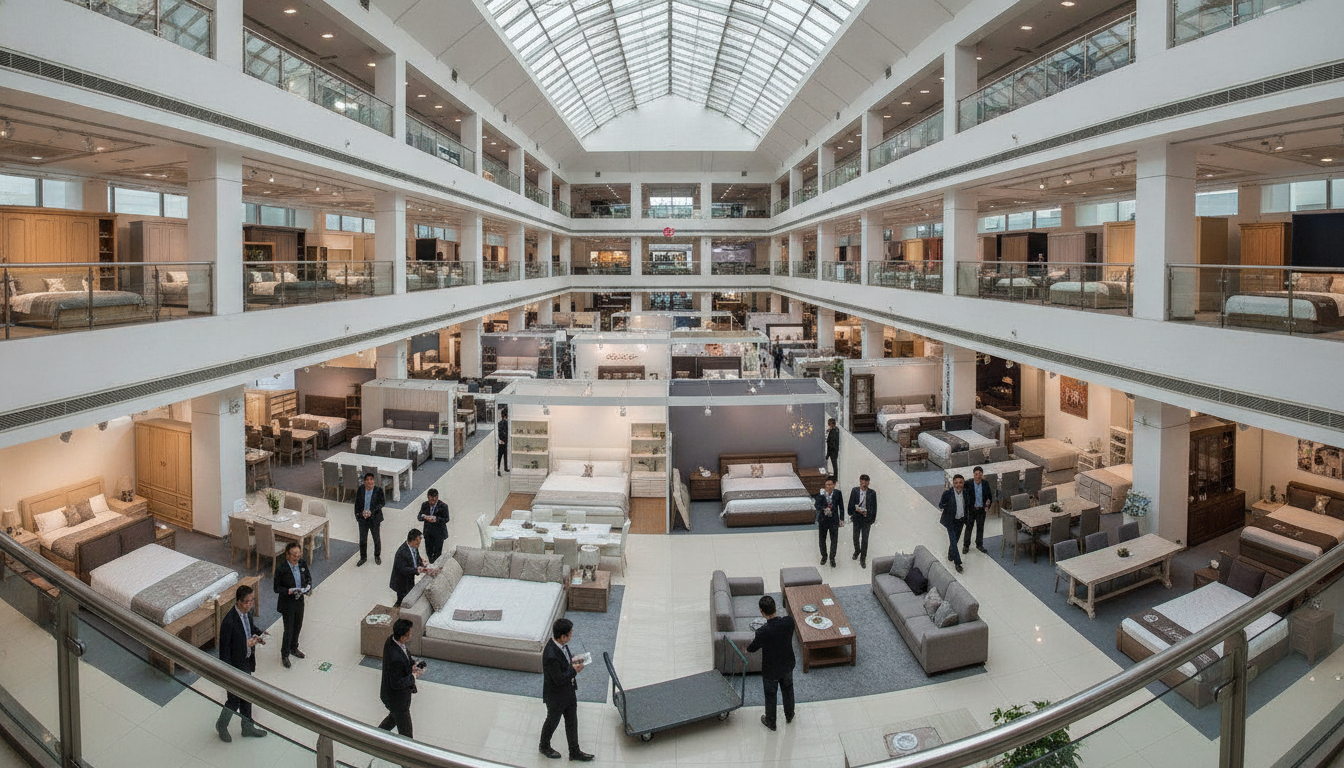
Sourcing Foshan furniture requires visiting the Lecong Furniture Market to compare showrooms, requesting factory audits to verify production capacity, negotiating minimum order quantities that typically start at 20-50 pieces per model, approving pre-production samples, and coordinating container consolidation from multiple suppliers through a warehouse before export.
📋 Table of Contents
- Executive Summary
- How Do You Navigate the Lecong Furniture Market?
- How Do You Verify a Foshan Furniture Supplier Before Ordering?
- What Are Typical MOQs and How Do You Negotiate Them?
- How Does Sample Approval Work?
- What Inspection Steps Protect Your Order Quality?
- How Do You Consolidate and Ship Multiple Suppliers?
- Key Takeaways
- Frequently Asked Questions
Executive Summary
- Market concentration: Lecong Furniture Market in Shunde district spans over 3.5 million square meters and hosts thousands of showrooms displaying bedroom sets, dining furniture, sofas, and commercial pieces.
- Factory minimums: According to Source Foshan (2026), standard factory minimums are approximately 20-50 pieces per model, while below-MOQ orders may incur a 15%-40% surcharge.
- Sample timeline: Furniture samples commonly cost approximately USD 100-400 and take around 2-3 weeks, with the sample fee often credited against the final order.
- Production lead time: According to a field report (2026), typical supplier production lead times are approximately 30-45 days before warehouse consolidation.
- Sourcing support: A trusted China sourcing agent coordinates factory audits, specification documentation, payment milestones, inspection scheduling, and container consolidation across multiple Foshan furniture suppliers.
Foshan sits at the center of Guangdong’s furniture manufacturing cluster, where raw material suppliers, component manufacturers, upholstery workshops, and finishing specialists operate within a 50-kilometer radius. This concentration reduces lead times and allows buyers to compare dozens of factories producing similar styles in a single visit. Shunde district, home to the Lecong market, specializes in residential Foshan furniture including bedroom sets and dining tables. Longjiang town focuses on upholstered sofas and chairs, while Nanhai district produces office furniture and commercial seating.
How Do You Navigate the Lecong Furniture Market?
The Lecong Furniture Market operates as a multi-building showroom complex where each booth displays sample pieces from a single factory or trading company. Buyers walk the floors, photograph items, collect business cards, and request quotations. According to Source Foshan (2026), a Foshan buying itinerary is described as roughly one day for a single category, two days for a whole-home list, three days for factories and specialist areas, and five days for sample approval and ordering.
Pre-Visit Preparation
Prepare a product brief listing dimensions, materials, target quantities, budget per piece, and destination port before arriving. Include reference photos showing desired styles, finishes, and hardware details. This brief allows showroom staff to direct you to relevant suppliers and eliminates time spent viewing categories outside your scope.
Showroom vs Factory Verification
Showrooms display finished samples but rarely reveal the factory’s actual production floor, equipment condition, or worker count. Request the factory address and schedule a site visit to verify production capacity. A factory audit checks business license scope, production equipment, raw material storage, quality control stations, and export documentation. Buyers who skip this step risk placing orders with trading companies that subcontract production to unknown workshops.
Recording Quotations Consistently
Remote buyers face uncertainty when comparing products because dimensions, materials, finishes, and quotations must be documented consistently before purchase. Create a spreadsheet capturing supplier name, model number, exact dimensions in centimeters, material specifications, hardware type, finish color, FOB unit price, MOQ, and production lead time. Photograph each sample from multiple angles and label photos with the corresponding supplier code. This documentation prevents confusion when reviewing dozens of similar pieces after returning home.
How Do You Verify a Foshan Furniture Supplier Before Ordering?
Supplier verification confirms that the company quoting your order holds the legal authority to manufacture the product, operates the equipment required to meet your specifications, and maintains quality systems that reduce defect rates. Verification steps include business license review, factory audit, reference checks, and financial stability assessment.
Business License Scope Check
Request a copy of the supplier’s business license and check the registered business scope section. This field lists the exact product categories the company is legally permitted to manufacture and sell. If your furniture category does not appear in this scope, the supplier is a trading company reselling another factory’s production. Trading companies add margin without adding transparency, and buyers lose direct contact with the manufacturer responsible for quality.
On-Site Factory Audit
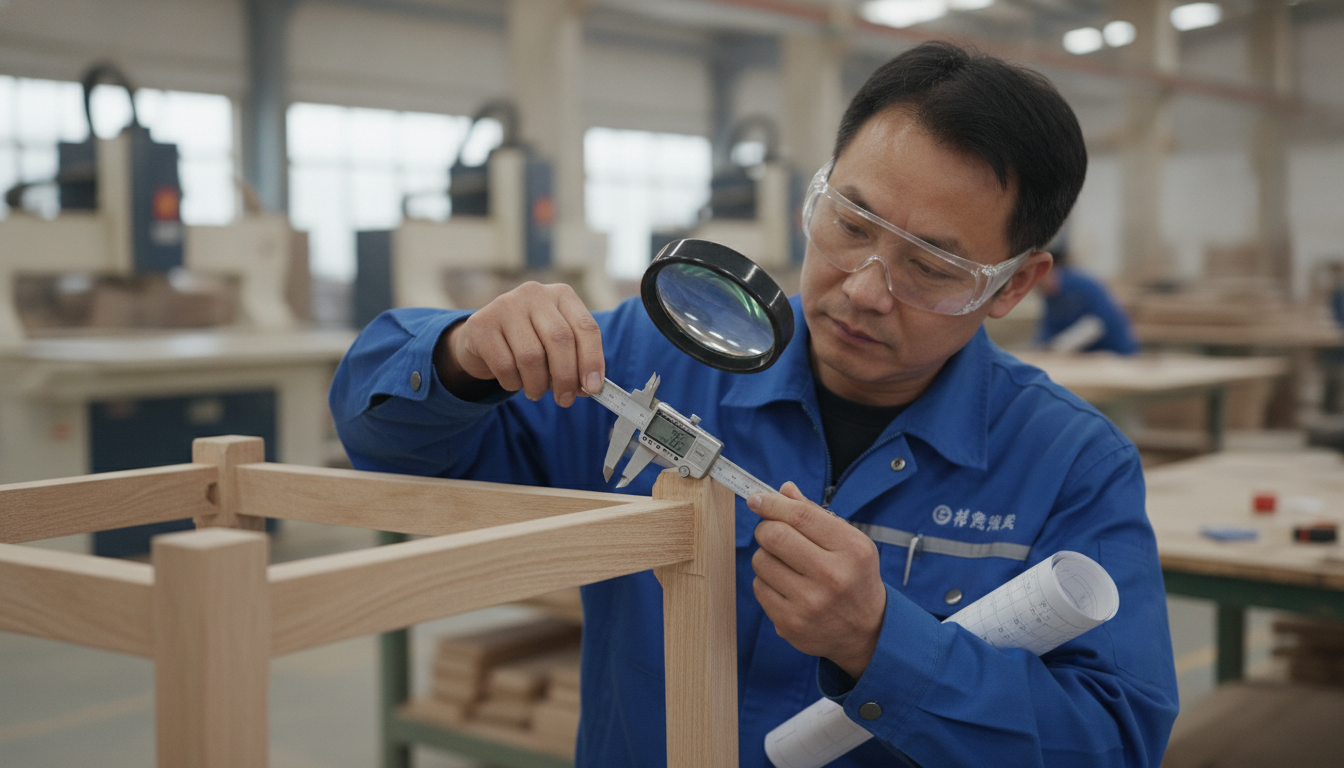
A factory audit verifies production capacity, equipment condition, and quality control processes. Our quality control team checks workshop square footage, machine count and age, raw material inventory levels, worker headcount, QC inspection stations, and finished-goods storage capacity. Factories with modern CNC routers, edge-banding machines, and spray-booth systems deliver more consistent quality than workshops relying on manual saws and hand-finishing.
Reference and Certification Review
Request contact details for three recent buyers who ordered similar products and shipped to your destination region. Call these references and ask about defect rates, on-time delivery performance, communication responsiveness, and post-sale support. Check whether the factory holds FSC certification for wood sourcing, CARB compliance for formaldehyde emissions, or ISO 9001 for quality management. Certifications indicate investment in systems but do not replace direct audits.
What Are Typical MOQs and How Do You Negotiate Them?
Minimum order quantities balance the factory’s setup costs against the buyer’s inventory risk. Foshan furniture factories set MOQs based on material purchase minimums, production-line changeover time, and the cost of tooling or molds required for custom designs.
Standard MOQ Ranges
According to Source Foshan (2026), standard factory minimums are approximately 20-50 pieces per model. Upholstered sofas and chairs often require 30-piece minimums because fabric rolls come in standard lengths and cutting waste increases with smaller runs. Wooden dining tables and bedroom sets may accept 20-piece orders when the finish and hardware match existing production. Custom designs requiring new molds or specialized joinery push minimums to 100 pieces or higher.
Below-MOQ Surcharges
According to Source Foshan (2026), below-MOQ orders may incur a 15%-40% surcharge. This surcharge covers the factory’s fixed costs for material procurement, machine setup, and quality inspection when spread across fewer units. Buyers ordering 10 pieces of a model with a 30-piece MOQ can expect per-unit prices to rise by one-quarter to one-third compared to the standard rate.
Negotiation Strategies for Foshan Furniture Orders
Combine multiple models from the same factory into a single purchase order to meet overall minimums while keeping per-model quantities lower. Offer to accept longer lead times that allow the factory to batch your order with other buyers’ production runs. Agree to simplified packaging or standard finishes that eliminate custom setup costs. Our supplier management team negotiates these terms across multiple Foshan furniture factories to optimize your total order value.
- Multi-model bundling: Order 15 dining chairs, 15 coffee tables, and 20 side tables from one factory to meet a 50-piece threshold without committing to 50 units of a single SKU.
- Extended lead time: Accept a 60-day production window instead of 30 days, allowing the factory to combine your order with another buyer’s run and reduce your per-unit setup cost.
- Standard specifications: Choose from the factory’s existing finish colors and hardware options rather than requesting custom stains or pulls that require new supplier relationships.
How Does Sample Approval Work?
Sample approval confirms that the factory understands your specifications and can execute the design, finish, and construction quality you expect before bulk production begins. Skipping this step or approving samples remotely without physical inspection increases the risk that bulk goods deviate from your requirements.
Sample Cost and Timeline
Samples typically cost USD 100-400 and require 2-3 weeks for completion, with fees often credited against bulk orders. Complex upholstered pieces with custom fabric and tufting details cost more and take longer than simple wooden tables. Buyers should budget sample fees into their sourcing timeline and request written confirmation that fees will be deducted from the bulk order invoice.
What to Check on a Physical Sample
Inspect dimensions with a tape measure to verify they match the specification sheet. Check joint tightness by applying pressure to corners and testing drawer slides for smooth operation. Examine finish consistency by viewing the piece under natural light and checking for drips, bubbles, or uneven stain coverage. Test upholstery by sitting on chairs and sofas to assess cushion firmness and fabric tension. Photograph any defects and share detailed feedback with the factory before approving production.
Specification Lock-In
Once you approve a sample, document every detail in a specification sheet that becomes part of the purchase contract. Include material grades, finish codes, hardware supplier and model numbers, packaging requirements, and acceptable defect levels. Both parties sign this sheet, and it serves as the quality benchmark for pre-shipment inspection. Changes after approval require a new sample cycle and may delay production.
What Inspection Steps Protect Your Order Quality?
Inspection checkpoints during production and before shipment catch defects early, verify that bulk goods match approved samples, and document any deviations that require corrective action or price adjustment. Buyers who rely solely on factory self-inspection reports face higher defect rates upon arrival.
During-Production Inspection
Schedule an inspection when 30-50% of the order is complete. The inspector checks that materials match specifications, construction methods follow the approved sample, and finish quality remains consistent across the batch. Early detection of deviations allows the factory to correct the remaining production without scrapping finished goods. Coordinating multiple Foshan furniture factories, deposits, specifications, and production deadlines requires a local representative to maintain visibility after buyers return home.
Pre-Shipment Inspection
A pre-shipment inspection occurs when 100% of the order is complete and packed for export. The inspector randomly selects units from the batch, unpacks them, measures dimensions, tests functionality, examines finishes, and compares results against the approved sample and specification sheet. Inspection reports include photos of any defects, a pass/fail recommendation, and a defect summary by category. Buyers use this report to decide whether to release payment and authorize shipment or to request rework.
Acceptable Defect Levels
Define acceptable quality limits in your purchase contract using AQL standards. AQL 2.5 for critical defects and AQL 4.0 for major defects are common for furniture orders. Critical defects include structural failures, sharp edges, or finish damage that makes the piece unsellable. Major defects include minor scratches, slight color variation, or loose hardware that can be tightened. The inspection report calculates the defect rate and compares it to your AQL threshold to determine pass or fail status.
How Do You Consolidate and Ship Multiple Suppliers?
Foshan furniture buyers often source dining sets from one factory, sofas from a second, and bedroom pieces from a third to optimize quality and price across categories. Consolidation warehouses collect goods from multiple suppliers, inspect and repack items, and load a single container for export.
Warehouse Collection Process
Each factory delivers finished goods to the consolidation warehouse according to a schedule coordinated by your sourcing agent. Warehouse staff unpack random samples, verify quantities against packing lists, and inspect for shipping damage. Items that fail inspection are returned to the factory for replacement or repair. Approved goods are stored in a designated area until all suppliers have delivered.
Export Packing and Fumigation
Furniture requires protective wrapping, corner guards, and carton reinforcement to survive ocean transit. Wooden components must undergo heat treatment or fumigation to meet phytosanitary requirements for most destination countries. The warehouse applies ISPM 15 stamps to wooden pallets and crates, wraps upholstered pieces in stretch film and cardboard, and secures items inside the container with straps and dunnage to prevent shifting.
Container Loading and Documentation
A container loading inspection verifies that the correct quantities and SKUs are loaded, that weight distribution prevents tipping, and that the container door seals properly. The inspector photographs the loading process and records container number, seal number, and gross weight. Our freight and shipping team coordinates customs clearance documentation including commercial invoice, packing list, bill of lading, and certificates of origin required by your destination country.
- Supplier coordination: Schedule delivery windows so all factories complete production within a two-week span, preventing early-finishing suppliers from incurring extended warehouse storage fees.
- Volume optimization: Calculate cubic meters for each item and plan container layout to maximize utilization, reducing per-unit freight cost.
- Insurance coverage: Purchase marine cargo insurance covering total landed value including freight and duty, protecting against loss or damage during ocean transit.
According to a field report (2026), typical supplier production lead times are approximately 30-45 days before warehouse consolidation. Add 7-10 days for consolidation, packing, and container loading, then 25-35 days ocean transit to major Latin American or European ports.
Key Takeaways
- Market access: The Lecong Furniture Market in Shunde provides direct access to thousands of Foshan furniture showrooms across 3.5 million square meters, but verifying the factory behind each showroom through on-site audits separates real manufacturers from trading companies.
- MOQ economics: According to Source Foshan (2026), factory minimums of 20-50 pieces per model balance setup costs against buyer inventory risk, while combining multiple models into a single purchase order reduces the 15%-40% surcharge applied to below-MOQ quantities.
- Sample investment: Physical sample approval costing USD 100-400 locks in specifications before bulk production and provides the quality benchmark for inspection, preventing costly deviations that only appear after goods arrive.
- Inspection timing: During-production inspection at 30-50% completion catches material substitutions and construction shortcuts early, while pre-shipment inspection using AQL 2.5 for critical defects verifies that finished goods match approved samples before payment release.
- Consolidation value: Sourcing from multiple specialized factories optimizes quality and price across furniture categories, and warehouse consolidation combines these suppliers into a single container shipment with coordinated inspection and export documentation.
- Agent coordination: A sourcing agent with local Foshan presence coordinates factory audits, specification documentation, production monitoring, inspection scheduling, and container consolidation for buyers who cannot remain in China during the 30-45 day production window.
Frequently Asked Questions
Can you source Foshan furniture remotely without visiting China?
Remote sourcing is possible when you work with a local agent who conducts factory audits, approves samples on your behalf, and monitors production. The agent photographs showroom options, records detailed specifications, negotiates pricing, and coordinates inspection before shipment. Buyers looking for help furnishing homes in Foshan report difficulty identifying dependable local assistance, which is why selecting an agent with verifiable factory networks and multilingual support reduces risk. You lose the ability to personally inspect samples, but a structured process with documented checkpoints maintains quality control.
What payment terms do Foshan furniture factories typically accept?
Standard terms are 30% deposit upon order confirmation and 70% balance before shipment, paid via telegraphic transfer. Some factories accept letters of credit for large orders, though LC fees and bank processing add cost and time. Established buyers with verified trading history may negotiate extended terms. Our company offers 90-120 day open account settlement to qualifying buyers, allowing you to receive goods before final payment while we manage supplier relationships and payment risk. Conditions are agreed per order based on value and destination.
How do you handle customs clearance for furniture imports?
Customs clearance requires accurate HS code classification, commercial invoice showing FOB value, packing list detailing quantities and weights, bill of lading, and certificates of origin when preferential duty rates apply. Wooden furniture may require phytosanitary certificates proving heat treatment or fumigation. Your customs broker files entry documents, calculates duties and taxes, and coordinates port delivery. Misclassification or missing certificates delay clearance and incur storage fees, which is why preparing complete documentation before the vessel arrives prevents costly port holds.
Ready to source Foshan furniture with factory verification, quality inspection, and container consolidation managed end to end?
Request Your Sourcing Plan →
Written by the Goodcantrading Sourcing Team.