True Cost Importing Throw Blankets China to Spain [2026 Guide]
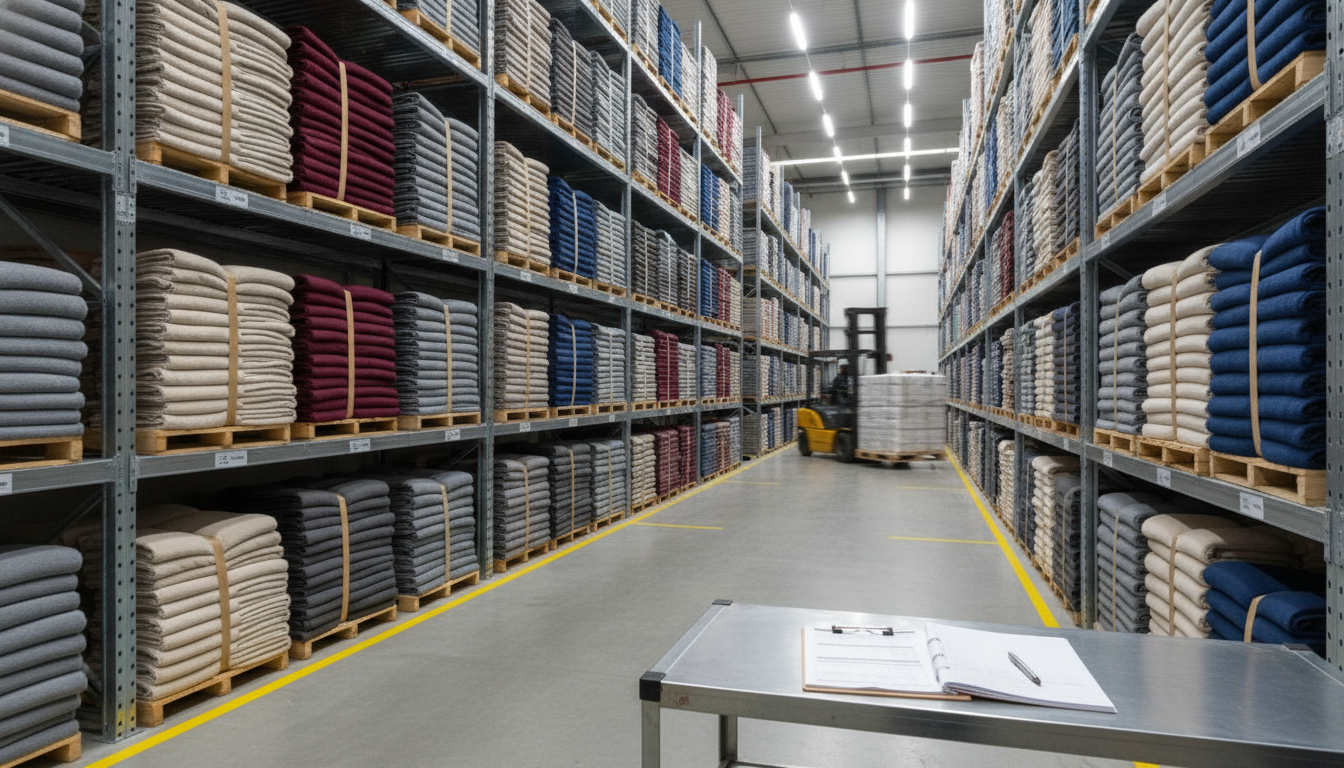
The true cost importing throw blankets China to Spain reaches 45-52% above your FOB purchase price when you account for ocean freight, customs duty at 8-12% depending on fiber composition, Spain’s 21% import VAT, terminal handling charges at Valencia or Barcelona, customs brokerage, and inland delivery to your warehouse. A €10,000 FOB blanket order typically lands at €14,500-15,200 after all charges, with the exact figure determined by your HS classification, shipping method, and whether you recover the import VAT as a registered business.
📋 Table of Contents
- Executive Summary
- What Determines Your Blanket’s HS Classification and Duty Rate?
- Ocean Freight Costs from China to Spain in 2026
- How Are Customs Duty and Import VAT Calculated?
- Port, Terminal, and Clearance Charges
- Complete Landed Cost Model for a Typical Order
- Hidden Costs Most Buyers Overlook
- DDP Versus FOB: Which Shipping Term Saves Money?
- Textile Compliance Requirements for Spain and the EU
- Key Takeaways
- Frequently Asked Questions
Executive Summary
- Landed cost multiplier: Expect your FOB blanket price to increase by 45-52% after freight, duty, VAT, terminal charges, and delivery to your Spanish warehouse.
- Duty rate variability: Cotton and wool blankets attract 8% duty under TARIC heading 6301, while polyester and acrylic constructions face 12%, directly affecting your final margin.
- Import VAT recovery: Spain’s 21% import VAT is recoverable if you hold a Spanish VAT number and sell within the EU, reducing your true cost by one-fifth for registered businesses.
- Freight benchmarks: According to DDPLINK (2026), ocean freight from China to Valencia was approximately €1,350 for a 20-foot container in Q4 2026, with LCL rates at €150-260 per cubic meter.
- Compliance obligations: Every throw blanket entering Spain must carry fiber-composition labeling in Spanish, REACH-compliant dyes, and GPSR-mandated responsible-person details as of July 2026.
📊 Case Study: Madrid Retailer Cuts Landed Costs by 11%
A Madrid home-goods retailer ordering 1,500 sherpa throws discovered their initial quote of €22,500 DDP excluded REACH testing and Spanish labeling costs. By switching to FOB terms, consolidating with a direct freight forwarder, and ordering pre-production fiber testing at €220, they reduced the true cost importing throw blankets China to Spain to €20,025 landed, saving €2,475 (11%) and ensuring customs clearance without detention.
What Determines Your Blanket’s HS Classification and Duty Rate?
Your throw blanket’s HS code determines the customs duty Spain applies, and the classification hinges on fiber composition, construction method, and whether the item qualifies as a blanket or a bedspread. Most throw blankets fall under TARIC heading 6301, which covers blankets and traveling rugs, but the six-digit subheading splits by material: cotton and wool attract 8% duty, while man-made fibers such as polyester, acrylic, and blended constructions face 12%. A blanket advertised as 80% polyester and 20% cotton is classified by the predominant fiber and pays the 12% rate.
Cotton and Wool Blankets (HS 6301.20 and 6301.30)
Pure cotton blankets weighing 300-500 grams per square meter and wool blankets above 450gsm both classify under subheadings that carry an 8% MFN duty rate when imported into Spain. The lower rate reflects longstanding EU textile policy favoring natural fibers, but you must verify the fiber content with a laboratory test report before declaring the code. A supplier’s word is not sufficient evidence for customs.
Synthetic and Blended Blankets (HS 6301.40)
Polyester fleece throws, acrylic sherpa blankets, and any construction where man-made fibers exceed 50% by weight fall into 6301.40, attracting 12% duty. This four-percentage-point difference matters when your order runs to 5,000 units: on a €10,000 FOB shipment, the duty gap alone is €400. Buyers sometimes request a cotton-polyester blend engineered to just exceed 50% cotton to capture the lower rate, but customs laboratories spot fiber misrepresentation and the penalty is confiscation plus a fine equal to the evaded duty.
Bedspreads Versus Blankets
Quilted throws and decorative bedspreads classify under heading 6304 rather than 6301, and the duty rate can reach 12% regardless of fiber. The distinction rests on whether the item is primarily functional (warmth) or decorative (aesthetic covering). A throw sold as a sofa accent rather than bedding risks reclassification during inspection, so ensure your commercial invoice and product description align with the intended use.
Ocean Freight Costs from China to Spain in 2026
Ocean freight from China to Spain’s main container ports, Valencia and Barcelona, depends on whether you ship full-container-load (FCL) or less-than-container-load (LCL), the season, and your departure port in China. According to DDPLINK (2026), a 20-foot container from Shanghai or Ningbo to Valencia cost approximately €1,350 in Q4 2026, while LCL rates ranged from €150 to €260 per cubic meter. Air freight, quoted at €3.70-7.70 per kilogram by Hongocean (2026), is rarely economical for throw blankets because the volumetric weight of folded textiles exceeds the actual weight.
FCL Versus LCL: When Does Each Make Sense?
A 20-foot container holds roughly 1,200-1,500 folded throw blankets depending on packaging density, making FCL the better choice when your order exceeds 800 units. Below that threshold, LCL avoids paying for unused container space, but you inherit shared-container risks: customs may inspect the entire consolidation if one shipper’s cargo is flagged, delaying your release by 3-7 days. LCL also incurs a per-CBM charge at the destination terminal, typically €45-65, which FCL shippers avoid.
Volumetric Weight and Shipping Calculations
Carriers calculate freight charges on whichever is greater: actual weight or volumetric weight (length × width × height in cm ÷ 5000 for sea, ÷ 6000 for air). A carton of 50 folded fleece throws measuring 60×40×50cm and weighing 18kg has a volumetric weight of 24kg for sea freight, so you pay for 24kg. Buyers who compress packaging to reduce carton height by 10cm can cut volumetric weight by 20%, directly lowering the per-unit freight cost. Our Yiwu warehouse processes blanket consolidations where packaging optimization saves €0.30-0.50 per unit on LCL shipments.
How Are Customs Duty and Import VAT Calculated?
Spain calculates customs duty on the CIF value (cost, insurance, freight), then adds import VAT on top of the duty-paid amount. The sequence matters because VAT is charged on a base that already includes the duty, compounding the cost. According to Soorce (2026), mainland Spain applies a standard import VAT rate of 21% to imported goods, with the taxable base generally including customs value, duty, and qualifying related charges.
Step-by-Step Calculation
Start with your FOB invoice value, add ocean freight and marine insurance (typically 0.3-0.5% of FOB), then multiply by the applicable duty rate. The result is your customs value plus duty. Import VAT is then 21% of that combined figure. For a €10,000 FOB blanket order with €400 freight, €50 insurance, and 12% duty, the math runs: CIF €10,450 × 12% duty = €1,254, giving a duty-paid value of €11,704. Import VAT is €11,704 × 21% = €2,458, bringing the total customs charge to €3,712 before any terminal or delivery fees.
Recoverable Versus Non-Recoverable VAT
If you hold a Spanish VAT number and sell the blankets within the EU, you reclaim the €2,458 import VAT on your quarterly VAT return, making it a cash-flow issue rather than a true cost. According to Hongocean (2026), the same example estimated the shipment at €10,675 excluding recoverable import VAT, representing a 26% increase over the goods value. Buyers without VAT registration, such as individuals or non-EU entities selling direct-to-consumer, absorb the full 21% as a permanent cost, raising the landed multiplier from 45% to 52%.
Port, Terminal, and Clearance Charges
Beyond duty and VAT, every container or LCL shipment incurs port-specific charges that buyers often discover only when the freight forwarder presents the final bill. Valencia and Barcelona both levy terminal handling charges (THC), documentation fees, customs brokerage, and container-release fees that together add €250-450 to an FCL shipment and €80-150 to an LCL consolidation.
Terminal Handling Charge (THC)
THC covers the cost of unloading your container from the vessel, moving it to the container yard, and making it available for pickup or customs inspection. Valencia’s THC for a 20-foot container runs €180-220, while Barcelona charges €200-240. LCL shipments pay a per-CBM THC, typically €35-50, which the consolidator splits across all shippers in the container.
Customs Brokerage and Documentation
A licensed customs broker files your import declaration, pays the duty and VAT on your behalf, and releases the cargo once customs clears it. Brokerage fees in Spain range from €120 for a straightforward textile shipment to €250 when the HS classification is ambiguous or the invoice requires amendment. The broker also charges for document preparation, typically €40-60, covering the bill of lading, commercial invoice, packing list, and certificate of origin if your blankets qualify for preferential duty under an EU trade agreement.
Inland Delivery to Your Warehouse
Moving the cleared container or palletized LCL cargo from the port to your warehouse in Madrid, Zaragoza, or another inland city adds €200-600 depending on distance and whether you need a tail-lift truck for unloading. A Valencia-to-Madrid haul for a 20-foot container costs approximately €350-400, while Barcelona-to-Zaragoza runs €180-220. LCL buyers often consolidate multiple suppliers’ goods into one pallet to share this cost, but the forwarder charges a consolidation fee of €60-90.
Complete Landed Cost Model for a Typical Order
A realistic throw-blanket order helps illustrate how each cost layer compounds. Assume you purchase 1,000 polyester fleece throws at €10 FOB per unit from a Zhejiang supplier, shipping via 20-foot container to Valencia, then trucking to your Madrid warehouse. The blankets classify under HS 6301.40 (12% duty), you hold a Spanish VAT number (VAT recoverable), and the supplier provides REACH and fiber-content test reports.
The per-unit landed cost is €16.24 if you absorb VAT, or €13.55 if you recover it. A buyer planning a €25 retail price and expecting 60% gross margin discovers the margin shrinks to 35% when the true cost importing throw blankets China to Spain includes every charge. Switching to cotton blankets (8% duty) saves €457 in duty, lowering the landed cost to €13.10 per unit for VAT-registered importers.
Hidden Costs Most Buyers Overlook
The line items above represent the direct, invoice-backed charges, but several indirect costs erode margin further. Buyers who budget only for FOB, freight, and duty routinely underestimate the true cost importing throw blankets China to Spain by 8-12% because they omit inspection fees, currency conversion spreads, storage, defect allowances, and marketplace fees.
Pre-Shipment Inspection and Testing
A third-party inspection at the factory, covering random sampling, measurement checks, and carton drop tests, costs €250-350 for a 1,000-unit blanket order. Fiber-content lab testing to verify the HS classification adds €180-220 per sample, and REACH compliance screening for azo dyes and heavy metals runs €300-400. Skipping these steps saves money upfront but risks customs detention when the declared fiber content does not match laboratory analysis, or a product recall when a Spanish market-surveillance authority finds a banned dye.
Currency Conversion and Payment Fees
Paying your Chinese supplier in USD or CNY incurs a bank conversion spread of 1.5-3% depending on your bank and the payment method. A €10,000 order converted at a 2.5% spread costs an extra €250. Wire-transfer fees add €25-40 per payment, and if you split the order into a 30% deposit and 70% balance, you pay twice. Buyers using PayPal or Alibaba Trade Assurance face higher spreads, sometimes reaching 4%, plus platform fees of 2-3%.
Defect Allowance and Returns
Even after inspection, a small percentage of blankets arrive with stitching defects, color variation, or packaging damage. Industry practice allows a 2-3% defect rate for textiles, meaning 20-30 units in a 1,000-piece order may be unsellable. If your supplier does not replace defects, you absorb the cost, effectively raising your per-good-unit price by 2-3%. Returns from end customers, common when selling online, add reverse logistics and restocking fees that can reach 5-8% of revenue for home-textile categories.
Storage and Inventory Carrying Cost
Blankets occupy significant warehouse space, and if your sales velocity is slower than expected, you pay monthly storage fees. A pallet of 200 blankets occupies roughly 1.2 cubic meters and costs €8-12 per month in a Madrid 3PL warehouse. Holding 1,000 units for three months before they sell adds €144-216 to your total cost. Inventory financing, if you borrow to pay the supplier while waiting for sales, incurs interest at 4-8% annually.
DDP Versus FOB: Which Shipping Term Saves Money?
Delivered Duty Paid (DDP) means the supplier or freight forwarder handles everything from factory to your warehouse door, paying duty, VAT, and all charges, then invoicing you one all-in price. FOB (Free On Board) means you take ownership once the goods are loaded on the vessel in China, and you arrange and pay for everything thereafter. According to Gerudo Logistics (2026), an illustrative €20,000 FOB shipment with €2,000 freight and insurance used a 4% duty assumption and identified €8,193 in expenditure beyond the FOB purchase price before some local brokerage and terminal charges.
When DDP Makes Sense
DDP simplifies budgeting because you receive one quote covering every cost, and you avoid dealing with customs brokers, terminal operators, and trucking companies separately. First-time importers and buyers ordering small quantities (under 500 units) often prefer DDP because the supplier’s freight forwarder has established rates and processes. The trade-off is that DDP quotes typically include a 10-15% markup over the actual freight and clearance costs, which the forwarder retains as margin. A worked example showed €8,500 of goods reaching Spain at approximately €14,000 after freight, duty, import VAT, terminal charges, and delivery, according to DDPLINK (2026).
When FOB Saves Money
Experienced importers with their own freight-forwarder relationships and customs-broker accounts save 8-12% by shipping FOB and managing logistics directly. You negotiate your own ocean-freight rate, choose your preferred carrier, and control the clearance timeline. FOB also gives you flexibility to consolidate multiple suppliers’ goods into one container, spreading the fixed costs across a larger order value. The downside is that you assume all risk once the goods leave the Chinese port: if the container is delayed, damaged, or detained by customs, you handle the problem and pay any extra charges.
VAT Deferral and Cash Flow
Spain offers a VAT-deferral scheme that lets registered importers delay paying import VAT until their quarterly VAT return, rather than paying it upfront at customs. Under DDP, the forwarder pays VAT immediately and invoices you, tying up your cash for 30-90 days until you file your return. Under FOB with VAT deferral, you avoid that cash-flow hit entirely, which matters when your order value exceeds €20,000 and the VAT bill runs to €4,000-5,000.
Textile Compliance Requirements for Spain and the EU
Every throw blanket sold in Spain must comply with EU textile labeling, REACH chemical restrictions, and the General Product Safety Regulation (GPSR) that took effect in July 2026. Non-compliance triggers customs detention, market-surveillance fines, and mandatory product withdrawal, so these requirements are cost items you must budget for during sourcing.
Fiber-Composition Labeling in Spanish
EU Regulation 1007/2011 requires a permanent label stating the fiber content by descending weight percentage, care instructions, and the country of manufacture, all in Spanish when the blanket is sold in Spain. A polyester fleece throw must read “100% poliéster” or “80% poliéster, 20% algodón” with percentages accurate to within ±3%. The label must be sewn or heat-transferred in a location that remains legible through the product’s normal life, typically the corner seam or a side edge. Printing the label on a hangtag that the buyer removes does not satisfy the regulation.
REACH Compliance for Dyes and Finishes
REACH (Registration, Evaluation, Authorization, and Restriction of Chemicals) restricts azo dyes that release certain aromatic amines, heavy metals in prints, and flame retardants in textile finishes. Your supplier must provide a REACH declaration or test report from an accredited laboratory confirming the blanket contains no Annex XVII restricted substances. Testing costs €300-400 per colorway and takes 7-10 days, so plan it into your pre-production timeline. Customs can request the REACH certificate at clearance, and market-surveillance authorities conduct random retail checks.
GPSR Responsible Person and Traceability
The General Product Safety Regulation, effective July 13, 2026, requires every product sold in the EU to identify a responsible person established in the EU who ensures the product meets safety requirements and handles recalls. For throw blankets, your packaging or label must state the responsible person’s name and postal address. If you are an EU-based importer, you can act as the responsible person yourself. If you are outside the EU, you must appoint an authorized representative, typically a compliance service that charges €300-600 annually per product category. According to Managora (2026), for consignments valued at €150 or less, a reported EU policy change introduced a €3 fixed customs duty per item category from July 1, 2026, followed by a €2 handling charge from November 1, 2026.
Packaging and Waste Obligations
Spain’s packaging-waste regulations require importers to register with an Extended Producer Responsibility (EPR) scheme and pay fees based on the weight of packaging materials you place on the market. Polybag and carton packaging for 1,000 blankets typically weighs 40-60kg, and the EPR fee runs €0.08-0.12 per kilogram, adding €5-7 to your total cost. Registration with Ecoembes or another authorized EPR operator costs €150-250 annually and must be completed before your first import.
Key Takeaways
- What drives the 45-52% markup on FOB prices? The landed cost multiplier results from €1,350-1,600 ocean freight (DDPLINK, 2026), 8-12% customs duty depending on fiber, 21% import VAT, €250-450 in terminal and brokerage charges, and €200-600 inland trucking to Spanish warehouses.
- Why does fiber type matter for total cost? Cotton and wool blankets pay 8% duty under TARIC 6301.20/6301.30, while polyester and acrylic constructions face 12% under 6301.40, a €400 difference on a typical €10,000 FOB order (EU TARIC Database, 2026).
- Should you recover import VAT or absorb it? Registered businesses reclaim Spain’s 21% import VAT quarterly, reducing true landed costs from 62.4% above FOB to 35.5% above FOB for a €10,000 order (Soorce, 2026), while non-registered buyers absorb the full amount permanently.
- Which hidden costs add 8-12% beyond invoice charges? Pre-shipment inspection (€250-350), fiber-content lab testing (€180-220), REACH screening (€300-400), 1.5-3% currency conversion spreads, 2-3% defect allowances, and €8-12/month storage fees compound beyond direct freight and duty (industry benchmarks, 2026).
- When does FOB beat DDP pricing? Experienced importers managing their own customs clearance and freight contracts save 8-12% versus DDP by eliminating the forwarder’s 10-15% markup, particularly on orders exceeding 800 units where FCL rates apply (Gerudo Logistics, 2026).
- What compliance steps prevent detention and fines? Spanish-language fiber labels per EU Regulation 1007/2011, REACH-compliant dyes verified by €300-400 lab tests, and GPSR responsible-person details (€300-600 annual service) are mandatory for all textile imports as of July 2026 (Managora, 2026).
Frequently Asked Questions
Can I import throw blankets to Spain without a Spanish VAT number?
You can import without a Spanish VAT number, but you will pay the 21% import VAT at customs and cannot recover it, making it a permanent cost that raises your landed price by one-fifth. Individuals and non-EU businesses selling direct-to-consumer often operate without registration, but the margin compression makes it difficult to compete with VAT-registered sellers who reclaim the tax. If you plan to import regularly or sell within the EU, registering for VAT in Spain or another EU member state becomes worthwhile once your annual import value exceeds €15,000-20,000.
How do I verify the HS code my supplier declares is correct?
Request a fiber-content lab test report from an accredited laboratory such as SGS, Intertek, or TÜV, which measures the exact percentage of each fiber by weight and confirms the predominant material. Cross-reference the test result with the EU TARIC database to identify the correct six-digit subheading and duty rate. Suppliers sometimes declare a lower-duty code to make their quote appear cheaper, but Spanish customs conducts random laboratory checks, and a mismatch triggers reclassification, a penalty equal to the evaded duty, and possible shipment detention. Investing €180-220 in pre-shipment fiber testing avoids a €1,000+ penalty on a typical order.
What happens if my blankets fail a REACH test after they arrive in Spain?
If market-surveillance authorities or a customer complaint triggers a REACH test and the blanket contains a restricted substance such as an azo dye releasing a banned aromatic amine, Spanish authorities issue a withdrawal order requiring you to remove all units from sale, notify customers who already purchased, and arrange disposal or return to China at your expense. The cost of a recall typically exceeds the original order value when you account for reverse logistics, customer refunds, and the destroyed inventory. Preventing failures requires obtaining a REACH compliance certificate from your supplier before production, backed by an independent lab test on a pre-production sample, which costs €300-400 but protects against a five-figure loss.
Understanding the true cost importing throw blankets China to Spain requires adding every charge from factory gate to your warehouse, then accounting for compliance testing, currency spreads, defect allowances, and storage. Buyers who budget only for FOB and freight discover their margin evaporates when duty, VAT, terminal fees, and hidden costs compound. Working with a trusted China sourcing agent who provides transparent, itemized quotations covering inspection, freight, clearance, and delivery eliminates the surprise charges that erode profitability. Our Yiwu and Guangzhou sourcing desks verify supplier fiber claims, coordinate REACH and GPSR compliance testing, and consolidate shipments to minimize per-unit freight costs for importers across Spain and the EU.
Ready to calculate your exact landed cost and source compliant throw blankets with full transparency?
Request Your Detailed Quote →
Written by the Goodcantrading Sourcing Team.