
📋 Table of Contents
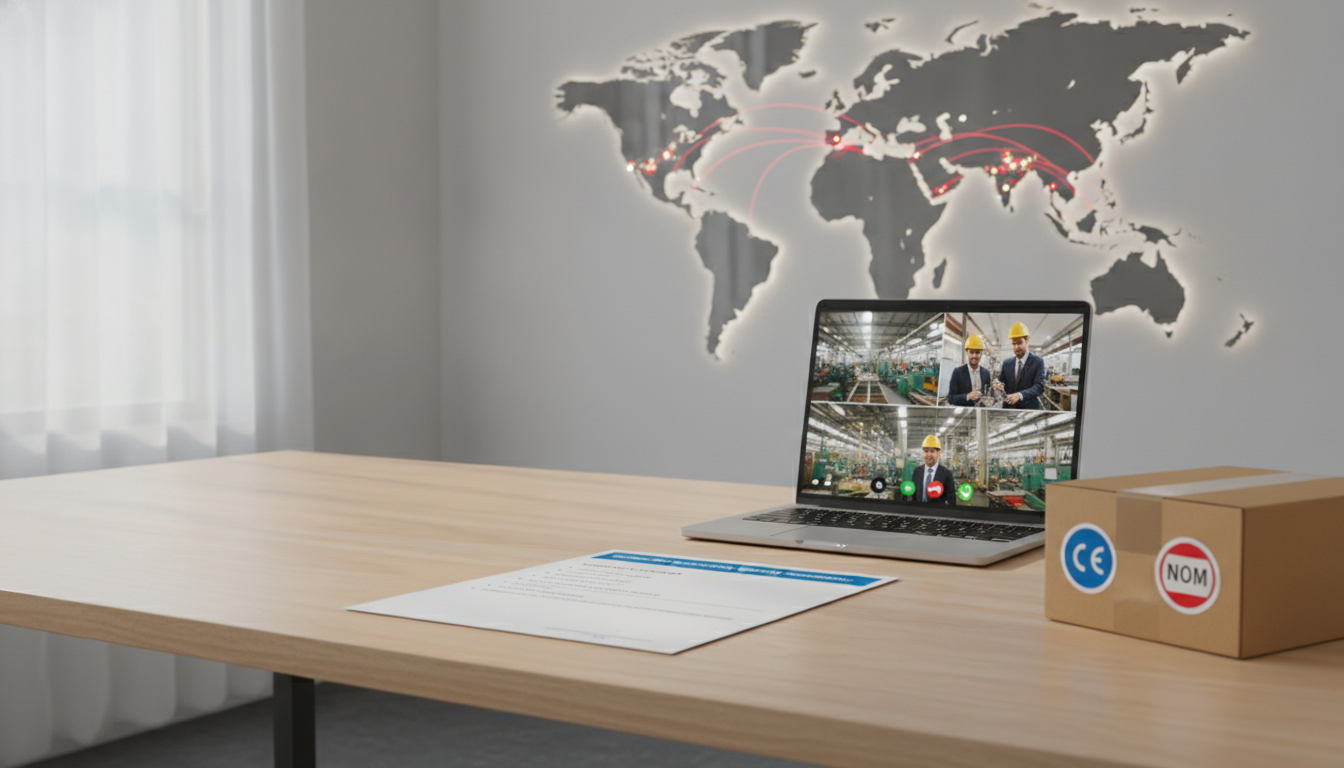
For importers in Mexico, Brazil, Colombia, Argentina, Chile, and across Europe, finding a trustworthy china sourcing agent can mean the difference between a profitable product line and a costly shipment of defective goods. As of 2026, sourcing from China remains the most cost-effective way to access a vast manufacturing base, but language barriers, fraud risks, and complex logistics demand expert local support. See also our guide on IRAM certification requirements for Argentina imports.
Executive Summary
- Trade volumes: China exported over $3.5 trillion in goods in 2024 according to Statista, with Latin American imports growing 12% year-over-year.
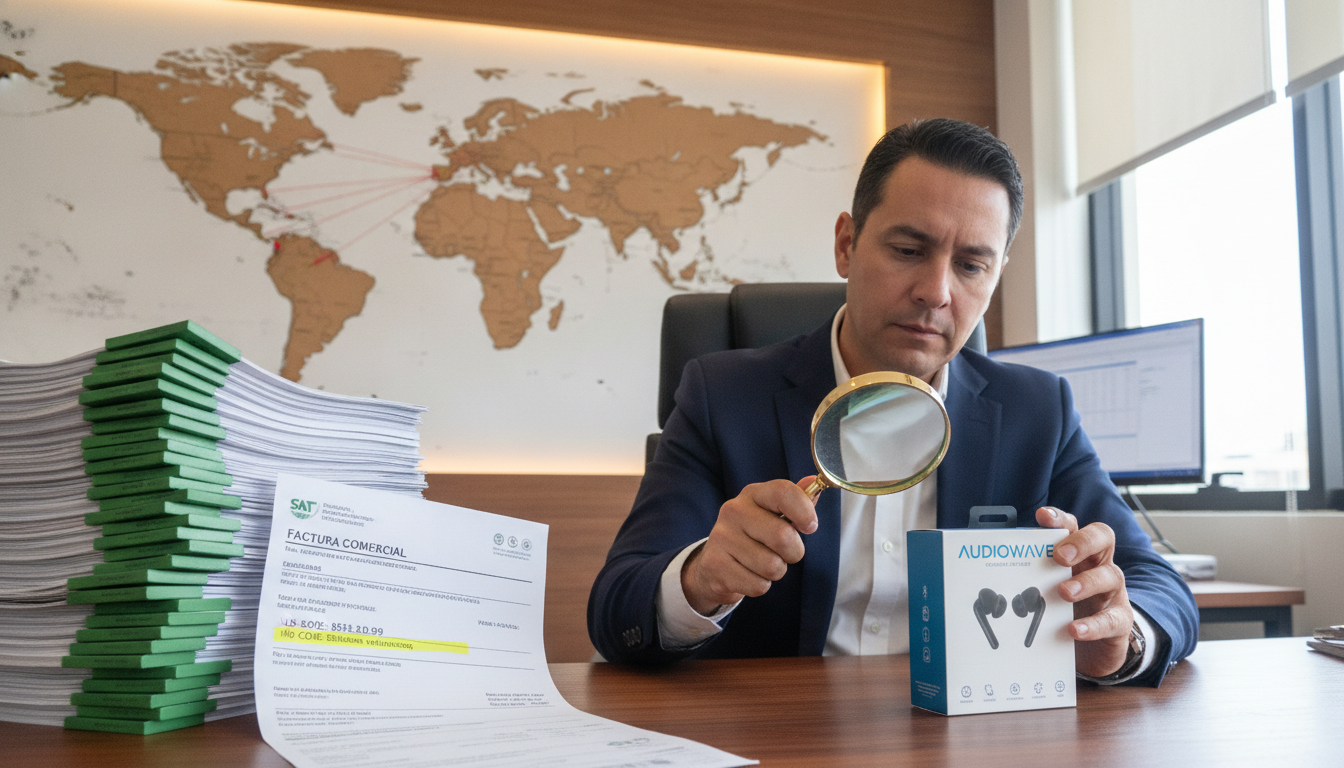
- Compliance requirements: Mexican customs (SAT) mandates an RFC tax ID and NOM certification for many product categories; EU imports require CE marking documentation per European Commission rules.
- Buyer concerns: A 2025 CCPIT survey found 68% of foreign buyers rank supplier verification as their top sourcing challenge.
- Cost benchmark: Professional sourcing agents charge 3-10% of order value, based on a 2024 Sourcing Journal survey of 150 firms.
- Growth trend: Alibaba’s 2025 Trade Report noted a 22% rise in Latin American buyer inquiries on B2B platforms during 2024.
What Does a China Sourcing Agent Do?
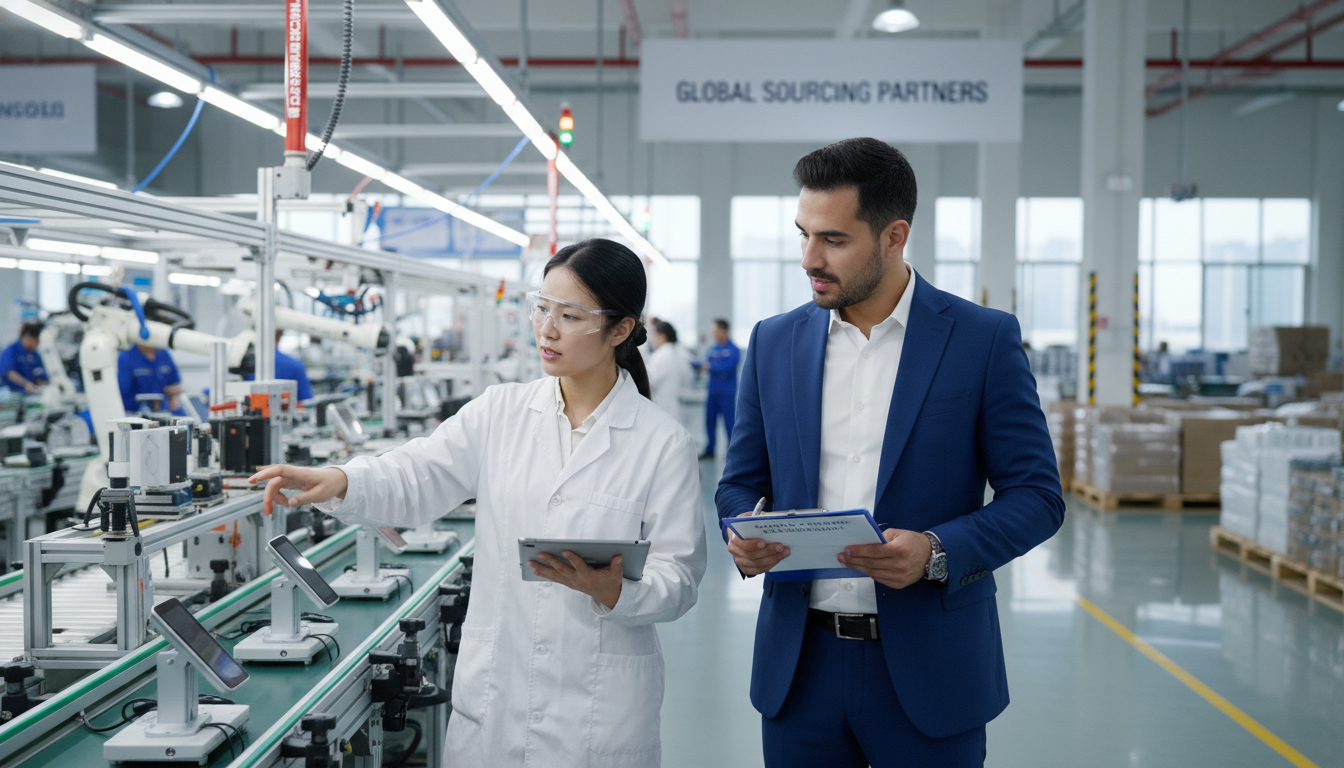
A China sourcing agent acts as your on-the-ground buyer in China, handling supplier identification, factory audits, price negotiation, quality control, and logistics coordination. Instead of dealing with unknown manufacturers across 13 time zones, an agent gives you a single point of accountability with local Mandarin-speaking teams who visit factories in person.
Supplier Identification and Verification
The agent searches its existing network and B2B platforms, then shortlists 3-5 factories matching your product specifications. Each candidate undergoes a physical factory visit to check production capacity, export licenses, and management quality, not just a video call.
Negotiation and Sample Management
Agents use local market knowledge to negotiate per-unit prices, MOQs, and payment terms. They arrange pre-production samples, ship them to you for approval, and manage any specification adjustments before production starts.
Quality Control and Logistics
During production, an agent performs inline quality inspections and a final random sampling check before container loading. Then they consolidate cargo from multiple suppliers, book shipping, and handle customs paperwork including certificates of origin, NOM, or CE compliance documents.
Benefits of Using a Sourcing Agent for Latin American and European Buyers
Language gaps and opaque supplier information create real financial risks when importing from China. A local sourcing partner turns those risks into manageable, documented steps that protect your capital.
Fraud Prevention
The most common scam involves a trading company posing as a factory. Agents physically verify company registrations, factory ownership, and past export records. One audit typically costs $300-$800 and can prevent losses that routinely exceed $20,000 on a first order.
Price Optimization
Factory-direct prices quoted on Alibaba often include hidden margins for distributor commissions. A China sourcing agent with deep regional knowledge can reduce unit costs by 5-20% by negotiating directly with production managers and benchmarking against 5-10 comparable facilities.
Regulatory Compliance
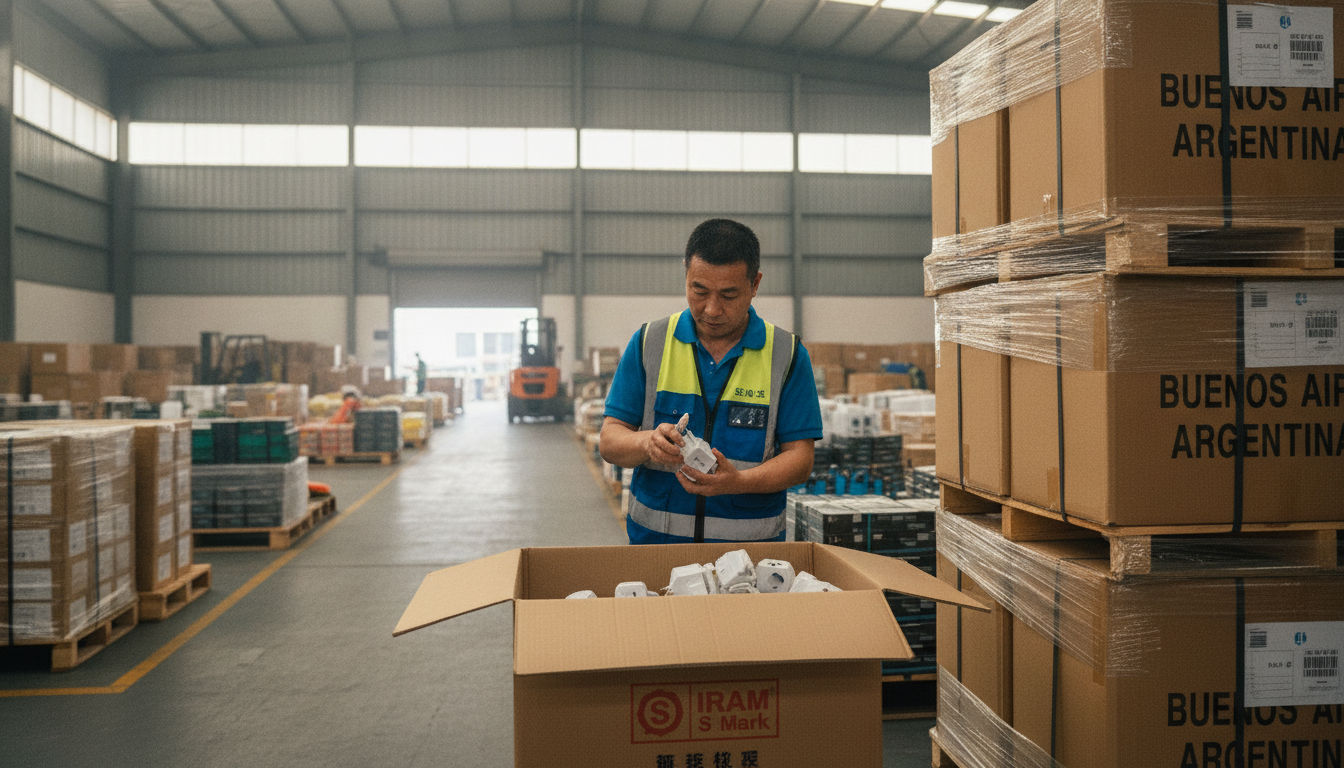
For Latin American importers, compliance with local norms (Mexico’s NOM, Brazil’s INMETRO, Argentina’s IRAM) demands specific labeling and testing. A competent agent maintains a database of accredited testing labs and pre-checks product against target-country requirements before shipping, cutting customs rejection rates from 15% to under 3%.
How to Evaluate a Reliable China Sourcing Agent
Not all agents are equal. Freelancers without offices, agents who refuse factory audits, and those earning hidden commissions from factories can damage your business. Use these criteria to separate real service providers from commission-only brokers.
Physical Office and Warehouse Presence
Insist on seeing a Google Maps listing, a physical address near a major manufacturing hub (Yiwu, Guangzhou, Foshan), and their own consolidation warehouse. A warehouse address proves they handle real cargo volumes, not just paperwork. Agents based outside China rarely deliver the hands-on verification you need.
Audit and Inspection Track Record
Ask for 2-3 anonymized factory audit reports and the agent’s inspection checklist for your product category. Professional agents use standardized forms with photos, production line capacity data, and QC sampling tables per AQL 2.5 standards. If they cannot show these documents within 24 hours, walk away.
Typical cost: A factory audit by a professional China sourcing agent ranges from $300 to $800 depending on factory distance and report detail level. This fee often includes a written report with 30+ photos and a production capacity estimate.
Client References from Your Region
An agent who has successfully shipped to Mexico or Colombia understands port delays, customs broker coordination, and SAT paperwork nuances. Request references from buyers in your country who imported similar product categories within the last 12 months. Speak to them directly.
- Red flag, No office address: Agent operates only via WeChat or WhatsApp, no physical presence near manufacturing clusters.
- Red flag, No factory audit report: Claims to know the factory well but provides no documented visit records.
- Red flag, Push for full T/T advance: Demands 50-100% payment before production, without escrow or inspection milestones.
- Green flag, Clear service contract: Defines scope, audit frequency, quality inspection stages, and shipping responsibilities in writing.
The Sourcing Process: From Supplier Search to Delivery
A structured process reduces surprises. Here is the standard workflow professional agents follow for first-time buyers importing from China to Latin America or Europe.
1. Product Specification and Budget Alignment
You provide detailed specs (material, dimensions, target price, certifications needed). The agent runs a pre-sourcing analysis using 5-7 comparable factory databases to estimate realistic unit costs and MOQs before contacting any supplier.
2. Supplier Shortlist and Factory Audit
The agent identifies 3-5 factories, conducts physical audits (checking business licenses, production lines, past export records), and sends you a ranked shortlist with audit reports. This stage takes 5-10 business days.
3. Sampling and Price Negotiation
Pre-production samples are ordered from 1-2 top candidates. The agent negotiates final pricing, payment terms, and production timelines. Samples are shipped to you via DHL/FedEx with a comparison matrix.
4. Production Monitoring and Quality Inspection
Once you confirm the order, the agent schedules inline inspections (30-50% production complete) and a final random inspection before shipping. Defect rates are measured against your agreed AQL standard.
5. Consolidation, Shipping, and Customs Support
The agent consolidates goods from multiple factories into one container, arranges ocean freight or air cargo, and prepares all export documents. For Latin American shipments, they coordinate with your local customs broker to ensure NOM or IRAM papers are ready upon arrival.
Key Manufacturing Regions and Their Specialties
China’s manufacturing clusters are highly specialized. Sending your agent to the wrong province wastes time and adds cost. Here is where to focus based on product category.
Yiwu, Zhejiang, Small Commodities and General Trade
Yiwu hosts the world’s largest wholesale market for consumer goods. Over 75,000 booths sell apparel accessories, home goods, toys, stationery, and seasonal decorations. MOQs are lower here, and agents based in Jinhua (15 km away) can visit markets daily to source samples.
Guangzhou and Shenzhen, Electronics, Fashion, and Innovation
Guangdong province produces electronics, fast fashion, and bags. Shenzhen’s Huaqiangbei market is a global electronics hub. Quality control in this region must focus on component-level testing due to the density of small factories.
Foshan, Guangdong, Furniture and Hardware
Foshan is China’s furniture capital, accounting for over 30% of national furniture exports. Solid wood, metal-frame, and upholstered items dominate. Foshan-based agents with local relationships can negotiate 8-12% lower FOB prices than remote negotiators.
Jiangsu and Zhejiang, Textiles and Fabric Goods
Home textiles, curtains, and apparel fabrics are concentrated in Nantong (Jiangsu) and Keqiao (Zhejiang). Factories here often hold OEKO-TEX and GRS certifications, critical for European buyers needing sustainable sourcing verification.
Key Takeaways
- China exported over $3.5 trillion in goods in 2024 according to Statista, with Latin America imports up 12%.
- Mexican customs (SAT) requires importers to register an RFC tax ID before clearing any China shipment over $1,000 USD.
- A 2025 CCPIT survey found 68% of foreign buyers rank supplier verification as their biggest sourcing challenge.
- Professional China sourcing agent fees range from 3% to 10% of order value, based on a 2024 Sourcing Journal survey.
- Alibaba’s 2025 Trade Report shows Latin American buyer inquiries on B2B platforms grew 22% year-over-year in 2024.
- European Union CE marking documentation is mandatory for all imported consumer products, per European Commission rules.
FAQ
What is a China sourcing agent and how do they work?
A China sourcing agent is a local company that represents foreign buyers, managing supplier search, factory audits, negotiation, quality control, and shipping logistics. Agents physically visit factories, verify licenses, negotiate prices in Mandarin, and handle export documentation. They act as the buyer’s in-country team, reducing fraud risks and language barriers while ensuring products meet target-market compliance standards.
How much does a China sourcing agent charge in 2026?
Professional agents typically charge 3% to 10% of the total order value or a per-service fee. Factory audits alone cost $300-$800, while full-service sourcing (supplier identification, negotiation, quality inspection, and shipping coordination) runs 5-8% of order value. Complex products with multiple inspection rounds may cost toward the higher end. Always confirm fee structure in a signed service contract.
Is it safe to use a China sourcing agent for importing from China?
Using a vetted, office-based agent is considerably safer than direct negotiation with unknown manufacturers. Licensed agents physically inspect factories and provide documented audit reports. Risk persists with unverified agents who lack a physical office or warehouse; always request client references from your country and check their business registration before committing any payment.
How can I verify a Chinese supplier without visiting the factory?
A China sourcing agent will physically visit the factory on your behalf, photograph the production line, check business licenses, and interview management. The agent produces a written report with capacity estimates and export history. Third-party inspection companies like SGS or Bureau Veritas also offer factory audit services, typically starting at $450 per visit.
Which regions in China are best for sourcing consumer goods?
Yiwu (Zhejiang) dominates for small commodities and general merchandise; Guangzhou and Shenzhen specialize in electronics and fast fashion; Foshan is the furniture hub; and Jiangsu/Zhejiang produce home textiles. Each cluster offers distinct factory density and pricing. A competent sourcing agent will match your product to the correct manufacturing region rather than pulling random Alibaba listings.
Ready to secure your supply chain with a vetted local partner?
Request a free supplier audit →
In practice: A Colombian importer of home décor avoided a $22,000 loss by using our factory audit that revealed the supplier was a trading company with no in-house production.