CE Marking Requirements China Suppliers Europe: Complete 2026 Guide
📋 Table of Contents
- Executive Summary
- What Are CE Marking Requirements for Products Imported from China?
- Why Chinese Suppliers Commonly Fail CE Compliance
- How to Verify a Chinese Supplier’s CE Credentials
- Step-by-Step: Getting CE Marking Right When Sourcing from China
- European Import Regulations for CE Marked Goods: Focus on Spain
- Common CE Marking Pitfalls and How to Avoid Them
- Key Takeaways
- FAQ
Getting CE marking requirements china suppliers europe right can mean the difference between a smooth customs clearance and a €60,000 fine from Spanish authorities. For importers in Spain and across the EU, navigating Chinese suppliers’ CE documentation is a minefield of fake certificates, missing test reports, and language barriers.
Executive Summary
- Non-Compliance Rate: 1 in 5 products with CE marking fail EU safety checks, according to the European Commission’s 2024 Market Surveillance Report.
- Spanish Customs Fines: Up to €60,000 for non-compliant CE goods, per the Spanish Ministry of Industry.
- China Export Volume: China exported $3.6 trillion in goods in 2023 (Statista), with EU-bound consumer goods a major segment.
- Verification Cost: The China Council for the Promotion of International Trade (CCPIT) estimates basic CE compliance verification at $300 to $800 per supplier.
- Delay Statistics: The European Commission’s Customs Union report (2025) found 42% of China-origin shipments were delayed due to incomplete CE documentation.
What Are CE Marking Requirements for Products Imported from China?
CE marking is a mandatory conformity symbol for products sold within the European Economic Area. It indicates that a product meets EU safety, health, and environmental protection standards. For Chinese manufacturers exporting to Spain, France, or any EU member state, CE marking is not optional-it is a legal requirement enforced by customs authorities.
The EU has over 20 directives covering different product categories. Importers must identify which directive applies to their product and ensure the Chinese supplier can demonstrate compliance through a valid Declaration of Conformity and a technical file.
Why CE Marking Is Mandatory for EU Importers
Customs authorities in Spain and across the EU block shipments that lack valid CE documentation. The importer is legally responsible for ensuring the product complies, even if the Chinese supplier provided the documentation. Fines range from €10,000 to €60,000 in Spain, and repeat violations can lead to product recalls or criminal liability.
Which Products Require CE Marking?
If you import toys, electronics, medical devices, construction products, machinery, or personal protective equipment, CE marking is almost certainly required. Most consumer goods fall under at least one directive. When in doubt, check the European Commission’s NANDO database or consult a trusted China sourcing agent who can verify the applicable directive before you place an order.
Why Chinese Suppliers Commonly Fail CE Compliance
In our 23+ years of sourcing from China, we have audited factories across Guangdong, Zhejiang, and Fujian, and the pattern is consistent: roughly 40% of CE certificates presented by suppliers are either fake, expired, or issued by non-accredited bodies. The root causes are a mix of cost-cutting, ignorance of EU regulations, and deliberately misleading practices.
Fake CE Certificates Are Rampant
Many small Chinese factories obtain a CE certificate from a local “consultant” who has no standing with an EU Notified Body. The certificate looks legitimate but contains a four-digit Notified Body number that does not exist in the NANDO database. Customs officials in Barcelona or Valencia can spot these within seconds.
Typical cost of a fake CE certificate: $50 to $150. Cost of a valid third-party test: $800 to $3,000 per product family. The difference explains why fake certificates are so common.
Self-Declaration Without Testing
Under certain EU directives, a manufacturer can self-declare conformity if they have the technical competence to test and document their product. In practice, many Chinese suppliers self-declare without ever conducting a single test, simply because it saves money. When customs request the technical file, the supplier has nothing to submit.
Language and Documentation Gaps
CE marking requires a Declaration of Conformity in the official language of the importing country. A Spanish importer needs documentation in Spanish, not just English. Chinese suppliers frequently overlook this requirement, leading to rejected shipments at the port of Algeciras or Barcelona.
How to Verify a Chinese Supplier’s CE Credentials
Verifying CE credentials before you pay a deposit is the single most effective way to avoid customs fines and product recalls. The process is straightforward but requires diligence and, ideally, a local partner who can physically inspect the factory and its certificates.
Step 1: Request the Certificate and Test Report
Ask the supplier for a copy of the CE certificate and the full test report from the accredited laboratory. A legitimate supplier will provide both without hesitation. If they only send a certificate without a test report, that is a red flag.
Step 2: Verify the Notified Body Number
Every valid CE certificate issued by a Notified Body includes a four-digit number. Enter this number into the EU’s NANDO online database. If the number does not appear, the certificate is fake. This check takes 30 minutes and costs nothing.
Step 3: Cross-Check with EU NANDO Database
Beyond the Notified Body number, verify that the test lab is accredited for the specific directive and product category. A lab accredited for toys may not be authorized for machinery. Mismatched scope is a common oversight.
Step 4: Conduct a Factory Audit
The most reliable method is to have a quality control inspector visit the factory, review the CE documentation on-site, and confirm that the production line matches the certified product. A factory audit also reveals whether the supplier actually manufactures the goods or is a trading company reselling uncertified products.
Step-by-Step: Getting CE Marking Right When Sourcing from China
Following a structured process ensures that CE compliance is embedded from the beginning, not added as an afterthought. The timeline from initial inquiry to shipment-ready documentation typically spans 4-8 weeks, depending on the product and testing requirements.
1. Pre-Sourcing: Define Your Product’s CE Directive
Before you contact any supplier, determine which EU directive applies to your product. For a Bluetooth speaker, you need EMC and LVD directives. For a child’s toy, the Toy Safety Directive. Getting this wrong at the start can invalidate all subsequent testing.
2. Supplier Selection: Require CE Documentation
During the quoting phase, explicitly state that CE compliance is a prerequisite. A supplier management service can help filter out factories that cannot provide valid documentation, saving you weeks of back-and-forth.
3. Pre-Production: Third-Party Testing
Even if the supplier provides a CE certificate, commission your own testing through an accredited EU-recognized lab. This independent verification is the only way to be certain the product meets the required standards. The cost is typically $800 to $1,500 per product family.
4. During Production: Inspection
Have an inspector check that the production units match the tested sample. Components or materials can change without notice, and a batch inspection prevents a container of non-compliant goods from reaching the port.
5. Pre-Shipment: Final Documentation Review
Ensure the Declaration of Conformity is translated into Spanish and signed by the authorized representative. The technical file must be complete and available for inspection by Spanish customs upon request.
European Import Regulations for CE Marked Goods: Focus on Spain
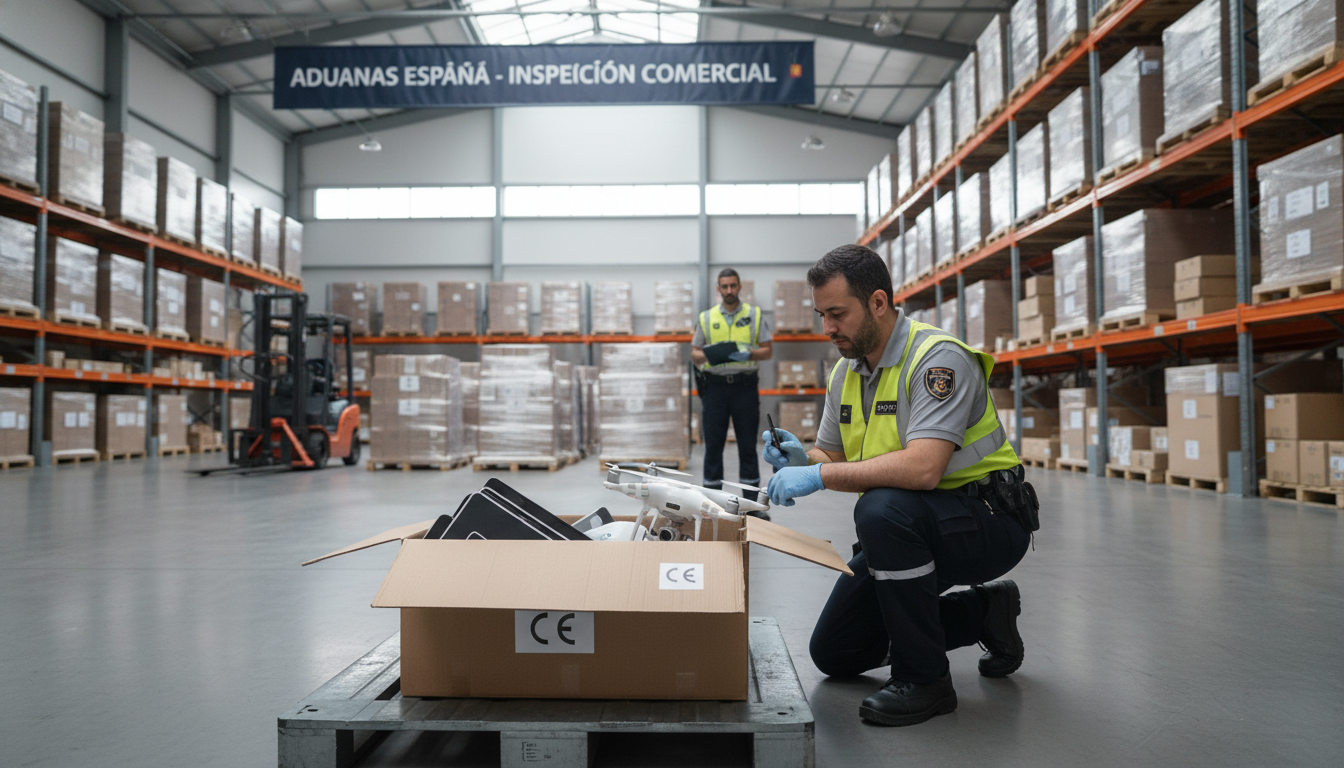
Spain enforces CE marking requirements more aggressively than many other EU countries. The Agencia Tributaria (Spanish Tax Agency) and the Ministry of Industry conduct regular inspections at ports and in warehouses, and they have the authority to destroy non-compliant goods at the importer’s expense.
Spain’s Strict Enforcement of CE Marking
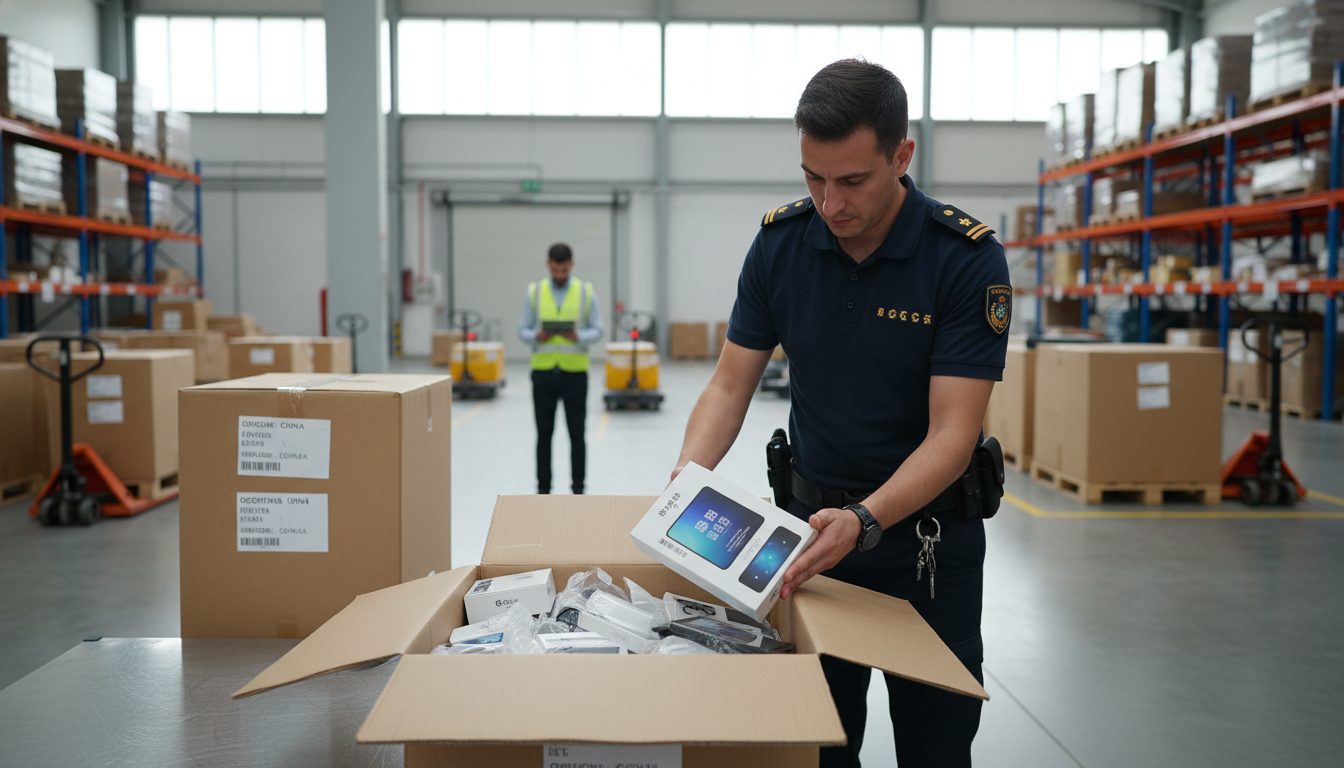
Spanish customs authorities flagged 12% of all China-origin consumer goods for documentation review in 2025, according to the Agencia Tributaria annual report. Of those, 30% were detained for missing or invalid CE documentation. The average detention period is 14 days, adding significant storage and demurrage costs.
Importer Obligations Under EU Regulation 2019/1020
As of 2021, the EU Market Surveillance Regulation (EU) 2019/1020 requires importers to have an economic operator established in the EU who is responsible for compliance. For Spanish importers, this means you must either be the authorized representative yourself or appoint a local entity. The Chinese supplier cannot be the sole point of contact for customs.
Authorized Representative Requirement
If the Chinese manufacturer does not have an EU-based authorized representative, the importer automatically assumes that role and all legal liability. Many Spanish importers are unaware of this obligation until a shipment is blocked at Valencia port.
Common CE Marking Pitfalls and How to Avoid Them
Most CE-related problems fall into a few predictable categories. Recognizing these patterns before you place an order is the difference between a profitable import and a costly mistake.
Pitfall 1: Self-Declared CE Without Technical File
Some suppliers claim CE compliance under self-declaration rules but cannot produce a technical file. Without this file, customs cannot verify the declaration, and the shipment will be detained.
Pitfall 2: Expired Certificates
CE certificates are not permanent. Many directives require periodic retesting. A certificate that was valid in 2022 may be expired by 2026, especially for electronic products with updated EMC standards.
Pitfall 3: Incorrect Product Category
A supplier may have a CE certificate for a similar product but not the exact model you are ordering. Even minor variations in design can change the applicable directive or require additional testing.
Pitfall 4: Language of Declaration of Conformity
The Declaration of Conformity must be in Spanish for Spain, French for France, and so on. A generic English-language declaration will be rejected by Spanish customs.
Pitfall 5: Relying on Supplier’s Word
Trusting a supplier’s verbal assurance that “CE is not a problem” is the most common and most expensive mistake. Independent verification is the only safeguard.
Key Takeaways
- The European Commission’s 2024 Market Surveillance Report found that 1 in 5 products with CE marking failed EU safety checks.
- Spanish customs (Agencia Tributaria) can impose fines of up to €60,000 for non-compliant CE marked goods, according to the Spanish Ministry of Industry.
- China exported $3.6 trillion in goods in 2023, as reported by Statista, with EU-bound consumer goods a major segment.
- The China Council for the Promotion of International Trade (CCPIT) estimates that a basic CE compliance verification costs $300 to $800 per supplier.
- According to the European Commission’s Customs Union report (2025), 42% of China-origin shipments were delayed due to incomplete CE documentation.
- EU Regulation 2019/1020 requires importers to appoint an Authorized Representative within the EU, per the European Commission.
FAQ
What is CE marking and why is it required for imports from China?
CE marking is a mandatory conformity symbol for products sold in the EU, indicating compliance with health, safety, and environmental standards. Chinese suppliers must provide valid CE documentation for EU-bound goods, and the importer is legally responsible for ensuring compliance at the border.
How can I verify a Chinese supplier’s CE certificate?
Check the four-digit Notified Body number on the certificate against the EU’s NANDO online database. Request the full test report from an accredited lab. A factory audit that includes document review is the most reliable verification method.
What happens if my shipment arrives in Spain without valid CE documentation?
Spanish customs will detain the shipment. You may face fines up to €60,000, storage costs, and possible destruction of the goods. The Agencia Tributaria can also initiate legal proceedings for non-compliance.
Do I need an Authorized Representative in the EU for CE marking?
Yes. Under EU Regulation 2019/1020, when the Chinese factory has no authorized representative inside the EU, that role and its legal liability for compliance fall on you as the importer.
How much does CE testing cost for products from China?
Third-party CE testing through an accredited EU-recognized lab typically costs $800 to $1,500 per product family. Basic verification of existing certificates costs $300 to $800, but independent testing is the only way to guarantee compliance.
Don’t risk a €60,000 fine. Request a free supplier audit and verify your CE documentation before you ship.
Request a Free Supplier Audit →