How to Import Clothing from China (2026 Guide for Buyers)
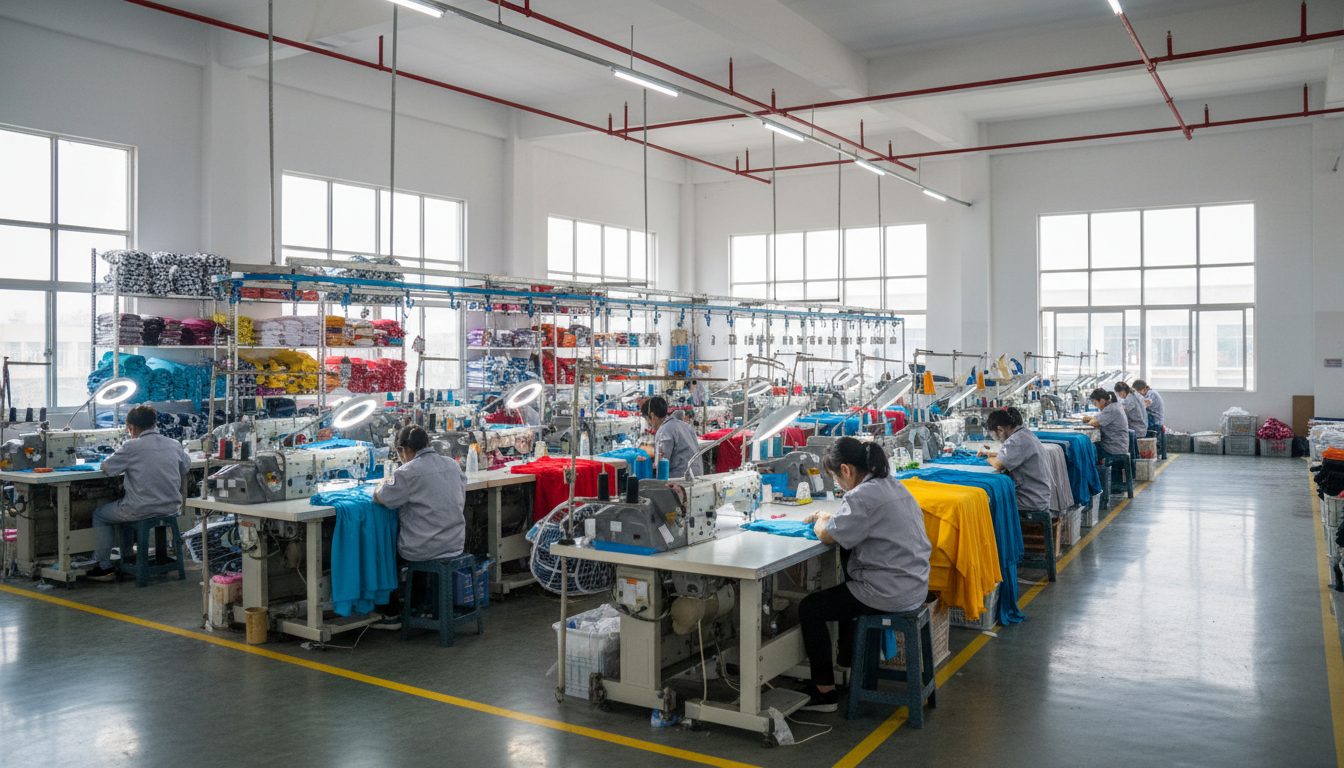
📋 Table of Contents
Understanding how to import clothing from China remains critical for apparel businesses targeting Latin American and European markets in 2026. With global textile supply chains shifting and compliance requirements tightening, buyers face new challenges around carbon fees, tariff structures, and supplier verification. This guide provides the operational framework you need to source, inspect, and ship garments profitably while avoiding the fraud traps that cost importers millions annually.
Executive Summary
- Market scale: China exported $178 billion in textiles and apparel globally in 2025, with Latin America receiving 12.4% ($22.1 billion), up 18% year-over-year according to China Customs (2026).
- Mexico dominance: China supplied $8.7 billion of Mexico’s clothing imports in 2025, 62% of the total even with 20-35% tariffs.
- Colombia growth: Colombia’s textile imports from China rose 24% to $2.1 billion in 2025, at a 15% average duty.
- EU carbon fees: The EU bought €42 billion of Chinese apparel in 2025, and from 2026 CBAM adds €0.12-0.45 per kg.
- Brazil tariff reality: Despite a 35% average tariff, Brazil imported $4.3 billion of Chinese apparel in 2025, 68% of it fast fashion.
Why China Dominates Global Apparel Manufacturing
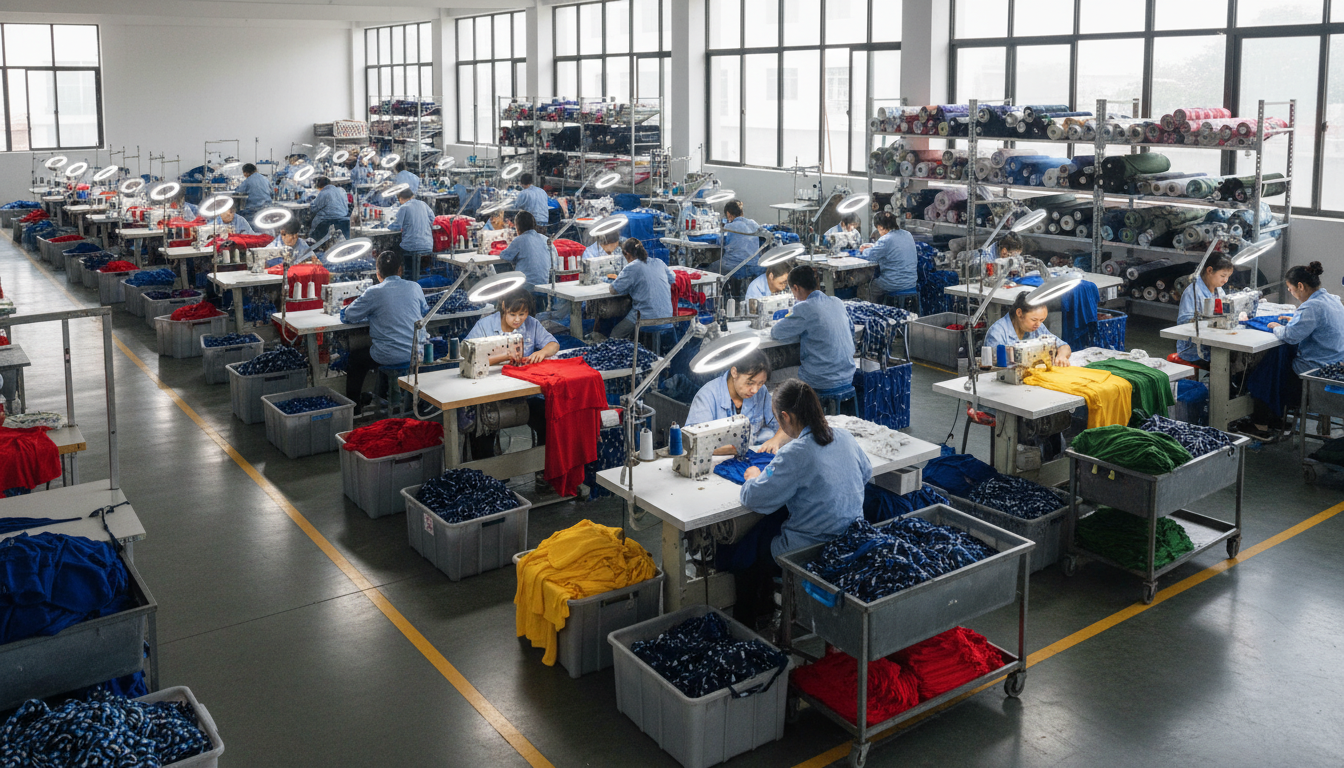
China controls 31% of global garment exports because of integrated supply chains that span raw materials to finished goods. The Yangtze River Delta and Pearl River Delta regions house 60% of the country’s textile mills, dyeing facilities, and cut-and-sew operations within 200 kilometers of major ports.
Manufacturing Ecosystem Advantages
Chinese apparel hubs offer vertical integration that competitors cannot match. A single province like Zhejiang contains fabric suppliers, zipper manufacturers, button factories, printing workshops, and garment assembly lines. This density reduces lead times from 45 days to 21 days for custom orders compared to sourcing from multiple countries.
Working with a trusted China sourcing agent based in manufacturing regions like Jinhua provides direct access to these supplier networks without the trial-and-error costs of independent sourcing.
Price Competitiveness
Labor costs in coastal China average $4.80 per hour in 2026, higher than Bangladesh ($2.10) or Vietnam ($3.20), but Chinese factories offset this through automation and scale. A 10,000-unit t-shirt order costs $2.20 per unit in Guangdong versus $1.90 in Dhaka, but Chinese suppliers deliver in 18 days versus 35 days from South Asia.
Key Manufacturing Regions
- Guangdong Province: Specializes in sportswear, activewear, and technical fabrics with 12,000+ garment factories concentrated in Dongguan and Shenzhen.
- Zhejiang Province: Focuses on fast-fashion, knitwear, and children’s clothing with Yiwu Market serving as the wholesale hub for 400,000+ product SKUs.
- Fujian Province: Produces outdoor apparel, footwear, and bags with strong supply chains for waterproof and breathable materials.
- Jiangsu Province: Manufactures formal wear, uniforms, and high-end textiles with advanced dyeing and finishing capabilities.
Step-by-Step Import Process
Learning how to import clothing from China requires following a structured sequence that protects your investment at each stage. Skipping verification steps or rushing production approvals causes 70% of first-time importer failures.
1. Define Product Specifications
Create a technical pack that includes fabric composition, weight (GSM), construction details, sizing charts, color codes (Pantone), trim specifications, and packaging requirements. Vague descriptions like “cotton t-shirt, good quality” generate quotes that vary by 300% and result in unusable samples.
Include tolerance ranges for shrinkage (typically ±3%), color variance (Delta E <2.0), and stitching density (12-14 stitches per inch for standard garments). Professional buyers provide reference samples or detailed CAD files to eliminate interpretation errors.
2. Source and Vet Suppliers
Identify 5-8 potential manufacturers through Alibaba, Global Sources, trade shows (Canton Fair, Intertextile Shanghai), or sourcing agents. Request business licenses, export records, and factory certifications (BSCI, WRAP, ISO 9001) before sharing your technical specifications.
Fraud prevention: 23% of Alibaba clothing suppliers listed as “manufacturers” are actually trading companies without production facilities. Verify factory ownership through on-site audits or third-party inspection services.
Our supplier management process includes physical factory visits, production capacity verification, and financial stability checks that reveal shell companies before you transfer deposits.
3. Request and Evaluate Quotations
Send RFQs (Request for Quotation) to your vetted shortlist with identical specifications, order quantities (500, 1000, 3000 units), delivery terms (FOB, CIF), and payment conditions. Compare unit prices, MOQs, lead times, and payment terms across suppliers.
4. Order Pre-Production Samples
Pay $50-150 per sample to produce exact replicas using your production fabrics and trims. Samples made from substitute materials do not predict final quality. Test samples for colorfastness, shrinkage, seam strength, and dimensional accuracy before approving mass production.
Require the factory to send fabric swatches with lot numbers and dyeing dates. Production batches dyed 3+ months apart can show visible color variation even with identical Pantone codes.
5. Negotiate and Sign Contract
Formalize terms in a manufacturing agreement that specifies product specs, quality standards (AQL 2.5 for major defects, 4.0 for minor), inspection rights, payment milestones, delivery dates, and penalty clauses for delays or quality failures.
Include intellectual property protections if you are providing original designs. Chinese contract law recognizes IP rights, but enforcement requires explicit contractual language and registration with local authorities.
6. Manage Production and Quality Control
Implement a three-stage quality control process: pre-production inspection (raw materials), during-production inspection (at 30-50% completion), and pre-shipment inspection (final goods). Each inspection costs $200-350 but prevents defect rates above 5%.
In practice: A Colombian fast-fashion buyer discovered 40% of a 5,000-unit dress order used incorrect zipper lengths during our mid-production inspection, saving $12,000 in rework costs and avoiding a 3-week delay
- Pre-production inspection: Verify fabric quality, color accuracy, and trim specifications match approved samples before cutting begins.
- During-production inspection: Check construction quality, measurement accuracy, and workmanship on partially completed garments.
- Pre-shipment inspection: Inspect finished goods using AQL sampling standards, test packaging, and confirm carton marking meets destination requirements.
7. Arrange Shipping and Customs Clearance
Choose between sea freight (28-45 days, $1.20-2.80 per kg) and air freight (5-8 days, $6.50-9.20 per kg) based on order urgency and value density. Sea freight makes sense for orders over 500 kg where delivery timelines exceed 30 days.
Obtain commercial invoice, packing list, bill of lading, certificate of origin, and any required compliance certificates (textile declarations, safety certifications) before the container ships. Missing documents cause 7-21 day customs delays and storage fees of $85-200 per day.
Complete Cost Breakdown
Understanding total landed cost prevents the pricing mistakes that erase profit margins. First-time importers typically underestimate costs by 18-25% when they ignore duties, compliance testing, and logistics variables.
Product Costs
Factory prices vary by garment complexity, fabric quality, and order volume. Basic cotton t-shirts cost $1.80-3.20 FOB, while technical outerwear with waterproof membranes runs $18-45 FOB. Prices drop 12-18% when order quantities double from 1,000 to 2,000 units.
Freight and Logistics
Shipping costs fluctuate based on fuel prices, capacity, and seasonal demand. A 20-foot container (28 CBM) from Ningbo to Veracruz costs $2,400-3,800 in 2026, while the same route to Hamburg runs $2,100-3,200. Air freight from Guangzhou to Mexico City averages $7.20 per kg for shipments over 100 kg.
Container utilization: A 20-foot container holds approximately 10,000-12,000 basic t-shirts or 2,500-3,500 winter jackets depending on packing efficiency and carton dimensions.
Duties and Taxes
Import duties on Chinese apparel range from 0% (some EU categories under trade agreements) to 35% (Brazil) depending on product classification and destination country. Value-added tax (VAT/IVA) adds another 16-23% in most Latin American and European markets.
- Mexico: 20-35% duty on most apparel (HS code 61/62 chapters) plus 16% IVA, with IMMEX program offering duty deferral for re-export.
- Colombia: 10-20% duty depending on garment type plus 19% IVA, with preferential rates for certain textile categories.
- Brazil: 35% duty on most clothing imports plus 17-20% ICMS (state tax) and additional federal taxes totaling 45-55% landed cost.
- Argentina: 35% duty plus 21% IVA, with frequent policy changes requiring customs broker consultation.
- European Union: 8-12% duty on most apparel plus 19-25% VAT depending on member state, with CBAM carbon fees adding €0.12-0.45 per kg starting 2026.
Hidden Costs
Budget 8-12% of product value for expenses that first-time importers overlook: quality inspections ($250-400 per visit), compliance testing ($300-800 per product line), customs broker fees ($150-400 per shipment), port handling charges ($180-320 per container), inland transportation ($0.80-1.60 per km), and warehouse storage ($12-25 per pallet per week).
Compliance Requirements by Market
Regulatory compliance failures cause 15-20% of apparel shipments to face customs holds, fines, or rejection. Each market has specific labeling, safety, and documentation requirements that must be met before goods clear customs.
Latin America Compliance Standards
Latin American countries enforce textile labeling regulations that require care instructions, fiber content, country of origin, and importer information in Spanish or Portuguese. Non-compliant labeling results in customs delays of 10-30 days and re-labeling costs of $0.15-0.40 per garment.
European Union Requirements
EU textile regulations (REACH, CLP) restrict hazardous substances in clothing including azo dyes, formaldehyde, heavy metals, and phthalates. All apparel must carry CE marking for children’s items and comply with General Product Safety Directive requirements.
According to Eurostat (2026), the EU imported €42 billion in Chinese apparel in 2025, with CBAM adding €0.12-0.45 per kilogram carbon fee starting 2026. Importers must calculate and report embedded carbon emissions for all textile shipments over 1,000 kg.
- REACH compliance: Test reports confirming absence of restricted substances (costs $400-700 per product line).
- Textile labeling: Care symbols, fiber content, and origin in the language of the destination country (French for France, Spanish for Spain).
- CBAM reporting: Carbon intensity data from Chinese manufacturers, typically 2.8-4.2 kg CO2 per kg of finished garment.
- Product safety files: Technical documentation proving compliance with EU safety standards, required for customs clearance.
Documentation Checklist
Prepare these documents before the container ships to avoid clearance delays: commercial invoice with HS codes and accurate valuations, packing list with carton dimensions and weights, bill of lading or airway bill, certificate of origin (Form A for GSP benefits where applicable), and product-specific certificates (textile declaration, safety test reports, phytosanitary certificates for natural fibers).
Supplier Vetting and Fraud Prevention
Supplier fraud costs apparel importers an estimated $2.8-4.1 billion annually through advance payment scams, quality bait-and-switch, and counterfeit certifications. Systematic vetting eliminates 90% of high-risk suppliers before you transfer deposits.
Red Flags in Supplier Selection
Legitimate manufacturers own production equipment, employ skilled workers, and maintain quality systems. Trading companies posing as factories use stock photos, offer impossibly low MOQs, and cannot provide factory tour videos. Verify these indicators before engaging suppliers.
- Business license verification: Cross-check company registration numbers on the National Enterprise Credit Information Publicity System (China) to confirm legal status and registered capital.
- Export history: Request customs export records showing shipment volumes, destinations, and product categories over the past 12-24 months.
- Factory ownership: Confirm the supplier owns or leases production facilities through property documents or lease agreements.
- Production capacity: Calculate realistic capacity based on machinery count, worker numbers, and shift patterns (a 200-worker factory produces 8,000-12,000 basic garments daily).
- Quality certifications: Verify BSCI, WRAP, ISO 9001, or Oeko-Tex certificates directly with issuing bodies using certificate numbers and expiry dates.
On-Site Factory Audits
Physical factory visits reveal operational reality that photos and certificates cannot. Professional audits assess production capability, quality systems, worker conditions, and financial stability through on-site inspection and management interviews.
In practice: Our Yiwu team conducted a pre-contract audit for a Chilean buyer and discovered the “factory” was a 3-person trading office with no equipment, saving the client from a $45,000 advance payment scam
Our supplier management service includes comprehensive factory audits covering production capacity verification, quality system assessment, compliance status review, and financial stability checks before you commit to orders.
Payment Structure Protection
Structure payments to minimize risk while maintaining supplier cooperation. Industry-standard terms for new suppliers are 30% deposit, 70% balance against inspection approval or bill of lading copy. Never pay 100% in advance regardless of supplier pressure or discount offers.
Third-Party Verification Services
Independent inspection companies (SGS, Bureau Veritas, Intertek) provide factory audits, product testing, and shipment verification for $250-600 per service. These investments prevent quality failures that cost 10-20 times more in customer returns, brand damage, and regulatory penalties.
Shipping and Logistics Options
Logistics decisions directly impact your landed cost, delivery speed, and inventory planning. Understanding how to import clothing from China requires matching shipping methods to your order characteristics, market requirements, and cash flow constraints.
Sea Freight vs Air Freight
Sea freight handles 85% of China-to-Latin America apparel shipments because cost advantages outweigh longer transit times for most buyers. Air freight makes economic sense for high-value items, urgent replenishment, or test orders under 200 kg.
Transit times: Sea freight from Ningbo to Veracruz takes 28-35 days, to Cartagena 32-40 days, to Santos 38-48 days. Air freight to Mexico City takes 5-7 days, to Bogotá 6-8 days, to São Paulo 7-9 days.
Incoterms Selection
Incoterms define cost and risk transfer points between buyer and seller. FOB (Free On Board) gives you control over freight forwarder selection and ocean rates, while CIF (Cost, Insurance, Freight) simplifies logistics management but typically costs 8-12% more than arranging your own shipping.
- FOB (Free On Board): Seller delivers goods to the ship at origin port. You arrange and pay for ocean freight, insurance, and destination handling. Best for experienced importers with freight forwarder relationships.
- CIF (Cost, Insurance, Freight): Seller arranges shipping to destination port. You handle customs clearance and inland transport. Convenient but offers less cost control.
- DDP (Delivered Duty Paid): Seller handles everything including customs and delivery to your door. Premium pricing but eliminates your logistics burden. Suitable for small test orders.
Consolidation Strategies
Combining multiple supplier orders into one container reduces per-unit freight costs by 25-40% compared to individual LCL (Less than Container Load) shipments. Our warehouse and consolidation facility in Yiwu collects goods from multiple factories, performs quality checks, and arranges unified shipping to reduce your logistics complexity.
Customs Clearance Process
Hire a licensed customs broker in your destination country to handle entry filing, duty calculation, and document submission. Broker fees range from $150-400 per shipment depending on complexity and country regulations.
Prepare your customs documentation package 5-7 days before vessel arrival: commercial invoice with accurate HS codes (chapters 61 for knitted apparel, 62 for woven), detailed packing list, original bill of lading, certificate of origin, and any required test reports or compliance certificates.
Regional Import Strategies
Each market presents unique opportunities and challenges when learning how to import clothing from China. Successful importers adapt their sourcing, compliance, and logistics strategies to regional trade dynamics, currency risks, and consumer preferences.
Mexico Market Approach
According to Mexican SAT (2026), Mexico clothing imports from China reached $8.7 billion in 2025, representing 62% of total apparel imports despite 20-35% tariffs. The IMMEX program allows duty-free imports for manufacturers who export finished goods, making Mexico attractive for cut-and-sew operations using Chinese fabrics.
According to Amazon Mexico (2026), Amazon Mexico FBA fees were cut 27-57 MXN for low-price clothing items effective February 17, 2026, improving margins for Chinese-sourced fast fashion. Register for RFC tax ID before your first shipment, as customs requires this for all commercial imports over $1,000 USD.
- Nearshoring advantage: Use Mexico as a distribution hub for North American sales, combining Chinese component imports with local assembly to qualify for USMCA benefits.
- Port selection: Manzanillo handles 40% of Asian imports with better container availability than Veracruz during peak season (September-November).
- Peso volatility: Hedge currency risk through forward contracts when the peso trades above 18.5 per USD, protecting margins on 60-90 day payment cycles.
Colombia and Andean Region
According to DIAN Colombia (2026), Colombian textile imports from China grew 24% to $2.1 billion in 2025 with an average import duty of 15%. Colombia offers preferential access to Peru, Ecuador, and Bolivia through the Andean Community trade bloc.
Free trade zones in Barranquilla and Cartagena allow duty-free import, storage, and re-export, reducing landed costs for regional distribution models. Register with VUCE (Ventanilla Única de Comercio Exterior) before importing to streamline customs clearance.
Brazil Complexity
According to MDIC Brazil (2026), Brazilian apparel imports from China hit $4.3 billion in 2025 despite 35% average tariff, with fast-fashion dominating 68% of volume. Brazil requires INMETRO certification for children’s clothing and specific labeling in Portuguese with CNPJ importer registration.
High tariffs make local manufacturing competitive for basic items, but Chinese imports dominate fashion-forward and technical categories where local production lacks capability. Use the RECOF customs regime for temporary imports with duty suspension if you plan to re-export or incorporate into manufactured goods.
European Union Strategy
For EU-bound orders, budget for the CBAM carbon fee on top of duty. Calculate embedded carbon emissions for all textile shipments over 1,000 kg and report quarterly through the CBAM registry.
Use the EU’s GSP (Generalized System of Preferences) where applicable to reduce duties from 12% to 6.5% on qualifying garments. Route shipments through Rotterdam or Hamburg for fastest customs clearance and best inland connections to Western Europe.
- CBAM compliance: Request carbon intensity data from Chinese manufacturers (typical range: 2.8-4.2 kg CO2 per kg finished garment) and calculate carbon fees before quoting customers.
- REACH testing: Budget €400-700 per product line for restricted substance testing to prove compliance with EU chemical regulations.
- Multilingual labeling: Prepare labels in French, German, Spanish, Italian, and Polish to serve major markets without re-labeling costs.
Currency and Payment Considerations
Latin American currency volatility creates pricing challenges when you quote in local currency but pay suppliers in USD. The Argentine peso depreciated 78% against the dollar in 2024, the Colombian peso fluctuated 12-18% quarterly, and the Brazilian real varied 8-14% during 2025.
Key Takeaways
- MDIC Brazil (2026) reports Brazilian apparel imports from China hit $4.3 billion in 2025 despite a 35% average tariff, with fast-fashion categories dominating 68% of import volume.
- Eurostat (2026) indicates the European Union imported €42 billion in Chinese apparel in 2025, with CBAM carbon fees adding €0.12-0.45 per kilogram starting in 2026.
- Amazon Mexico (2026) announced FBA fee reductions of 27-57 MXN for low-price clothing items effective February 17, 2026, improving margins for Chinese-sourced fast fashion sellers.
FAQ
What documents are required to import clothing from China?
You need a commercial invoice with accurate HS codes (chapters 61 for knitted, 62 for woven apparel), detailed packing list showing carton dimensions and weights, the original bill of lading or airway bill, a certificate of origin (Form A where GSP applies), plus whatever product certificates your goods need, such as textile declarations, safety test reports, or phytosanitary certificates for natural fibers. Additional documents vary by destination country, with Mexico requiring RFC importer registration, Brazil needing INMETRO certification for children’s items, and the EU demanding REACH compliance reports.
How much does it cost to import clothes from China to Mexico?
Total landed cost includes factory FOB price ($1.80-45.00 depending on garment complexity), sea freight ($2,400-3,800 for a 20-foot container from Ningbo to Veracruz, or $7.20 per kg air freight to Mexico City), import duties (20-35% on most apparel under HS codes 61/62), 16% IVA tax, customs broker fees ($150-400), and quality inspection costs ($250-400 per visit). A typical 1,000-unit t-shirt order at $2.50 FOB costs approximately $4,200-4,800 landed in Mexico City including all fees and 25% average duty.
What are the import duties for apparel from China to Europe?
European Union import duties on Chinese apparel range from 8-12% depending on product classification under the Combined Nomenclature, plus 19-25% VAT depending on the member state (19% in Germany, 20% in France, 21% in Spain, 23% in Portugal, 25% in Denmark and Sweden). Starting in 2026, CBAM carbon fees add €0.12-0.45 per kilogram based on embedded emissions, typically 2.8-4.2 kg CO2 per kg of finished garment. GSP preferential rates can reduce duties to 6.5% on qualifying items with proper origin documentation.
How to find reliable clothing manufacturers in China?
Verify manufacturers through business license checks on China’s National Enterprise Credit Information Publicity System, request customs export records showing 12-24 months of shipment history, confirm factory ownership through property documents or lease agreements, and conduct on-site audits to assess production capacity (a 200-worker factory realistically produces 8,000-12,000 basic garments daily). Check quality certifications (BSCI, WRAP, ISO 9001, Oeko-Tex) directly with issuing bodies using certificate numbers. Avoid suppliers offering impossibly low MOQs (under 300 units for custom orders), prices 40%+ below market average, or refusing factory video calls, as these indicate trading companies or fraud operations.
What is the lead time for shipping clothing from China to Latin America?
Sea freight from Ningbo to Veracruz takes 28-35 days, to Cartagena 32-40 days, to Callao 35-42 days, and to Santos 38-48 days port-to-port, plus 3-7 days for customs clearance and 2-5 days for inland transport. Air freight to Mexico City takes 5-7 days, to Bogotá 6-8 days, to Lima 7-9 days, and to São Paulo 7-9 days door-to-door. Add production lead time of 18-55 days depending on garment complexity (basic t-shirts 18-25 days, winter jackets 40-55 days) for total timeline from order placement to delivery.
Ready to source high-quality clothing from verified Chinese manufacturers while avoiding fraud and compliance pitfalls?
Request Your Free Factory Audit →