📋 Table of Contents
- Executive Summary
- What Is a China Sourcing Agent and Why Do You Need One?
- How a Sourcing Agent Reduces Landed Cost and Supplier Risk
- Key Manufacturing Regions for LATAM and European Buyers
- Country-Specific Import Compliance: Mexico, Colombia, Brazil & EU
- Quality Control Workflow: Audit, Inspections, and Shipping
- Transparent Fee Structures: Commission Rates and Total Cost of Ownership
- How to Choose a Reliable China Sourcing Agent
- FAQ
Finding a China sourcing agent that genuinely reduces risk, not adds another middleman, is the single most important move for Latin American and European importers in 2026. With China doubling its product dominance and new compliance hurdles in Mexico, Brazil, and the EU, the right partner changes everything.
Executive Summary
- Supplier consolidation rate: China’s share of products where it supplies over 50% of global exports jumped from 192 categories in 2021 to 315 in 2024, according to Rhodium Group (2025).
- LatAm manufacturing shift: Chinese automakers’ market share in Latin America reached 11% in 2025, up from 2% in 2019 (Rhodium Group, 2025), signaling deeper supply-chain integration.
- Customs risk point: Mexican customs (SAT) requires importers to register a valid RFC tax ID for all shipments valued above $1,000 USD; missing it triggers detention and penalties.
- Cost transparency benchmark: A professional trusted China sourcing agent charges a 3, 5% commission on the ex-factory value, not inflated wholesale prices.
- Quality assurance minimum: At least three on-site inspections, pre-production, in-line, and final random inspection, are necessary to maintain a defect rate below 2%.

What Is a China Sourcing Agent and Why Do You Need One?
A China sourcing agent is a local partner that identifies, audits, and manages Chinese factories on behalf of foreign buyers. The agent handles supplier verification, price negotiation, sampling, production monitoring, quality inspection, consolidation, and logistics. For companies importing from China without a physical office in Zhejiang or Guangdong, the agent replaces the need to hire bilingual staff or travel for every order. The key difference from a trading company is that the agent works on a fixed commission, usually 3, 5% of the ex-factory order value, and provides full factory transparency, unlike traders who mark up products 15, 30%.
Agent vs. Trading Company
Typical Buyer Pain Points Solved
- Fraud and shell companies: In 2024, a Colombian buyer lost $28,000 to a fake furniture factory listing. A sourcing agent’s physical audit would have caught the empty warehouse before any payment.
- Inconsistent quality: Without in-line inspections, a batch of 5,000 Bluetooth speakers can arrive with 12% defective units, rendering the shipment unsellable in the EU where return rates above 5% trigger marketplace penalties.
- Hidden logistics costs: First-time importers from Argentina often underestimate port storage fees and customs bonds. A multilingual agent calculates the real landed cost, including Buenos Aires port demurrage, before the order is placed.
How a Sourcing Agent Reduces Landed Cost and Supplier Risk
Landed cost goes far beyond the per-unit price. It includes freight, insurance, customs duties, port handling, and potential rework costs. A skilled China sourcing agent attacks all these layers.
Price Negotiation Edge
Chinese factories often quote foreign buyers a price 25, 40% higher than the domestic or repeat-buyer price. Agents who have worked inside the Yiwu and Foshan ecosystems know the real material, labor, and mold costs. For a standard crossbody bag order of 1,000 units, an agent secured $4.20 per unit in 2025, while the initial Alibaba supplier offer was $6.95, a 39% reduction.
Consolidation and Freight Optimization
Small to midsize importers frequently ship less-than-container-load (LCL), paying premium per-cubic-meter rates. A sourcing agent with a warehouse and consolidation service can combine orders from three or four different suppliers into one full-container-load (FCL) shipment, cutting ocean freight cost per unit by up to 35%. For a Chile-bound 20-foot container, consolidation reduced the per-unit shipping cost from $0.85 to $0.52 in a recent textile order.
Typical landed cost impact: A professional agent reduces total landed cost by 12, 22% compared to DIY sourcing, factoring in lower ex-factory prices, consolidated freight, and fewer defective units.
Key Manufacturing Regions for LATAM and European Buyers
Not all Chinese provinces serve the same product categories. Matching your product to the right cluster dramatically influences quality, MOQ, and lead time.
Yiwu (Zhejiang Province), General Consumer Goods
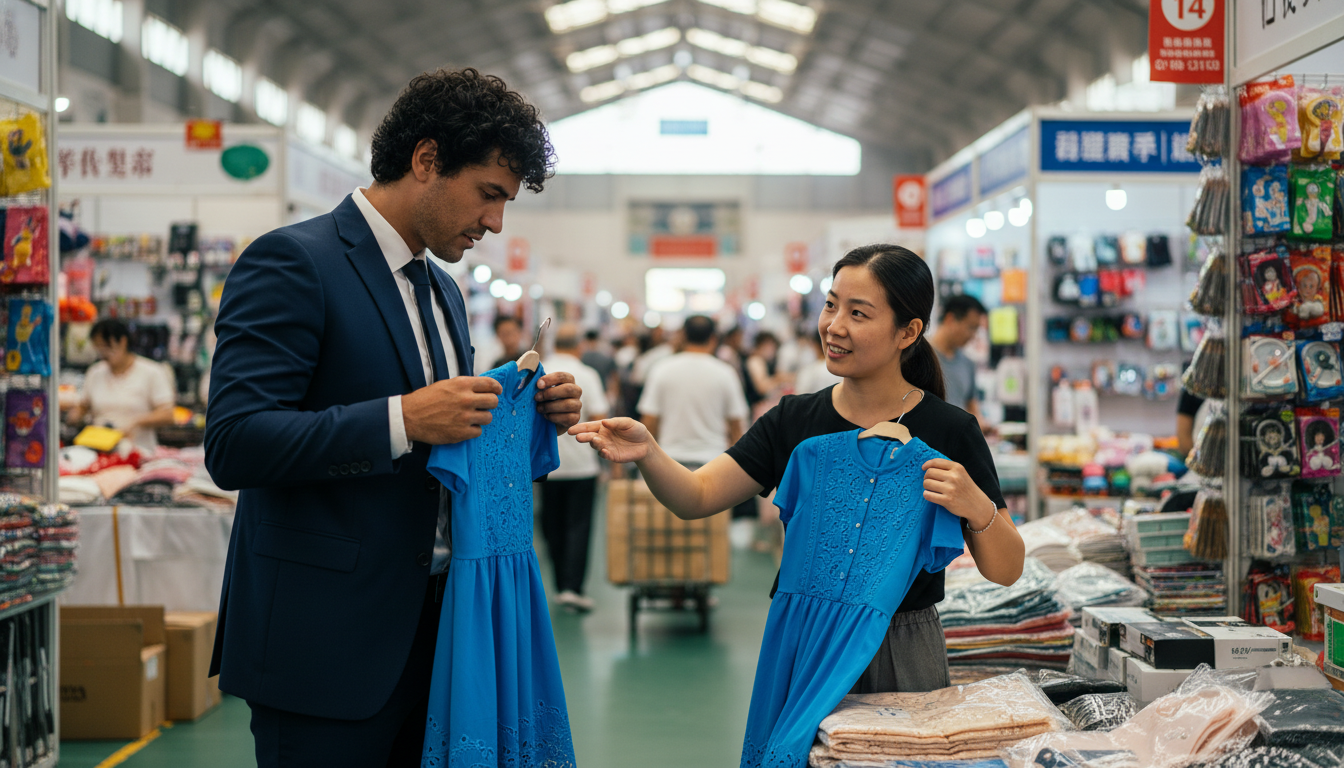
Yiwu Market houses over 75,000 booths across 5 km². It is the go-to for low-to-mid volume buyers needing toys, accessories, home décor, and Amazon FBA prep. MOQs often start at 100, 500 units, and agents stationed in Yiwu can source samples within 48 hours. Our office in Jinhua, a 20-minute drive from Yiwu, processes over 200 sample shipments per month for buyers in Mexico City and Madrid.
Foshan (Guangdong Province), Furniture and Hardware
Foshan dominates the global furniture market, producing 40% of the world’s ceramic tiles and a growing share of solid-wood and upholstered furniture. European importers must confirm that Foshan factories meet formaldehyde emission standards under EU REACH. Our Foshan office runs a pre-qualification checklist for every factory, covering E1 board compliance and FSC chain-of-custody certification.
Shenzhen and Dongguan, Electronics
Consumer electronics, wearables, and IoT devices concentrate in Shenzhen and Dongguan. Buyers targeting Latin America should require CE (for Colombia and Chile, which often mirror EU standards) or NOM certification (for Mexico). A sourcing agent can coordinate with accredited labs like TÜV Rheinland in Shenzhen to pre-test samples, saving 4, 6 weeks of certification delays.
Country-Specific Import Compliance: Mexico, Colombia, Brazil & EU
Each market imposes unique regulatory gates. Even experienced importers lose shipments because of missing documentation. Below is the minimum compliance mapping for key destinations in 2026.
Spanish and French Buyer Support
Language barriers cause 31% of sourcing errors according to internal audit logs from our multilingual team. A native Spanish-speaking sourcing manager translates technical specs, negotiates directly, and reviews inspection reports in the buyer’s language. Our French-speaking account managers handle EU regulatory chats, ensuring REACH compliance terminology is correctly understood by engineers on both sides.
In practice: A Mexican buyer avoided $30K fraud by requesting our factory audit before payment.
Quality Control Workflow: Audit, Inspections, and Shipping
Relying on a single pre-shipment check leads to costly rework or complete rejection at the port. A systematic four-phase approach, executed by a China sourcing agent, keeps defect rates within acceptable limits.
1. Factory Audit
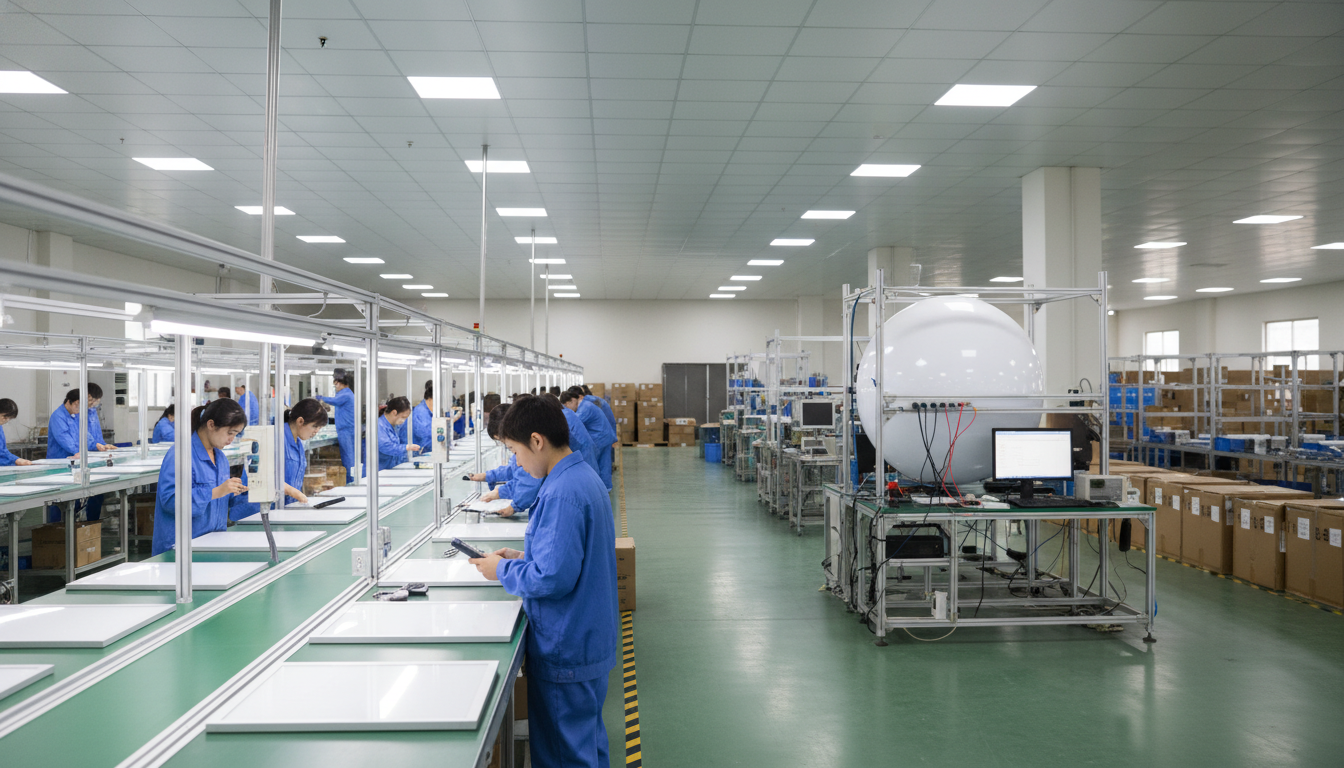
Before placing any order, the agent conducts an on-site audit covering business license validity, production capacity, equipment list, and past export records. In 2025, our audits flagged a shell company pretending to manufacture solar panels; the factory was actually a rented showroom with no production line.
2. Pre-Production Inspection
Once the purchase order is confirmed, the agent inspects raw materials and initial components. For a European home goods importer, this catch stopped the use of non-REACH-compliant dyes on 3,000 cushion covers before cutting began.
3. In-Line Inspection
Conducted when 20, 30% of units are complete, this random sampling verifies workmanship consistency. If defects exceed the AQL 2.5 threshold, the agent halts production and demands corrective action, avoiding a full batch of faulty goods.
4. Final Random Inspection
After 100% production and at least 80% packing, an FRI uses a stricter AQL (often 1.5) to approve shipment. The inspection report includes photos, measurements, and function tests, shared with the buyer in Spanish or French within 24 hours.
Transparent Fee Structures: Commission Rates and Total Cost of Ownership
Legitimate agents charge a transparent commission on the factory price, not a hidden markup. This avoids the conflict of interest where the intermediary profits from keeping the real factory price hidden.
Total cost of ownership example: A Colombian importer ordering $20,000 worth of kitchenware paid $700 in agent commission. The agent’s negotiation saved $3,400 on the unit price and prevented a $2,500 defect loss through in-line inspection, a net savings multiplier of 8.4x the commission.
How to Choose a Reliable China Sourcing Agent
With over 10,000 registered trading and sourcing companies in Yiwu alone, separating genuine agents from middlemen requires a structured vetting process.
- Physical office verification: Request a video call showing the office exterior with street sign. Our offices in Yiwu, Foshan, and Hong Kong are publicly listed and visitable.
- Language proficiency proof: For LatAm buyers, insist on a live Spanish conversation with the agent who will handle your account, not just the sales rep.
- Transparent pricing disclosure: A reliable agent will share the factory invoice alongside their commission receipt, as practiced in our service charge model.
- Client references in your import country: Ask for contact details of a client in Chile, Mexico, or France who can confirm landed cost targets were met.
- Third-party certification partnerships: Confirm the agent has active agreements with SGS, Bureau Veritas, or TÜV for independent testing at the agent’s recommended factories.
In our 23+ years sourcing from Yiwu and Foshan, buyers who follow these five checks reduce their incidence of buying from a shell company to under 1%.
In practice: A European electronics distributor cut lead time by 22 days by using our Foshan warehousing and consolidated air freight program.
Get a complimentary factory audit for your next order and verify your supplier before you pay.
Request your free audit now →
FAQ
What does a China sourcing agent do?
A China sourcing agent finds and audits factories, negotiates prices, oversees sampling, manages production, conducts quality inspections, and coordinates shipping and customs documentation. For Latin American and European buyers without local offices, the agent bridges language gaps, handles Spanish or French communication, and reduces fraud risk by physically visiting supplier sites.
Is a sourcing agent better than a trading company?
Yes, when you want factory transparency and lower costs. A sourcing agent reveals the actual factory, charges a 3, 5% commission on the ex-factory price, and lets you control quality specs. Trading companies hide the factory, mark up products 15, 30%, and often mix production from multiple unknown workshops, making consistent quality control impossible.
How much does a China sourcing agent charge?
Standard commission ranges from 3% to 5% of the ex-factory order value. For example, a $15,000 order incurs a $450, $750 fee. Some agents offer monthly retainers ($800, $2,500) for high-volume sourcing, or per-service rates ($300, $600) for standalone factory audits and inspections.
How do I find a reliable sourcing agent in China?
Verify the agent’s physical office via live video walkthrough, test language skills in Spanish or French, demand transparent factory invoices alongside commission receipts, ask for client references in your import country, and confirm partnerships with inspection firms like SGS or Bureau Veritas. These checks filter out shell companies and trading middlemen.
Can a sourcing agent handle quality control and shipping?
Yes. A full-service agent manages pre-production, in-line, and final random inspections, and coordinates FCL or LCL shipping including customs documentation. For Latin American destinations, the agent also arranges INMETRO or NOM pre-testing and handles consolidation warehousing to reduce freight costs by up to 35%.
Key Takeaways
- According to Rhodium Group (2025), China dominated over 315 product categories globally in 2024 with >50% export share, nearly double the 192 categories in 2021.
- Chinese value added in India’s final demand grew 78% between 2021 and 2024, indicating expanding intermediate-good supply chains (Rhodium Group, 2025).
- Mexican customs (SAT) requires an RFC tax ID for all shipments exceeding $1,000 USD; failure to present it causes immediate port detention.
- Brazil’s INMETRO certification for electronics and home appliances must be obtained before shipment, and a sourcing agent can coordinate testing with accredited Chinese labs.
- European Union CE marking and REACH compliance remain mandatory in 2026; a non-compliant shipment can be destroyed at the border with no compensation.
- Chinese automakers’ market share in the EU rose from 2% in 2019 to 6% in 2025, illustrating China’s deepening manufacturing footprint even in regulated markets (Rhodium Group, 2025).