China Cosmetics Manufacturer Verification Guide (2026 Update)

📋 Table of Contents
- Executive Summary
- Why Verification Matters for Cosmetic Importers
- How to Use This China Cosmetics Manufacturer Verification Guide
- Key Certifications Every Chinese Cosmetics Factory Should Hold
- The GACC Order No. 284 Impact on Verification From December 2026
- Step-by-Step Factory Due-Diligence Process
- Common Red Flags and How to Avoid Scams
- Country-Specific Documentation for Latin America & Europe
- When to Use a Third-Party Verification Agent
- FAQ
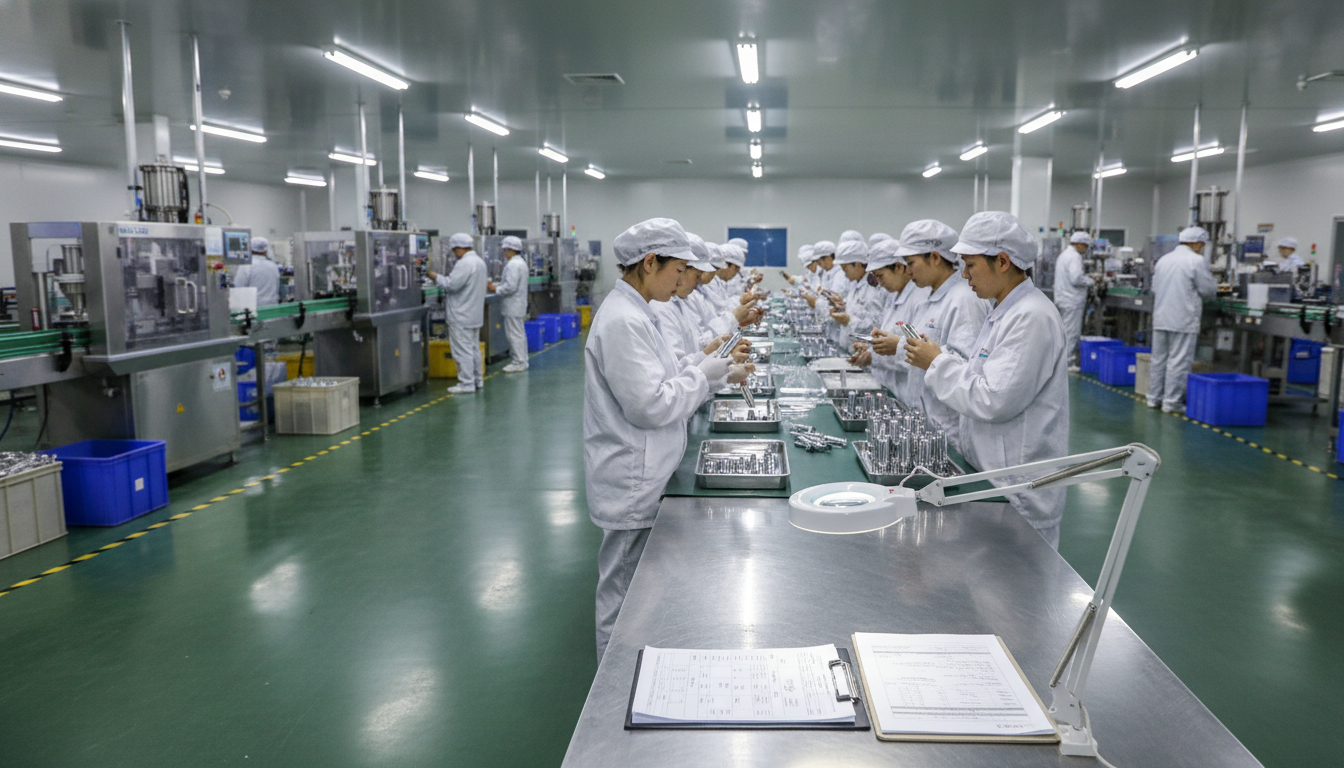
Importing cosmetics from China without a manufacturer verification process is like signing a blank check. A single batch of mislabeled shampoo or non-compliant cream can cost you thousands in fines, detained shipments, or a full product recall. This china cosmetics manufacturer verification guide walks through the exact steps to confirm a factory’s legitimacy, certifications, and compliance before you send a single lote.
Executive Summary
- Verification cost: Basic factory audit $350, $600 USD, according to independent audit firms in Guangdong.
- Shipment rejection risk: Cosmetic imports without proper NMPA notification face a 98% rejection rate at China customs (GACC data, 2025).
- New 2026 rule: According to ZMUNI (2026), GACC Order No. 284 introduces digital verification and reduces paper submissions for imported cosmetics starting December 1, 2026.
- LatAm compliance: Brazil’s ANVISA requires a responsible person registration costing approximately R$550 per product (ANVISA fee schedule 2025).
- Fraud prevalence: The China Council for the Promotion of International Trade (CCPIT) reported that 1 in 5 online cosmetic supplier profiles contain exaggerated or false certifications.
Why Verification Matters for Cosmetic Importers
Cosmetics fall under strict regulatory frameworks on every continent. In Latin America and Europe, a single violation can block entire containers. A verified manufacturer ensures batch traceability, accurate ingredient disclosure, and compliance with your market’s labeling rules.
Regulatory Penalties
- Mexico: COFEPRIS can impose fines up to 16,000 times the UMA (approx. $1.5 million MXN) for unregistered cosmetics.
- Colombia: INVIMA may cancel the sanitary registration if the manufacturer fails a traceability audit.
- EU: Under EU Cosmetics Regulation 1223/2009, the responsible person can face criminal charges for non-compliant products.
Supply Chain Risks
Untested factories may use unapproved colorants, exceed heavy metal limits, or lack stability testing data. A proper verification checks microbiological testing, heavy metal limits, and shelf-life validation documents. In our 23+ years sourcing from Yiwu and Foshan, we’ve seen cases where a factory’s “ISO 22716 certificate” was a photocopy from an unrelated plant.
How to Use This China Cosmetics Manufacturer Verification Guide
This china cosmetics manufacturer verification guide organizes the process into four phases: document screening, virtual audit, in-person inspection, and post-verification compliance. Each phase addresses a specific risk layer. Print the tables as your working checklist.
1. Document Screening
Ask the supplier to send scanned copies of business license (营业执照), ISO 22716 certificate, and any NMPA notification for export products. Check that the legal representative name matches bank account details.
2. Virtual Audit
Conduct a video walkthrough of the production line, raw material storage, and quality lab. Look for cleanroom conditions, batch coding machines, and retained samples. Record the session for reference.
3. In-Person Inspection
Hire a local quality auditor or use a trusted China sourcing agent to visit the factory unannounced. Verify GMPC documentation against actual floor practices. This step typically costs $350, $600 depending on location.
4. Post-Verification Compliance
Sign a supply agreement with batch traceability clauses. Require that the manufacturer retains batch records for at least two years, aligning with the new 2026 GACC retention period.
Key Certifications Every Chinese Cosmetics Factory Should Hold
Certifications are the first filter. Know which ones are mandatory for your market and which add trust. The table below compares the most critical credentials.
Certificate Fraud Spotting
A common trick: a seller shows a valid ISO 22716 but the scope lists “liquid detergents,” not “skin creams.” Always read the scope annex. Use the issuing body’s online verification tool. If the supplier hesitates to provide the certificate number, walk away.
The GACC Order No. 284 Impact on Verification From December 2026
China’s General Administration of Customs issued Order No. 284 on May 6, 2026, with new cosmetics inspection and quarantine rules effective December 1, 2026. This transforms import verification by shifting to automatic digital verification and system-based data matching.
Key change: According to ZMUNI (2026), imported semi-finished cosmetics are now exempt from registration notification verification and labeling review at the import stage. Sample traceability records must be retained for at least two years, or until one year after product expiration for items with a shelf life.
Digital Verification Workflow
Data from the NMPA notification system feeds directly into customs clearance. When you import, your broker’s declaration cross-checks against the digital database. If the product notification number does not match the manufacturer’s export record, the shipment is blocked automatically. No opportunity for manual override.
Impact on Foreign Importers
For Latin American and European buyers, this means your Chinese manufacturer must have an active NMPA notification before your goods leave the factory. You cannot fix this at the destination port. Verify that the notification number you see on the certificate of free sale matches the Chinese customs record.
The GACC Order also mandates that sample retention records be digitized. In audits, the factory must show an electronic log of retained samples. This china cosmetics manufacturer verification guide recommends you request a sample retention policy as part of your pre-production due diligence.
Step-by-Step Factory Due-Diligence Process
Verification is not a one-time checklist; it is a layered process that mirrors how large retailers audit suppliers. Below is the sequence used by experienced importers.
1. Pre-Screening by Video
Request a 30-minute live video tour covering the raw material warehouse, mixing tanks, filling line, and QC lab. Ask the person to show today’s newspaper on screen to confirm the date. A factory that refuses video likely has something to hide.
2. Documentation Review
Collect the business license, export registration, GMPC certificate, product INCI declaration in English and Spanish (or French), and heavy metal test reports for a random batch. Have a bilingual team member compare Chinese-language originals with the translations provided.
Typical document review cost: $150, $300 if outsourced to a quality agent. Time: 3, 5 working days for full report.
3. On-Site Audit
Hire a local auditor to visit the facility. A standard audit checks 150+ points across management, production, equipment, and hygiene. It takes about one day. The auditor will verify batch traceability, check for segregated allergen storage, and confirm that workers wear proper PPE. After the audit, you receive a scored report.
4. Sample Production & Third-Party Testing
Order a small pilot batch. Ship samples to an independent lab (SGS, Bureau Veritas, or Intertek) for microbiological testing, heavy metal screening, and label review against your target country’s regulations. This validates that the factory’s internal QC matches reality.
5. Order Monitoring & Pre-Shipment Inspection
During the first full order, deploy a third-party inspector when at least 80% of the goods are finished and packed. According to the FDA China Office, pre-shipment checks reduce import alerts by over 60%. Randomly open 10% of cartons to verify quantity, label accuracy, and packaging integrity.
Common Red Flags and How to Avoid Scams
Fraud patterns in cosmetics sourcing evolve, but certain signals consistently predict a bad supplier. Use this red-flag matrix during your initial queries.
In practice: A Colombian buyer lost $18,000 when a supplier sent diluted shampoo batches because no pre-shipment inspection was conducted. The INCI list looked correct on paper, but the actual surfactant level was only 60% of the specification.
In our experience, the largest scams exploit urgent deadlines. A fraudster knows you need stock before a seasonal sale. Always start verification at least 8 weeks before your planned production date, even for repeats.
Country-Specific Documentation for Latin America & Europe
Different markets require distinct paperwork that your Chinese manufacturer must support. This table aligns the seven most common destinations with mandatory documents and the factory’s role.
Bilingual Documentation Tips
If you are importing into Spanish-speaking markets, your Chinese manufacturer should provide the certificate of free sale and INCI list in Spanish. Double-check translations: we’ve seen “paraben-free” incorrectly translated as “sin conservantes,” which led to a rejection in Chile. For French markets, ensure the Product Information File includes French-language labeling and that the responsible person designation matches the EU language requirements.
When to Use a Third-Party Verification Agent
If you cannot travel to China or lack a bilingual team, a professional verification agent bridges the gap. A good agent acts as your on-ground representative, not just a paperwork checker.
When It Makes Financial Sense
- First order value over $15,000: The audit cost is a small fraction of your investment.
- OEM/ODM projects: Custom formulation and packaging require deep process auditing, not just a certificate check.
- Known red flags: If the supplier’s address is vague or their Alibaba profile has trade assurance only for small orders, trigger an in-person visit.
What a Quality-Focused Agent Delivers
An agent performs a structured evaluation using a 150+ point checklist covering GMPC compliance, ISO 22716 implementation, batch traceability, and raw material certification. They produce a scored report with photos and a clear pass/fail recommendation. This document protects you if a dispute arises later.
Factory due-diligence scoring system for OEM/ODM: A typical agent rates factories on a 1, 100 scale using parameters like management (20 points), equipment (20), documentation (20), hygiene (20), and social compliance (20). A score above 75 is production-ready for LatAm and EU markets.
In practice: A French importer avoided a $45K customs violation fine by using our documentation review to ensure correct NMPA notification numbers before shipping. The original numbers provided by the factory belonged to an expired registration.
When selecting an agent, confirm they have bilingual auditors (Chinese + English/Spanish/French) and that they provide raw photos, not filtered ones. Also check if they offer supplier management services that cover long-term factory relationship tracking, not just one-time checks. And if you need ongoing quality control, integrate periodic inspections into the same contract to build a complete verification chain.
Use this china cosmetics manufacturer verification guide as your starting point; then request a free supplier audit to validate your top candidate before you transfer any deposit.
Ready to verify your cosmetics manufacturer with zero surprises?
Request a Free Supplier Audit Now →
How do I verify a cosmetics manufacturer in China?
Start with a document check (ISO 22716, NMPA notification, business license). Then conduct a live video tour of the production floor. Follow with an on-site audit by a third-party agent covering GMPC practices, batch traceability, and lab testing. Validate product samples through an independent lab for microbiological and heavy metal compliance.
What certifications should a Chinese cosmetic factory have?
At minimum, ISO 22716 (GMP for cosmetics) or China’s national GMPC certificate. NMPA notification is mandatory for products exported from China. A valid MSDS/SDS is required for shipping. For EU-bound goods, ensure the factory holds a certificate of free sale and that the product has a designated responsible person in Europe.
Is China GACC Order No. 284 changing cosmetics import verification?
Yes. Effective December 1, 2026, GACC Order No. 284 introduces automatic digital verification of NMPA data for imported cosmetics, reducing paper submissions. Semi-finished cosmetics will be exempt from registration verification at import. Sample traceability records must be retained for at least two years. Factories must digitize sample logs.
How can I check if a Chinese cosmetics supplier is legitimate?
Check the business license on the Chinese National Enterprise Credit Information Publicity System. Verify NMPA notification numbers on the NMPA website. Cross-check bank account details with the legal company name. Conduct an unannounced video call showing the factory address sign and today’s newspaper.
What documents are needed to import cosmetics from China?
Essential documents include a certificate of free sale, INCI ingredient list (in the destination language), MSDS, GMPC certificate, NMPA notification, and a batch testing report. For Latin America, sanitary registration from COFEPRIS, INVIMA, or ANVISA is often required. The factory must supply originals or notarized copies.