China Wholesale Market Guangzhou: Which District Fits Your Product? [2026 Guide]
![China Wholesale Market Guangzhou: Which District Fits Your Product? [2026 Guide]](https://goodcantrading.com/wp-content/uploads/2026/10/featured-china-wholesale-market-guangzhou.png)
The china wholesale market guangzhou ecosystem divides by product category and quality tier: Baima Market serves mid-to-high-end apparel exporters with MOQs starting at 300 pieces per style, Shahe Wholesale Clothing Market targets fast-fashion and budget buyers with per-piece pricing as low as $2-4, Shisanhang specializes in women’s fashion with 3,000+ stalls across five buildings, and Panyu Furniture Market offers factory-direct office and commercial furniture with container-load pricing. Your product category, target price point, and order volume determine which district and which building cluster inside that district will carry the suppliers you need.
📋 Table of Contents
- Executive Summary
- Why Guangzhou Wholesale Markets Matter for International Buyers
- Which Guangzhou Apparel Market Matches Your Clothing Category?
- How Do You Choose Between Panyu, Baiyun, and Haizhu for Furniture?
- Where to Source Electronics, Leather Goods, and Toys in Guangzhou
- Step-by-Step Decision Workflow: Product Type to Market Building
- How Do You Verify a Supplier Before Placing an Order?
- What Logistics and Customs Steps Follow a Guangzhou Purchase?
- Key Takeaways
- Frequently Asked Questions
Executive Summary
- Market specialization: Guangzhou wholesale markets cluster by product category and quality tier, with Baima serving export-oriented mid-range apparel, Shahe handling budget fast-fashion, Shisanhang focusing on women’s clothing, and Panyu offering factory-direct furniture.
- MOQ and pricing structure: Baima typically requires 300-piece minimums per style, Shahe allows per-piece purchases starting around $2-4, and Panyu furniture quotes are container-load based with FOB pricing.
- Supplier type: Many Guangzhou market stalls are trading companies that consolidate factory output rather than manufacturers, which is why business-license verification and factory-audit requests separate real production capacity from resellers.
- International buyer workflow: Successful sourcing combines on-the-ground market visits with back-end supplier verification, sample approval, pre-shipment inspection, and consolidated shipping through a bonded warehouse.
- Logistics advantage: Guangzhou’s proximity to Shenzhen port and Hong Kong provides faster ocean-freight access to Latin America and Europe compared to inland Yiwu, though Yiwu remains stronger for small commodities and general merchandise.
Why Guangzhou Wholesale Markets Matter for International Buyers
Guangzhou sits at the center of the Pearl River Delta manufacturing belt, which concentrates apparel production in Guangdong province, furniture factories in Foshan and Dongguan, and electronics assembly in Shenzhen. Wholesale markets in Guangzhou act as physical showrooms where factory sales teams and trading companies display current inventory, accept sample orders, and negotiate bulk pricing. Unlike online platforms where product photos may not match actual goods, walking a Guangzhou market lets buyers inspect fabric weight, stitching quality, hardware finish, and packaging before committing to an order.
Geographic and Logistical Position
Guangzhou Baiyun International Airport handles direct cargo flights to Mexico City, São Paulo, Madrid, and Frankfurt. Nansha Port, 60 kilometers south of the city center, offers weekly container sailings to Veracruz, Cartagena, Buenos Aires, and Hamburg. This port proximity reduces inland trucking costs and shortens lead times compared to sourcing from interior provinces. A trusted China sourcing agent with a Guangzhou buying office can consolidate purchases from multiple markets into a single container, cutting per-unit freight expense and simplifying customs clearance at destination.
Market Ecosystem vs. Factory Direct
Guangzhou markets serve two buyer profiles: small importers who need mixed SKUs in moderate quantities, and larger buyers scouting new suppliers before placing factory-direct orders. Markets offer lower MOQs and faster turnaround than going direct to a factory, but per-unit prices run higher because the stall operator adds margin. Factory-direct sourcing delivers better pricing on repeat orders but requires upfront mold costs, longer lead times, and higher minimums. Many buyers use markets for initial product validation, then transition to factory contracts once a SKU proves successful.
Which Guangzhou Apparel Market Matches Your Clothing Category?
Guangzhou operates three major apparel wholesale clusters, each serving a distinct quality tier and buyer type. Choosing the wrong market wastes time walking floors that do not stock your target price range or style category.
Baima Clothing Wholesale Market
Baima Market occupies a 10-story building at 188 Zhanqian Road, Yuexiu District, metro line 2 Guangzhou Railway Station exit. The market specializes in mid-to-high-end men’s and women’s apparel, with a strong export focus. Typical products include tailored blazers, business shirts, trench coats, and formal dresses. Fabric quality runs from 180gsm cotton blends to 300gsm wool-polyester suiting. MOQs start at 300 pieces per style per color, and most suppliers require a 30% deposit before cutting fabric. Buyers report per-unit FOB prices ranging from $8 to $25 depending on fabric and construction complexity. Baima suppliers often hold BSCI or WRAP certifications, which matter for European retail chains with social-compliance requirements.
Stall operators at Baima are typically sales offices for factories located in Dongguan, Zhongshan, or Shenzhen, not the factories themselves. This structure means the person quoting you does not control production schedules or quality directly. Requesting a factory visit and checking the supplier’s business license scope against the product category being quoted catches trading companies posing as manufacturers. Our supplier management process includes on-site factory audits that verify production equipment, workforce size, and export documentation before any deposit moves.
Shahe Wholesale Clothing Market
Shahe Market clusters around Shahe Road in Tianhe District, metro line 3 Shahe Station. The market spans multiple buildings and street-level shops, totaling over 5,000 stalls. Shahe targets fast-fashion and budget apparel, with heavy volume in women’s tops, dresses, and casual wear. Per-piece pricing starts as low as $2 for basic tank tops and $4-6 for printed T-shirts, with no MOQ on in-stock items. Quality varies widely: some stalls carry export-surplus goods with intact hang tags, while others sell factory seconds with minor defects.
Shahe’s low-price advantage comes with higher transaction risk. Many stalls operate on cash-only terms with no formal invoicing, which complicates VAT recovery and leaves buyers without recourse if goods arrive damaged or short. Fabric content labels are often missing or inaccurate, creating customs-clearance problems in markets like Brazil and Argentina where textile labeling is strictly enforced. Buyers sourcing from Shahe should budget for third-party inspection and lab testing to confirm fiber content, colorfastness, and compliance with destination-country flammability standards.
Shisanhang Wholesale Clothing Market
Shisanhang Market sits near the Pearl River in Liwan District, metro line 1 Changshou Road Station. The market divides into five main buildings: New Zhonglian, Xinguang, Hongmian, Fuheng, and Jinxiuyuan. Shisanhang focuses almost exclusively on women’s fashion, particularly trendy styles that turn over quickly. Product categories include blouses, skirts, jumpsuits, and accessories like scarves and belts. Pricing falls between Baima and Shahe, with per-piece costs ranging from $5 to $15. MOQs vary by stall: some allow single-piece purchases for in-stock items, while others require 50-100 pieces per style for custom orders.
Shisanhang suppliers refresh inventory every two weeks during peak season, mirroring the fast-fashion cycle. This rapid turnover means a style you see today may be gone next month, which complicates reorder planning. Buyers who find a winning SKU should secure a sample, request the factory contact, and arrange direct production for future orders rather than relying on market availability. Our Guangzhou buying team maintains relationships with Shisanhang suppliers who can reproduce sold-out styles by going back to the original factory, bypassing the market’s inventory churn.
How Do You Choose Between Panyu, Baiyun, and Haizhu for Furniture?
Guangzhou furniture sourcing splits across three districts, each specializing in a different furniture category and buyer profile. Panyu handles office and commercial furniture with factory-direct pricing, Baiyun focuses on budget home furniture aimed at domestic wholesalers, and Haizhu operates high-end showrooms targeting interior designers and hotel projects.
Panyu Furniture Market
Panyu District, 30 kilometers south of central Guangzhou, hosts the Lecong Furniture Market and Shunde Furniture clusters. These markets connect buyers directly to factories rather than trading companies, which is why pricing runs lower but MOQs are higher. Typical products include office desks, conference tables, filing cabinets, retail display fixtures, and restaurant seating. Materials range from melamine-faced particleboard to solid wood and metal frames. MOQs are container-based: a 20-foot container holds approximately 8-10 cubic meters of assembled furniture or 15-18 cubic meters of flat-pack knock-down furniture. FOB pricing per container ranges from $4,000 to $12,000 depending on material and finish complexity.
Panyu suppliers quote in container loads because furniture’s low value-to-volume ratio makes LCL (less-than-container-load) shipping uneconomical. Buyers purchasing mixed SKUs should consolidate orders from multiple factories into a single container through a warehouse and consolidation service. This approach splits the fixed container cost across more units, lowering per-piece freight expense. Panyu factories typically require a 30% deposit to start production and the 70% balance before loading, with production lead times running 25-35 days after deposit.
Baiyun Furniture Market
Baiyun District, north of Guangzhou city center, operates budget home-furniture markets targeting domestic wholesalers and small importers. Product categories include bedroom sets, dining tables, sofas, and children’s furniture. Quality and pricing sit below Panyu’s commercial-grade output, with per-piece FOB costs ranging from $30 for a basic dining chair to $200 for a fabric sofa. MOQs are more flexible than Panyu, with some suppliers accepting 50-100 pieces per SKU. Baiyun furniture often uses lower-grade particleboard, thinner veneers, and simpler joinery, which reduces cost but also shortens product lifespan.
Haizhu Furniture Showrooms
Haizhu District, along the Pearl River, houses high-end furniture showrooms and design studios. These suppliers target hotel projects, luxury residential developments, and commercial interior-design firms. Products include custom upholstery, solid-wood dining sets, marble-top tables, and designer lighting. Pricing reflects the premium positioning, with per-piece costs starting at $500 and reaching several thousand dollars for bespoke items. MOQs are project-based rather than SKU-based, and lead times extend to 60-90 days for custom orders. Haizhu suppliers often hold FSC certification for wood sourcing and can provide fire-retardant fabric certifications required by hotel chains.
Where to Source Electronics, Leather Goods, and Toys in Guangzhou
Beyond apparel and furniture, Guangzhou operates specialized markets for electronics, leather goods, toys, and other categories. Each market cluster serves a specific product niche and buyer type.
Dashatou Electronics Market
Dashatou Market in Yuexiu District focuses on consumer electronics, mobile accessories, and small appliances. Product categories include phone cases, chargers, Bluetooth speakers, power banks, and LED lighting. The market connects buyers to Shenzhen electronics factories, which dominate China’s consumer-electronics supply chain. MOQs vary widely: phone accessories may require 500-1,000 pieces per SKU, while small appliances start at 100-300 units. Buyers sourcing electronics must verify product certifications match destination-country requirements, particularly CE marking for Europe, FCC for the United States, and NOM certification for Mexico.
Sanyuanli Leather Goods Market
Sanyuanli Market near Guangzhou Railway Station specializes in leather bags, wallets, belts, and small leather goods. The market mixes genuine leather, PU leather, and synthetic materials, with pricing and quality spanning budget to mid-range. Per-piece FOB costs range from $3 for a basic PU wallet to $25 for a genuine-leather crossbody bag. MOQs start at 100-300 pieces per style. Leather-goods buyers should request material-composition certificates and conduct lab testing to confirm fiber content, because mislabeled synthetic leather creates customs-clearance problems and exposes importers to consumer-protection claims.
Yide Road Toy Market
Yide Road in Yuexiu District operates a toy wholesale market covering plush toys, plastic figures, educational toys, and seasonal items. Most suppliers source from factories in Shantou and Dongguan, Guangdong’s two main toy-manufacturing hubs. Toy imports face strict safety regulations in Latin America and Europe, including phthalate limits, small-parts testing, and flammability standards. Buyers must request third-party lab reports confirming compliance with EN 71 (Europe), ASTM F963 (United States), or NOM-015-SCFI (Mexico) before shipping. Our quality control team coordinates pre-shipment testing with accredited labs in Guangzhou and Shenzhen, catching non-compliant products before they leave China.
Step-by-Step Decision Workflow: Product Type to Market Building
Matching your product category and order parameters to the right Guangzhou market requires a structured decision process. This workflow walks through the key variables that determine which market district and which specific building cluster will carry the suppliers you need.
Define Your Product Category and Quality Tier
Start by categorizing your product into one of Guangzhou’s core specializations: apparel, furniture, electronics, leather goods, toys, or general merchandise. Within apparel, distinguish between budget fast-fashion (Shahe), mid-range export-oriented (Baima), or trendy women’s fashion (Shisanhang). Within furniture, separate office and commercial (Panyu) from budget home (Baiyun) or high-end custom (Haizhu). Quality tier directly determines which market cluster stocks your target price range.
Calculate Your Order Volume and MOQ Tolerance
Guangzhou markets split between low-MOQ trading companies and higher-MOQ factory-direct suppliers. If your order volume is below 300 pieces per SKU, focus on Shahe or Shisanhang for apparel, or Baiyun for furniture. If you can commit to 500+ pieces per style or container-load furniture orders, Baima and Panyu offer better per-unit pricing. Buyers who need mixed SKUs in moderate quantities should plan for consolidation through a bonded warehouse, which allows combining purchases from multiple suppliers into a single shipment.
Assess Compliance and Certification Requirements
Destination-country regulations determine which Guangzhou suppliers can fulfill your order. European buyers importing textiles must verify REACH compliance for restricted substances, while Mexican buyers need NOM certification for electronics and toys. Brazilian imports require Portuguese-language care labels sewn into garments before shipping. Suppliers at Baima and Panyu are more likely to hold export certifications and understand international compliance requirements compared to purely domestic-focused markets like Shahe. Requesting certificates upfront and conducting pre-shipment lab testing catches non-compliant products before they trigger customs holds or rejections.
Plan Your Sourcing Trip Logistics
Guangzhou’s wholesale markets operate on compressed schedules, with most stalls open from 9:00 AM to 6:00 PM daily. Visiting multiple markets in a single day is feasible if they are metro-accessible, but furniture markets in Panyu require dedicated half-day or full-day trips due to distance and scale. Buyers should allocate at least two days for apparel markets (one day for Baima and Shisanhang, one day for Shahe) and one full day for Panyu furniture. Bringing a local sourcing agent who speaks Mandarin and understands market negotiation norms accelerates the process and improves pricing outcomes.
Typical sourcing-trip structure: Day 1 covers Baima and Shisanhang apparel markets, Day 2 handles Shahe fast-fashion and Sanyuanli leather goods, Day 3 visits Panyu furniture factories. Metro access connects Baima, Shisanhang, and Shahe; Panyu requires taxi or private car.
How Do You Verify a Supplier Before Placing an Order?
Guangzhou market stalls display products and accept orders, but many operators are trading companies rather than factories. Verifying the supplier’s legal status, production capacity, and export track record before sending a deposit protects buyers from fraud, quality failures, and delivery delays.
Request and Verify the Business License
Every registered Chinese company holds a business license issued by the local Administration for Market Regulation. The license lists the company’s registered name, legal representative, registered capital, and business scope. The business scope is the critical field: it specifies which product categories the company is legally permitted to produce or trade. A supplier quoting on women’s dresses must have “garment manufacturing” or “textile trading” in its scope. If the scope lists only “import and export agency services,” the company is a pure trading intermediary with no production capability.
Request a scanned copy of the business license and verify it through China’s National Enterprise Credit Information Publicity System, a free government database. The system confirms whether the license is current, whether the company has outstanding legal judgments, and whether its registered address matches the factory location the supplier claims. Mismatches between the license and the supplier’s story are red flags for shell companies or trading-company misrepresentation.
Conduct an On-Site Factory Audit
A factory audit verifies production equipment, workforce, quality-control procedures, and export documentation. The audit should cover the production floor, raw-material storage, finished-goods warehouse, and quality-inspection area. Key observations include whether machinery matches the claimed production capacity, whether workers are trained on the specific product being quoted, and whether the factory holds certifications like BSCI, WRAP, or ISO 9001 that the supplier mentioned.
Many Guangzhou market suppliers resist factory visits, claiming the factory is too far away or production is outsourced. These objections often signal a trading company with no direct factory relationship. Legitimate manufacturers welcome audits because they demonstrate production capability and build buyer confidence. Our Guangzhou sourcing team conducts factory audits as a standard step in product sourcing, photographing equipment, interviewing production managers, and verifying export records before recommending a supplier to clients.
Request and Approve Pre-Production Samples
Pre-production samples confirm the supplier understands your specifications and can execute them before bulk production starts. The sample should match your tech pack or reference sample in fabric, color, construction, and packaging. Buyers should test samples for dimensional accuracy, stitching strength, colorfastness, and any safety or performance requirements relevant to the product category. Approving a sample without testing, then discovering bulk-production drift, is a common and expensive failure mode.
Verify Export Documentation and Payment Terms
Suppliers with genuine export experience can provide past bills of lading, commercial invoices, and packing lists as proof of shipment history. These documents confirm the supplier has cleared Chinese customs, understands Incoterms, and can produce the export paperwork your freight forwarder needs. Payment terms also signal supplier legitimacy: established exporters accept 30% deposit and 70% balance before shipment, while fraudulent operators demand full payment upfront or push for Western Union transfers that bypass banking records.
What Logistics and Customs Steps Follow a Guangzhou Purchase?
Completing a Guangzhou market purchase triggers a logistics and customs workflow that moves goods from the supplier’s warehouse to your destination port, clears customs, and delivers to your final address. Each step introduces costs, lead times, and compliance requirements that buyers must plan for upfront.
Domestic Transport to Consolidation Warehouse
Suppliers ship finished goods to a consolidation warehouse in Guangzhou or nearby Foshan, where a freight forwarder or sourcing agent combines purchases from multiple suppliers into a single container. Domestic trucking within Guangdong province costs approximately $50-150 per cubic meter depending on distance and cargo type. Consolidation reduces per-unit freight expense by splitting the fixed container cost across more SKUs, and it simplifies customs clearance at destination because all goods arrive under a single master bill of lading.
Quality Inspection Before Container Loading
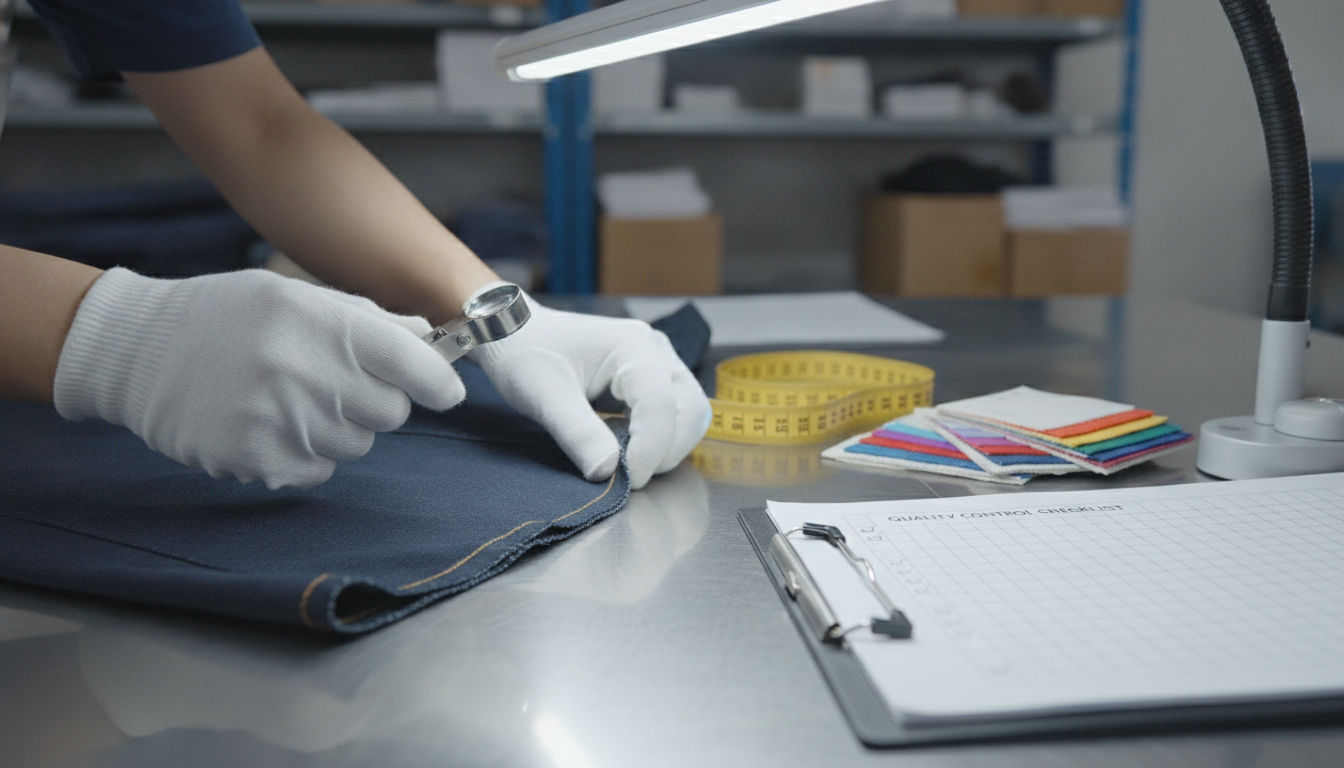
Pre-shipment inspection catches defects, quantity shortages, and packaging errors before goods leave China. The inspection covers carton count, random sampling for quality defects, measurement verification, and packaging integrity. Inspectors photograph findings and issue a pass/fail report within 24 hours. Buyers who skip inspection and discover problems after arrival face the choice of accepting defective goods or negotiating costly returns and replacements. Our inspection team operates from Guangzhou and Yiwu, covering apparel, furniture, electronics, and general merchandise with same-day or next-day scheduling.
Ocean Freight and Incoterms
Guangzhou exports ship from Nansha Port or nearby Shenzhen Port, with weekly sailings to Latin America and Europe. Ocean freight from Guangzhou to Veracruz, Mexico takes approximately 25-30 days, to Cartagena, Colombia 28-32 days, to Buenos Aires, Argentina 35-40 days, and to Hamburg, Germany 28-32 days. Freight rates fluctuate with fuel costs, seasonal demand, and global shipping capacity, but typical 2026 rates for a 20-foot container range from $1,800 to $3,200 depending on destination.
Incoterms define which party pays freight, insurance, and customs duties. FOB (Free On Board) Guangzhou means the supplier delivers goods to the port and the buyer pays ocean freight and destination charges. CIF (Cost, Insurance, Freight) means the supplier pays ocean freight and insurance, but the buyer still handles customs clearance and import duties. Buyers should clarify Incoterms in the purchase contract to avoid disputes over who pays which costs.
Customs Clearance and Import Duties
Destination-country customs clearance requires a commercial invoice, packing list, bill of lading, and any product-specific certificates like CE marking or NOM approval. Customs authorities classify goods by HS code, which determines the import duty rate. Apparel imports to Mexico face duties ranging from 15% to 35% depending on fiber content and country of origin, while furniture imports to Brazil incur duties of 20% to 35% plus state-level ICMS tax. European Union imports benefit from lower duty rates but require EORI registration and VAT payment at the border.
Buyers should work with a licensed customs broker in the destination country who understands local regulations and can expedite clearance. Misclassified HS codes, missing certificates, or incomplete documentation trigger customs holds that delay delivery and incur storage fees. Our freight and shipping service includes customs-brokerage coordination, ensuring all paperwork is complete before the container arrives at destination port.
Final-Mile Delivery and Warehousing
After customs clearance, goods move from the port to the buyer’s warehouse or retail location. Final-mile delivery costs vary by destination country and delivery address: urban deliveries in Mexico City or São Paulo cost less per kilometer than rural deliveries in Argentina or Chile. Buyers importing container loads should arrange warehouse space before the container arrives, because port storage fees accumulate quickly if goods sit unclaimed. Some buyers use third-party logistics providers who receive the container, break it down into individual shipments, and deliver to multiple retail locations or Amazon FBA warehouses.
Key Takeaways
- Market specialization by product and quality: Baima serves mid-to-high-end export apparel with 300-piece MOQs, Shahe handles budget fast-fashion with per-piece pricing, Shisanhang focuses on women’s trendy styles, and Panyu offers factory-direct furniture in container loads.
- Supplier verification prevents fraud: Requesting a business license and verifying its scope against the product category separates real factories from trading companies, while on-site factory audits confirm production equipment and workforce capacity before any deposit is paid.
- Consolidation lowers freight costs: Combining purchases from multiple Guangzhou suppliers into a single container through a bonded warehouse splits the fixed shipping cost across more units, reducing per-piece freight expense and simplifying customs clearance.
- Pre-shipment inspection catches defects: Quality-control checks before container loading identify quantity shortages, workmanship defects, and packaging errors while goods are still in China, when corrections cost less than post-arrival returns or replacements.
- Compliance requirements vary by destination: European textile imports require REACH certification, Mexican electronics need NOM approval, and Brazilian goods must carry Portuguese-language labels, which is why verifying supplier certificates and conducting lab testing before shipment prevents customs holds.
- Payment terms signal supplier legitimacy: Established exporters accept 30% deposit and 70% balance before shipment through documented banking channels, while fraudulent operators demand full upfront payment or untraceable wire transfers that bypass financial records.
Frequently Asked Questions
Can I visit Guangzhou wholesale markets without speaking Mandarin?
Visiting Guangzhou markets without Mandarin is possible but limits negotiation effectiveness and increases transaction risk. Most stall operators speak minimal English, and product specifications, pricing tiers, and MOQ flexibility are communicated in Mandarin. Buyers who walk markets alone often pay higher prices, miss volume discounts, and struggle to verify supplier claims about factory location or production capacity. Hiring a local sourcing agent or interpreter for the visit costs approximately $150-250 per day but delivers better pricing, faster supplier screening, and clearer communication on technical specifications and payment terms.
How do Guangzhou wholesale prices compare to Alibaba or 1688 online prices?
Guangzhou market prices typically run higher than 1688 platform prices for the same product because market stalls add margin on top of factory cost, while 1688 listings often come directly from manufacturers. The price gap ranges from 10% to 30% depending on product category and order volume. However, market purchases offer advantages that offset the price difference: buyers inspect physical samples before ordering, negotiate face-to-face with suppliers, and avoid the platform service fees and escrow holds that online transactions require. Buyers who find a product in a Guangzhou market can reverse-image-search it on 1688 to locate the original factory, then place future orders direct at lower pricing once the initial market purchase validates the product.
What payment methods do Guangzhou wholesale suppliers accept from international buyers?
Guangzhou suppliers with export experience accept wire transfers (T/T) to Chinese bank accounts, with typical terms of 30% deposit before production and 70% balance before shipment. Some larger suppliers accept letters of credit (L/C) for orders above $50,000, though L/C fees and bank processing add cost and time. Smaller market stalls often prefer cash or Alipay for domestic transactions, but international buyers should avoid cash payments because they leave no documentation trail for dispute resolution or tax recovery. Payment through a sourcing agent’s verified account adds a layer of protection, because the agent releases funds to the supplier only after inspection confirms goods match the purchase order.
Written by the Goodcantrading Sourcing Team.
Ready to source from Guangzhou with supplier verification, quality inspection, and consolidated shipping?
Request a Free Sourcing Consultation →