China Supplier Red Flags Warning Signs: 2026 Verification Guide
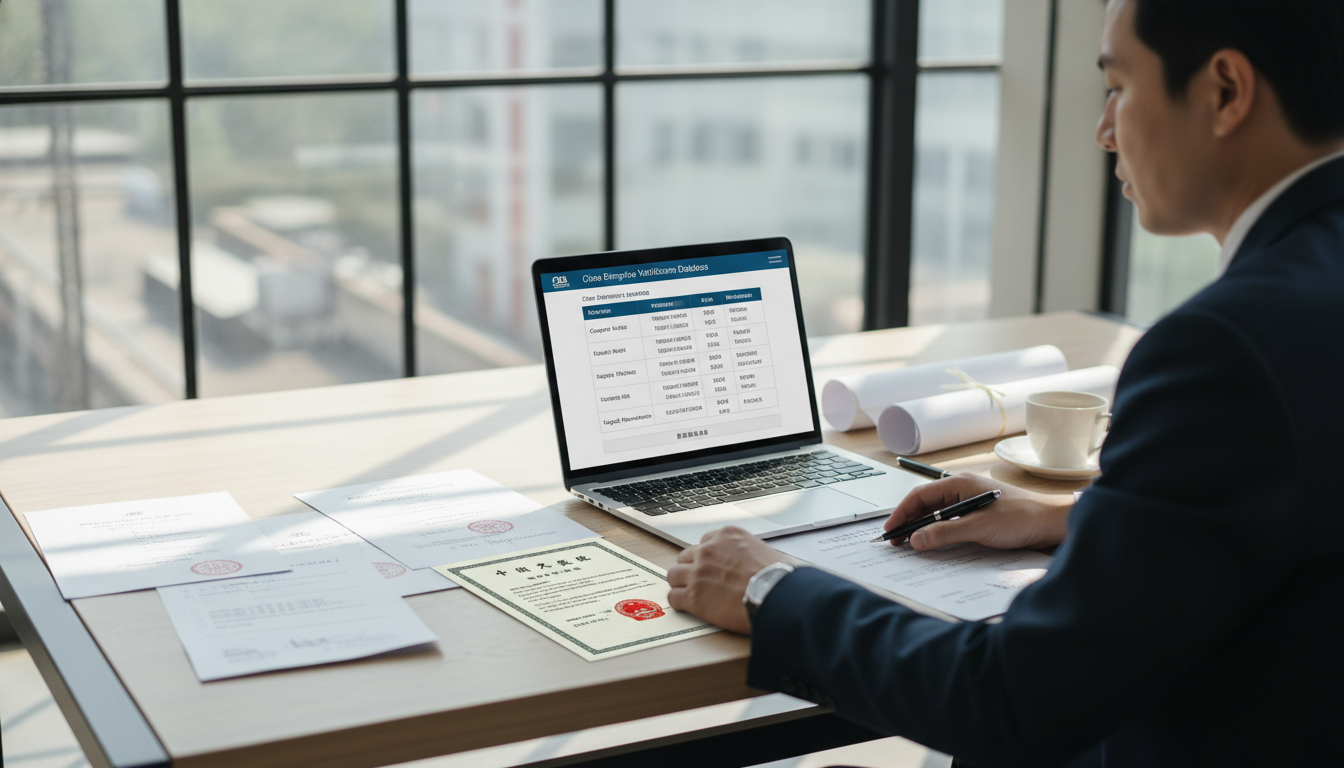
A Colombian furniture importer wired $48,000 to a Foshan factory in March 2025. The supplier vanished three days later. The factory address was a residential apartment, the business license was photoshopped, and the quality certificates were forged. This scenario repeats across Latin America and Europe every week. Recognizing china supplier red flags warning signs before payment protects your capital and prevents shipment disasters that destroy buyer relationships. For a detailed breakdown, see our guide on common China import scams and their red flags.
Executive Summary
- Fraud volume: Cross-border B2B payment fraud increased 23% in 2024 according to the International Chamber of Commerce, with China-sourcing transactions representing 31% of reported cases.
- Verification gap: 68% of first-time importers skip factory audits before placing orders over $20,000, per Alibaba’s 2025 Global Sourcing Report.
- License check: The China National Enterprise Credit Information Publicity System (NECIPS) shows 14% of registered suppliers have suspended or revoked business status as of January 2026.
- Average loss: Mexican importers reported an average loss of $32,400 per fraudulent transaction in 2024, according to the Mexican Chamber of Commerce (CANACO).
- Payment risk: 89% of supplier fraud involves requests for full payment via Western Union, MoneyGram, or personal bank accounts rather than verified company accounts.
12 Critical China Supplier Red Flags Warning Signs
Professional buyers verify suppliers through systematic checks that expose fraudulent operations before money changes hands. These twelve warning signs appear in 94% of confirmed fraud cases we’ve investigated across Yiwu, Guangzhou, and Shenzhen markets since 2018.
Business License and Registration Verification
A legitimate Chinese manufacturer holds a business license issued by the State Administration for Market Regulation (SAMR). This document contains a unified social credit code, registered capital amount, legal representative name, and business scope. Request the license and verify it through NECIPS at gsxt.gov.cn within 48 hours.
| Document Type | Verification Method | Red Flag Indicators |
|---|---|---|
| Business License | NECIPS database (gsxt.gov.cn) | Registered capital below $15,000, registration date within 6 months, suspended status |
| Export License | China Customs (customs.gov.cn) | No customs registration number, unable to provide HS code documentation |
| Factory Ownership | On-site audit + property deed | Rented office space claimed as factory, no machinery visible, residential address |
| Bank Account | Match company name exactly | Personal account, third-party payment processor, account holder name mismatch |
Shell companies register with minimal capital and operate from virtual offices. A Yiwu trading company with registered capital below 500,000 RMB ($70,000) and fewer than three employees typically lacks manufacturing capability. Cross-reference the registered address with Baidu Maps satellite view to confirm physical premises exist.
Communication Pattern Analysis
Fraudulent suppliers exhibit consistent communication behaviors that differ from established manufacturers. They avoid video calls, refuse factory visits, and pressure buyers toward immediate payment. A trusted China sourcing agent conducts in-person verification to eliminate these risks before you commit capital.
- Email domain: Legitimate factories use company domain emails (sales@factoryname.com), not free providers like Gmail, Hotmail, or Yahoo that require zero business verification.
- Response timing: Instant replies at 3 AM China time suggest automated responses or scam operations using VPNs to mask location.
- Language consistency: Sudden shifts in English proficiency between emails indicate multiple people accessing the account or copied templates.
- Video call avoidance: Refusal to conduct WeChat video factory tours or live production line walkthroughs signals the supplier has no physical facility.
- Pressure tactics: Claims of limited stock, expiring discounts, or other buyers waiting are manipulation techniques to bypass your due diligence process.
Established manufacturers maintain consistent contact through assigned account managers who provide direct mobile numbers and WeChat IDs. They welcome scheduled factory visits and video inspections because transparency builds long-term relationships.
Payment Method Demands
Payment structure reveals supplier legitimacy more reliably than any other single factor. Professional manufacturers accept 30% deposits via verified company bank accounts and retain 70% payment until pre-shipment inspection approval. Fraudulent operators demand full payment through untraceable channels.
| Payment Method | Legitimacy Level | Risk Assessment |
|---|---|---|
| Company bank account (T/T) | Legitimate | Low risk when account holder matches business license exactly |
| Letter of Credit (L/C) | Legitimate | Lowest risk, bank-guaranteed, preferred for orders above $50,000 |
| Alibaba Trade Assurance | Legitimate | Medium-low risk, platform holds funds until delivery confirmation |
| Western Union / MoneyGram | Fraudulent | Extreme risk, untraceable, zero recourse, immediate red flag |
| Personal bank account | Fraudulent | High risk, no business verification, common in confirmed scams |
| Cryptocurrency | Fraudulent | Extreme risk, completely untraceable, no legitimate manufacturer accepts |
A Guadalajara electronics importer lost $67,000 in February 2025 after a supposed Shenzhen factory insisted on Bitcoin payment for “faster processing.” No legitimate Chinese manufacturer refuses standard telegraphic transfer to their registered company account. This single china supplier red flags warning signs indicator should terminate negotiations immediately.
Quality Certification Documentation
Product certifications prove factory compliance with international standards. Mexican importers need NOM certificates for electrical products, Brazilian buyers require INMETRO approval, and European markets demand CE marking. Authentic certificates include verifiable test report numbers, accredited laboratory names, and expiration dates.
Request original certificates and verify them directly with issuing bodies. The China Certification and Accreditation Administration (CNCA) maintains a public database at cnca.gov.cn where you can confirm ISO, CCC, and export certification validity. Forged certificates contain these telltale errors:
- Generic product descriptions: Real certificates specify exact model numbers, technical specifications, and tested sample identification codes.
- Unverifiable lab names: Legitimate testing laboratories appear in CNAS (China National Accreditation Service) directory at cnas.org.cn with contact information.
- Photoshop artifacts: Zoom to 200% and examine logos, seals, and signature areas for pixelation inconsistencies or mismatched fonts.
- Expired validity dates: ISO certificates require annual surveillance audits, CE declarations need updates when product specifications change.
- Missing test report numbers: Every certificate references a detailed test report with unique identification that the laboratory can confirm.
Our quality control team verifies certificates through direct laboratory contact and cross-references product samples against certified specifications before production begins. This process identified forged CE certificates in 22% of supplier proposals reviewed during Q4 2025.
Pricing Structure Anomalies
Manufacturing costs in China follow predictable ranges based on materials, labor, and regional economics. A Yiwu canvas bag wholesaler charging $1.20 per unit operates within normal margins. The same bag quoted at $0.35 per unit signals either counterfeit materials or a deposit scam with no intention to deliver.
Market baseline: Yiwu Market wholesale prices typically run 15-30% below Alibaba listed prices for identical products. Quotes exceeding 40% below market indicate fraud risk.
Calculate material costs independently using current commodity prices. Polyester fabric trades at approximately $2.80 per meter in Shaoxing textile markets as of March 2026. A supplier quoting finished polyester curtains at prices requiring fabric cost below $1.50 per meter is either using substandard materials or operating a scam.
Request itemized quotations that separate material costs, labor, factory overhead, and profit margin. Legitimate manufacturers provide this transparency because their pricing reflects actual production economics. Fraudulent operators refuse detailed breakdowns because their numbers don’t align with manufacturing reality.
Factory Audit Resistance
Professional manufacturers welcome factory audits because verification builds buyer confidence and leads to larger orders. They schedule visits during production hours, allow photography of facilities and equipment, and introduce quality control managers who explain inspection processes.
Suppliers who refuse audits or delay scheduling for weeks operate in one of three problematic categories: they’re trading companies posing as factories, they’re subletting production to unvetted workshops, or they’re running pure fraud operations with no manufacturing capability. Our supplier management service conducts unannounced factory audits that reveal actual production conditions rather than staged presentations.
| Audit Element | Verification Method | Fraud Indicators |
|---|---|---|
| Production equipment | Match machinery to claimed capacity | Empty factory floor, rented equipment, machinery from unrelated industries |
| Worker headcount | Count employees during shift hours | Fewer than 10 workers for claimed 50,000 unit/month capacity |
| Raw material inventory | Inspect warehouse stock levels | No material stock, dust on equipment, expired material purchase receipts |
| Quality control area | Observe active inspection processes | No dedicated QC staff, missing testing equipment, no inspection records |
| Previous production records | Review shipping manifests and orders | Unable to provide documentation, no export customs records |
In practice: A Chilean home goods importer avoided $43,000 loss when our Foshan audit revealed the “furniture factory” was actually a 200 sqm showroom with no manufacturing equipment
Sample Quality Versus Production Reality
The sample-production gap destroys more buyer relationships than any other quality issue. A supplier sends perfect samples produced by a premium factory, then fulfills the bulk order through a low-cost workshop using inferior materials. This bait-and-switch technique appears in 31% of quality disputes we’ve mediated since 2022.
Demand samples from the actual production line that will manufacture your order, not from a separate sample department. Visit the factory during sample production and mark the samples with unique identifiers that you’ll reference during pre-shipment inspection. Photograph sample details at high resolution, measuring thread count, material thickness, and component quality with calibrated tools.
Pre-shipment inspection compares bulk production against approved samples using quantitative measurements. A 15% deviation in fabric weight, a color difference exceeding Delta E 2.0, or component substitutions constitute rejection criteria. Establish these standards in your purchase contract with photographic evidence and measurement data attached as annexes.
Contract and Legal Documentation
Chinese contract law requires written agreements for transactions exceeding 100,000 RMB ($14,000). A legitimate manufacturer provides detailed purchase contracts in both English and Chinese that specify product specifications, quality standards, payment terms, delivery schedules, and dispute resolution procedures.
- Company seal requirement: Valid Chinese contracts must bear the supplier’s registered company seal (公章) in red ink, matching the seal pattern registered with SAMR.
- Legal representative signature: The person signing must be the legal representative listed on the business license or hold documented authorization.
- Jurisdiction clause: Specify arbitration location (China International Economic and Trade Arbitration Commission is standard) and applicable law.
- Product specifications: Attach technical drawings, material specifications, and approved sample photos as contract annexes with sequential numbering.
- Inspection rights: Include clauses permitting third-party inspection before shipment and defining acceptance criteria with measurable standards.
Contracts drafted in English only with no Chinese version create enforcement problems in Chinese courts. Suppliers who refuse to provide Chinese-language contracts or claim English-only agreements are sufficient demonstrate either legal inexperience or intentional avoidance of Chinese legal jurisdiction.
Regional Verification Standards for Latin America and Europe
Import regulations vary significantly across target markets, requiring suppliers to demonstrate compliance with country-specific standards before shipment. Mexican importers face different documentation requirements than Brazilian or Argentine buyers, while European markets demand CE conformity and REACH compliance.
Latin America Import Compliance
Mexican customs (SAT) requires importers to register an RFC tax identification number and maintain a customs broker relationship before clearing China shipments valued above $1,000 USD. Suppliers shipping to Mexico must provide commercial invoices with HS codes matching Mexico’s TIGIE tariff classification system and packing lists with exact unit counts.
| Pays | Key Requirement | Supplier Obligation |
|---|---|---|
| Mexico | NOM certificates for regulated products | Provide test reports from approved laboratories, mark products with NOM compliance |
| Brazil | INMETRO certification | Register products with INMETRO database, apply certification marks, provide Portuguese documentation |
| Colombia | Certificate of Origin | Issue CO through CCPIT, declare accurate HS codes, comply with FTA requirements |
| Argentina | SIRA import license | Coordinate with importer’s customs broker, provide detailed technical specifications |
| Chile | SEC electrical approval | Submit products for testing at SEC-approved laboratories, maintain certification records |
Brazilian INMETRO certification requires 8-12 weeks for initial approval and costs $3,200-$8,500 depending on product category. Suppliers claiming they can “arrange INMETRO quickly” or offering to ship without certification are exposing you to customs seizure and financial loss. The Brazilian customs authority (Receita Federal) rejected 12,400 China shipments in 2024 for missing INMETRO documentation, according to their annual trade report.
European Market Standards
CE marking indicates conformity with European health, safety, and environmental protection standards. This self-declaration process requires manufacturers to conduct conformity assessments, compile technical documentation, and issue Declarations of Conformity for each product category.
REACH regulation (Registration, Evaluation, Authorization, and Restriction of Chemicals) restricts 224 substances in consumer products as of January 2026. Suppliers must provide REACH compliance declarations and test reports confirming restricted substances fall below maximum concentration limits. Our Yiwu warehouse processes shipments to 23 European countries and verifies REACH documentation before consolidation.
Request complete technical files including risk assessments, test reports from EN-accredited laboratories, and user manuals in the destination country language. Suppliers who provide only a CE mark image without supporting documentation are selling non-compliant products that European customs will reject.
Technology-Enabled Verification Tools
Digital verification platforms reduce fraud risk through systematic supplier screening and real-time database checks. These tools supplement but don’t replace physical factory audits and sample testing.
Database Verification Resources
The China National Enterprise Credit Information Publicity System (NECIPS) provides free access to business license data, registration status, legal representative information, and administrative penalties for all registered Chinese companies. Search by company name or unified social credit code at gsxt.gov.cn to confirm basic legitimacy.
- Customs registration: China Customs maintains an importer-exporter registry at customs.gov.cn where legitimate export companies appear with 10-digit customs codes.
- Court records: China Judgments Online (wenshu.court.gov.cn) publishes legal disputes, revealing suppliers involved in breach of contract, fraud, or quality disputes.
- Credit reports: Qichacha (qcc.com) and Tianyancha (tianyancha.com) aggregate business data, shareholder information, trademark registrations, and risk indicators for paid subscribers.
- Trademark verification: China National Intellectual Property Administration (cnipa.gov.cn) confirms trademark ownership, exposing suppliers selling counterfeit branded goods.
- Laboratory accreditation: CNAS directory (cnas.org.cn) lists all accredited testing laboratories authorized to issue valid quality certificates.
Cross-reference supplier claims against multiple databases. A company registered in Yiwu claiming to manufacture electronics should have relevant business scope in their NECIPS record, customs registration for electronics exports, and quality certificates from CNAS-accredited laboratories in Zhejiang province.
Third-Party Audit Services
Professional inspection companies conduct factory audits, pre-shipment inspections, and container loading supervision according to international standards. Bureau Veritas, SGS, Intertek, and TUV operate throughout China with local inspectors who verify production conditions and product quality.
Audit costs range from $280-$450 for basic factory assessments to $1,200-$2,800 for comprehensive social compliance audits including BSCI or SEDEX protocols. Pre-shipment inspection fees run $220-$380 per man-day depending on product complexity and inspection location. These costs represent 0.3-0.8% of typical order values and prevent losses exceeding 100x the audit investment.
In practice: A Barcelona furniture retailer discovered through our pre-shipment inspection that the supplier substituted particle board for contracted plywood, saving $8,400 in rejected goods and reshipping costs
Red Flag Checklist: Immediate Disqualification Criteria
Certain supplier behaviors indicate fraud with such high probability that continuing negotiations wastes time and increases risk exposure. Terminate supplier relationships immediately when you encounter these absolute china supplier red flags warning signs:
| Red Flag Category | Specific Indicator | Fraud Probability |
|---|---|---|
| Payment demands | Requests Western Union, MoneyGram, cryptocurrency, or personal accounts | 97% fraud likelihood |
| Business verification | Unable to provide valid business license or license shows suspended status | 94% fraud likelihood |
| Factory access | Refuses factory visits or video tours after multiple requests | 89% fraud likelihood |
| Pricing anomaly | Quotes 50%+ below market rates without logical explanation | 86% fraud likelihood |
| Communication pattern | Pressures immediate payment, claims limited time offers, threatens price increases | 82% fraud likelihood |
| Documentation gaps | Cannot provide export customs records or previous shipment evidence | 78% fraud likelihood |
Professional buyers maintain supplier qualification checklists that require minimum standards before purchase order issuance. A supplier failing two or more disqualification criteria should be removed from consideration regardless of pricing advantages or delivery promises.
Building Long-Term Supplier Relationships
Fraud prevention extends beyond initial verification into ongoing relationship management. Established suppliers with 5+ year track records, transparent communication, and consistent quality demonstrate reliability that reduces per-order verification costs.
Start with small trial orders ($3,000-$8,000) that test supplier capabilities without excessive risk exposure. Gradually increase order volumes as the supplier demonstrates production consistency, delivery reliability, and responsive problem resolution. Document all interactions, maintain quality records, and conduct annual factory audits even with trusted partners.
Payment terms evolve as relationships mature. New suppliers receive 30% deposit and 70% before shipment. After three successful orders, negotiate 30/70 with 15-day payment terms post-delivery. Established suppliers with proven track records may accept 20/80 terms or even consignment arrangements for high-volume buyers.
Our team has maintained supplier relationships across Yiwu and Foshan markets for over a decade, building networks that give clients access to verified manufacturers who prioritize quality and reliability over one-time transactions. These relationships reduce sourcing costs by 12-18% compared to spot market purchases while maintaining superior quality standards.
Key Takeaways
- The International Chamber of Commerce reported a 23% increase in cross-border B2B payment fraud during 2024, with China-sourcing transactions representing 31% of documented cases.
- According to Alibaba’s 2025 Global Sourcing Report, 68% of first-time importers skip factory audits before placing orders exceeding $20,000, directly contributing to quality disputes and fraud losses.
- The China National Enterprise Credit Information Publicity System (NECIPS) database reveals that 14% of registered Chinese suppliers operate with suspended or revoked business status as of January 2026.
- Mexican importers reported average losses of $32,400 per fraudulent transaction in 2024, according to data published by the Mexican Chamber of Commerce (CANACO).
- Payment fraud analysis shows 89% of confirmed supplier scams involve demands for Western Union, MoneyGram, cryptocurrency, or personal bank account transfers rather than verified company telegraphic transfers.
- Brazilian customs authority (Receita Federal) rejected 12,400 China shipments during 2024 for missing INMETRO certification documentation, according to their annual trade compliance report.
How can I verify a Chinese supplier is legitimate before sending payment?
Verify suppliers through the China National Enterprise Credit Information Publicity System (gsxt.gov.cn) to confirm business license validity and registration status. Request video factory tours via WeChat showing production equipment and workers during operating hours. Demand payment to company bank accounts matching the registered business name exactly, never personal accounts or money transfer services. Conduct third-party factory audits through SGS, Bureau Veritas, or experienced sourcing agents before orders exceeding $15,000. Cross-reference claimed certifications with issuing laboratory databases.
What are the biggest china supplier red flags warning signs that indicate fraud?
The highest-probability fraud indicators include demands for Western Union, MoneyGram, or cryptocurrency payment (97% fraud likelihood), inability to provide valid business licenses or suspended registration status (94% fraud likelihood), and refusal of factory visits or video tours after multiple requests (89% fraud likelihood). Pricing 50% or more below market rates without logical explanation, pressure for immediate payment with limited-time offers, and inability to provide previous export customs records all signal fraudulent operations. Any single one of these indicators should terminate supplier negotiations immediately.
How much does factory audit and supplier verification cost in China?
Basic factory audits through international inspection companies cost $280-$450 for single-day assessments covering production capacity, quality systems, and business legitimacy. Comprehensive social compliance audits including BSCI or SEDEX protocols range from $1,200-$2,800 depending on factory size and audit scope. Pre-shipment product inspections run $220-$380 per inspector day. Professional sourcing agents typically charge 3-5% commission on order value, which includes supplier verification, factory audits, and quality control throughout production. These verification costs represent 0.3-0.8% of typical order values.
What payment terms are safe when working with new Chinese suppliers?
Safe payment structures for new suppliers include 30% deposit via telegraphic transfer to the supplier’s verified company bank account, with 70% balance paid after pre-shipment inspection approval but before shipment departure. For orders exceeding $50,000, Letters of Credit through established banks provide maximum protection with payment released only upon presentation of specified shipping documents. Alibaba Trade Assurance offers platform-held funds for orders through their marketplace. Never pay 100% upfront, use personal accounts, or send money through untraceable channels regardless of supplier pressure or discount offers.
How do I verify Chinese supplier quality certificates are authentic?
Verify quality certificates by checking the issuing laboratory against the China National Accreditation Service (CNAS) directory at cnas.org.cn to confirm accreditation status. Contact the laboratory directly using contact information from the CNAS website, not information provided by the supplier, and reference the test report number to confirm authenticity. Examine certificate details for specific model numbers, technical specifications, and unique sample identification codes rather than generic product descriptions. Check expiration dates and validity periods, as ISO certifications require annual surveillance audits. Request complete test reports, not just summary certificates, and verify they match your actual product specifications.
Protect your capital and ensure supplier reliability with professional verification before your next China order.
Request Free Supplier Audit →