Importing from China to the United States has never been more opportunity-filled — or more complicated. On one hand, China remains a manufacturing powerhouse.
On the other, US customs regulations, Section 301 tariffs, and compliance enforcement have tightened significantly in recent years.
So where does DDP shipping fit into this picture?
DDP — Delivered Duty Paid — is often marketed as the “all-inclusive” solution. The seller handles freight, customs clearance, duties, tariffs, and final delivery. You receive your goods ready to sell.
Sounds simple. Almost too simple.
In 2026, DDP shipping from China to the US has become especially popular among:
- Amazon FBA sellers
- Shopify eCommerce brands
- Small-to-medium importers
- First-time US buyers
Why? Because US customs procedures can feel overwhelming. Between Customs and Border Protection (CBP), import bonds, HS codes, and Section 301 tariffs, many importers prefer handing responsibility to experienced freight forwarders.
But here’s the key: DDP simplifies logistics — it doesn’t eliminate risk.
Understanding how DDP works specifically for US imports is critical. The US has strict compliance standards, aggressive tariff enforcement, and heavy penalties for misdeclaration. If your forwarder cuts corners, your business could be exposed.
In this guide, we’ll break down:
- How DDP works for US shipments
- How tariffs affect pricing
- Real cost estimates for 2026
- Customs clearance procedures
- Transit times
- Amazon FBA considerations
- How to avoid costly mistakes
Let’s start by understanding how DDP shipments actually move from China to the US.
Table of contents
How DDP Shipping from China to the US Works
DDP shipping from China to the US follows a structured process — even though it may feel effortless on your end.
Here’s what happens behind the scenes.
Step-by-Step Shipping Process
- You agree on DDP terms with your supplier.
- Supplier arranges pickup from their factory.
- Export customs clearance in China is completed.
- Freight is booked (air or ocean).
- Cargo arrives in the US.
- Import customs entry is filed with CBP.
- Duties, taxes, and tariffs are paid.
- Shipment clears customs.
- Final delivery is made to your warehouse or Amazon FBA center.
All of this is bundled into one quoted price.
Who Is the Importer of Record?
This is extremely important in the US.
Under standard DDP terms, the seller handles duties. However, US law requires a registered Importer of Record (IOR). That party is legally responsible for customs declarations.
Sometimes:
- The buyer is listed as IOR.
- The freight forwarder uses their US entity as IOR.
- A third-party customs broker acts as IOR.
You must clarify this before shipping. If your business is listed as IOR, you are legally responsible for compliance — even under DDP.
Risk Transfer Under DDP
Under Incoterms rules, risk transfers when goods are delivered to your named US location.
Until then, the seller carries transport risk.
However, customs liability may still involve the importer of record.
Understanding this distinction protects you from unpleasant surprises.
DDP vs Other Incoterms for US Importers
Many US importers default to FOB because it offers more transparency. So why choose DDP?
DDP vs DAP
- DAP: Seller delivers goods, but you pay duties.
- DDP: Seller delivers goods and pays duties.
DDP removes the need to manage CBP payments yourself.
DDP vs FOB
- FOB: You control freight and customs broker.
- DDP: Seller manages logistics and clearance.
FOB offers more visibility. DDP offers more convenience.
When DDP Makes Sense
DDP works well if:
- You’re new to importing.
- You don’t have a customs broker.
- You ship smaller volumes.
- You want predictable landed cost.
For large importers managing containers monthly, FOB often provides better long-term control
Shipping Methods Available Under DDP

DDP shipping can be executed using several freight methods.
Air Freight DDP
- Transit time: 5–10 days
- Cost: Higher
- Best for urgent or high-value goods
Air freight is common for electronics, fashion, and Amazon restocks.
Sea Freight DDP
- Transit time: 25–40 days
- Cost: Lower per unit
- Best for bulk shipments
Most large-volume imports use ocean freight.
Express Courier DDP
- Transit: 3–7 days
- Best for small parcels
Courier companies like DHL and FedEx often operate similarly to DDP for smaller shipments.
Choosing the right method depends on urgency and shipment size.
DDP Shipping Costs from China to the US (2026 Update)
Let’s talk real numbers.
Shipping costs depend on:
- Weight or volume
- Shipping method
- Product classification
- Section 301 tariff rate
- Destination state
Freight Cost Ranges (2026 Averages)
| Method | Estimated Cost |
|---|---|
| Express | $6–$12 per kg |
| Air Freight | $4–$8 per kg |
| Sea Freight (LCL) | $80–$150 per CBM |
| Sea Freight (FCL 40ft) | $2,500–$4,500 |
US Customs Duties
Duty rates vary by HS code. Many electronics are 0–5%, while textiles can reach 15% or more.
Section 301 Tariffs
This is where things get serious.
Many Chinese-origin goods face additional tariffs of:
- 7.5%
- 15%
- 25%
These apply on top of regular duties.
DDP pricing must account for these tariffs. If a quote seems too low, confirm that Section 301 is included.
US Customs Clearance Under DDP
Customs clearance in the United States is not something to take lightly. The US Customs and Border Protection (CBP) agency is known for strict enforcement, advanced screening systems, and heavy penalties for non-compliance. When shipping DDP from China to the US, understanding how customs works is essential — even if someone else is handling it for you.
Under DDP terms, the seller or their appointed freight forwarder manages the customs entry process. However, the shipment still requires proper filing with CBP.
Required Documentation
A standard US import entry requires:
- Commercial Invoice
- Packing List
- Bill of Lading (for ocean) or Air Waybill (for air)
- HS Code (Harmonized Tariff Schedule classification)
- Entry Summary (CBP Form 7501)
- Importer of Record number (EIN or SSN for individuals)
Missing or inaccurate documents can result in delays, inspections, or holds.
CBP Entry Process
When goods arrive in the US:
- Entry documentation is filed electronically.
- CBP reviews classification, value, and country of origin.
- Duties and tariffs are calculated.
- Cargo is either released or flagged for inspection.
- Once cleared, goods proceed to final delivery.
CBP uses automated targeting systems to flag suspicious shipments, especially those with undervaluation or high-risk tariff classifications.
Bond Requirements
Most US imports require a customs bond.
There are two types:
- Single Entry Bond – Used for occasional shipments
- Continuous Bond – Covers multiple shipments for one year
Even under DDP, a bond must be secured if the shipment exceeds $2,500 in value (or if regulated goods are involved).
Here’s the key: If your business is listed as the Importer of Record, you are legally responsible for the bond and compliance — even if the seller arranges everything.
DDP reduces your workload, but it doesn’t erase US customs law.
Section 301 and Trade Tariffs Explained

If you import from China to the US in 2026, you cannot ignore Section 301 tariffs.
These additional tariffs were introduced during US–China trade tensions and remain in place for many product categories.
Which Products Are Affected?
Section 301 tariffs impact thousands of goods, including:
- Electronics
- Machinery
- Furniture
- Textiles
- Consumer products
- Automotive parts
Tariff rates typically range between:
- 7.5%
- 15%
- 25%
These are applied in addition to regular import duties.
For example:
- Base duty: 5%
- Section 301: 25%
- Total tariff impact: 30%
That dramatically changes landed cost.
How Tariffs Impact DDP Pricing
Under DDP terms, the seller includes these tariffs in your quoted price.
But here’s where caution matters.
Some freight providers offer unusually cheap DDP quotes by:
- Misclassifying goods under different HS codes
- Under-declaring shipment value
- Routing through third countries improperly
CBP actively monitors such practices. If violations are detected, penalties can include:
- Back payment of tariffs
- Fines
- Shipment seizure
- Loss of import privileges
If your DDP quote seems significantly lower than market rate, confirm that Section 301 tariffs are properly included.
Compliance is not optional in US trade.
Transit Times from China to the US
Time matters — especially for eCommerce sellers and retail businesses.
Transit time depends on shipping method, customs clearance, and final destination.
Air Freight Timeline
- Airport-to-airport: 3–5 days
- Door-to-door DDP: 5–10 days
Air freight is ideal for urgent shipments or fast-moving products.
Ocean Freight Timeline
From major Chinese ports (Shanghai, Shenzhen, Ningbo) to major US ports (Los Angeles, Long Beach, New York, Savannah):
- West Coast: 15–20 days port-to-port
- East Coast: 25–35 days port-to-port
- Door-to-door: 25–45 days
Add time for customs clearance and inland trucking.
Door-to-Door Expectations
Realistically:
- Express: 3–7 days
- Air DDP: 7–12 days
- Sea DDP: 30–45 days
Peak season (August–December) may add congestion delays.
The key is planning inventory around transit cycles. Late shipments cost more than slow ones.
DDP Shipping for Amazon FBA USA
DDP is extremely popular among Amazon FBA sellers — and for good reason.
Amazon warehouses require:
- Strict labeling
- Scheduled delivery appointments
- Pallet compliance
- Accurate documentation
Handling customs, tariffs, and last-mile delivery yourself can be complex.
Why Sellers Prefer DDP
DDP offers:
- One all-inclusive cost
- Simplified logistics
- Reduced paperwork
- Direct delivery to FBA warehouses
For new sellers, it removes major logistical barriers.
FBA-Specific Compliance Requirements
However, sellers must ensure:
- Correct FNSKU labeling
- Proper carton labeling
- Appointment scheduling
- Accurate declared values
Amazon will reject non-compliant shipments.
Also, Amazon does not act as Importer of Record. That responsibility must belong to you or a designated entity.
DDP simplifies the process — but Amazon compliance still requires attention to detail.
Benefits of DDP Shipping to the US

DDP offers several powerful advantages for US importers.
Predictable Landed Costs
With tariffs and duties included upfront, you can calculate margins accurately before products ship.
For eCommerce brands operating on tight margins, this predictability is critical.
Reduced Administrative Burden
You don’t need to:
- Coordinate customs brokers
- Pay duties separately
- Manage freight bookings
Everything is bundled.
Simplified Logistics
Instead of managing multiple service providers, you deal with one point of contact.
For small businesses without in-house logistics teams, this simplicity is valuable.
Convenience is the main selling point.
Risks and Challenges of DDP Shipping
Convenience always comes with trade-offs.
Compliance Risks
If your forwarder misdeclares goods, CBP may hold you accountable — especially if you’re the Importer of Record.
Never assume compliance is guaranteed.
Hidden Cost Concerns
DDP pricing may include:
- Freight markups
- Duty buffers
- Exchange rate padding
Transparency can be limited.
Limited Control
You typically cannot:
- Choose the carrier
- Select the customs broker
- Negotiate freight contracts directly
For high-volume importers, this lack of control can reduce cost efficiency long term.
DDP works best for simplicity — not for maximum optimization.
How to Calculate DDP Shipping Costs
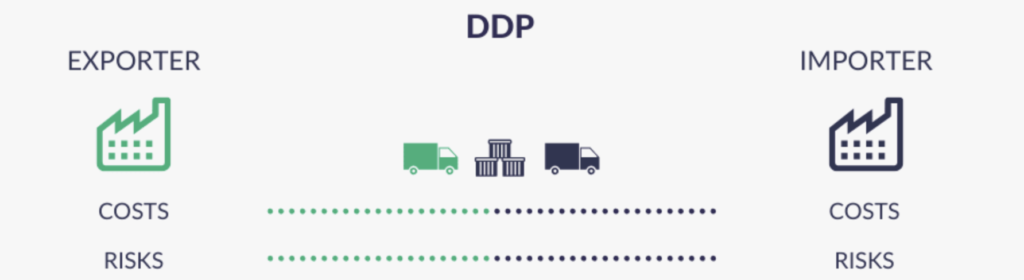
Understanding how pricing is built protects your margins.
Step-by-Step Formula
- Product cost
- Freight cost
- Insurance (if applicable)
- Base import duty
- Section 301 tariff
- Customs clearance fees
- Final delivery
Total = Landed DDP cost
Real-World Example
- Product value: $20,000
- Ocean freight: $3,000
- Base duty (5%): $1,000
- Section 301 (25%): $5,000
- Clearance & delivery: $1,000
Total DDP cost: $30,000
That’s a 50% increase over product cost due to freight and tariffs.
This is why tariff awareness is critical.
How to Choose a Reliable DDP Freight Forwarder
Your forwarder determines your experience.
Red Flags to Avoid
- Prices far below competitors
- No US presence
- Refusal to clarify Importer of Record
- Vague answers about tariffs
Questions to Ask
- Are Section 301 tariffs included?
- Who acts as Importer of Record?
- Is a customs bond required?
- Can you provide entry documentation copies?
- What happens if CBP inspects the shipment?
Professional forwarders answer clearly and confidently.
Tips to Reduce DDP Shipping Costs to the US

DDP shipping is convenient — but convenience doesn’t mean you should overpay. If you’re importing from China to the US regularly, even small cost reductions can protect thousands (or millions) of dollars in margin over time.
The key is simple: optimize legally, negotiate intelligently, and plan strategically.
Let’s break down the most effective ways to reduce DDP shipping costs without exposing your business to compliance risk.
1. Increase Shipment Volume Strategically
Freight pricing rewards volume. The more space you occupy, the lower your per-unit cost.
If you’re shipping small batches frequently, you’re likely paying premium rates. Instead, consider:
- Combining multiple SKUs into one shipment
- Ordering larger production runs
- Consolidating shipments from multiple suppliers
For example:
Shipping 200 cartons by air twice per month may cost significantly more per unit than shipping 400 cartons once per month via sea freight.
Ocean freight becomes dramatically more economical when you move from LCL (Less than Container Load) to FCL (Full Container Load). Even upgrading from half-container volume to full-container volume can reduce per-unit cost by 20–40%.
But volume strategy must balance:
- Storage capacity
- Cash flow
- Inventory turnover speed
Holding too much stock increases warehousing and capital lockup costs.
The smartest importers calculate total landed cost + storage cost — not just freight cost.
2. Plan Around Peak Shipping Seasons
Shipping rates fluctuate based on demand.
The most expensive periods typically include:
- August to October (holiday inventory rush)
- Pre-Chinese New Year (January–February)
- Black Friday & Cyber Monday prep
During these periods:
- Ocean rates rise
- Air cargo space tightens
- Port congestion increases
- Customs backlogs grow
If you can produce and ship earlier — even by 2–4 weeks — you can often lock in lower rates and avoid congestion surcharges.
Think of it like booking airline tickets. Buying early saves money.
The best practice? Build a rolling 90-day inventory forecast and schedule shipments proactively.
3. Optimize Packaging Dimensions
Air freight and courier pricing are heavily influenced by volumetric weight.
The formula typically used:
Length × Width × Height (cm) ÷ 6000
If your packaging is bulky but lightweight, you’re paying for empty space.
Small packaging changes can produce major savings:
- Reduce carton height by 2–3 cm
- Use tighter internal packing
- Eliminate oversized void fill
- Optimize pallet stacking
Even a 10% reduction in cubic volume can translate to meaningful freight savings.
For sea freight, optimizing container loading (known as container utilization) is equally important. Poor loading can waste expensive space.
Ask your supplier to provide:
- Carton dimension breakdown
- Container loading plan
- Maximum pallet optimization
Freight savings often start in product design — not at the shipping stage.
4. Review HS Code Classification Carefully
This is one of the most powerful — and most misunderstood — strategies.
Your product’s HS code determines:
- Base duty rate
- Section 301 tariff rate
- Eligibility for exclusions
Even a small change in classification can significantly affect tariff exposure.
Example:
Product classified under one category may face:
- 5% duty + 25% Section 301
But a legally correct alternative classification may carry:
- 2% duty + 7.5% Section 301
That difference can be massive at scale.
However, this must be done legally and correctly. Misclassification to reduce tariffs is illegal and risky.
Consult a licensed customs broker or trade compliance expert before adjusting classifications.
Smart classification = legal savings.
5. Negotiate DDP Rate Transparency
Many importers treat DDP as a black box price.
Instead, ask for a rough cost structure breakdown:
- Estimated freight cost
- Estimated duty
- Section 301 tariff inclusion
- Clearance fees
- Final delivery cost
You may not receive exact numbers, but understanding the structure gives negotiation power.
If freight markets soften, you can request price adjustments.
If tariffs are reduced or exclusions apply, your DDP rate should reflect that.
Long-term importers should renegotiate DDP rates quarterly — not annually.
Markets change. Your rates should too.
Conclusion
DDP shipping from China to the US in 2026 offers a powerful mix of convenience and predictability. For small businesses, eCommerce brands, and Amazon sellers, it removes many logistical headaches.
But convenience should never replace understanding.
US customs enforcement is strict. Section 301 tariffs significantly impact costs. Importer of Record responsibilities matter. Transparency is essential.
DDP works best when:
- You value simplicity
- You ship moderate volumes
- You partner with a reputable forwarder
It may not be ideal when:
- You import containers regularly
- You want full customs control
- You negotiate freight contracts directly
International trade rewards informed decisions. When you understand the mechanics behind DDP — not just the promise of simplicity — you protect your margins and your business.
Choose wisely. Verify compliance. Protect your supply chain.
FAQs About DDP shipping from China to US

1. Is DDP shipping legal in the United States?
Yes. DDP is a recognized international trade term. However, all US customs laws still apply, and compliance must be maintained.
2. Are Section 301 tariffs included in DDP pricing?
They should be. Always confirm with your supplier that all applicable tariffs are included in the quote.
3. Who is responsible if customs finds an issue under DDP?
It depends on who is listed as Importer of Record. If your company is listed, you may be legally responsible.
4. How long does DDP sea freight from China to the US take?
Typically 30–45 days door-to-door, depending on port and clearance speed.
5. Is DDP good for Amazon FBA shipments?
Yes, many sellers use DDP for simplicity. However, ensure Amazon compliance and proper Importer of Record designation.