China Purchasing Agent: Complete Buyer’s Guide [2026]
![China Purchasing Agent: Complete Buyer’s Guide [2026]](https://goodcantrading.com/wp-content/uploads/2026/09/featured-china-purchasing-agent.png)
A China purchasing agent is a buyer-side representative who sources suppliers, negotiates prices, coordinates quality inspections, and manages logistics on behalf of importers. Unlike trading companies that buy and resell, a purchasing agent works exclusively for you, typically charging 3-8% commission on order value. Agents handle everything from factory verification to customs documentation, reducing fraud risk and language barriers for buyers in Latin America and Europe.
📋 Table of Contents
Executive Summary
- Role clarity: A China purchasing agent acts as your buyer-side representative, not a reseller, handling supplier sourcing, price negotiation, quality control, and logistics coordination.
- Cost structure: Typical commission ranges from 3% for large-volume orders to 8% for small or complex projects, with transparent breakdowns covering sourcing, inspection, and consolidation.
- Verification priority: Buyers report that many agents hide factory identities or blur their role, making independent factory audits and business license checks essential before engagement.
- Service scope: End-to-end coverage includes RFQ management, sample approval, pre-production and during-production inspections, export documentation, and warehouse consolidation.
- Regional advantage: Agents based in manufacturing hubs like Yiwu and Guangzhou offer direct factory access, multilingual support, and faster turnaround for Latin America and Europe shipments.
What Does a China Purchasing Agent Do?
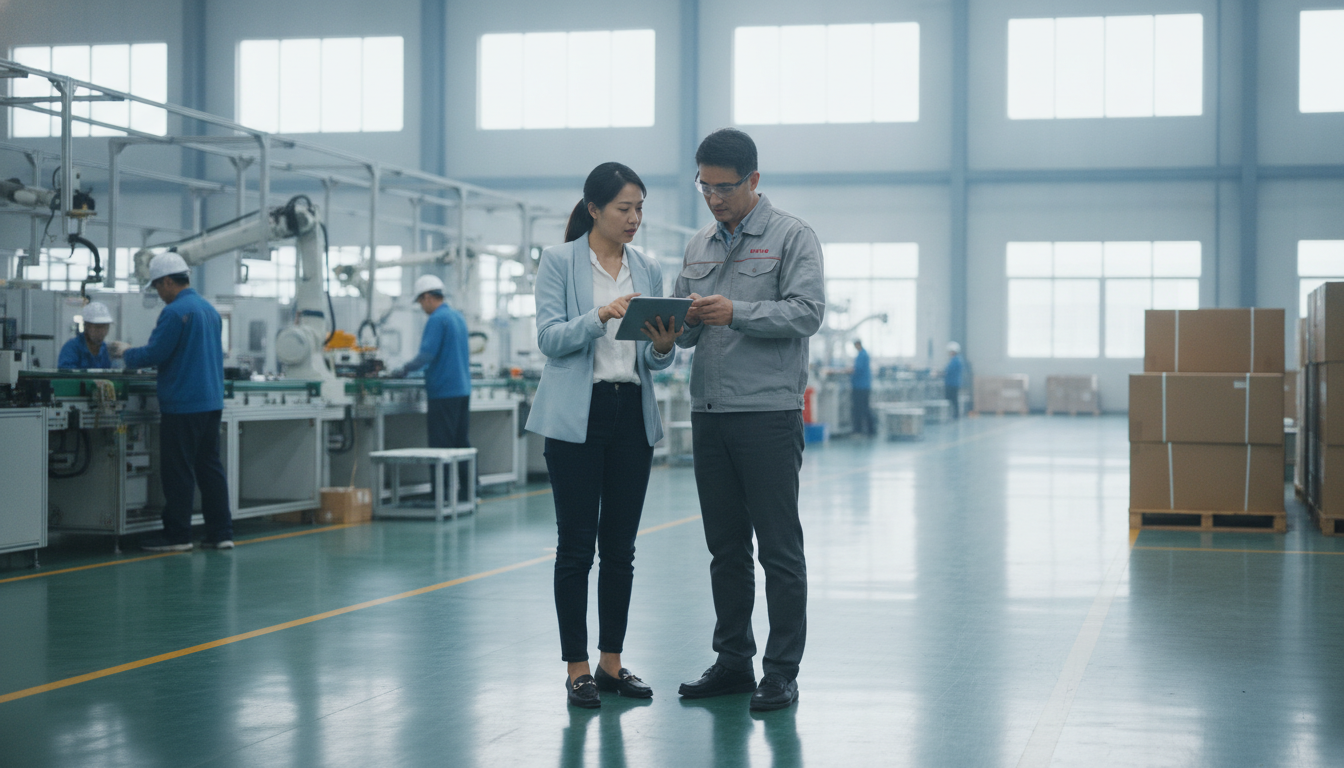
A China purchasing agent manages the entire procurement cycle from your initial product inquiry to final shipment. The agent identifies factories, requests quotations, arranges samples, monitors production, inspects finished goods, and coordinates freight. This contrasts with self-sourcing on platforms like Alibaba, where you handle every step and bear the full risk of supplier fraud or quality failures.
Supplier Sourcing and Verification
The agent searches manufacturing clusters in Guangdong, Zhejiang, Fujian, and other regions to find factories that match your product specifications, MOQ requirements, and certification needs. Verification includes checking business licenses, export records, and production capacity. Many buyers discover that suppliers listed on B2B platforms are trading companies, not actual manufacturers. A purchasing agent visits the factory floor, photographs equipment, and confirms the facility can meet your order volume and timeline.
Price Negotiation and Contract Management
Agents local market knowledge and Mandarin fluency to negotiate unit prices, payment terms, and delivery schedules. They compare quotes from multiple factories, identify hidden costs like mold fees or packaging surcharges, and draft purchase agreements in both English and Chinese. For buyers in Mexico, Colombia, Argentina, Chile, and Brazil, agents also clarify Incoterms, ensuring you understand whether the quoted price includes inland trucking to the port or only ex-factory cost.
Sample Approval and Pre-Production Inspection
Before mass production begins, the agent orders samples, checks them against your specifications, and ships them to your address for approval. Once you confirm the sample, the agent conducts a pre-production inspection to verify raw materials, colorways, and packaging match the approved prototype. This step catches discrepancies early, reducing the risk of receiving 5,000 units that differ from the sample you signed off on.
Quality Control During Production
During-production inspections occur when 30-50% of the order is complete. The agent visits the factory, measures dimensions, tests functionality, and photographs defects. If the defect rate exceeds your agreed AQL standard, the agent halts production and requests rework. Buyers often mention that agents who skip this step deliver shipments with high rejection rates at the destination port.
Final Inspection and Shipping Coordination
Before the factory loads the container, the agent performs a final random inspection, checking carton labeling, packing lists, and product condition. The agent then books freight, arranges customs export documentation, and provides you with the bill of lading, commercial invoice, packing list, and certificate of origin. For Amazon FBA sellers, agents can also apply FNSKU labels and prepare shipments according to Amazon’s carton and pallet requirements.
Purchasing Agent vs. Trading Company: Key Differences
Confusion between purchasing agents and trading companies is one of the most common pain points importers raise. Both operate in China and offer sourcing services, but their business models, fee structures, and loyalties differ fundamentally.
Why Factory Transparency Matters
Buyers who work with trading companies often cannot verify the actual manufacturer. If a quality issue arises, the trading company acts as a middleman, delaying resolution and sometimes refusing refunds. A trusted China sourcing agent provides the factory’s business license, export license, and GPS coordinates, allowing you to conduct independent audits or switch agents without losing supplier access.
Hidden Markup vs. Transparent Commission
Trading companies quote a single all-in price, making it impossible to know the factory’s actual cost. If the factory offers a 10% discount for repeat orders, the trading company pockets the savings rather than passing it to you. Purchasing agents itemize every cost: factory unit price, domestic trucking, inspection fee, consolidation charge, and agent commission. This transparency lets you negotiate directly with the factory on future orders or adjust specifications to reduce cost.
How Much Does a China Purchasing Agent Charge?
Agent fees vary based on order complexity, product category, and service scope. Most agents use a percentage-based commission model, though some charge flat project fees for consulting or one-time sourcing tasks.
Commission-Based Pricing
Standard commission ranges from 3% to 8% of the total order value, calculated on the factory cost plus domestic logistics. Large-volume buyers ordering container loads of simple products like furniture or home goods typically pay 3-5%. Small importers ordering mixed SKUs with custom packaging, private labeling, or strict certification requirements may pay 6-8%. The commission covers supplier sourcing, price negotiation, sample coordination, quality inspections, and export documentation.
Example: A $20,000 furniture order with 5% commission costs $1,000 in agent fees. A $5,000 mixed-SKU apparel order with 8% commission costs $400.
Flat-Fee Services
Some agents charge flat fees for specific tasks rather than a percentage of the order. Factory audits typically cost $200-$500 per site visit, depending on the province and audit depth. Sample sourcing without a production commitment may cost $100-$300 per product, covering the agent’s time to contact factories, request quotes, and arrange sample shipment. Buyers who already have a supplier but need only QC inspection or logistics coordination can negotiate task-based pricing.
Hidden Costs to Watch
Importers sometimes discover unexpected charges after the order ships. Common add-ons include warehouse storage fees if you delay shipment pickup, consolidation charges when combining multiple suppliers into one container, and rush-order premiums for expedited production. A reliable agent discloses all potential fees upfront in a written service agreement. Our transparent pricing page breaks down every cost category so buyers can budget accurately before placing orders.
How to Verify a Reliable Purchasing Agent
Buyers frequently report that agents misrepresent their capabilities, hide factory identities, or provide vague fee structures. Verification steps reduce the risk of fraud, quality failures, and cost overruns.
Check Business Registration and Office Location
Request the agent’s business license, which shows the registered company name, legal representative, and registration number. Verify the license through China’s National Enterprise Credit Information Publicity System. Confirm the agent has a physical office in a major sourcing hub like Yiwu, Guangzhou, Shenzhen, or Ningbo. Agents operating solely online without a local presence cannot conduct factory visits or handle urgent production issues.
Request Factory Audit Reports and Photos
Ask the agent to provide recent factory audit reports for suppliers they recommend. The report should include the factory’s business license, export license, production floor photos, equipment list, worker count, and quality control procedures. Buyers mention that agents who refuse to share factory details or provide only generic photos are often resellers, not true buyer-side representatives. Our team conducts on-site audits across Guangdong, Zhejiang, and Fujian, documenting every facility we recommend to clients.
Verify Multilingual Support and Communication Quality
Weak communication is a recurring complaint among importers. Test the agent’s responsiveness by sending a detailed RFQ with specific questions about MOQ, lead time, payment terms, and inspection procedures. A professional agent replies within 24 hours with itemized answers, not vague assurances. For buyers in Latin America, confirm the agent offers Spanish-language support for contracts, inspection reports, and shipping documents. Our Yiwu and Guangzhou teams provide multilingual service in English, Spanish, French, and Arabic, ensuring clear communication throughout the procurement cycle.
Review Client Testimonials and Case Studies
Request references from buyers in your target market and product category. Contact those references directly to ask about defect rates, lead time accuracy, and dispute resolution. Agents with genuine experience will share specific examples: a Colombian furniture importer who reduced defect rates from 12% to 2% after switching agents, or a Mexican electronics buyer who cut lead time by 15 days through better production monitoring.
In practice: A Brazilian home-goods importer avoided $18,000 in losses when our pre-production inspection caught incorrect fabric weight before mass production began
Confirm Quality Control Standards and Inspection Evidence
Some agents claim to perform inspections but provide no documentation. Ask the agent to explain their AQL sampling method, defect categorization (critical, major, minor), and reporting format. A thorough inspection report includes defect photos, measurement data, carton labeling verification, and a pass/fail recommendation. Buyers who receive only a one-sentence email saying “inspection passed” have no evidence to dispute defects discovered after shipment. Our quality control process documents every inspection with timestamped photos, defect counts, and corrective action requests sent to the factory.
When Do You Need a Purchasing Agent?
Not every buyer requires an agent. Self-sourcing works for experienced importers with Mandarin skills, established supplier relationships, and the capacity to travel to China regularly. A purchasing agent becomes essential in specific scenarios where language barriers, fraud risk, or logistics complexity exceed your internal capabilities.
First-Time Importers Without China Experience
Buyers placing their first order from China face steep learning curves: verifying supplier legitimacy, negotiating payment terms, understanding Incoterms, and managing customs documentation. Mistakes at any step can result in lost deposits, substandard products, or shipments held at customs. An agent guides you through each stage, reducing the risk of costly errors and providing local expertise you cannot build overnight.
High-Value or Complex Orders
Orders involving custom molds, private labeling, multi-component assembly, or strict certification requirements demand close production oversight. A furniture buyer ordering 500 dining sets with custom upholstery and packaging needs someone on the ground to verify fabric quality, check stitching, and ensure cartons meet shipping specifications. Remote management from Mexico City or São Paulo leaves too much room for miscommunication and quality drift.
Multi-Supplier Consolidation
Amazon FBA sellers and wholesalers often source 10-20 SKUs from different factories across China. Coordinating shipments, consolidating cartons into a single container, and managing export paperwork for multiple suppliers consumes significant time and increases the risk of shipping delays. Our Yiwu consolidation warehouse receives goods from factories across Zhejiang, Guangdong, and Fujian, inspects each SKU, and combines everything into one shipment with unified documentation.
Ongoing Quality Issues with Current Suppliers
Importers who experience recurring defects, late deliveries, or unresponsive factories benefit from an agent’s and local presence. The agent identifies the root cause, whether it’s poor raw material quality, inadequate worker training, or the factory subcontracting to unauthorized workshops. The agent then negotiates corrective actions or sources alternative suppliers if the current factory cannot meet standards.
Language and Time Zone Barriers
Buyers in Latin America and Europe often struggle with 12-hour time zone differences and limited English proficiency among Chinese suppliers. Email exchanges drag on for weeks, delaying sample approvals and production starts. A purchasing agent based in China handles real-time communication in Mandarin, resolves issues during the factory’s business hours, and provides you with daily or weekly progress updates in your preferred language.
Key Takeaways
- A China purchasing agent works as your buyer-side representative, handling supplier sourcing, negotiation, quality control, and logistics, distinct from trading companies that buy and resell with hidden markups.
- Typical agent commissions range from 3% for large-volume simple orders to 8% for small or complex projects, with transparent itemization of factory cost, inspection fees, and consolidation charges.
- Verification steps include checking business licenses, requesting factory audit reports with photos, testing multilingual communication quality, and reviewing client references from your target market.
- Agents provide critical value for first-time importers, high-value custom orders, multi-supplier consolidation, ongoing quality issues, and buyers facing language or time zone barriers.
- Factory transparency is non-negotiable: reliable agents disclose the manufacturer’s identity, location, and business registration, allowing you to conduct independent audits or switch agents without losing supplier access.
- Quality control documentation must include timestamped defect photos, AQL sampling results, measurement data, and corrective action requests, not vague pass/fail statements.
FAQ
What is the difference between a purchasing agent and a sourcing agent?
The terms are often used interchangeably, but some buyers distinguish them by scope. A sourcing agent focuses on finding and vetting suppliers, then hands off the relationship to you. A purchasing agent manages the entire procurement cycle, including negotiation, quality control, production monitoring, and logistics coordination. In practice, most professional agents offer full-service coverage under either title, so clarify the exact services included before engagement.
Can I negotiate the agent’s commission rate?
Yes, especially for large or repeat orders. Agents may reduce commission from 5% to 3% if you commit to a container load or place multiple orders per year. However, extremely low rates below 3% often signal that the agent earns hidden margins by marking up factory prices or receiving kickbacks from suppliers. Transparent agents provide itemized cost breakdowns, so you see exactly where your money goes and can verify the factory’s actual quote.
How long does it take an agent to source a new supplier?
Sourcing timelines depend on product complexity and certification requirements. Simple consumer goods like home textiles or plastic kitchenware typically take 3-7 days to identify qualified factories and request quotes. Custom products requiring molds, specific certifications like CE or FDA, or unique materials may take 10-14 days. Once you approve a supplier, sample production adds another 5-10 days, and mass production lead time ranges from 15 to 45 days depending on order volume and factory capacity.
Ready to source with confidence and transparent pricing?
Request a Free Supplier Audit →
Written by the Goodcantrading Sourcing Team.