China Sourcing Company: 2026 Buyer’s Guide [Verified Agents]
![China Sourcing Company: 2026 Buyer’s Guide [Verified Agents]](https://goodcantrading.com/wp-content/uploads/2026/09/featured-china-sourcing-company.png)
A China sourcing company is a third-party service provider that manages the entire procurement process for international buyers, from supplier identification and factory audits to quality control, production monitoring, and export logistics. Unlike trading companies that buy and resell, a sourcing company works as your agent, negotiating directly with manufacturers on your behalf while charging a transparent service fee-typically 3-5% commission or a flat project rate-so you maintain control over pricing and supplier relationships.
📋 Table of Contents
- Executive Summary
- What Does a China Sourcing Company Do?
- How Is a Sourcing Company Different from a Trading Company?
- What Services Should You Expect?
- How Much Does a China Sourcing Company Charge?
- How Do You Verify a Sourcing Company Before Hiring?
- What Red Flags Signal an Unreliable Agent?
- Key Takeaways
- FAQ
Executive Summary
- Core function: A China sourcing company acts as your on-ground procurement agent, handling supplier vetting, price negotiation, quality inspections, and export logistics while you retain direct factory pricing and contract control.
- Fee transparency: Reputable agents charge visible commission rates or project fees, whereas hidden rebate models obscure true factory costs and create pricing distortion.
- Service scope: End-to-end support includes factory audits, sample approval, production monitoring, pre-shipment inspections, warehousing consolidation, and customs documentation preparation.
- Verification priority: Buyers should confirm physical office presence, request client references, and review sample inspection reports before committing to any sourcing partner.
- Market scale: According to the World Bank (2025), China remained the world’s largest exporter in 2024, with exports of about US$3.58 trillion, underscoring continued demand for professional sourcing intermediaries.
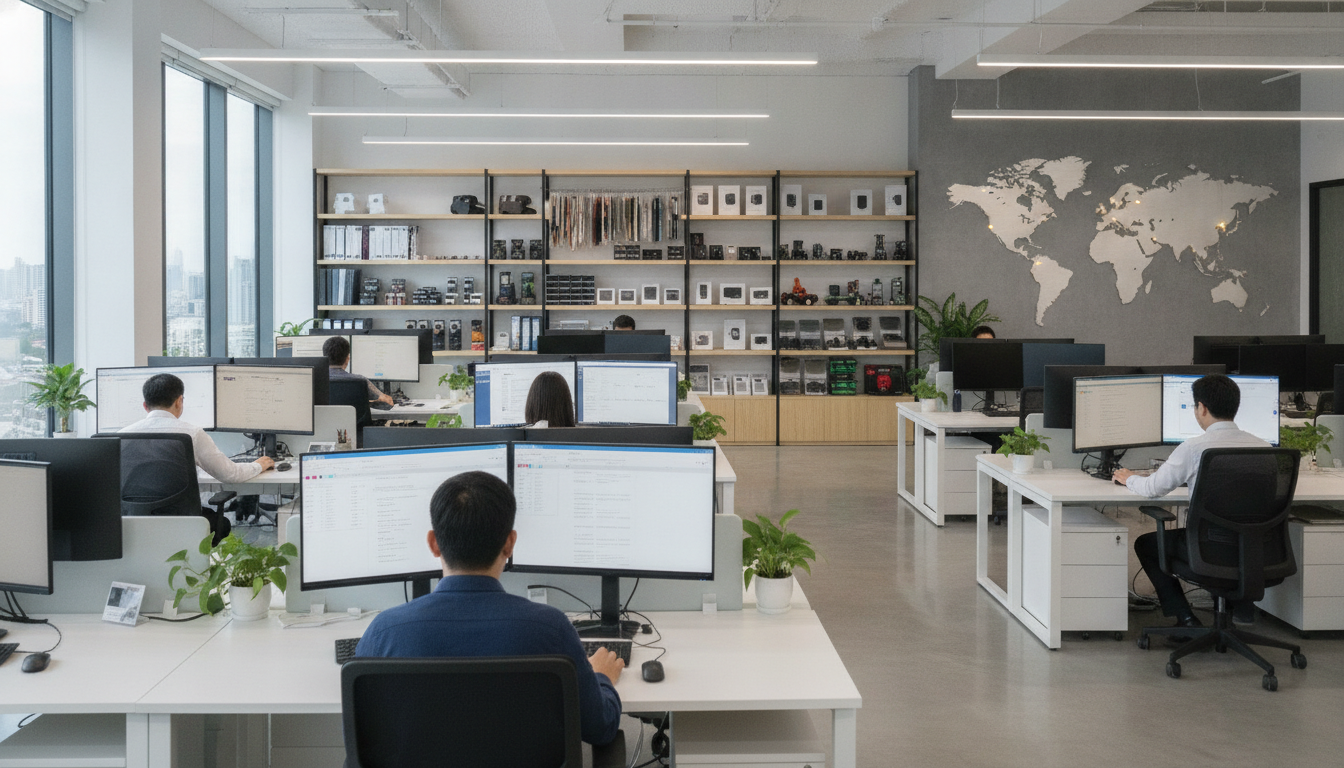
What Does a China Sourcing Company Do?
A China sourcing company bridges the gap between international buyers and Chinese manufacturers by managing procurement tasks that require local presence, language fluency, and industry expertise. The agent identifies suitable factories, conducts on-site audits, negotiates pricing and payment terms, monitors production timelines, performs quality inspections at multiple stages, and coordinates export logistics including freight booking and customs documentation.
Supplier Identification and Vetting
The sourcing team searches manufacturer databases, trade directories, and regional industrial clusters to compile a shortlist of factories matching your product specifications, MOQ requirements, and certification needs. Each candidate undergoes preliminary screening for business license validity, production capacity, export history, and financial stability before the agent schedules factory visits.
Factory Audits and Capability Assessment
On-site audits verify that a supplier operates a genuine manufacturing facility rather than a shell office or unregistered workshop. The inspection covers production equipment condition, worker count and shift patterns, raw material inventory levels, quality control systems, past export shipment records, and compliance with safety and environmental standards. Audit reports document findings with timestamped photographs and capacity calculations.
Price Negotiation and Contract Management
Agents market knowledge and bulk-buying relationships to secure factory-direct pricing, often 15-30% below published Alibaba rates for equivalent specifications. The sourcing company drafts or reviews purchase agreements, clarifies payment milestones, defines inspection criteria, and establishes penalty clauses for late delivery or quality failures. Contracts specify Incoterms, packaging standards, and acceptable defect rates.
Quality Control Throughout Production
Inspection checkpoints include pre-production sample approval, during-production inspections at 30-50% completion, and pre-shipment final inspections before goods leave the factory. Each QC visit follows a checklist covering dimensions, material composition, functionality testing, packaging integrity, and carton labeling accuracy. Inspection reports include defect counts, photographic evidence, and pass/fail recommendations.
Logistics Coordination and Export Documentation
The agent arranges freight forwarding, books container space, prepares commercial invoices and packing lists, coordinates customs clearance at the Chinese port, and provides tracking updates until goods reach your destination. For buyers shipping to multiple markets, the sourcing company can consolidate orders from different factories into a single container to reduce per-unit freight costs.
How Is a Sourcing Company Different from a Trading Company?
The distinction centers on who owns the goods and who controls pricing. A trading company purchases inventory from factories, marks up the price, and resells to you as the principal seller. A sourcing company works as your agent, connecting you directly with the manufacturer while charging a transparent service fee for coordination and oversight.
Buyers who need custom branding, specific material grades, or iterative product development benefit more from a trusted China sourcing agent model because direct factory access accelerates sample revisions and technical discussions. Trading companies suit buyers ordering standard catalog items in smaller quantities where customization is not required.
What Services Should You Expect?
A full-service China sourcing company delivers a coordinated package covering every stage from initial product research through final delivery. Service breadth varies by provider, but professional agents typically offer the following capabilities.
Product Sourcing and Supplier Matching
The agent researches manufacturers in relevant industrial zones, requests quotations based on your specifications, and compiles a comparison matrix showing unit price, MOQ, lead time, payment terms, and certification status. For complex products, the sourcing team may visit trade shows or consult industry contacts to identify specialized factories not listed on public platforms.
Sample Procurement and Approval Cycles
Before committing to bulk production, the agent orders pre-production samples from shortlisted factories, arranges international courier shipment to your location, and coordinates revision rounds if initial samples fail to meet specifications. Sample fees and shipping costs are tracked separately and often deducted from the first production order.
Production Monitoring and Timeline Management
Once you approve samples and issue a purchase order, the sourcing company schedules factory visits at key production milestones to verify that materials match approved samples, production quantities align with the order, and the factory adheres to the agreed delivery schedule. Monitoring reports include progress photographs and updated completion percentages.
Multi-Stage Quality Inspections
Professional quality control protocols include initial production checks (IPC) when 10-30% of the order is complete, mid-production inspections at 50-70% completion, and final random inspections (FRI) before goods are packed for export. Each inspection follows AQL sampling standards, with defect classifications (critical, major, minor) and photographic evidence.
Warehousing, Consolidation, and Export Logistics
For buyers ordering from multiple factories, the agent can consolidate shipments at a bonded warehouse near the export port, reducing freight costs by filling a single container instead of paying LCL rates for multiple small shipments. The sourcing company coordinates customs clearance, prepares export documentation (commercial invoice, packing list, certificate of origin), and books ocean or air freight based on your delivery timeline and budget.
After-Sales Support and Dispute Resolution
If quality issues surface after shipment, the agent investigates the root cause, negotiates compensation or replacement with the factory, and arranges corrective actions for future orders. Dispute mediation services help resolve payment disagreements, late-delivery penalties, or specification mismatches without requiring legal escalation.
How Much Does a China Sourcing Company Charge?
Fee structures vary based on service scope, order complexity, and the agent’s business model. Transparent pricing separates reputable providers from those who hide margins through undisclosed factory rebates.
Commission-Based Fees
Most sourcing companies charge a percentage of the total order value, typically 3-5% for straightforward products and 6-8% for complex OEM projects requiring extensive customization or multi-factory coordination. The commission covers supplier vetting, negotiation, quality inspections, and logistics coordination. Buyers receive the factory’s direct quotation and pay the agent’s fee separately, ensuring full pricing visibility.
Flat Project Fees
For one-time projects or small-volume orders where percentage-based fees would be minimal, agents may charge a fixed project rate covering a defined scope: supplier identification, factory audit, sample procurement, and one round of inspections. Project fees range from $800 to $3,000 depending on product complexity and the number of suppliers evaluated.
Retainer or Subscription Models
Buyers placing regular monthly orders sometimes negotiate retainer agreements where a fixed monthly fee covers ongoing supplier management, routine inspections, and logistics coordination. Retainers suit high-volume importers who need dedicated account management and priority response times.
Hidden Rebate Models (Avoid)
Some agents claim to work for free or charge unusually low fees, then collect undisclosed rebates from factories by inflating the quoted price. Buyers receive a single bundled price with no breakdown, making it impossible to verify the true factory cost. This model creates misaligned incentives because the agent profits more when you pay higher prices, undermining their role as your advocate.
Typical commission range: 3-5% for standard products, 6-8% for OEM/ODM. Project fee range: $800-$3,000 per supplier evaluation cycle.
Buyers should request a written fee agreement specifying the commission rate or project fee, payment milestones, and a clause confirming the agent will not accept factory rebates without disclosing them. Transparent service charge structures protect both parties and align the agent’s success with your cost savings.
How Do You Verify a Sourcing Company Before Hiring?
Buyers often worry that agents do not help enough with verification, leaving them exposed to fake factories or non-manufacturing traders. Conducting due diligence on the sourcing company itself reduces this risk.
Confirm Physical Office and Local Presence
Request the agent’s office address and verify it through Google Maps street view or a third-party business registry search. Legitimate sourcing companies maintain offices in major manufacturing hubs such as Guangzhou, Shenzhen, Yiwu, or Ningbo, not just virtual mailboxes or residential addresses. Video calls showing office interiors and staff introductions add credibility.
Request Client References and Case Examples
Ask for contact details of two or three current clients in your industry or target market. Speak directly with references to learn about response times, inspection thoroughness, and problem-resolution effectiveness. Review-site feedback shows buyers care about responsiveness and project follow-through; weak communication and missed timelines are recurring pain points.
Review Sample Inspection Reports
Request anonymized QC reports from recent projects to assess the agent’s inspection methodology. Professional reports include AQL sampling plans, defect classifications with photographs, measurement data for critical dimensions, and clear pass/fail recommendations. Generic checklists without photographic evidence or quantitative data suggest superficial inspections.
Verify Business Registration and Export License
China’s National Enterprise Credit Information Publicity System allows you to search a company’s registration number and confirm its legal status, registered capital, and business scope. Export-licensed agents hold a customs registration code enabling them to handle official export documentation and bonded warehouse operations.
Test Responsiveness with a Small Pilot Order
Before committing to large-volume production, place a trial order for 100-500 units to evaluate the agent’s communication speed, inspection accuracy, and logistics coordination. A pilot run reveals whether the sourcing company delivers on promises and handles unexpected issues professionally.
In practice: A Colombian buyer avoided a $22,000 fraud by requesting our factory audit before wiring deposit payment; the audit revealed the supplier operated from a residential apartment with no manufacturing equipment
What Red Flags Signal an Unreliable Agent?
Certain behaviors and business practices indicate a sourcing company may prioritize its own margins over your interests or lack the operational capacity to deliver promised services.
Refusal to Disclose Factory Contact Information
Buyers say some sourcing companies hide their real margin by not disclosing factory rebates or adding unclear service layers, making it hard to know the true purchase price. If an agent insists on being the sole communication channel and refuses to share the factory’s name, location, or direct contact details, they may be operating as a middleman rather than a transparent agent.
Unusually Low or Zero Service Fees
Agents claiming to work for free or charging fees below 2% likely earn hidden rebates from factories by inflating quoted prices. This model creates conflicts of interest because the agent profits when you pay more, not when you secure the best deal.
Generic or Recycled Inspection Reports
Forum-style discussions around China sourcing commonly complain about poor quality control when agents do not inspect samples and pre-shipment batches thoroughly. Inspection reports lacking timestamped photographs, specific defect counts, or measurable data suggest the agent did not visit the factory and instead copied a template or relied on factory self-inspection.
Pressure to Pay Full Deposit Before Verification
Reputable agents support a staged payment structure: deposit after sample approval, balance before shipment. Pressure to wire 100% upfront or to pay before receiving a factory audit report increases fraud risk, especially when combined with vague supplier details.
Lack of Multilingual Communication for Your Market
Buyers in Latin America and Europe benefit from agents offering Spanish or French support for contracts, QC reports, and real-time updates. Sourcing companies that communicate only in English or Mandarin create language barriers that slow decision-making and increase misunderstandings during production.
- No verifiable office: Virtual addresses or refusal to share office location via video call.
- Zero client references: Inability or unwillingness to provide contact details for current clients.
- Vague service agreements: Contracts lacking specific deliverables, timelines, or fee breakdowns.
- Factory-direct claims without proof: Some buyers report that sourcing agents claim to be factory-direct when they are actually middlemen, which creates trust issues and pricing distortion.
- Delayed or missing inspection reports: Promised QC reports arrive late, lack detail, or are never delivered.
Our Yiwu and Foshan sourcing desks run factory audits and QC across consumer-goods categories, with multilingual reporting in English, Spanish, and French to support buyers in Mexico, Colombia, Argentina, Chile, Brazil, and European markets. Transparent fee structures and direct factory introductions ensure you maintain pricing control and supplier relationships throughout the procurement cycle.
Key Takeaways
- According to the World Bank (2025), China remained the world’s largest exporter in 2024, with exports of about US$3.58 trillion, sustaining demand for professional sourcing intermediaries.
- According to UN Comtrade (2025), Mexico imported roughly US$114 billion from China in 2024, underscoring the scale of China-linked procurement demand in Latin America.
- According to UN Comtrade (2025), Brazil imported more than US$104 billion from China in 2024, making China one of Brazil’s most important sourcing origins.
- According to European Commission / Eurostat (2025), the EU continued to import over €500 billion in goods from China in 2024, keeping China central to European sourcing strategies.
- Transparent sourcing companies charge visible commission rates of 3-5% for standard products and 6-8% for OEM projects, whereas hidden rebate models obscure true factory costs and create pricing distortion.
- Professional quality control protocols include pre-production sample approval, during-production inspections at 30-50% completion, and pre-shipment final inspections using AQL sampling standards with photographic evidence.
FAQ
Can a sourcing company help with customs clearance in my destination country?
Most China sourcing companies handle export customs clearance at the Chinese port and prepare documentation (commercial invoice, packing list, certificate of origin) required for import clearance. However, they typically do not manage destination-country customs brokerage or duty payment. Buyers should engage a local customs broker or freight forwarder in Mexico, Brazil, Argentina, or Europe to handle import clearance, tariff classification, and VAT remittance. The sourcing agent can coordinate with your destination broker to ensure documentation consistency.
What happens if the factory delivers defective goods after the final inspection?
If defects surface after shipment despite a passing pre-shipment inspection, the sourcing company investigates whether the issue stems from inspection oversight, factory substitution of materials post-inspection, or damage during transit. The agent negotiates with the factory for compensation (partial refund, replacement units, or discount on the next order) and arranges corrective actions such as revised QC checklists or third-party lab testing for future shipments. Reputable agents include dispute-resolution clauses in service agreements specifying their role in post-shipment claims.
How do I know the sourcing company is not marking up the factory price?
Request that the agent provide the factory’s original quotation or proforma invoice directly, showing the manufacturer’s company name, contact details, and itemized pricing. The sourcing company’s fee should appear as a separate line item, either a percentage commission or a flat service charge. Written agreements should include a clause stating the agent will not accept undisclosed rebates or commissions from suppliers. Buyers can also cross-check quoted prices by requesting parallel quotations from two or three factories through independent channels, then comparing them to the agent’s submissions.
Ready to work with a transparent China sourcing company that puts your interests first?
Request a Free Supplier Audit →
Written by the Goodcantrading Sourcing Team.