How to Import from China to Chile: 2026 Compliance Guide
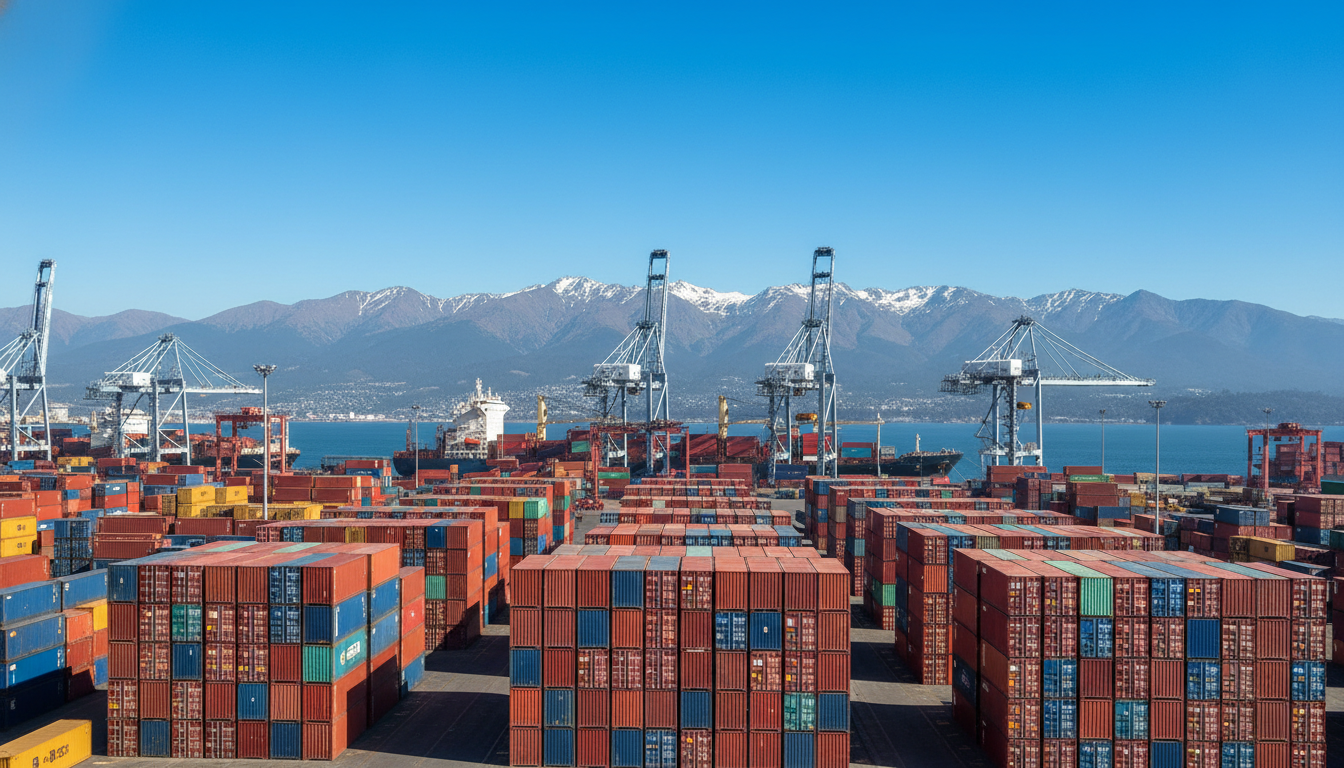
📋 Table of Contents
- Executive Summary
- Chile Import Regulatory Framework
- Required Documents for Customs Clearance
- Calculating Your Landed Cost in Chile
- Shipping Methods from China to Chile
- Product-Specific Compliance and Labeling
- Supplier Verification and Quality Control
- Customs Broker vs Self-Clearance
- Key Takeaways
- FAQ
Chilean importers face a unique challenge when sourcing from China: navigating a 19% VAT alongside product-specific compliance rules that shift by category. Understanding how to import from China to Chile requires mastering customs duties, shipping logistics, and supplier risk control to avoid costly delays at Valparaíso or San Antonio ports.
Executive Summary
- Import volume: Chile’s total imports reached approximately $96.6 billion in 2024, with China representing the largest single trading partner according to OEC World (2025).
- Average customs duty: Chile applies a 6% MFN tariff rate on most imports before adding the mandatory 19% VAT, per World Bank (2025) tariff schedule data.
- VAT impact: Chile’s 19% IVA (value-added tax) applies to CIF value plus customs duty, materially affecting landed cost calculations according to OECD (2025).
- Trade connectivity: China was Chile’s top export destination at $37.9 billion, reflecting deep bilateral trade infrastructure according to OEC World (2025).
- Regional context: Latin America and the Caribbean’s merchandise trade reached $2.7 trillion in 2024, underscoring the scale of cross-border sourcing opportunities per ECLAC (2025).
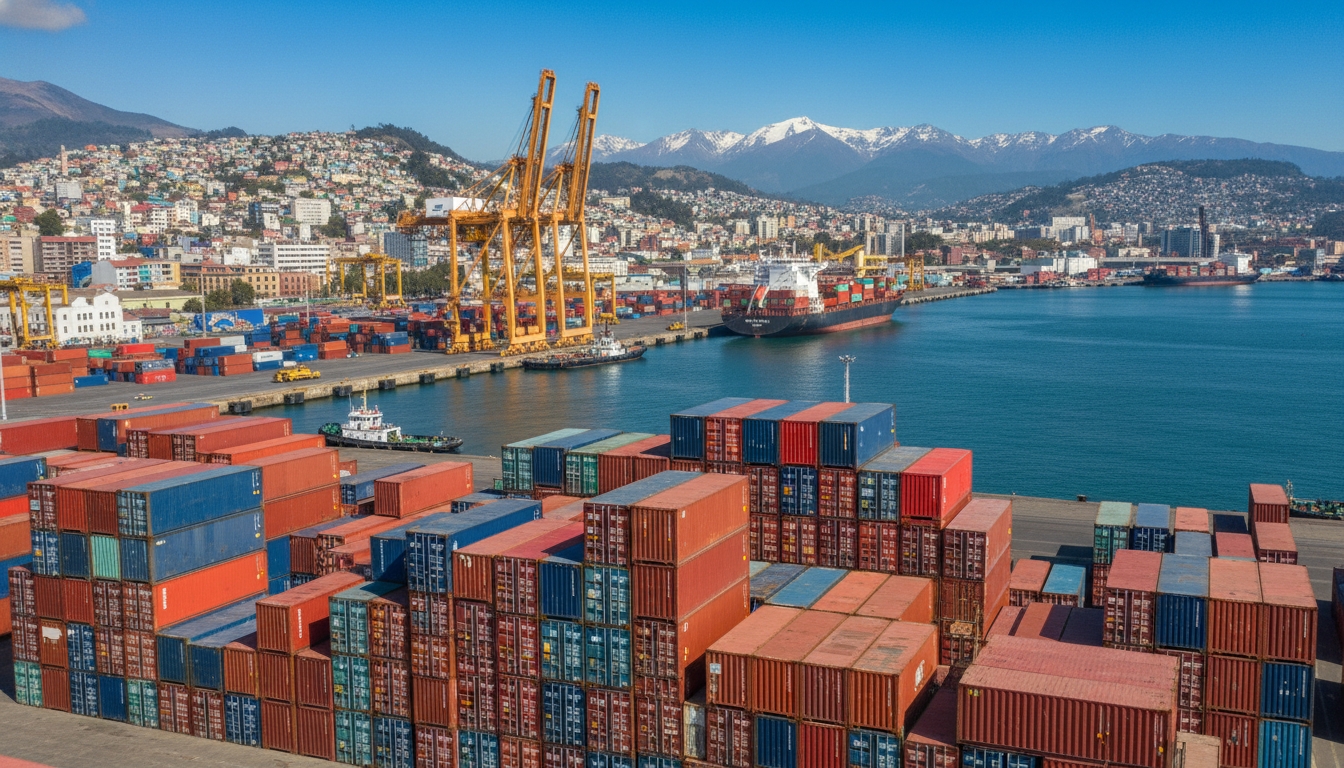
Chile Import Regulatory Framework
Chile operates one of Latin America’s most trade-open economies, with streamlined customs procedures managed by Servicio Nacional de Aduanas. The regulatory framework balances efficiency with compliance enforcement across three core areas.
Tax ID Registration (RUT)
Every commercial importer must obtain a Rol Único Tributario (RUT) from Servicio de Impuestos Internos before clearing shipments. This 8-9 digit identifier links to your tax obligations and customs declarations. Individual importers can register online within 3-5 business days, while corporate entities require notarized incorporation documents and a physical address in Chile.
Customs Broker Authorization
Chilean law permits self-clearance for shipments under $1,000 USD FOB value. Above this threshold, most importers engage a licensed customs broker (agente de aduanas) who holds legal liability for declaration accuracy. Broker fees typically range from $80-$150 per shipment for standard consumer goods, scaling up for regulated categories like electronics or food products.
Import Licenses by Product Category
Most general merchandise enters Chile without pre-approval. Specific categories trigger mandatory permits from sector regulators before customs release. The table below outlines common requirements:
Required Documents for Customs Clearance
Chilean customs requires a standardized documentation set for every commercial shipment. Missing or inconsistent paperwork triggers automatic holds at port, adding 5-10 days to clearance timelines.
Core Commercial Documents
The foundation of your customs filing consists of four critical documents that must align perfectly in product description, quantity, and declared value:
- Commercial Invoice: Must show FOB value in USD, itemized product descriptions matching HS codes, and supplier’s company chop or signature. Chilean customs cross-references invoice totals against bill of lading weights.
- Packing List: Details carton count, gross/net weight per item, and cubic meter volume. Discrepancies between packing list and actual shipment measurements result in physical inspection and penalty fees.
- Bill of Lading (B/L) or Airway Bill: Ocean freight requires an original or telex-release B/L marked “freight prepaid” or “freight collect.” Air shipments use a Master Airway Bill (MAWB) with consignee details matching your RUT registration.
- Certificate of Origin: While Chile’s 6% MFN rate applies universally, a China-issued CO can support duty drawback claims if you re-export finished goods. Form A or non-preferential CO both acceptable.
Category-Specific Certifications
Regulated products require additional certificates obtained before shipment departs China. Securing these documents post-arrival creates clearance gridlock and storage fees at Chilean ports.
- Electrical safety certificates: SEC requires IEC 60950 or equivalent test reports for voltage-powered devices. Chinese suppliers can provide CCC or CE certificates, which Chilean authorities accept with Spanish translation.
- Food safety documentation: ACHIPIA mandates sanitary registration, nutritional analysis, and manufacturing facility inspection reports. The exporter’s local health bureau in China must issue an official health certificate within 15 days of shipment.
- Textile fiber content labels: Apparel imports need fiber composition tags in Spanish showing percentages, care instructions, and country of origin permanently affixed before customs release.
Digital Customs Declaration (DIN)
Your customs broker files the Declaración de Ingreso (DIN) electronically through Chile’s SICEX platform within 15 days of vessel arrival. The DIN auto-calculates duty and VAT based on HS code classification and CIF value. Customs assigns one of three channels: green (automatic release), yellow (document review), or red (physical inspection). Approximately 12% of shipments receive red-channel assignment, extending clearance to 4-7 days.
Working with a trusted China sourcing agent ensures your supplier prepares compliant documentation from the start, eliminating the most common cause of Chilean customs delays.
Calculating Your Landed Cost in Chile
Accurate landed cost calculation determines whether your China sourcing strategy delivers the expected 30-40% savings versus local Chilean suppliers. The formula compounds multiple cost layers in a specific sequence.
FOB to CIF Conversion
Chinese suppliers quote FOB (Free On Board) pricing, which excludes international freight and insurance. To calculate CIF (Cost, Insurance, Freight) value for Chilean customs:
Ocean freight rate: $1,200-$1,800 per 20ft container Shanghai to Valparaíso (Q1 2026 average). Marine insurance: 0.3-0.5% of cargo value.
CIF = FOB product cost + international freight + marine insurance. This CIF figure becomes the taxable base for Chilean import duties.
Duty and Tax Calculation Sequence
Chilean customs applies charges in a cascading structure where each layer compounds the previous:
Local Clearance Fees
Beyond government taxes, budget for service provider charges that add 3-5% to total landed cost:
- Customs broker fee: $80-$150 per shipment for standard declarations, $200-$350 for regulated products requiring permit coordination.
- Port handling (THC): $120-$180 per container at Valparaíso or San Antonio, covering crane operations and terminal storage up to 5 free days.
- Documentation fees: $30-$50 for B/L release, customs filing, and certificate legalization.
- Inland transport: $150-$300 to move containers from port to Santiago warehouses, depending on final delivery zone.
Worked Example: Home Textile Import
A Santiago retailer imports 5,000 cotton bedsheet sets from a Jiangsu supplier. FOB price: $8.50 per set. Ocean freight: $1,400 for one 20ft container. Insurance: 0.4% of cargo value.
FOB total = 5,000 × $8.50 = $42,500
Insurance = $42,500 × 0.004 = $170
CIF = $42,500 + $1,400 + $170 = $44,070
Customs duty = $44,070 × 6% = $2,644
Taxable base = $44,070 + $2,644 = $46,714
IVA = $46,714 × 19% = $8,876
Local fees = $380 (broker + port + docs)
Total landed cost = $56,030
Per-unit landed cost = $56,030 ÷ 5,000 = $11.21
The importer’s markup to wholesale must cover this $11.21 landed cost plus domestic logistics, storage, and margin. Comparable Chilean-manufactured bedsheets wholesale at $16-$18 per set, confirming the 30%+ cost advantage when learning how to import from China to Chile effectively.
Shipping Methods from China to Chile
Route selection balances transit time, cost per unit, and shipment size. Chilean importers typically choose between three primary shipping modes, each suited to different order volumes and urgency levels.
Ocean Freight (FCL and LCL)
Sea freight handles 92% of China-Chile trade volume due to cost efficiency on bulk orders. Full Container Load (FCL) and Less than Container Load (LCL) serve different volume thresholds.
FCL becomes cost-effective when your shipment exceeds 15 cubic meters, the breakeven point where per-CBM LCL rates surpass the flat FCL container fee. Shanghai, Ningbo, and Shenzhen ports offer weekly direct sailings to Valparaíso and San Antonio, with occasional stops at Iquique for northern Chile deliveries.
Air Freight for Time-Sensitive Cargo
Air shipments make sense for high-value, low-weight products or urgent inventory replenishment. Guangzhou and Shanghai airports connect to Santiago Arturo Merino Benítez via direct or one-stop flights. Dimensional weight pricing applies: carriers charge whichever is greater between actual weight and volumetric weight (length × width × height in cm ÷ 6,000).
A 200kg electronics shipment measuring 120×80×100cm has volumetric weight of 160kg. The carrier bills at 200kg actual weight. At $5.80/kg, total air freight = $1,160, excluding fuel surcharges and security fees that add 18-25% to the base rate.
Express Courier (DHL, FedEx, UPS)
Express services handle shipments under 100kg with door-to-door delivery in 4-6 days. Couriers manage customs clearance as part of the service, ideal for samples, spare parts, or test orders. Rates start at $12-$18 per kg for the first 5kg, dropping to $6-$9 per kg for shipments above 50kg. Chilean customs applies simplified clearance for express shipments valued under $1,000 USD, bypassing formal entry procedures.
Our freight and shipping team negotiates volume discounts with carriers serving the China-Chile route, reducing per-unit logistics costs by 15-22% compared to booking directly.
Product-Specific Compliance and Labeling
Chilean consumer protection law (Ley 19.496) mandates Spanish-language labeling for all retail products. Compliance requirements vary by category, with enforcement concentrated on safety-critical and food items.
Textile and Apparel Labeling
Every garment sold in Chile must display a permanent fabric label showing fiber content percentages, care instructions, size, country of origin, and importer’s RUT number. The label must be sewn into the garment, not attached as a hangtag. SERNAC conducts random market inspections and issues fines of $800-$3,500 per violation for non-compliant labeling.
Coordinate with your Chinese supplier to print Spanish labels during production. Adding labels post-import in Chile costs $0.30-$0.60 per garment in labor and materials, eroding your margin. Provide your supplier with a label template showing:
- Fiber composition: “100% Algodón” or “65% Poliéster, 35% Algodón”
- Care symbols: International ISO 3758 symbols (wash temperature, bleach, iron, dry clean)
- Size: Chilean sizing (S, M, L, XL) or numeric (38, 40, 42)
- Origin and importer: “Hecho en China / Importado por [Your Company Name], RUT [Your RUT Number]”
Electrical Product Certification
The Superintendencia de Electricidad y Combustibles (SEC) requires pre-market approval for voltage-powered devices. Products must meet IEC safety standards and undergo testing at an accredited laboratory. Chinese manufacturers often hold CCC or CE certificates that Chilean authorities accept with Spanish translation and a local technical representative’s endorsement.
The SEC approval process takes 10-20 days and costs $150-$400 per product model. Submit test reports, user manuals in Spanish, and circuit diagrams to SEC’s online portal before your first shipment arrives. Selling uncertified electrical products in Chile triggers product seizure and fines up to $15,000.
Food Import Registration
ACHIPIA (Agencia Chilena para la Inocuidad y Calidad Alimentaria) oversees food safety. Every food product requires sanitary registration, nutritional labeling in Spanish, and manufacturing facility inspection. The registration process spans 4-8 weeks and costs $200-$600 per product SKU depending on category complexity.
Chinese food exporters must obtain a health certificate from their local AQSIQ office within 15 days of shipment. The certificate confirms the manufacturing facility meets Chilean hygiene standards and the product batch passed microbiological testing. ACHIPIA rejects shipments with expired or missing health certificates, leaving goods stranded at port accumulating $50-$80 per day storage fees.
Toy Safety Standards
Toys for children under 3 years require SERNAC registration demonstrating compliance with ASTM F963 or EN 71 standards for choking hazards, toxic materials, and sharp edges. Chinese toy manufacturers typically hold third-party test reports from SGS, TÜV, or Intertek that satisfy Chilean requirements. Registration costs $80-$150 per toy line and takes 7-14 days.
professional quality control to verify your supplier’s compliance documentation before production, avoiding the scenario where non-compliant goods arrive in Chile and cannot clear customs.
Supplier Verification and Quality Control
Payment fraud and quality defects represent the highest-cost risks when importing from China to Chile. Distance and language barriers complicate dispute resolution, making upfront verification critical.
Factory Legitimacy Checks
Verify your supplier operates a real manufacturing facility before transferring deposits. Request business license scans showing the company’s registered address, legal representative, and scope of business. Cross-check the business license number against China’s National Enterprise Credit Information Publicity System (NECIPS) to confirm active status.
Alibaba Gold Supplier badges and Trade Assurance do not guarantee manufacturing capability. Many badge holders operate as trading companies that outsource production to unlicensed workshops. Insist on a video factory tour showing production lines operating with your product category. Look for:
- Production equipment: Machinery matches your product type (sewing lines for apparel, injection molding for plastics, powder coating for metal goods).
- Worker count: Staffing level aligns with claimed monthly capacity. A factory claiming 50,000 units per month should employ 30-80 workers depending on product complexity.
- Quality control area: Dedicated QC stations with testing equipment (color matching cabinets for textiles, torque testers for hardware, drop-test rigs for packaging).
- Certifications displayed: ISO 9001, BSCI, or category-specific certificates (GOTS for organic textiles, FSC for wood products) visible on factory walls.
In practice: A Santiago furniture importer avoided a $28,000 loss by requesting a third-party factory audit that revealed the supplier’s workshop lacked wood moisture meters, explaining why previous shipments arrived with warped panels
Pre-Production Sample Approval
Never approve bulk production based on photos alone. Request physical samples shipped via DHL or FedEx to your Chile address. Evaluate samples against your specification sheet for dimensions, materials, color accuracy, and workmanship. Common sample-to-production discrepancies include:
- Material substitution: Sample uses specified 280gsm cotton, but production switches to 220gsm blend to cut costs.
- Color shift: Sample matches Pantone 185C red, but bulk production runs 15% lighter due to different dye lot.
- Finishing shortcuts: Sample has reinforced stitching and bar tacks, but production omits these for faster output.
Document your approval in writing with annotated photos and measurements. This creates enforceable evidence if the supplier delivers off-spec goods.
During-Production and Pre-Shipment Inspection
Third-party inspection at 80% production completion catches defects while correction is still possible. An inspector pulls random samples per AQL 2.5 standard, checking dimensions, functionality, packaging, and labeling. Inspection reports detail pass/fail status with photographic evidence of any issues.
Pre-shipment inspection occurs when 100% of goods are packed and ready to ship. The inspector verifies carton count, gross weight, and shipping marks match the packing list. This final check prevents short-shipments and mislabeling that cause customs delays in Chile.
Inspection costs $200-$350 per man-day in China. A typical 5,000-unit order requires one inspector for 6-8 hours, totaling $250-$300. This investment prevents the scenario where you discover defects after goods arrive in Chile, when return shipping costs $1,800-$2,400 per container.
Our supplier management service includes factory vetting, sample coordination, and on-site inspection, giving Chilean importers the same supply chain visibility as buyers with permanent China offices.
Customs Broker vs Self-Clearance
Chilean law permits importers to self-clear shipments, but practical constraints make broker engagement the default choice for most commercial imports. The decision hinges on shipment value, product category, and your familiarity with SICEX platform procedures.
When Self-Clearance Makes Sense
Self-clearance works for shipments under $1,000 USD FOB value arriving via express courier or postal service. Chilean customs applies simplified procedures for low-value imports, requiring only a basic declaration form and proof of payment. The process takes 30-60 minutes at the courier’s customs office.
For commercial shipments above $1,000, self-clearance requires:
- SICEX platform access: Register as an importer-declarant through Servicio Nacional de Aduanas, obtaining digital certificate credentials.
- HS code expertise: Correctly classify products using Chile’s 10-digit tariff nomenclature. Misclassification triggers penalty assessments and re-calculation of duties.
- Time availability: Respond to customs queries within 24-48 hours during clearance, which may require document amendments or additional certifications.
- Bond posting: Certain product categories (alcohol, tobacco, chemicals) require customs bonds guaranteeing tax payment, adding complexity.
Customs Broker Value Proposition
Licensed brokers hold legal liability for declaration accuracy, protecting you from penalty exposure. Their services include:
Broker Fee Structures
Chilean customs brokers charge either flat fees or percentage-based rates depending on shipment complexity. Standard fee ranges for 2026:
- Basic clearance: $80-$120 for straightforward consumer goods with no permits required.
- Regulated products: $200-$350 when coordinating SEC, ACHIPIA, or ISP approvals.
- Percentage model: 1-2% of CIF value for high-value shipments, with $150 minimum.
- Rush service: Additional $50-$100 for same-day clearance processing.
Broker fees are tax-deductible business expenses in Chile. The time saved and penalty risk avoided typically justify the cost for shipments above $3,000 CIF value.
Selecting a Reliable Broker
Chilean customs brokers must hold a license from Servicio Nacional de Aduanas. Verify license status on the customs website before engagement. Look for brokers with experience in your product category and English-language capability if your Spanish is limited. Request references from other importers handling similar goods.
Establish clear communication protocols: broker should provide daily status updates via WhatsApp or email during clearance, with scanned copies of stamped customs documents within 24 hours of release.
Key Takeaways
- Ocean freight from Shanghai to Valparaíso costs $1,200-$1,800 per 20ft container with 28-35 day transit time, making FCL economical for shipments exceeding 15 cubic meters according to Q1 2026 freight rate surveys.
- The Superintendencia de Electricidad y Combustibles (SEC) requires IEC safety certification for voltage-powered devices, with approval processing taking 10-20 days and costing $150-$400 per product model.
- Third-party factory inspection in China costs $200-$350 per man-day, preventing defects that would cost $1,800-$2,400 per container to return from Chile based on 2026 reverse logistics rates.
- Licensed customs brokers in Chile charge $80-$150 for standard clearance or 1-2% of CIF value for complex shipments, providing legal liability protection and 2-3 day faster clearance versus self-filing.
FAQ
What documents do I need to import from China to Chile?
Chilean customs requires a commercial invoice showing FOB value, detailed packing list with weights and dimensions, bill of lading or airway bill, and certificate of origin. Regulated products need additional certifications: SEC approval for electrical items, ACHIPIA registration for food, ISP permits for pharmaceuticals. Your customs broker files the electronic DIN declaration through SICEX platform using these documents. Missing or inconsistent paperwork triggers automatic holds adding 5-10 days to clearance timelines.
How much tax do I pay when importing from China to Chile?
Chile charges 6% customs duty on CIF value (FOB cost plus freight and insurance) for most products under MFN tariff rates. After adding the 6% duty to your CIF value, Chilean customs then applies 19% IVA (value-added tax) to the combined total. For example, a $10,000 CIF shipment incurs $600 duty, then $2,014 IVA on the $10,600 subtotal, totaling $2,614 in taxes. Add broker fees of $80-$150 and port charges of $120-$180 for complete landed cost calculation.
What is the cheapest shipping method from China to Chile?
Ocean freight FCL (full container load) offers the lowest per-unit cost for shipments exceeding 15 cubic meters, with 20ft containers costing $1,200-$1,800 from Shanghai to Valparaíso. LCL (less than container load) charges $65-$95 per cubic meter for smaller volumes but adds 4-7 days to transit time due to consolidation delays. Air freight at $4.50-$7.20 per kilogram makes sense only for urgent or high-value lightweight goods. Express courier services cost $12-$18 per kg but include door-to-door delivery and customs clearance.
Do I need a customs broker to import into Chile?
Chilean law permits self-clearance for shipments under $1,000 USD FOB value, but commercial imports above this threshold typically require a licensed customs broker due to SICEX platform complexity and HS code classification expertise. Brokers charge $80-$150 for standard clearance and hold legal liability for declaration accuracy, protecting you from penalty assessments. Self-clearance demands SICEX registration, tariff nomenclature knowledge, and availability to respond to customs queries within 24-48 hours. Most importers find broker fees worthwhile for shipments exceeding $3,000 CIF value.
How long does shipping from China to Chile take?
Ocean freight FCL from Shanghai or Shenzhen to Valparaíso takes 28-35 days port-to-port, with LCL adding 4-7 days for consolidation and deconsolidation. Air freight requires 5-8 days including customs clearance, while express courier (DHL, FedEx) delivers in 4-6 days door-to-door. Add 2-4 days for Chilean customs clearance on standard shipments, or 5-10 days if your documentation triggers yellow or red channel inspection. Regulated products requiring SEC or ACHIPIA permits need an additional 10-30 days for approval processing before customs release.
Ready to import from China to Chile with full supply chain transparency and compliance support?
Request Your Free Supplier Audit →