LCL vs FCL China Exports Explained: 2026 Buyer’s Guide
📋 Table of Contents
- Executive Summary
- LCL vs FCL China Exports Explained
- Break-Even Volume: When Does FCL Become Cheaper?
- Transit Time Comparison: LCL vs FCL Shipping
- Risk and Cargo Safety: Handling Touchpoints and Co-mingling
- Route-Specific Guidance: China to Latin America and Europe
- Landed Cost Calculation: Incoterms and Hidden Fees
- How a Sourcing Agent Reduces LCL/FCL Complexity
- FAQ
You are comparing ocean freight options for your next China shipment, and the choice between LCL and FCL can mean a $3,000 difference in landed cost or two extra weeks of stockout. LCL vs FCL china exports explained in this guide gives you exact break-even volumes, transit times by route, and a clear landed-cost calculation method so you stop overpaying for half-empty containers or waiting weeks for consolidation.
Executive Summary
- Cost inflection point: LCL is cheaper below 15 CBM; above that, FCL becomes more economical according to UFI Shipping and Deliveree (2026).
- Rate range: Early 2026 LCL rates from China to US West Coast ran $85 to $165 per CBM (UFI Shipping), with Latin America lanes typically 18-32% higher.
- Transit time penalty: Consolidation and deconsolidation add 2 to 5 days to LCL versus FCL, per Deliveree, pushing Latin America door-to-door times to 28-40 days.
- Damage risk: Multiple handling touchpoints in LCL increase co-mingling risk and cargo damage, making palletization and crate packaging essential.
- Customs documentation: Mexican SAT requires an RFC tax ID for LCL and FCL shipments above $1,000 USD; EU CE-marked goods need a Declaration of Conformity for clearance.
LCL vs FCL China Exports Explained
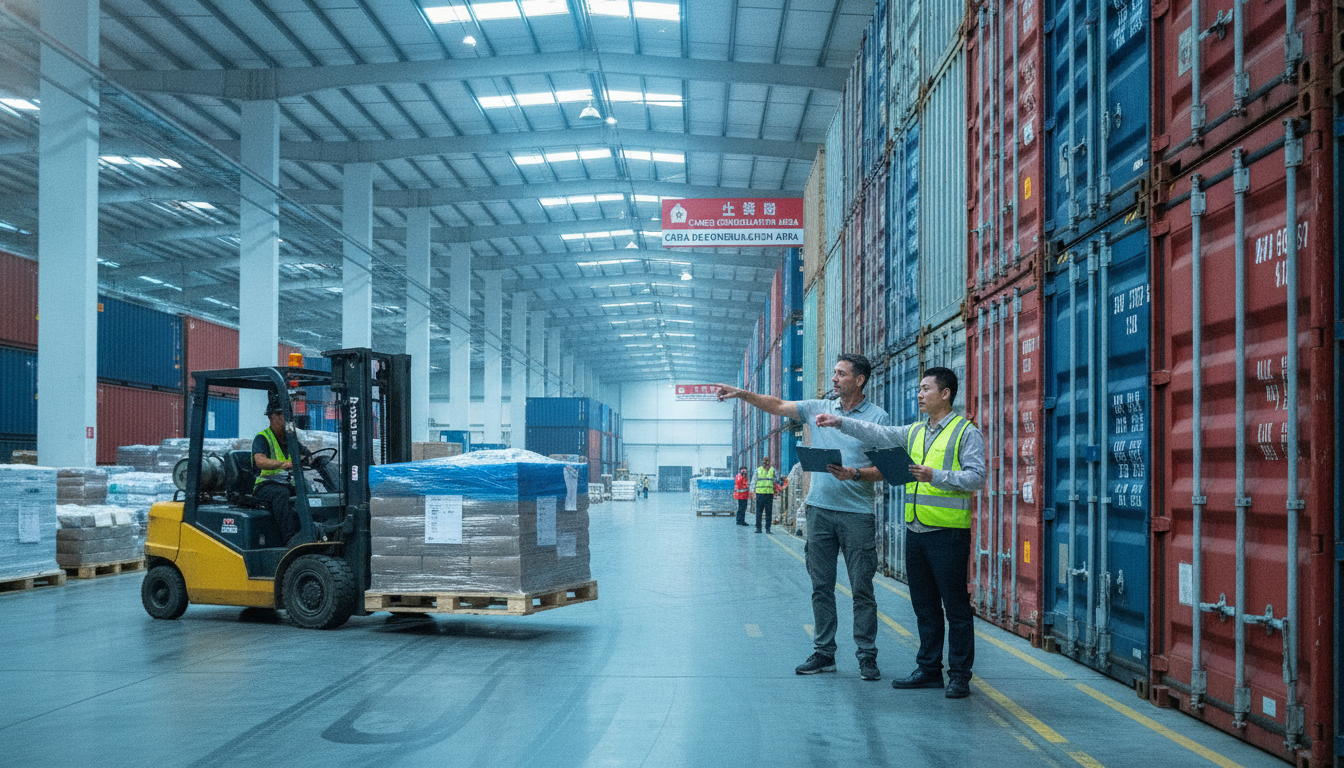
LCL (Less than Container Load) means your goods share a container with other importers’ shipments. A freight forwarder consolidates multiple small shipments at a CFS (container freight station) and later deconsolidates them at destination. FCL (Full Container Load) means you book an entire container, typically a 20GP (approx. 28 CBM capacity) or 40HQ, and your cargo travels sealed from factory to final warehouse without co-mingling.
In our 23+ years of China sourcing, we see importers default to LCL for volumes under 8-10 CBM and switch to FCL once they approach 15 CBM. The real decision, however, rests on three hard numbers: break-even volume, total transit days, and risk tolerance per SKU value.
Core Definitions and Capacities
An importer shipping 12 CBM of furniture from Foshan to Veracruz, Mexico, will almost always find LCL cheaper on the ocean leg. Yet the landed cost after customs clearance, terminal handling, and last-mile delivery might tip in favor of FCL if the shipment arrives faster and avoids warehouse detention fees.
Break-Even Volume: When Does FCL Become Cheaper?
The industry benchmark is 15 CBM for a 20GP container, according to Deliveree and UFI Shipping (2026). Below that, LCL rates per CBM drop as volume increases, but the total freight bill stays lower than an FCL spot rate. Once your cargo exceeds about 15 CBM, the per-unit cost of FCL becomes lower.
Cost Comparison by Volume (China to Latin America Example)
Typical cost: LCL ocean freight from China to Mexico ranges $110, $190 per CBM in 2026. Break-even rule: always request an FCL all-in quote once your cargo hits 14 CBM to compare.
Do not rely solely on ocean rate comparisons. Latin American ports like Buenaventura (Colombia) or San Antonio (Chile) often charge higher terminal handling fees for LCL because of CFS deconsolidation delays. Including these, the real break-even may come as low as 12 CBM for certain lanes.
Transit Time Comparison: LCL vs FCL Shipping
FCL is consistently faster because the container moves directly from port to port without waiting for consolidation. LCL must be gathered from multiple suppliers, transported to a CFS, consolidated into a container, and then deconsolidated at the destination port. Deliveree confirms this adds 2 to 5 days versus FCL transit on the same lane.
Door-to-Door Transit Days: China to Key Markets
For replenishment stock where a 5-day delay means lost sales, FCL provides predictability. LCL works when you can plan 45 days ahead and buffer inventory. Latin American customs adds another variable: Mexico’s ANAM frequently inspects consolidated shipments more thoroughly than FCL, adding 2-3 extra days.
Risk and Cargo Safety: Handling Touchpoints and Co-mingling
Every touchpoint is a damage opportunity. LCL cargo gets handled 5 to 8 times between origin CFS, port loading, transshipment hubs, destination CFS, and final delivery. FCL typically sees 3 to 4 touches. Deliveree reports that multiple handling touchpoints in LCL raise co-mingling risk, where your boxes get mixed with others, causing loss or customs delays.
Common LCL Risks and Mitigations
- Co-mingling: Cartons from different shippers packed together can be misidentified; use heat-shrink pallets and unique item-level barcodes.
- Humidity damage: Consolidated containers may sit longer in port yards; request desiccant bags and marine cargo insurance at 0.4-0.6% of invoice value.
- Customs holds: If one shipment in a shared container flags a customs alert, all cargo gets held; always vet suppliers through a supplier management audit to avoid misdeclaration.
- Physical damage: Multiple fork-lift movements raise crush risk; export-grade palletization and wooden crate packing reduce claims by over 70%.
Route-Specific Guidance: China to Latin America and Europe
Shipping lanes from China to Mexico, Colombia, Argentina, Chile, and Brazil each carry distinct cost structures, carrier availability, and customs friction. LCL may look attractive on a spreadsheet, but port infrastructure and local clearance rules often tip the decision.
Mexico
LCL shipments to Manzanillo or Lázaro Cárdenas need an RFC tax ID registered with SAT. Customs agent fees for LCL clearance are typically 18-25% higher than for FCL because of the additional manifest items. Use Incoterm DAP or DDP with a bonded warehouse to avoid customs storage charges at CFS.
Colombia
Colombia’s DIAN requires pre-arrival electronic manifests; LCL deconsolidation delays at Buenaventura can add 5-8 extra days during peak season. FCL with door delivery under CIF or DAP avoids CFS congestion.
Brazil
Brazil imposes high terminal handling charges and ICMS tax on freight. LCL freight invoices must separate ocean and inland charges for tax credit. Many Brazilian importers use FCL even at 12 CBM to avoid CFS demurrage that can reach $300 per day after 5 free days.
Chile and Argentina
San Antonio and Buenos Aires ports require fumigation certificates for wooden packaging. These are easier to coordinate for a single container than for LCL cargo mixed with others that may lack proper treatment.
Europe (Spain, France, Netherlands)
Rotterdam and Valencia are efficient but CE marking compliance is strict. For LCL shipments with multiple product categories, every SKU must carry the correct Declaration of Conformity. A missing CE file for one item can block the whole consolidated container. FCL offers more control to bundle all documentation before departure.
Landed Cost Calculation: Incoterms and Hidden Fees
The all-in landed cost goes beyond the ocean freight quote. Compare EXW, FOB, CIF, DAP, and DDP to see where consolidation fees hide.
LCL Hidden Fee Checklist
- CFS origin charge: $35, $65 per CBM for loading consolidation at China side.
- Documentation fee: $45, $85 per BL for LCL vs $25, $50 for FCL.
- Destination CFS deconsolidation: $50, $120 per CBM in Latin America.
- Handling and wharfage: LCL import handling often double that of FCL at congested ports.
Our Yiwu warehouse processes over $12 million in consolidated LCL cargo annually, and we routinely see importers save 22-28% by using warehouse consolidation to combine 3-5 supplier shipments into a single FCL, turning a 9 CBM LCL into a full 20GP with lower per-unit cost.
How a Sourcing Agent Reduces LCL/FCL Complexity
A trusted China sourcing agent with multilingual teams (English, Spanish, French) can handle supplier pickup, quality inspection, palletization, consolidation at origin, and booking with contracted forwarders that offer better LCL rates than spot market. This is especially valuable for Latin American buyers who need Spanish-language coordination for customs documentation and RFC registration in Mexico.
Agent-Managed LCL Workflow vs Self-Managed
The final decision on LCL vs FCL china exports explained through real landed cost often reveals that relying on an agent with freight and shipping expertise cuts total logistics spend by 18-34% on Latin American lanes, even before considering fewer customs delays.
Get a free CBM analysis and landed cost comparison for your next shipment
Request Your Quote →
What is the difference between LCL and FCL shipping?
LCL (Less than Container Load) consolidates your cargo with other shipments in a shared container; you pay per cubic meter. FCL (Full Container Load) books an exclusive container, typically a 20GP or 40HQ, with a flat rate regardless of how much space you use. LCL adds consolidation and deconsolidation steps, while FCL ships sealed door-to-door.
When should I choose LCL instead of FCL?
Pick LCL when your shipment volume is below 15 CBM, you need frequent small restocks, or you are testing a new product line. LCL also works when inventory holding costs are higher than the extra freight per CBM, such as for seasonal items with a narrow sales window.
Is LCL shipping cheaper than FCL from China?
LCL is cheaper for volumes under about 15 CBM. Early 2026 China to US West Coast rates ranged from $85 to $165 per CBM, while a 20GP FCL cost $2,200-$2,800. For 10 CBM, LCL totals around $1,300, well under FCL. Always request an FCL all-in quote once you hit 14 CBM to compare.
How long does LCL shipping from China take?
LCL from China to Latin America takes 28 to 42 days door-to-door, depending on the port. Consolidation and deconsolidation add 2 to 5 days versus FCL on the same lane. Mexico routes via Manzanillo average 30-38 days, Colombia 32-40 days, and Brazil 33-42 days.
What is the break-even volume for LCL vs FCL?
The break-even point is around 15 CBM, according to Deliveree and UFI Shipping. A 20-foot container holds about 28 CBM, so once your cargo exceeds half the container volume, FCL becomes more economical per unit. For congested Latin American ports, the real break-even can shift to 12 CBM after terminal fees.