

📋 Table of Contents
A landed cost calculator from China to Argentina is the missing tool that separates profitable importers from those losing 15-30% on hidden fees. Many first-time buyers see only the FOB price and forget freight, customs duties, IVA, and the wildcard of Argentina’s parallel exchange rate. In our 23+ years handling shipments from Yiwu and Foshan, we have watched importers overpay thousands of dollars simply because they did not model the full landed cost before ordering.
Executive Summary
- Total landed cost markup: 45% to 70% above FOB value for typical consumer goods shipped from China to Argentina, according to AFIP duty schedules and freight rate averages.
- Most underestimated cost: Importers understate IVA and customs brokerage by at least 25%, based on a 2025 China Council for the Promotion of International Trade (CCPIT) survey of Latin American buyers.
- FX risk impact: The gap between the official USD rate and the Argentine parallel rate can swing landed cost by 80-100%, per Banco Central de la República Argentina data as of early 2026.
- Documentation errors: AFIP imposes penalties of 2-5 times the applicable duty for HS code misclassification, making correct classification a direct cost driver.
- Verification necessity: 22% of importers from China report receiving goods that do not match the purchase order, per CCPIT trade facilitation report 2025.
What Is a Landed Cost Calculator China to Argentina?
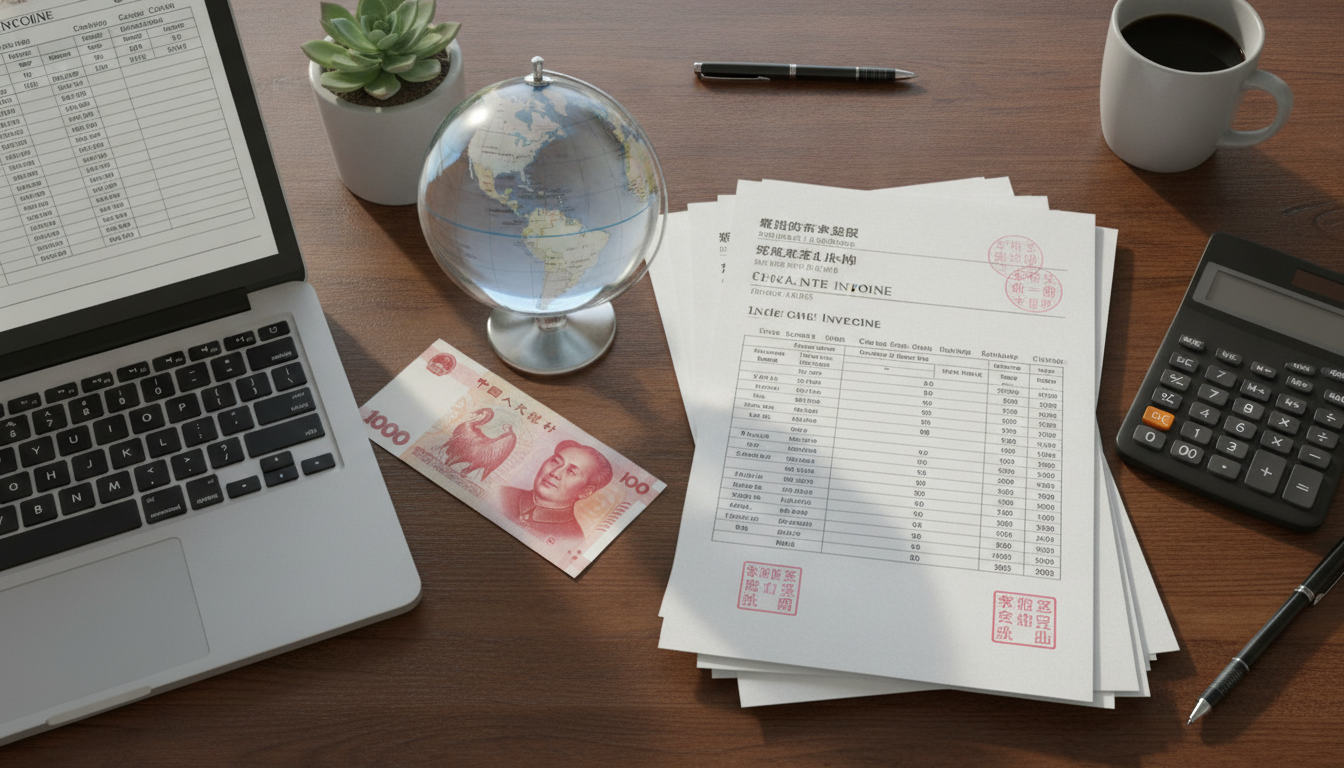
A landed cost calculator traces every expense from the factory floor in China to your warehouse door in Argentina. Instead of budgeting only the supplier’s invoice, the tool layers in ocean or air freight, insurance, customs duties, the 21% IVA, brokerage charges, port handling fees, storage, and even the exchange-rate spread you will pay at the moment of import. For a $5,000 FOB order of home goods shipped via sea, a proper calculator might show a final landed figure of $7,800, $8,500, a 56-70% jump that catches many buyers off guard.
The Incoterms Starting Point
Most Chinese suppliers quote FOB, which covers factory-to-port costs inside China. Every expense beyond that belongs to the buyer. A landed cost calculator moves the calculation from FOB to DDU (Delivered Duty Unpaid) or DDP (Delivered Duty Paid), depending on whether the Argentine importer or the foreign seller clears customs. Understanding Incoterms 2020 avoids double-counting freight or forgetting terminal charges.
Why a Generic Calculator Fails for Argentina
Argentina’s import environment is unique. A generic global calculator cannot handle the SIMI-forerunner SEDI declaration system, the AFIP reference pricing database, or the fact that IVA is calculated on CIF value plus duty, not just on FOB. Tools built for the EU or US market will produce a result that is off by 8-15 percentage points because they ignore the cascading tax structure.
Breakdown of Landed Cost Components
A precise landed cost calculation requires itemizing seven core line items. The table below shows typical ranges for a 20-foot container moving from Ningbo to Buenos Aires in mid-2026.
Full-Order Example: $10,000 FOB Shipment
Assume a mixed pallet of apparel and home textiles, HS heading 61.09, 20% duty. After adding freight, insurance, duty, statistical tax, IVA, and brokerage, the landed cost reaches approximately $16,200, a 62% uplift. If the importer uses the parallel FX market to source dollars, the effective peso cost jumps an additional 85% on top of the USD numbers.
Hidden Costs Argentine Importers Forget
- Storage and demurrage: Buenos Aires port congestion can add $40-80 per day after the free 5-day window.
- AFIP guarantee deposit: Some shipments require a 5-10% security deposit on CIF value until final clearance.
- Lab testing: IRAM or SENASA certifications for textiles, electronics, or food can cost $800-1,500 before goods are released.
Argentina Customs and Tax Complexities
Argentina’s import regime changed significantly in 2024 with the replacement of SIMI by SEDI, yet many underlying controls remain. The AFIP CITA (Capacidad Económica Financiera) check limits how much a company can import based on declared income, directly capping landed cost feasibility.
SEDI Declaration and CUIT Registration
Every importer must hold an active CUIT number and submit a SEDI declaration before goods load. The system cross-references CIF value against an internal AFIP reference price database. If the declared FOB price falls more than 10% below the reference, the importer faces a red channel review, additional guarantees, and potential penalty. Our sourcing team in Jinhua routinely documents factory invoices and payment proofs to keep valuations within AFIP bands.
Duty Rate and IVA Calculation Example
For a standard consumer product with 20% duty, 0.5% statistical tax, and 21% IVA:
Landed cost formula: CIF × (1 + 0.20 + 0.005) × 1.21 = CIF × 1.453. Every dollar of CIF becomes $1.45 at the customs gate. On top of that, the FX spread for dollar access adds another layer of cost in real pesos.
Practical Strategies to Reduce Landed Cost Risk
Argentine importers cannot control the AFIP, but they can control how they structure shipments, verify suppliers, and time payments. The difference between a profit and a loss often lies in these operational choices.
Supplier Verification Before the PO
22% of importers receive goods that deviate from the order, according to the CCPIT 2025 survey. A factory audit before payment confirms the supplier holds the claimed certifications and has real production capacity. This prevents a landed cost disaster where defective goods incur return freight and penalty taxes.
Quality Control at Two Checkpoints
A pre-shipment inspection catches 85% of visible defects before container loading. For Argentine buyers, where re-export for repair is unsupported by customs procedures, a single bad batch can destroy the entire landed cost equation. We recommend both an in-production inspection at 30% completion and a final container-loading check.
FX Structuring with Multiple Payment Windows
Using only the official exchange rate locks importers into the highest dollar cost. Most experienced Argentine buyers split payment: part through the official MULC for customs documentation, and the balance through financial instruments that access the MEP rate, closing the gap by 30-40 percentage points. This dramatically lowers the effective landed cost in peso terms.
A trusted China sourcing agent can help you structure supplier payments to align with the most favorable FX window, while ensuring the commercial invoice remains compliant with AFIP requirements. In our 23+ years managing cross-border transactions, we have seen the landed cost shrink by 12-18% purely through invoice timing and correct documentation.
Don’t rely on guesswork-our experts can walk you through a precise landed cost calculator from China to Argentina for your specific product.
Get Your Free Landed Cost Analysis →
Key Takeaways
- Argentina’s average import duty on Chinese consumer goods is 15.3%, according to the AFIP 2026 tariff schedule.
- IVA of 21% is applied on the sum of CIF value plus duty plus statistical tax, not on FOB alone.
- The Argentine peso lost 60% of its value against the USD between 2023 and 2025, as reported by the Banco Central de la República Argentina.
- 25% of importers underestimate customs brokerage and port fees by at least 25% on their first China shipment, per a CCPIT 2025 buyer survey.
- AFIP penalties for HS misclassification can reach 2-5 times the applicable duty, making correct tariff code selection a direct landed cost protection step.
- Structuring payment through MEP dollar channels reduces the peso landed cost by 30-40% compared to using the official FX rate only.
FAQ
What is included in landed cost from China?
Landed cost from China includes the supplier’s FOB price, international freight, insurance, customs duties, value-added tax (IVA), statistical tax, customs brokerage, port handling, and any storage or demurrage up to final delivery at the buyer’s warehouse.
How do you calculate landed cost for imports?
Add CIF value (FOB + freight + insurance) to applicable customs duties and statistical tax, then apply IVA. Finally, add flat fees for brokerage, port charges, and any additional certifications or laboratory testing required by the destination country.
What duties and taxes apply when importing from China to Argentina?
Argentina applies an import duty ranging from 10% to 35% depending on the HS code, a statistical tax of 0.5%, 3%, and a 21% IVA on the CIF value plus duty. Additional consumption taxes may apply for electronics or luxury goods.
What is the difference between FOB and landed cost?
FOB covers the goods, export packing, and delivery to the port in China. Landed cost adds all international freight, insurance, customs duties, taxes, and inland delivery fees. FOB is a partial price; landed cost represents the total outlay to receive goods at your door.
How can I estimate total import cost before shipping?
Request a detailed quotation from your freight forwarder for the precise freight and insurance. Use your product’s HS code to check the AFIP tariff schedule for duty and IVA rates. Add 10-15% contingency for port delays and FX fluctuation if importing into Argentina.