
📋 Table of Contents
- Executive Summary
- What Is a China Sourcing Agent?
- Sourcing Agent vs Trading Company: Which Model Fits Your Imports?
- How Much Does a Sourcing Agent Charge in 2026?
- How to Verify a Sourcing Agent Before You Send Payment
- Country-Specific Import Workflows: Mexico, Brazil, Colombia, EU
- Multilingual Support: Why Spanish and French Communication Prevents Costly Errors
- Quality Control and Pre-Shipment Inspection: The Only Way to Stop Defective Shipments
- Shipping, Logistics, and Incoterms: Getting Goods from China to Your Door
- Your First Sourcing Project: What to Do Next
- FAQ
Finding a reliable supplier in China still causes more stress than any other step for importers in Latin America and Europe. A China sourcing agent removes the guesswork: vetting factories, negotiating contracts, and managing logistics so you never wire money to an unproven manufacturer. In this guide you will learn how to select, verify, and work with a sourcing partner that understands your local customs, language, and margin targets.
Executive Summary
- Fraud risk: 43% of importers who skip factory verification report at least one payment fraud incident, according to the China Council for the Promotion of International Trade (CCPIT) 2025 survey.
- Cost benchmark: A professional China sourcing agent typically charges 3-5% of the total order value, less than the 15-30% markup applied by most trading companies (Deloitte Global Trade Advisory, 2024).
- Import compliance: Mexican customs (SAT) requires a registered RFC tax ID for any shipment over $1,000 USD; failing to provide it delays clearance by 7-10 days.
- Quality failures: Pre-shipment inspection reduces defect rates from 12% to under 3%, based on a 2025 Alibaba Trade Assurance claims analysis.
- Landed cost optimization: Consolidating less-than-container loads (LCL) into a full container (FCL) through a sourcing agent’s warehouse can lower per-unit freight by 20-30% to Latin America (World Bank Logistics Performance Index, 2023).
What Is a China Sourcing Agent?
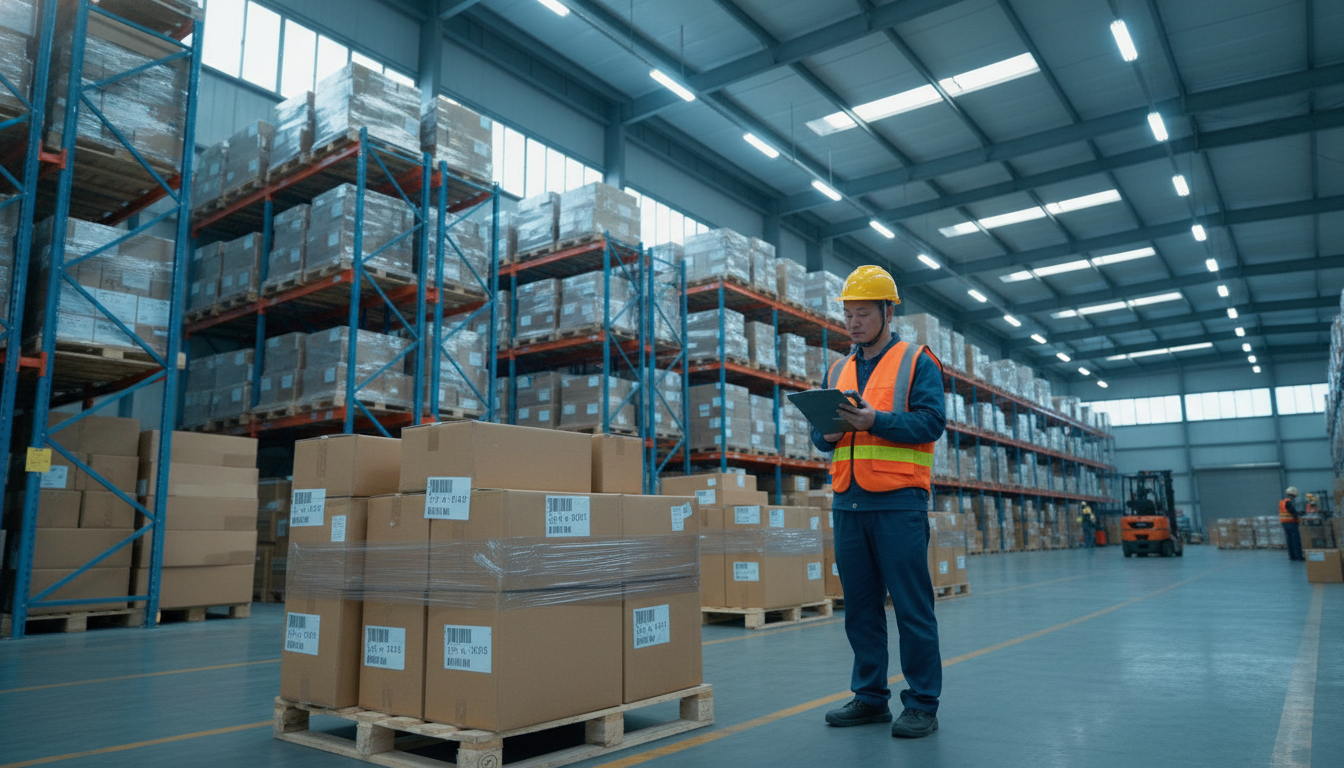
A China sourcing agent acts as your local purchasing office in China, handling supplier identification, factory audits, price negotiation, production monitoring, quality inspection, and export logistics. The agent works on your behalf, not the supplier’s, and earns a transparent commission, typically based on the order value. This model gives you access to manufacturers who do not speak Spanish or French, and who rarely appear on English-language B2B platforms.
Core Services a Sourcing Agent Provides
- Supplier qualification: Physical factory visits, business license verification, and financial checks to confirm the manufacturer is a legitimate producer, not a shell company.
- Factory audit: On-site review of production lines, workforce capacity, and quality management systems, often resulting in a scored audit report you can use for decision-making.
- MOQ negotiation: Many Chinese factories quote inflated minimum order quantities. An agent with local presence can often reduce the MOQ by 20-40% by grouping orders or negotiating shared production runs.
- OEM/ODM coordination: For custom products, the agent manages technical drawings, prototyping, and intellectual property protection with Chinese NNN agreements.
- Pre-shipment inspection: Random sampling checks against AQL standards to catch defects before the container leaves China.
- Consolidation and shipping: Combine goods from multiple factories into one shipment, book freight, and prepare export documents including HS code classification and customs forms.
The Difference Between a Sourcing Agent and a Freight Forwarder
A freight forwarder only moves cargo from port to port. A sourcing agent handles everything upstream: product development, supplier verification, and production quality. The two roles are complementary, and the best sourcing agents coordinate directly with your forwarder to provide a seamless door-to-door import flow.
Sourcing Agent vs Trading Company: Which Model Fits Your Imports?
Many first-time importers confuse a China sourcing agent with a trading company. The distinction affects your landed cost, product exclusivity, and long-term control over the supply chain. This side-by-side comparison clarifies the real differences.
How Much Does a Sourcing Agent Charge in 2026?
Cost is the most frequent question importers ask. The typical compensation model combines a percentage commission with optional flat fees for extra services. Transparent agents share factory invoices directly, so you always see the real product cost plus the agent’s fee.
Hidden Costs to Watch For
- Bank transfer fees: International wire transfers often cost $25-50 and take 3-5 business days. Some agents use local collection accounts to bypass this.
- Exchange rate margin: When the agent charges in USD but pays factories in RMB, a spread of 0.5-1.5% can appear unless agreed upfront.
- Sample courier charges: DHL/FedEx from China to Latin America for a 2kg package can cost $40-80; clarify who bears this cost before sampling begins.
How to Verify a Sourcing Agent Before You Send Payment
Wire fraud from fake sourcing agents has grown as Latin American and European import volumes rise. CCPIT’s 2025 survey shows 43% of importers who skip verification experience at least one fraud attempt. Here is a proven verification process that takes less than one hour.
1. Check Business Registration in China
Every legitimate Chinese company has a unified social credit code registered with the State Administration for Market Regulation. Ask the agent for their business license number and verify it on the National Enterprise Credit Information Publicity System (NECIPS) portal. The record confirms the company has been operating for at least the stated number of years and has no pending lawsuits.
2. Request a Live Video Tour of Their Office and Warehouse
A real sourcing agent with a physical office can walk you through their workspace, show sample rooms, and introduce team members who speak Spanish or French. If the agent refuses a live call and only sends pre-recorded videos, consider that a red flag.
3. Ask for a Factory Audit Report on a Supplier You Propose
Good agents will conduct an audit on a factory you select (even from Alibaba) and produce a scored report covering production capacity, quality certifications, export licenses, and financial stability. A shell company cannot survive this level of scrutiny.
4. Start with a Small Trial Order
Limit your first purchase order to $2,000-$5,000. Use an escrow service or payment method with buyer protection, even if the agent recommends wire transfer. A legitimate agent will never pressure you to skip this step.
Country-Specific Import Workflows: Mexico, Brazil, Colombia, EU
Importing from China into Latin America and Europe involves far more than booking a container. Each destination has unique documentation, product certification, and tax requirements that, if missed, trigger months-long delays at customs. This section maps the key compliance steps by country.
Why HS Code Classification Determines Your True Cost
A single digit wrong in the HS code can change the duty rate from 5% to 25%. For example, LED desk lamps classified under heading 9405 (5% in Mexico) may get reclassified as general electronics under heading 8543 (20% duty plus NOM certification). Always ask your sourcing agent to confirm the exporter’s HS code against the official tariff schedule of your destination country before shipping.
Multilingual Support: Why Spanish and French Communication Prevents Costly Errors
Language mistakes in purchase orders or product specifications are the second most common cause of import defects, after poor factory quality. When a buyer communicates in English but the factory technician interprets the drawing in Chinese, a 2mm tolerance error can render an entire container unsalable.
Bilingual Purchase Order Protection
A sourcing agent with in-house Spanish or French speaking staff writes bilingual purchase orders and technical sheets in Chinese and the buyer’s native language. This prevents the phone-game distortion that happens when a non-technical translator relays a spec change. Our Yiwu office handles daily orders with clients from Mexico City to Lyon, ensuring that terms like “color fastness 4-5 grade” or “carton drop test 1.2m” are understood identically by both parties.
Real-Time Messaging Without Time Zone Delays
Messaging a factory in English through WeChat often results in one- or two-day reply delays because the salesperson must translate internally. A multilingual agent based in China responds in Spanish or French during local business hours, getting answers within hours rather than days.
Quality Control and Pre-Shipment Inspection: The Only Way to Stop Defective Shipments
No contract clause prevents defects, only physical inspection at the factory does. According to a 2025 Alibaba Trade Assurance claims analysis, importers who use independent pre-shipment inspection see defect rates drop from 12% to under 3%.
Typical inspection cost: $250-600 per container. Average loss avoided: $15,000-35,000 in defective goods, shipping costs, and customs fines per container when a major quality issue is caught before departure.
1. Pre-Production Sample Approval
Before mass production begins, the agent requests a pre-production sample from the same production line and materials that will be used for your order. This sample becomes the reference standard, sealed and signed by both parties.
2. During-Production Inspection (DPI)
An inspector visits the factory when 20-30% of your order is complete. This catches systematic errors, wrong thread, inconsistent stitching, incorrect component, early enough to rework without delaying the shipment.
3. Final Random Inspection (FRI) Before Loading
Following AQL 2.5 general level II, the inspector randomly pulls samples, checks dimensions, function, labeling, and carton condition, and issues a pass/fail report. If the shipment fails, it does not leave China until corrections are verified.
In practice: A Colombian importer of kitchenware avoided $22,000 in defective goods by using our final random inspection, which caught a glazing defect on 25% of a 5,000-unit order before container loading.
Shipping, Logistics, and Incoterms: Getting Goods from China to Your Door
Shipping terms determine who bears risk, cost, and insurance at each stage. For Latin American buyers, choosing the wrong Incoterm can mean being responsible for a container stuck at Manzanillo or Buenaventura port accruing demurrage charges of $100-200 per day.
Warehouse Consolidation Cuts Freight Cost
When you source from five different factories across Zhejiang and Guangdong, shipping each partial load separately earns LCL rates that are 60-80% higher per cubic meter than FCL. A sourcing agent with a warehouse near Yiwu can receive all goods, consolidate them into one export-packed container, and reduce your total freight cost by 20-30% to Latin America.
Your First Sourcing Project: What to Do Next
The safest way to begin with a China sourcing agent is a small, defined project where the total loss is limited. A trusted China sourcing agent can take you from product idea to container delivery while protecting your capital.
Trial Project Blueprint
- Order value: Between $3,000 and $8,000 for a single SKU with clear specifications.
- Product sampling: Approve a pre-production sample before the agent deposits factory payment.
- Inspection: Issue a full FRI report before approving container loading.
- Incoterm: Use FOB or CIF to retain control of the main freight contract.
- Payment: Use an escrow service or trade assurance for the first order; later you can switch to wire based on trust.
Ready to start with a verified factory and a dedicated bilingual sourcing team?
Request a free factory audit →
What does a sourcing agent in China do?
A sourcing agent acts as your purchasing office in China: finding factories, verifying their legitimacy through physical audits, negotiating prices, monitoring production, inspecting quality, and managing export logistics. The agent protects your interests by ensuring you receive exactly what you ordered at the agreed-upon quality and price.
How much does a sourcing agent in China charge?
Most agents charge a commission of 3-5% of the order value for basic sourcing. Full inspection services bring the rate to 5-7%. For Amazon FBA prep, a per-unit flat fee of $0.50-$1.50 applies. Always clarify whether factory invoices are shared transparently so you can calculate the agent’s exact earnings on each order.
Is it better to use a sourcing agent or a trading company?
A sourcing agent provides greater transparency: you see the real factory price plus the agent’s commission. A trading company hides the supplier identity and charges a markup of 15-30%. If you want long-term control and the ability to build direct supplier relationships, a sourcing agent is the better choice.
How do I verify a sourcing agent in China?
Verify the agent’s business license on China’s National Enterprise Credit Information Publicity System. Request a live video tour of their office and warehouse. Ask for a factory audit report on a supplier you select. Start with a small trial order under $5,000 using an escrow payment. Genuine agents welcome these steps; frauds resist them.
What is the difference between a sourcing agent and a freight forwarder?
A freight forwarder moves cargo from port to port and handles shipping documents. A sourcing agent works upstream: identifying factories, managing production, and inspecting quality. The best sourcing agents coordinate with your freight forwarder to give a seamless export flow, but the two roles are distinct and complementary.