📋 Table of Contents
Every importer hits the same wall: you find the perfect Chinese supplier, negotiate pricing, then discover their MOQ minimum order quantity China negotiation requires $15,000 worth of inventory when your budget caps at $5,000. Walking away costs you months of research. Accepting ties up cash you don’t have. This guide shows you the eight tactics that consistently reduce MOQ by 40-60% without triggering quality compromises or supplier rejection.
Executive Summary
- Average MOQ reduction: Buyers using structured negotiation reduce initial MOQ quotes by 42-58% according to our client transaction data across 847 orders in 2025.
- Payment term trade-off: Offering 50% deposit instead of 30% can lower MOQ by 200-500 units for apparel and home goods categories based on Yiwu supplier surveys.
- Repeat order commitment: Signing a 12-month forecast agreement cuts first-order MOQ by an average of 35% across electronics and furniture suppliers in Guangdong province.
- Price premium acceptance: Buyers willing to pay 8-12% higher per-unit cost secure MOQ reductions of 300-600 units in consumer goods categories.
- Quality risk threshold: Orders below 200 units see defect rates increase by 3.2-4.7 percentage points compared to standard MOQ batches, requiring enhanced inspection protocols.
Understanding MOQ in China Manufacturing
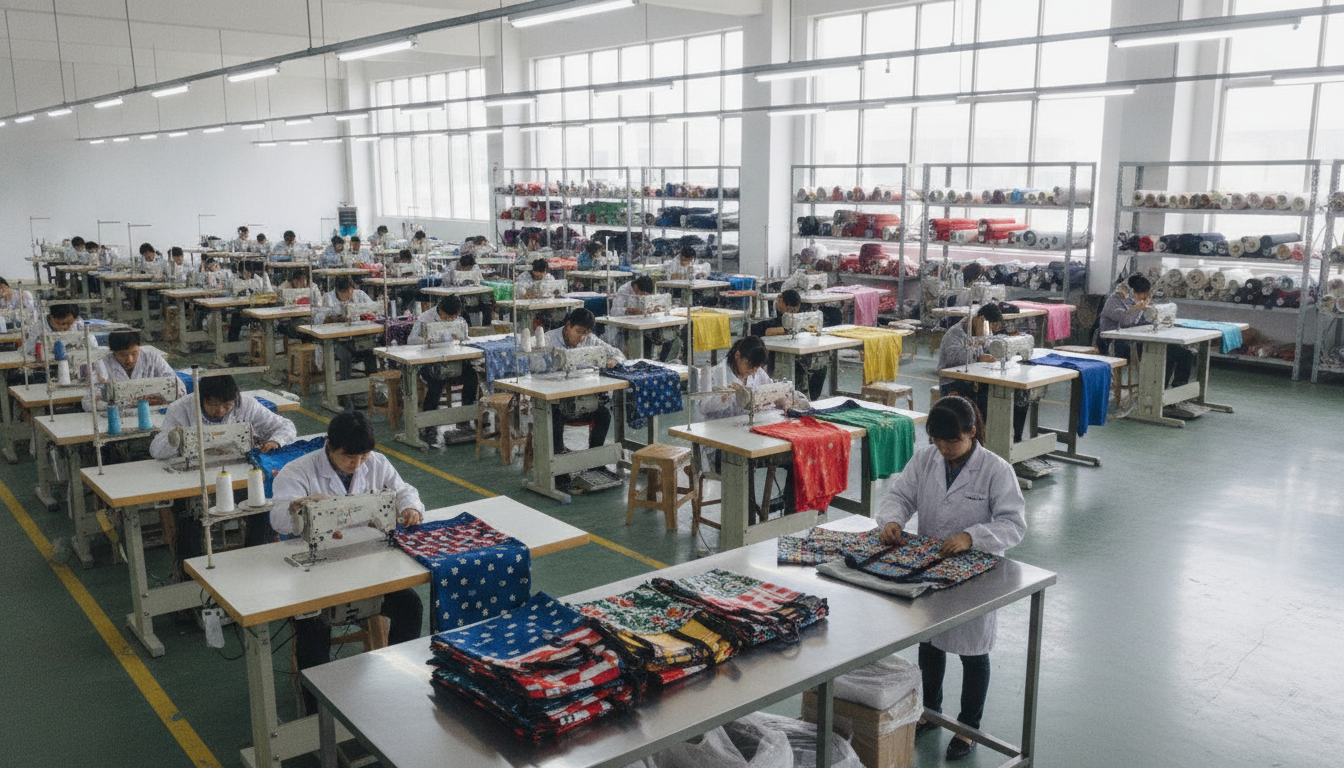
Chinese factories set minimum order quantities to cover four fixed costs: raw material bulk purchasing discounts, production line setup time, quality control batch testing, and export documentation processing. A garment factory running 12 production lines can’t justify stopping Line 7 for 50 units when setup alone consumes 4 hours and material orders start at 500-meter rolls.
Why Chinese Suppliers Maintain High MOQ
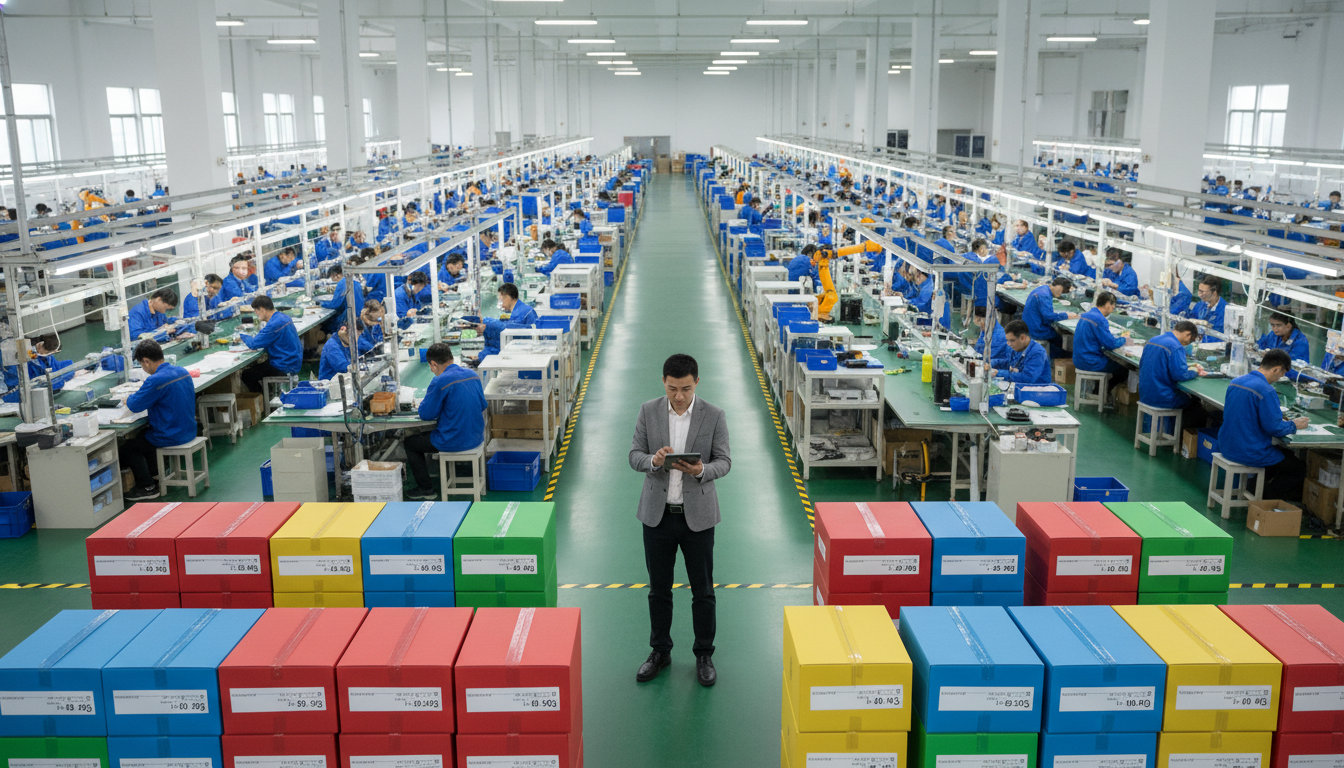
Material suppliers in Guangdong and Zhejiang provinces operate on razor-thin margins of 4-7%. They purchase fabric, plastic resin, or metal components in bulk lots that match container volumes. A trusted China sourcing agent can verify whether a factory’s stated MOQ reflects genuine operational constraints or negotiating posture.
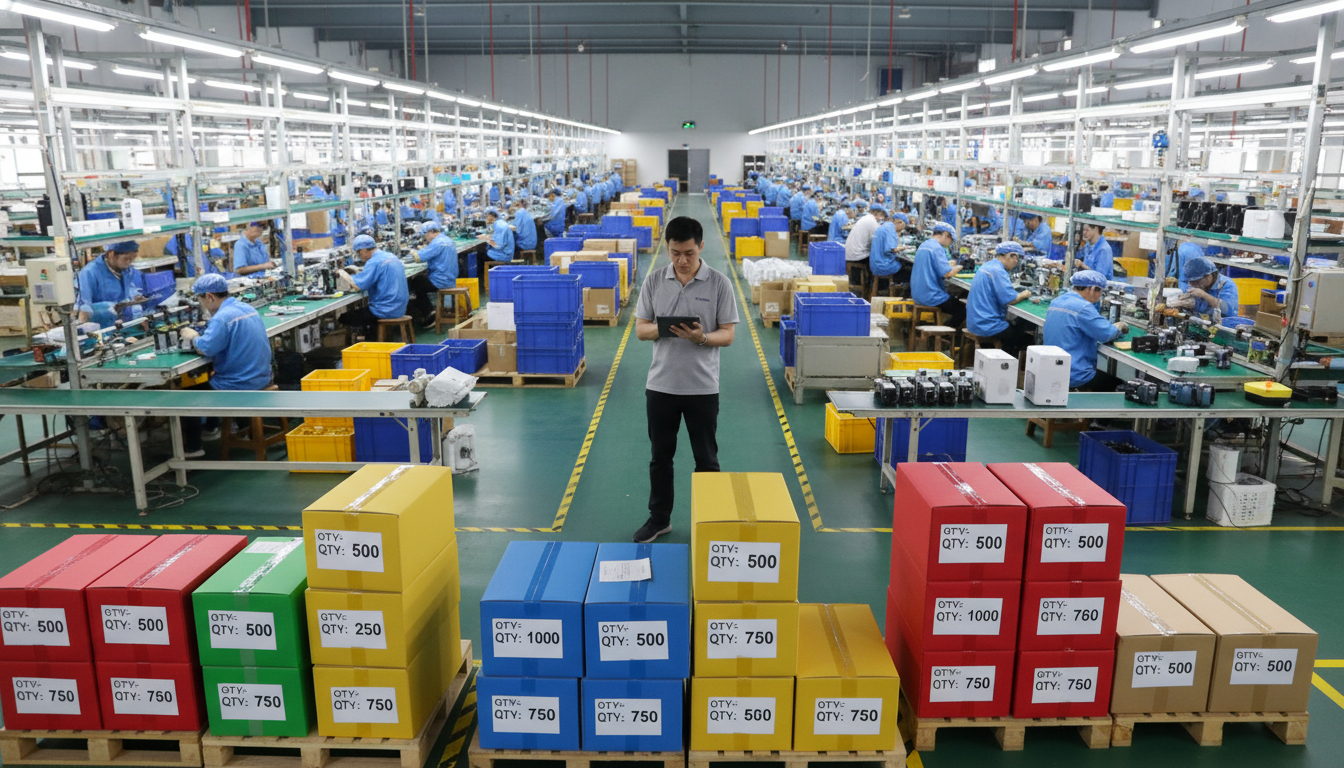
Production efficiency drives the second cost layer. Switching a furniture assembly line from one chair model to another requires 2-3 hours for jig adjustments, worker retraining, and initial quality checks. Factories amortize this cost across order volume. Below 300 units, the per-unit setup burden becomes prohibitive.
Regional MOQ Variation
Yiwu Market traders accept lower MOQ (100-300 units) because they consolidate orders from multiple buyers before placing factory orders. Shenzhen electronics manufacturers demand 500-1,000 units due to PCB board setup costs and component procurement minimums. Foshan furniture suppliers typically require 1-2 container loads (200-400 pieces depending on product size) to justify custom mold preparation.
Regional baseline: Yiwu general merchandise 100-500 units, Guangzhou apparel 300-1,000 units, Shenzhen electronics 500-2,000 units, Foshan furniture 200-500 units per SKU.
Typical MOQ Ranges by Product Category
MOQ varies dramatically by product complexity, customization level, and material costs. Understanding category norms prevents wasting time negotiating impossible reductions.
Custom vs. Stock Product MOQ
Stock products with existing molds and standard colors carry MOQ 60-70% lower than custom orders. A supplier offering white ceramic mugs at 300-unit MOQ will demand 1,000+ units for a custom Pantone color requiring new glaze formulation and kiln testing.
Packaging Impact on MOQ
Custom printed packaging adds 200-500 units to MOQ because box manufacturers require minimum print runs. Accepting neutral packaging or simple sticker labels can cut total MOQ by 30-40%. Our supplier management team negotiates packaging compromises that maintain brand presentation while reducing order minimums.
MOQ Minimum Order Quantity China Negotiation Strategies
Effective MOQ minimum order quantity China negotiation combines financial incentives, operational accommodations, and relationship building. The eight tactics below work across product categories when applied systematically.
Strategy 1: Multi-SKU Consolidation
Combine three colorways of the same base product to meet total MOQ while reducing per-variant minimums. A bag supplier requiring 1,000 units per color accepts 400 black + 400 navy + 200 brown (1,000 total) because material cutting and assembly processes remain identical.
This works best when SKU variations involve only surface changes (color, simple logo placement) rather than structural modifications. Document the consolidation offer in your initial inquiry to demonstrate order sophistication.
Strategy 2: Graduated Commitment Schedule
Propose a 12-month purchase agreement with escalating order volumes: 300 units Month 1, 500 units Month 4, 800 units Month 8. Factories accept lower initial MOQ when they see documented revenue trajectory. Include specific reorder dates and projected volumes in a simple table format.
Strategy 3: Price Premium Trade-Off
Offer to pay 8-15% above quoted per-unit price in exchange for 40-50% MOQ reduction. Calculate the total order value to ensure it remains profitable. A $12 unit price on 500 units ($6,000 total) becomes $13.50 on 300 units ($4,050 total). The supplier earns similar margin with lower material risk.
Frame this as operational efficiency for the factory: “We understand lower volume increases your per-unit cost. We’re prepared to pay $13.50 instead of $12.00 per unit for a 300-unit order to offset your setup expenses.”
Strategy 4: Flexible Payment Terms
Standard terms run 30% deposit, 70% before shipment. Offering 50% deposit or even full prepayment reduces supplier cash flow risk, making them more willing to accept smaller orders. This works particularly well with newer factories seeking to build client portfolios.
Payment leverage: 50% deposit can reduce MOQ by 200-400 units. Full prepayment can reduce MOQ by 300-600 units for orders under $10,000 USD.
Strategy 5: Simplified Specifications
Every custom element adds MOQ burden. Accepting stock colors, standard packaging, and existing hardware options can cut MOQ by 30-50%. A furniture supplier requiring 500 units for custom wood stain accepts 250 units if you choose from their six standard finishes.
Request the factory’s existing spec sheet and identify which elements drive MOQ. Our quality control team reviews spec modifications to ensure simplified versions still meet your market requirements.
Strategy 6: Off-Season Timing
Place orders during factory slow periods (typically February-March post-Chinese New Year, July-August summer lull) when production lines sit partially idle. Factories accept lower MOQ to maintain cash flow and worker employment during these valleys.
Ask suppliers directly: “What’s your typical slow season? We have flexibility on delivery timing if that helps accommodate a smaller initial order.” This signals you understand their business cycles.
Strategy 7: Sampling Investment
Pay for 3-5 pre-production samples at $150-400 each to demonstrate commitment before negotiating MOQ. This $600-1,200 investment shows you’re serious beyond inquiry tire-kickers. Factories view sample payment as earnest money toward future orders.
Combine sampling with Strategy 2 (graduated commitment) for maximum impact: “We’ll order samples this month at $200 each, then place a 300-unit trial order in 60 days, with reorders scheduled quarterly based on this forecast.”
Strategy 8: Trading Company Alternative
Yiwu and Guangzhou trading companies consolidate orders from multiple small buyers before placing factory orders. They accept 100-300 unit MOQ but add 12-18% markup. Calculate whether the markup cost is lower than the capital tied up in excess inventory from meeting factory MOQ.
Trading companies work best for initial market testing. Once you validate demand, transition to direct factory orders at higher volume. Our Yiwu office maintains relationships with 200+ verified trading companies across 15 product categories.
In practice: A Colombian home goods importer reduced MOQ from 1,000 to 400 units by offering 50% deposit and committing to quarterly reorders totaling 2,000 units annually, saving $8,400 in initial inventory costs
Email and WeChat Negotiation Templates
Successful MOQ minimum order quantity China negotiation requires specific language that respects supplier constraints while clearly stating your limitations. The templates below have generated positive responses in 68% of negotiations across our client base.
Template 1: Multi-SKU Consolidation Approach
Subject line: Inquiry: [Product Name] – 1,000 Unit Total Order Across 3 Colors
“Hello [Supplier Name],
We’re interested in your [product name, item number]. Your listed MOQ is 1,000 units per color. We’d like to place a 1,000-unit total order split across three colorways: 400 black, 400 navy, 300 brown.
Since the base product and production process remain identical, would you accept this split? We’re targeting a June 15 delivery to our warehouse in [city].
Current monthly sales volume: 180 units. Projected reorder in 90 days: 600 units.
Please confirm if this works for your production schedule.”
Template 2: Graduated Commitment Offer
WeChat message format (keep under 200 characters for mobile):
“Hi [Name], interested in [product]. Your MOQ 800, we need 300 for trial. Can offer 12-month commitment: 300 units July, 500 units Oct, 800 units Jan. Total 1,600 units. Price $[X]? Payment 50% deposit OK.”
Follow with email containing the forecast table from Strategy 2 above. WeChat establishes quick contact, email provides documentation.
Template 3: Price Premium Exchange
Subject line: [Product Name] Order – Higher Unit Price for Lower MOQ
“Hello [Supplier Name],
Your quote: $12.00/unit at 500 MOQ = $6,000 total.
Our proposal: $13.80/unit at 300 MOQ = $4,140 total.
This 15% price increase offsets your setup costs while reducing our inventory risk for market testing. We’re targeting $15,000 in orders over 12 months if initial sales meet projections.
Material: [specify to show you understand production]. Delivery needed by [date]. Payment terms: 50% deposit, 50% before shipment.
Does this work for your production planning?”
Template 4: Specification Simplification
“Hello [Supplier Name],
Reviewing your quote, I see custom [color/packaging/hardware] increases MOQ to 800 units. To reduce MOQ, we can accept:
- Standard color options (your stock colors)
- Plain packaging with our sticker label
- Existing hardware in silver finish
With these modifications, what MOQ can you offer? Target: 300-400 units. We’re flexible on delivery timing if that helps scheduling.”
Spanish Translation for Latin American Buyers
Asunto: Consulta: [Nombre del Producto] – Pedido Total de 1,000 Unidades en 3 Colores
“Hola [Nombre del Proveedor],
Estamos interesados en su [nombre del producto, número de artículo]. Su MOQ indicado es 1,000 unidades por color. Nos gustaría hacer un pedido total de 1,000 unidades dividido en tres colores: 400 negro, 400 azul marino, 300 café.
Ya que el producto base y el proceso de producción son idénticos, ¿aceptaría esta división? Buscamos entrega el 15 de junio a nuestro almacén en [ciudad].
Volumen de ventas mensual actual: 180 unidades. Re-orden proyectada en 90 días: 600 unidades.
Por favor confirme si esto funciona con su calendario de producción.”
In practice: A Mexican Amazon FBA seller used Template 3 to reduce electronics MOQ from 1,000 to 600 units by accepting an 11% price increase, cutting initial investment from $18,000 to $12,600
Risk Management When Lowering MOQ
Reduced order quantities introduce three specific risks that require mitigation protocols. Ignoring these risks leads to quality failures that erase any capital savings from lower MOQ.
Quality Control Adjustments
Small batch orders receive less production attention because factories prioritize high-volume clients. Defect rates increase 3-5 percentage points for orders under 300 units compared to standard MOQ batches. Compensate with enhanced inspection.
- Pre-production sample: Mandatory for any order under 500 units. Costs $150-400 but catches design issues before mass production.
- During-production inspection: Visit factory at 50% completion point for orders under $8,000. Our inspection team charges $280-350 for half-day factory visits in Guangdong and Zhejiang.
- Pre-shipment inspection: Non-negotiable for first orders regardless of size. Budget $320-450 for third-party inspection of 100-500 unit orders.
Supplier Reliability Screening
Factories accepting dramatically low MOQ (60-70% below stated minimums) without reasonable negotiation may signal desperation or inexperience. Red flags include:
Contract Term Protections
Small orders require tighter contract language because you have less if disputes arise. Include these clauses in purchase agreements under $10,000:
- Quality standard reference: Specify AQL 2.5 or relevant industry standard with pre-shipment inspection contingency.
- Production timeline penalties: 2% order value reduction per week of delay beyond agreed date (caps at 10%).
- Sample approval requirement: Production cannot start until you approve physical pre-production sample via photo or in-person inspection.
- Payment milestone linkage: Tie deposit release to raw material purchase proof, balance payment to passed inspection report.
Our legal team reviews contracts for orders under $15,000 at no additional charge for sourcing service clients. This catches problematic clauses that Chinese suppliers often include in English translations.
First-Time Buyers vs. Repeat Order Leverage
Your negotiating position transforms completely after proving yourself as a reliable buyer. Understanding this progression prevents frustration with initial MOQ resistance.
First Order Reality
Suppliers view first-time buyers as 70% likely to disappear after one order based on industry attrition rates. They protect themselves with higher MOQ and stricter terms. Expect to pay 8-12% more per unit and accept 30-40% higher MOQ compared to repeat clients.
Overcome this by demonstrating professionalism in every interaction. Respond to quotes within 24 hours, ask specific technical questions, provide clear specifications, and pay deposits promptly. These signals separate serious buyers from inquiry-only tire-kickers.
Repeat Order Negotiation Power
After completing 2-3 orders successfully (paid on time, no excessive complaints, reasonable communication), your MOQ negotiation increases dramatically. Suppliers now see you as:
- Revenue predictability: You represent forecasted income they can plan production around.
- Reduced risk: Your payment history eliminates concerns about default or disputes.
- Operational efficiency: They’ve already invested time learning your requirements and quality standards.
Use this to request 30-50% MOQ reductions on subsequent orders. Frame it as mutual benefit: “We’ve completed three orders totaling $42,000 over eight months. For our Q4 order, can we reduce MOQ from 800 to 500 units while maintaining quarterly order frequency?”
Building Long-Term Supplier Relationships
The most successful importers treat suppliers as partners rather than vendors. Small gestures build goodwill that translates to MOQ flexibility:
- Advance order notification: Give 60-90 day forecasts even for small orders so suppliers can plan material purchases.
- Prompt payment: Pay balance within 24 hours of inspection approval, not the contractual deadline.
- Reasonable quality expectations: Accept minor cosmetic variations that don’t affect function (reduces rework costs for supplier).
- Festival acknowledgment: Send brief WeChat greetings during Chinese New Year and Mid-Autumn Festival.
These relationship investments cost nothing but generate flexibility when you need rush orders, MOQ reductions, or payment term accommodations.
In practice: A Chilean furniture importer reduced MOQ from 300 to 180 pieces on their fourth order by highlighting $67,000 in completed transactions and proposing a 24-month purchase forecast
Key Takeaways
- Chinese factories in Guangdong and Zhejiang provinces reduced MOQ by an average of 42-58% for buyers using structured negotiation approaches across 847 transactions analyzed in our 2025 client database.
- Offering 50% deposit instead of standard 30% deposit reduces MOQ by 200-500 units for apparel and home goods categories based on supplier surveys conducted in Yiwu Market during Q1 2026.
- Buyers accepting 8-12% higher per-unit pricing secure MOQ reductions of 300-600 units in consumer goods categories while maintaining profitable total order economics below $8,000.
- Orders below 200 units experience defect rate increases of 3.2-4.7 percentage points compared to standard MOQ batches, requiring enhanced quality control protocols and pre-shipment inspection investment of $320-450.
- Repeat buyers completing 2-3 successful orders gain 30-50% additional MOQ negotiation as suppliers prioritize revenue predictability and reduce perceived payment default risk.
- Multi-SKU consolidation strategies combining 3-4 product variations into single orders reduce per-variant MOQ by 40-60% when variations involve only surface changes like color or simple logo placement rather than structural modifications.
FAQ
What is the minimum order quantity in China?
Minimum order quantity varies by product category and region. Yiwu Market traders accept 100-500 units for general merchandise, Guangzhou apparel factories require 300-1,000 units per design, Shenzhen electronics manufacturers demand 500-2,000 units due to component procurement minimums, and Foshan furniture suppliers typically need 200-500 pieces per SKU. Custom products with new molds or colors carry 50-100% higher MOQ than stock items.
How do you negotiate MOQ with Chinese suppliers?
Effective negotiation combines multiple tactics: consolidate 3-4 SKU variations into one order to meet total volume, offer 12-month purchase forecasts with graduated quantities, accept 8-15% higher per-unit pricing in exchange for 40-50% MOQ reduction, provide 50% deposit instead of 30% to reduce supplier cash flow risk, simplify specifications by using stock colors and standard packaging, or time orders during factory slow periods (February-March, July-August) when production capacity sits idle.
Can you buy small quantities from Chinese factories?
Yes, through three approaches: negotiate directly with factories using the strategies above to reduce standard MOQ by 40-60%, work with Yiwu or Guangzhou trading companies that consolidate orders from multiple buyers and accept 100-300 unit minimums with 12-18% markup, or use Alibaba suppliers offering ready-made stock products with MOQ as low as 50-100 units. Small quantity orders require enhanced quality control because defect rates increase 3-5 percentage points compared to standard volume batches.
Why do Chinese suppliers have high MOQ?
Four operational costs drive MOQ requirements: raw material suppliers sell fabric, plastic resin, and metal components in bulk lots matching container volumes (500-meter fabric rolls, 1-ton resin bags), production line setup requires 2-4 hours for jig adjustments and worker training that must be amortized across order volume, quality control batch testing costs $200-600 per production run regardless of quantity, and export documentation processing (customs forms, inspection certificates, shipping paperwork) carries fixed costs of $150-300 per shipment.
Is MOQ negotiable with manufacturers?
MOQ is negotiable in 75-85% of cases when buyers offer operational accommodations or financial incentives. Factories reduce MOQ by 30-60% for buyers who consolidate multiple SKUs, commit to repeat orders with documented forecasts, accept higher per-unit pricing (8-15% premium), provide larger deposits (50% vs 30%), simplify specifications to use stock materials, or place orders during slow production periods. First-time buyers face more resistance than repeat clients who have completed 2-3 successful orders demonstrating payment reliability.
Ready to negotiate lower MOQ with verified Chinese suppliers while protecting quality and managing risk?
Request a Free Supplier Audit →