Import Bluetooth Speakers China to Mexico Customs [2026 Guide]
![Import Bluetooth Speakers China to Mexico Customs [2026 Guide]](https://goodcantrading.com/wp-content/uploads/2026/07/featured-import-bluetooth-speakers-china-to-mexico-customs.png)
📋 Table of Contents
Mexican importers ordering Bluetooth speakers from China face three critical bottlenecks: NOM-019-SCFI certification requirements, customs classification errors under HS Code 8518.21, and RFC tax ID registration delays. When you import Bluetooth speakers China to Mexico customs, a single missing document can trigger a 30-day hold at Veracruz or Manzanillo port, costing $45-$80 per day in demurrage fees. the exact compliance steps, certification timelines, and supplier verification protocols to clear Mexican customs without delays or penalties.
Executive Summary
- NOM-019-SCFI certification: Mandatory for all Bluetooth speakers entering Mexico; processing takes 45-60 days and costs $1,200-$2,800 per product model according to Alibaba Electronics Buying Guides (2026).
- HS Code 8518.21: Correct classification for portable Bluetooth speakers; misclassification as 8518.29 triggers 15-20% duty penalties and customs audits.
- RFC tax ID requirement: Mexican customs (SAT) blocks all shipments over $1,000 USD without a registered RFC number; registration takes 7-10 business days for foreign entities.
- De minimis trap: Aggregating multiple orders within 30 days exceeds the $800 exemption threshold, triggering full duty payment and NOM compliance retroactively.
- Voltage specification: 110-130V AC input or USB-C-only units required; 220V-only speakers face rejection or costly voltage converter mandates at customs.
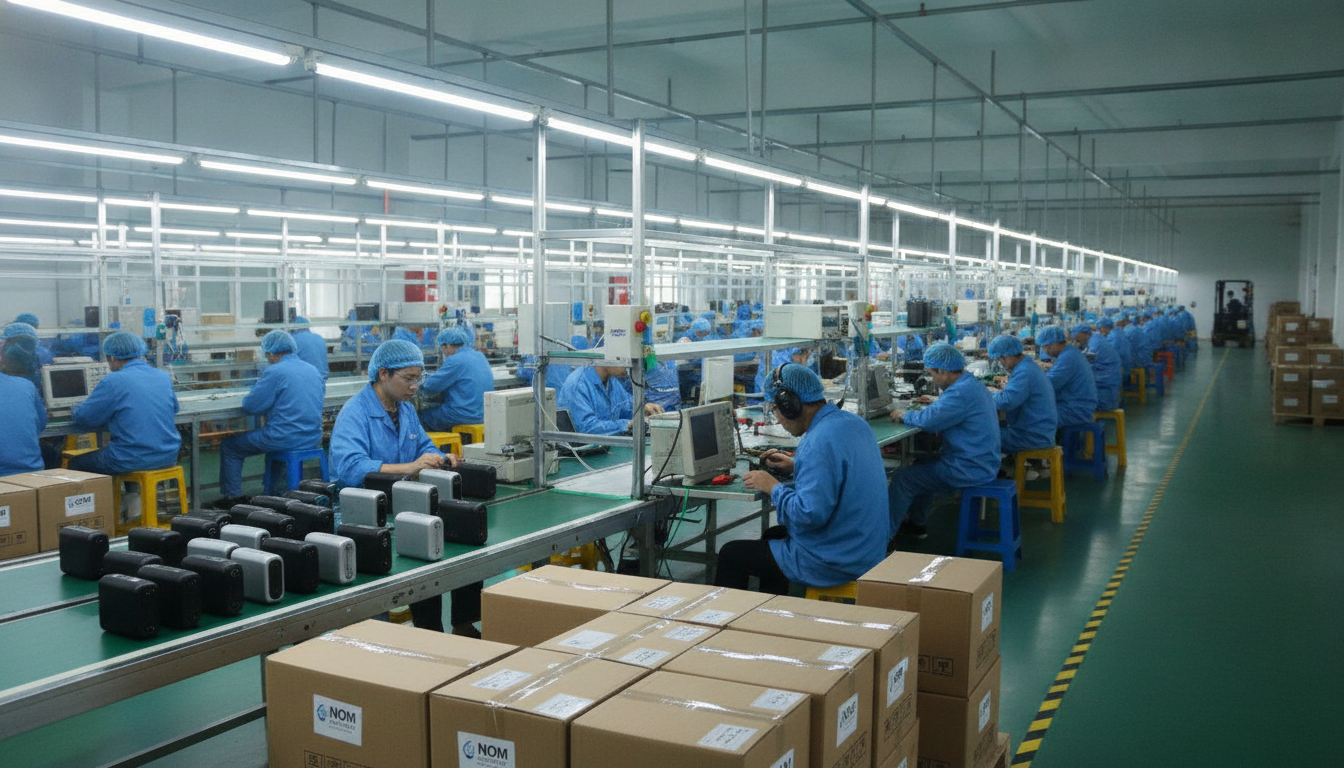
NOM Certifications Required for Mexico
Mexico enforces two primary NOM standards for Bluetooth speakers: NOM-019-SCFI for electromagnetic compatibility and NOM-003-SCFI for electrical safety. According to Alibaba Electronics Buying Guides (2026), unmarked audio units without NOM certification risk customs seizure or insurance invalidation in Mexico. The certification process requires factory testing, label design approval, and ongoing surveillance audits every 24 months.
NOM-019-SCFI Electromagnetic Compatibility
This standard governs radio frequency emissions and interference limits. Your Chinese supplier must submit test reports from an accredited laboratory (ANCE, NYCE, or CANAME) showing compliance with IEC 60068 environmental testing and FCC Part 15 Class B limits. Testing costs $800-$1,400 per model and takes 21-28 days. The certificate remains valid for 5 years but requires annual surveillance audits costing $300-$500.
NOM-003-SCFI Electrical Safety
Covers lithium battery safety (UN38.3 compliance), charging circuit protection, and thermal runaway prevention. Speakers with integrated rechargeable batteries must include MSDS (Material Safety Data Sheet) documentation and pass drop-test protocols. Certification adds $400-$800 to your per-model cost. Speakers without batteries (AC-only) skip this requirement but still need NOM-019-SCFI approval.
Label & Packaging Requirements
Mexican customs inspects physical units for bilingual labels (Spanish mandatory) showing NOM certificate number, importer RFC tax ID, voltage rating, and country of origin. Label placement must be permanent (not stickers) on the speaker body or battery compartment. A trusted China sourcing agent coordinates label printing with your factory before production to avoid post-manufacturing rework delays.
HS Code 8518.21 Classification & Duty Rates
Portable Bluetooth speakers fall under HS Code 8518.21 (“Loudspeakers, whether or not mounted in their enclosures: Single loudspeakers, mounted in their enclosures”). Misclassifying as 8518.29 (“Other loudspeakers”) or 8518.30 (“Headphones and earphones”) triggers duty rate differences of 5-12% and invites customs audits. According to the U.S. Commerce Department (Federal Register, 2025), Mexican import duties for electronics are less than 2% for most exporters, significantly lower than Chinese counterparts facing 82.3-128.7% countervailing duties in the U.S.
Driver Configuration Impact
Single neodymium driver magnet units qualify for 8518.21. Speakers with separate woofer and tweeter drivers (2.1 systems, soundbars) shift to 8518.29, increasing duty exposure. Request your supplier’s product specification sheet showing driver count, impedance (typically 4Ω or 8Ω), and frequency response range (80Hz-20kHz standard). Customs officers use these specs to validate classification.
Bluetooth Codec Declaration
Advanced codecs (aptX, LDAC, AAC) do not change HS classification but must appear on the commercial invoice. Mexican customs cross-references codec declarations with NOM-019-SCFI test reports. Undeclared features trigger physical inspection delays of 5-7 days.
Voltage & Power Specifications for Mexican Market
Mexico operates on 110-130V AC, 60Hz electrical infrastructure. Bluetooth speakers designed for European 220-240V markets require voltage converters or face outright rejection at customs. According to Alibaba Electronics Buying Guides (2026), voltage input specifications (110-130V AC vs. USB-C only) for Mexican infrastructure determine clearance speed and compliance costs.
AC-Powered Units
Speakers with wall adapters must ship with 110-130V-compatible power supplies. Chinese factories default to 100-240V universal adapters, but Mexican customs requires the adapter label to explicitly state “110-130V” as the primary voltage. Adapters lacking this marking get held for 3-5 days pending importer clarification. Cost to retrofit: $0.80-$1.50 per unit.
USB-C and Battery-Only Models
USB-C charging (5V/2A or 5V/3A) bypasses voltage compliance entirely. Battery-only speakers (no AC adapter) clear customs 40% faster because they skip NOM-003-SCFI electrical safety testing. However, lithium batteries over 100Wh capacity require UN38.3 certification and IATA-compliant packaging, adding $200-$400 to your air freight cost per shipment.
Waterproofing Standards (IPX6/IPX7)
Mexico’s coastal and humid regions drive demand for IPX6 (water jet resistant) and IPX7 (submersible 1 meter, 30 minutes) ratings. These ratings do not affect customs classification but must appear on the NOM label and commercial invoice. Speakers marketed as “waterproof” without IPX certification face consumer protection fines of $2,000-$8,000 MXN ($110-$440 USD) under PROFECO regulations.
De Minimis $800 Exemption Traps
Mexico allows duty-free entry for shipments valued under $800 USD (de minimis threshold). However, customs aggregates all shipments from the same importer within a 30-day rolling window. When you import Bluetooth speakers China to Mexico customs in multiple small batches, the combined value determines duty liability. A common trap: ordering 50 units at $15 each ($750) on March 1, then 40 units ($600) on March 20. Total: $1,350, triggering full duty payment and NOM compliance on both shipments retroactively.
Aggregation Detection Methods
Mexican customs (SAT) tracks shipments by RFC tax ID, consignee name, and shipping address. Using different freight forwarders or consignee names does not reset the 30-day window. Customs software flags patterns like identical product descriptions, matching supplier names, or sequential invoice numbers. Penalty: 20-40% of shipment value plus storage fees.
Strategic Consolidation
Instead of multiple small shipments, consolidate orders into a single container or LCL (Less than Container Load) shipment exceeding $800. Pay the 0-2% duty upfront and obtain NOM certification once. A warehouse consolidation service in Yiwu or Shenzhen combines products from 3-5 suppliers into one export declaration, reducing per-unit compliance costs by 35-50%.
Express Courier vs. Sea Freight
DHL, FedEx, and UPS automatically declare shipments under $800 as duty-free, but Mexican customs audits 15-20% of express parcels. Sea freight (FCL or LCL) undergoes 100% document review but allows advance NOM submission, cutting clearance time from 7-10 days (express) to 3-5 days (sea with pre-clearance).
RFC Tax ID Registration Process
The RFC (Registro Federal de Contribuyentes) is Mexico’s federal tax ID. Mexican customs (SAT) blocks all shipments over $1,000 USD without a valid RFC number on the import declaration. Foreign companies must register through a Mexican legal representative or authorized customs broker. Processing takes 7-10 business days and costs $150-$300 USD in broker fees.
Required Documentation
- Proof of legal existence: Certificate of incorporation or business registration from your home country, apostilled and translated to Spanish by a certified translator ($80-$150).
- Tax residency certificate: Issued by your local tax authority (IRS Form 6166 for U.S. entities, HMRC certificate for UK companies), valid within 12 months.
- Mexican legal representative: Power of attorney (POA) granted to a Mexican customs broker or legal agent, notarized and apostilled ($100-$200).
- Proof of address: Utility bill or bank statement for your company’s registered address, dated within 90 days.
Customs Broker Selection
Mexico requires a licensed customs broker (agente aduanal) to file import declarations for commercial shipments. Broker fees range from $120-$250 per shipment for sea freight, $80-$150 for air freight. Choose brokers with AEO (Authorized Economic Operator) certification, which cuts customs inspection rates from 25% to 8% and allows 24-hour pre-clearance filing.
RFC Renewal and Compliance
RFC numbers do not expire but require annual tax filings (declaración anual) even if you have zero taxable income in Mexico. Filing deadline: April 30 each year. Missed filings trigger RFC suspension, blocking all future imports until resolved. Penalty: $500-$1,200 MXN ($28-$66 USD) plus reinstatement fees.
Supplier Verification Checklist
Chinese Bluetooth speaker factories range from ISO 9001-certified OEMs serving JBL and Sony to unregistered workshops assembling generic units. A common complaint buyers raise: hidden commissions between China factories and sourcing agents are extremely common, and unknown to the importer. Verifying your supplier’s export license, production capacity, and NOM certification experience prevents $10,000-$50,000 losses from defective shipments or customs seizures.
Export License Verification
Request a copy of the supplier’s Customs Registration Certificate (海关注册登记证书) showing their 10-digit customs code. Cross-check this code on China Customs’ public database (http://www.customs.gov.cn). Factories without valid export licenses cannot issue proper commercial invoices or packing lists, causing Mexican customs to reject the shipment outright.
NOM Certification Experience
Ask for copies of existing NOM-019-SCFI and NOM-003-SCFI certificates issued to other clients. Certificates include the testing laboratory name (ANCE, NYCE, CANAME), certificate number, and validity dates. Factories with zero NOM experience require 60-90 days to obtain certification, delaying your first shipment. Experienced suppliers complete the process in 45-50 days because they maintain relationships with accredited labs.
Production Capacity Audit
Request a factory audit report from a third-party supplier management service covering assembly line count, daily output (units per 8-hour shift), and worker headcount. A factory claiming 10,000 units/month capacity but employing only 15 workers is either outsourcing production (quality risk) or inflating numbers. Realistic output: 80-120 units per worker per day for manual assembly, 200-300 units for semi-automated lines.
Sample Testing Protocol
Order 3-5 pre-production samples and test for:
- Bluetooth range: Minimum 10 meters (33 feet) unobstructed, measured with RTA (Real-Time Analyzer) software.
- Battery life: Actual runtime at 50% volume vs. claimed specs; 15-20% deviation is acceptable, >25% indicates substandard cells.
- Driver magnet type: Neodymium magnets weigh 40-60% less than ferrite; use a scale to verify (neodymium: 8-12g per driver, ferrite: 20-30g).
- Waterproofing: Submerge IPX7-rated units in 1 meter of water for 30 minutes; any speaker failure = reject the supplier.
Payment Terms and Escrow
Standard terms: 30% deposit, 70% balance before shipment. For first-time orders, negotiate 20% deposit, 60% against pre-shipment inspection report, 20% after Mexican customs clearance. Use Alibaba Trade Assurance or a third-party escrow service (Escrow.com, PayPal Business) to protect the 70% balance. Escrow fees: 1.5-3.5% of transaction value.
Key Takeaways
- According to Alibaba Electronics Buying Guides (2026), NOM-019-SCFI certification processing takes 45-60 days and costs $1,200-$2,800 per product model for Bluetooth speakers entering Mexico.
- Mexican customs (SAT) requires importers to register a unique RFC tax ID before clearing any China shipment over $1,000 USD, with registration taking 7-10 business days through a licensed customs broker.
- The U.S. Commerce Department (Federal Register, 2025) reports Mexican import duties for electronics are less than 2% for most exporters, significantly lower than the 82.3-128.7% countervailing duties applied to Chinese electronics entering the United States.
- Mexico’s $800 de minimis exemption aggregates all shipments from the same importer within a 30-day rolling window, triggering retroactive duty payment and NOM compliance when the combined value exceeds the threshold.
- Bluetooth speakers with 110-130V AC adapters or USB-C-only charging clear Mexican customs 40% faster than 220V-only units, which require voltage converter documentation or face rejection at the port.
- Factories with existing NOM-019-SCFI and NOM-003-SCFI certificates complete Mexican compliance in 45-50 days, compared to 60-90 days for suppliers obtaining certification for the first time.
FAQ
What NOM certifications are required to import speakers into Mexico?
Mexico requires NOM-019-SCFI for electromagnetic compatibility and NOM-003-SCFI for electrical safety on all Bluetooth speakers. NOM-019-SCFI covers radio frequency emissions and interference limits, costing $800-$1,400 per model with 21-28 day testing. NOM-003-SCFI applies to units with rechargeable batteries, requiring UN38.3 compliance and MSDS documentation. Certification takes 45-60 days total and costs $1,200-$2,800 per model. Speakers without these certificates face customs seizure or insurance invalidation at Mexican ports.
Is HS Code 8518.21 the correct classification for portable Bluetooth speakers?
Yes, HS Code 8518.21 applies to portable Bluetooth speakers with single-driver configurations mounted in enclosures. This classification carries 0-2% duty rates in Mexico. Speakers with multiple drivers (woofer plus tweeter) fall under 8518.29 with 5-10% duties. Misclassification triggers customs audits and penalty fees of 15-20% of shipment value. Always verify driver count and impedance specifications (4Ω or 8Ω standard) on your commercial invoice to match the HS code declaration.
Do imported speakers without NOM-019-SCFI get blocked at Mexico customs?
Yes, Mexican customs blocks and seizes Bluetooth speakers lacking NOM-019-SCFI certification. Unmarked units without the certificate number on the label face immediate rejection at Veracruz, Manzanillo, or Mexico City ports. Importers must either return the shipment to China (costing $800-$1,500 in freight) or abandon it, forfeiting the product value. Customs holds non-compliant shipments for 15-30 days, accruing $45-$80 per day in demurrage fees. Obtaining NOM certification post-shipment is not permitted under Mexican regulations.
What is the minimum voltage AC input for Bluetooth speakers in Mexico?
Mexico operates on 110-130V AC, 60Hz electrical infrastructure. Bluetooth speakers with AC adapters must support this voltage range explicitly on the adapter label. Universal 100-240V adapters are acceptable only if “110-130V” appears as the primary voltage marking. Speakers designed for 220-240V European markets require voltage converters or face customs rejection. USB-C charging (5V/2A or 5V/3A) and battery-only models bypass voltage compliance entirely, clearing customs 40% faster than AC-powered units.
Can I import speakers via Mercado Libre without local service points in Mexico?
Mercado Libre allows cross-border sales from China but requires sellers to provide Mexican warranty service or authorized repair centers. Speakers without local service infrastructure face higher return rates (25-35% vs. 8-12% for brands with service points) and negative reviews. Mexican consumer protection law (PROFECO) mandates 30-day warranty coverage and Spanish-language support. Importers selling via Mercado Libre should partner with a third-party warranty provider in Mexico City, Guadalajara, or Monterrey, costing $2-$5 per unit annually for basic coverage.
Ready to import Bluetooth speakers from China with full NOM compliance and zero customs delays?
Request Your Free Supplier Audit →
Written by Michael Ye, Senior Sourcing Manager at Goodcantrading, 15 years in China sourcing and QC.