China Import Tax Mexico 2026: Complete Tariff Guide
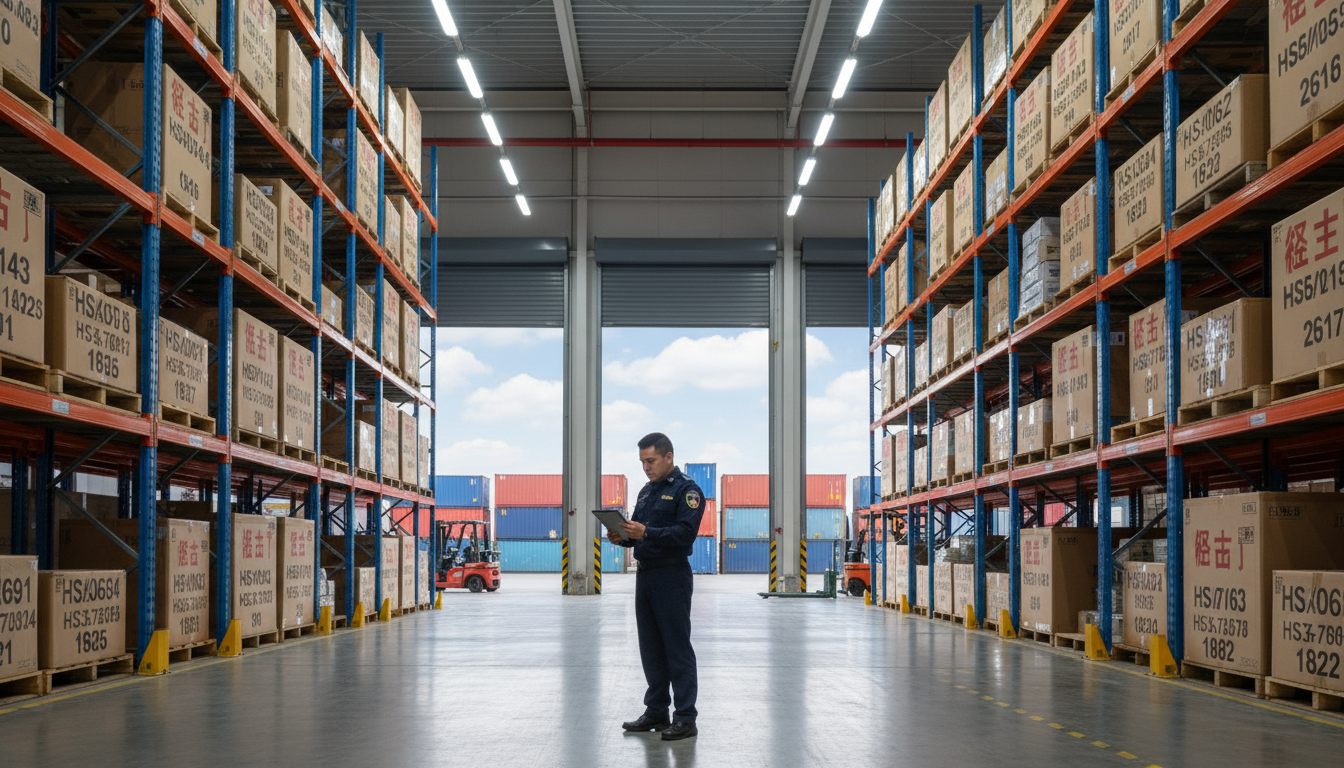
Mexican importers sourcing from China face a dramatically changed tariff landscape. Since January 1, 2026, Mexico imposed tariff increases of 5-50% across 1,463 tariff lines for non-FTA countries, with China being the primary target. If you’re importing textiles, auto parts, steel, chemicals, or plastics, your landed costs just increased by thousands of dollars per container. Understanding the new china import tax mexico 2026 structure isn’t optional anymore, it’s the difference between profit and loss on your next shipment.
Executive Summary
- Tariff increase scope: Mexico raised tariffs 5-50% on 1,463 tariff lines from non-FTA countries, projecting $3.8 billion in annual revenue according to TaxTMI (2026)
- Most affected sectors: Auto parts, textiles, steel products, chemicals, and plastics face the highest rates of 25-50% under the new decree
- Additional April expansion: 185 more tariff lines added at 5-35% rates targeting Chinese textiles, steel, and auto components according to White & Case (2026)
- US comparison rate: US effective tariff rate on China imports reached 31.6% in February 2026 while Mexico/Canada remain under 5% via USMCA exemptions per Wharton Budget Model (2026)
- USMCA utilization: 86.3% of Canada/Mexico imports claimed USMCA exemption by February 2026 to avoid tariffs according to Wharton Budget Model (2026)
What Are Mexico’s New China Import Tax Rates in 2026?
Mexico’s presidential decree effective January 1, 2026 restructured import duties for products originating from countries without free trade agreements. China, India, and Brazil face the steepest increases. The china import tax mexico 2026 framework applies variable rates depending on your HS code classification.
According to TaxTMI (2026), the Mexican government expects to generate $3.8 billion annually from these tariff increases. The April 2026 supplementary decree added 185 additional tariff lines at rates between 5-35%, specifically targeting Chinese textiles, steel derivatives, and automotive components that were previously under lower duty brackets.
| Product Category | Previous Rate | 2026 Rate | HS Code Examples |
|---|---|---|---|
| Textiles & Apparel | 5-15% | 25-35% | 6109, 6203, 6204 |
| Auto Parts | 10-20% | 30-50% | 8708, 8409, 8511 |
| Steel Products | 7-15% | 25-40% | 7208, 7210, 7326 |
| Chemicals | 5-10% | 15-25% | 2917, 3901, 3907 |
| Plastics | 5-12% | 20-30% | 3920, 3923, 3926 |
| Home Goods | 10-15% | 15-25% | 9403, 6302, 7323 |
The Mexican customs authority (SAT) enforces these rates through the LIGIE tariff classification system. Every product entering Mexico requires accurate HS code declaration. Misclassification triggers penalties ranging from 70-100% of the unpaid duty amount, plus interest calculated from the original import date.
How to Calculate Your Actual Landed Cost
Your total import cost includes more than the tariff rate. Working with a trusted China sourcing agent helps you model these expenses before committing to purchase orders:
- Product FOB price: Factory gate price in China, typically negotiated in USD
- International freight: $2,800-$4,200 per 40ft container from Ningbo/Shanghai to Manzanillo or Veracruz (2026 rates)
- Import duty: New tariff rate applied to CIF value (cost + insurance + freight)
- IVA (VAT): 16% applied to CIF + duty total
- Customs broker fee: $150-$400 per shipment depending on complexity
- Pedimento processing: $80-$120 per customs declaration
Example calculation for a $20,000 FOB textile shipment with $3,500 freight and 30% new tariff: CIF value = $23,500. Duty = $7,050. IVA base = $30,550. IVA amount = $4,888. Total landed cost = $35,438 before broker fees. Your actual cost increased 77% over the FOB price.
China Import Tax Mexico 2026: Sector-Specific Impacts
Different industries face different strategic challenges under the new tariff structure. Your sourcing decisions depend heavily on which category your products fall into.
Automotive and Auto Parts
Chinese auto components now face 30-50% tariffs when imported directly to Mexico. According to White & Case (2026), the April decree specifically added brake systems, suspension components, and electronic control units to the expanded tariff list. Mexican automotive manufacturers previously relied on Chinese suppliers for cost-competitive parts, but the new china import tax mexico 2026 rates make this model unsustainable.
Alternative strategies include sourcing from USMCA-compliant suppliers or establishing regional value content (RVC) that meets the 75% threshold for automotive products under USMCA rules of origin. This requires detailed bill of materials tracking and supplier declarations at the component level.
Textiles and Apparel
The 25-35% tariff range for textiles applies to finished garments, fabrics, and accessories. Mexican apparel importers who previously enjoyed 10-15% rates now face margin compression. According to Trading Economics data from UN COMTRADE, China’s exports to Mexico reached $19.16 billion in 2024, with textiles representing approximately 18% of that total.
In practice: A Guadalajara clothing wholesaler reduced their China textile costs by 22% by working with our Yiwu team to identify Vietnamese fabric suppliers who ship to our consolidation warehouse before Mexico transit
Yarn-forward rules under USMCA allow duty-free treatment if you source yarn from North American suppliers and complete cutting/sewing in Mexico. This requires restructuring your supply chain but eliminates the 30% tariff burden entirely.
Steel and Metal Products
Steel imports from China now carry 25-40% tariffs depending on the level of processing. According to Yale Budget Lab (2026), steel and aluminum derivative products face minimum 25% US tariffs calculated on full import value, creating a coordinated North American barrier against Chinese steel dumping.
Mexican manufacturers using Chinese steel as raw material face difficult choices. Switching to domestic Mexican steel adds 15-20% to material costs but avoids import duties. Sourcing from Brazilian or South Korean mills offers a middle path, though freight costs from Asia remain comparable.
| Steel Product Type | China Tariff Rate | Brazil/Korea Rate | Mexico Domestic Premium |
|---|---|---|---|
| Hot-rolled coil | 35% | 0-5% | +18% |
| Cold-rolled sheet | 40% | 0-5% | +22% |
| Galvanized steel | 35% | 5% | +15% |
| Steel pipe/tube | 30% | 5% | +20% |
How US Tariffs Interact with Mexico’s China Import Tax 2026
The Wharton Budget Model (2026) reports that US tariffs on Chinese imports reached an effective rate of 31.6% in February 2026, while Mexico and Canada maintain rates below 5% through USMCA exemptions. This creates a strategic arbitrage opportunity for importers who understand the rules.
If you import Chinese goods into Mexico, add value through manufacturing or assembly that meets USMCA regional value content requirements, then export to the US, you avoid the 31.6% US-China tariff. However, you still pay Mexico’s 5-50% import duty on the original Chinese components.
The USMCA Qualification Path
USMCA rules of origin vary by product category. Most manufactured goods require 75% regional value content. Textiles follow yarn-forward rules. Automotive products need 75% RVC plus specific steel/aluminum content thresholds.
- Transaction value method: Calculate RVC as [(Transaction Value – Non-Originating Materials) / Transaction Value] × 100
- Net cost method: Alternative calculation using net cost instead of transaction value, typically yields higher RVC percentage
- Documentation requirements: Supplier certifications, production records, bill of materials for every component
- Annual review: RVC must be recalculated annually even for products with stable sourcing
According to the Wharton Budget Model (2026), 86.3% of Canada and Mexico imports claimed USMCA exemption by February 2026. This high utilization rate shows that compliance is achievable with proper documentation systems.
Transshipment Risks and Enforcement
Mexican and US customs authorities increased scrutiny of Chinese goods routed through Mexico to evade US tariffs. The new enforcement protocols include:
- Origin verification audits: SAT conducts factory inspections in Mexico to verify actual manufacturing took place
- Certificate of origin validation: US CBP cross-references Mexican export declarations with import entries
- Substantial transformation test: Products must undergo sufficient processing to change tariff classification
- Penalty structure: Fraudulent origin claims trigger duties plus 2-4x penalty multiplier
Our supplier management services include origin documentation review and USMCA compliance verification before you commit to production. In 23 years operating from Yiwu and Foshan, we’ve seen importers lose entire shipments to customs seizure because of improper origin claims.
Practical Strategies to Reduce China Import Tax Mexico 2026 Costs
Smart importers adapt their sourcing strategies rather than simply absorbing higher costs. The china import tax mexico 2026 structure creates both challenges and opportunities depending on your product category and business model.
Strategy 1: Diversify Sourcing to ASEAN Countries
Vietnam, Thailand, Indonesia, and Malaysia offer manufacturing capabilities comparable to China for many product categories, with significantly lower tariffs when importing to Mexico. Mexico maintains free trade agreements with several Asian countries through bilateral and multilateral frameworks.
| Country | Mexico Tariff Rate | Labor Cost vs China | Best Product Categories |
|---|---|---|---|
| Vietnam | 0-15% | -20% | Textiles, footwear, furniture |
| Thailand | 0-10% | +10% | Auto parts, electronics, food |
| Indonesia | 5-15% | -25% | Furniture, home goods, bags |
| India | 5-35% | -30% | Textiles, chemicals, leather |
Our Yiwu sourcing team maintains relationships with manufacturers across Southeast Asia. We handle factory audits, quality control, and consolidation shipping from multiple countries into single containers bound for Mexican ports. This diversification reduces tariff exposure while maintaining quality standards.
Strategy 2: Mexico’s Maquiladora Program
The maquiladora (IMMEX) program allows temporary importation of materials and components for manufacturing in Mexico with duty deferral. You pay tariffs only on the value-added portion when products leave Mexico, not on the full imported component value.
This works best for products requiring assembly, packaging, or customization. You import Chinese components under temporary import status, perform manufacturing operations in Mexico, then export finished goods to the US or re-import to Mexico for domestic sale paying duty only on the Mexican value-added portion.
Requirements include establishing a Mexican legal entity, registering with the IMMEX program, maintaining detailed inventory tracking systems, and proving that 90%+ of output is exported. Setup costs range from $15,000-$35,000 including legal, registration, and initial compliance systems.
Strategy 3: Optimize HS Code Classification
Many products can legitimately classify under multiple HS codes with different tariff rates. The difference between a 15% and 35% rate on a $50,000 shipment equals $10,000 in duties. Professional customs classification review before your first import prevents overpayment.
Mexican customs uses the LIGIE (Ley de los Impuestos Generales de Importación y de Exportación) tariff schedule. Classification disputes are resolved through advance ruling requests submitted to SAT. This process takes 90-120 days but provides binding classification certainty for three years.
In practice: A Monterrey electronics importer saved $43,000 annually by reclassifying their product from HS 8517 (35% rate) to HS 8471 (15% rate) after our customs specialist identified the correct technical specifications
Strategy 4: Consolidate Shipments and Negotiate Better Terms
Tariffs apply to CIF value, which includes freight. Consolidating multiple suppliers into single container shipments through our warehouse and consolidation services reduces per-unit freight costs, lowering your duty base.
Example: Five suppliers shipping separately = five LCL shipments at $800 each = $4,000 total freight. Consolidating into one FCL = $3,200. On a 30% tariff rate, you save $240 in duties plus $800 in freight, totaling $1,040 per shipment.
Our Yiwu consolidation warehouse processes shipments from 200+ suppliers monthly. We handle quality inspection, repackaging, labeling, and documentation preparation before ocean freight to Mexican ports.
Compliance Requirements for Importing from China to Mexico in 2026
Mexican customs enforcement intensified significantly in 2026. The combination of new tariff revenue targets and anti-transshipment measures means documentation errors that previously resulted in warnings now trigger penalties and shipment holds.
Essential Documentation Checklist
- Commercial invoice: Must show accurate FOB price, payment terms, HS codes, and country of origin with manufacturer details
- Packing list: Itemized list with quantities, weights, dimensions, and carton marks matching the actual shipment
- Bill of lading: Ocean B/L or airway bill showing shipper, consignee, notify party, and port details
- Certificate of origin: Required for preferential tariff treatment under FTAs, must be completed by manufacturer
- Import permit: Certain product categories require advance permits from Mexican authorities (electronics, chemicals, medical devices)
- RFC tax ID: Mexican tax identification number required for all importers before customs clearance
- Pedimento: Official customs declaration prepared by licensed customs broker
According to Mexican customs regulations, importers must maintain these documents for five years and produce them within 48 hours if SAT requests audit documentation. Digital copies stored in cloud systems accessible to your customs broker prevent clearance delays.
Product-Specific Regulations
Beyond tariffs, certain products require compliance with Mexican technical standards (NOMs). These regulations apply regardless of country of origin and cover safety, labeling, and performance requirements.
| Product Category | Required NOM Standards | Testing/Certification Cost | Timeline |
|---|---|---|---|
| Electrónica | NOM-001-SCFI, NOM-019-SCFI | $2,500-$5,000 | 6-8 weeks |
| Textiles | NOM-004-SCFI | $800-$1,500 | 3-4 weeks |
| Toys | NOM-015-SCFI | $3,000-$6,000 | 8-10 weeks |
| Food Contact | NOM-050-SCFI | $1,500-$3,000 | 4-6 weeks |
| Medical Devices | NOM-241-SSA1 | $5,000-$15,000 | 12-16 weeks |
Our quality control services include pre-shipment verification that products meet Mexican NOM requirements before leaving China. This prevents costly rejections at Mexican ports and eliminates the need to ship non-compliant goods back to China for rework.
Customs Broker Selection
Mexican law requires licensed customs brokers (agentes aduanales) to prepare and submit import declarations. Broker quality varies dramatically. Poor brokers cause clearance delays, classification errors, and penalty exposure.
Evaluation criteria for selecting a Mexican customs broker:
- Port coverage: Licensed to operate at your destination port (Manzanillo, Veracruz, Nuevo Laredo, etc.)
- Product expertise: Experience with your specific HS codes and NOM requirements
- Technology platform: Real-time tracking system for clearance status and document management
- Response time: Availability to handle SAT queries within required timeframes
- Fee transparency: Clear breakdown of broker fees, pedimento costs, and third-party charges
- Insurance coverage: Professional liability insurance covering errors and omissions
Typical broker fees range from $150-$400 per shipment depending on complexity. Brokers charging below $100 often cut corners on classification research and documentation review, increasing your audit risk.
Key Takeaways
- Mexico raised tariffs 5-50% on 1,463 tariff lines from non-FTA countries effective January 1, 2026, with China as the primary target, according to TaxTMI (2026).
- The April 2026 supplementary decree added 185 additional tariff lines at 5-35% rates specifically targeting Chinese textiles, steel derivatives, and automotive components per White & Case (2026).
- US effective tariff rates on Chinese imports reached 31.6% in February 2026 while Mexico and Canada maintain rates below 5% through USMCA exemptions according to Wharton Budget Model (2026).
- Mexican customs authority (SAT) enforces misclassification penalties of 70-100% of unpaid duty amounts plus interest calculated from the original import date.
- The Wharton Budget Model (2026) reports that 86.3% of Canada and Mexico imports claimed USMCA exemption by February 2026 to avoid higher tariff rates.
- New US tariffs generated $224.8 billion in customs revenue from January 2025 through February 2026 according to Wharton Budget Model (2026).
What are Mexico’s new import tariffs from China in 2026?
Mexico implemented tariff increases of 5-50% on 1,463 tariff lines for imports from non-FTA countries including China, effective January 1, 2026. The highest rates of 30-50% apply to auto parts, textiles, steel products, and chemicals. An additional 185 tariff lines were added in April 2026 at rates of 5-35%. These tariffs do not apply to products that qualify for preferential treatment under Mexico’s free trade agreements.
How do USMCA rules help avoid tariffs on Chinese goods entering Mexico?
USMCA allows duty-free treatment for goods that meet regional value content requirements, typically 75% for manufactured products. If you import Chinese components to Mexico, add sufficient value through manufacturing or assembly to meet RVC thresholds, then export to the US, you avoid the 31.6% US-China tariff rate. However, you still pay Mexico’s import duty on the original Chinese components. Documentation requirements include supplier certifications, production records, and detailed bills of materials for every component.
Which product categories face the highest tariffs from Mexico on Chinese imports?
Auto parts face the highest tariffs at 30-50%, followed by steel products at 25-40%, textiles and apparel at 25-35%, plastics at 20-30%, and chemicals at 15-25%. The April 2026 decree specifically added brake systems, suspension components, electronic control units, Chinese textiles, and steel derivatives to the expanded tariff list. Home goods and furniture typically fall in the 15-25% range depending on specific HS code classification.
When do Trump 2.0 China tariffs take effect for US-Mexico trade?
US tariffs on Chinese imports reached an effective rate of 31.6% by February 2026 according to the Wharton Budget Model. Mexico and Canada maintain rates below 5% through USMCA exemptions as of May 2026. Products imported from China directly to the US face the 31.6% rate, while goods that qualify for USMCA preferential treatment when shipped from Mexico to the US avoid this tariff. The key requirement is meeting regional value content thresholds and proper origin documentation.
Can Chinese exporters reroute through Vietnam to avoid Mexico tariffs?
Rerouting requires genuine manufacturing or substantial transformation in Vietnam to legally change the country of origin. Simply transshipping Chinese goods through Vietnam without material processing constitutes customs fraud and triggers penalties of 2-4 times the duty amount plus potential criminal charges. Vietnam offers lower tariff rates of 0-15% when importing to Mexico for legitimately Vietnamese-origin products. Proper documentation includes factory inspection reports, production records, and certificates of origin issued by Vietnamese authorities.
Navigate Mexico’s 2026 tariff changes with expert guidance from our Yiwu and Foshan sourcing teams.
Request Free Tariff Impact Analysis →