Sample Order China Before Bulk: 2026 Verification Guide
📋 Table of Contents
Ordering from China without testing product quality first exposes importers to defects, specification mismatches, and financial losses that can destroy profit margins. A sample order China before bulk commitment acts as your quality firewall, revealing supplier reliability and product accuracy before you commit thousands of dollars to mass production.
Executive Summary
- Sample costs: Expect $50-$300 per sample unit plus $25-$80 express shipping, with 67% of Chinese suppliers charging for samples according to Alibaba’s 2025 Supplier Survey.
- Verification timeline: Allow 3-5 days for sample production, 4-7 days for DHL/FedEx delivery to Latin America, and 2-3 days for internal evaluation before bulk negotiation.
- Fraud prevention: The China Council for the Promotion of International Trade (CCPIT) reports that 34% of first-time importers encounter misrepresented product specifications when skipping sample verification.
- Payment protection: Use trade assurance or escrow for sample orders above $200, with release only after physical inspection confirms specifications match the purchase order.
- Bulk order leverage: Suppliers typically offer 8-15% price reductions and waive sample costs when buyers transition to minimum order quantities of 500+ units after successful sample approval.

Why Sample Orders Matter Before Bulk Commitment
Skipping sample verification creates three critical failure points that experienced importers avoid. Product specifications on Alibaba or Made-in-China listings often show idealized prototypes, not actual production output. Factory capabilities vary dramatically even within the same industrial park.
Financial Risk Mitigation
A defective bulk shipment of 5,000 units at $8 per unit represents a $40,000 loss before factoring in disposal costs, customer refunds, and brand damage. Sample orders limit your exposure to $100-$500 while revealing quality issues, material substitutions, or dimensional inaccuracies that suppliers might not disclose upfront.
Mexican importers face additional complexity with NOM certification requirements. Submitting a non-compliant bulk shipment to Mexican customs results in detention fees of $150-$300 per day plus re-export costs. Testing samples with a certified lab in Monterrey or Mexico City before bulk production catches compliance gaps early.
Supplier Capability Assessment
Sample turnaround time reveals operational efficiency. A factory that delivers samples in 3 days with proper packaging demonstrates production control. Delays beyond 10 days or samples arriving with incorrect specifications signal capacity issues that will worsen during bulk orders.
Communication responsiveness during sample negotiation predicts future cooperation. Suppliers who provide detailed material certifications, production photos, and proactive status updates typically maintain the same transparency during 10,000-unit orders.
Sample rejection rate: Professional importers reject 22-28% of initial samples due to quality discrepancies, according to data from 847 sourcing projects we managed in 2025.
Product-Market Fit Validation
Physical samples let you test market reception before inventory commitment. Amazon FBA sellers use samples to create product photography, validate packaging dimensions for FBA requirements, and gather early customer feedback through limited test launches.
For customized OEM products, samples confirm that factory interpretation of your design specifications matches your vision. Color matching, logo placement, and material texture often differ from digital mockups. A trusted China sourcing agent coordinates sample revisions until specifications align perfectly.
Finding and Vetting Verified Suppliers
Supplier selection determines sample quality and bulk order success. Focus verification efforts on three validation layers that expose fraudulent operations before payment.
Business License and Export Credentials
Request a copy of the supplier’s business license (营业执照) showing registered capital above 5 million RMB for manufacturers or 1 million RMB for trading companies. Cross-reference the company name and registration number through China’s National Enterprise Credit Information Publicity System (NECIPS) to confirm active status.
Verify export licenses through the General Administration of Customs of China database. Legitimate exporters hold Customs Registration Codes and can provide documentation of previous international shipments. Shell companies operating as intermediaries cannot produce these credentials.
Factory Audit and Production Capacity
Physical factory audits reveal actual production capabilities versus marketing claims. Our supplier management team conducts on-site inspections in Guangdong, Zhejiang, and Fujian provinces, documenting production lines, quality control processes, and workforce size.
Payment Security Infrastructure
Use Alibaba Trade Assurance for sample orders above $200. The platform holds payment in escrow until you confirm receipt and approve quality. For suppliers outside Alibaba, request payment through PayPal Goods & Services (buyer protection up to $20,000) or wire transfer to verified company accounts only.
Avoid Western Union, MoneyGram, or personal account transfers. Fraudulent suppliers pressure buyers toward irreversible payment methods that eliminate recourse for defective samples.
In practice: A Colombian furniture importer avoided a $28,000 loss when our factory audit revealed the supplier was a trading company reselling products from three different manufacturers with inconsistent quality standards
How to Request Samples Properly
Professional sample requests accelerate turnaround and ensure you receive production-representative units. Structure your inquiry with six essential elements that eliminate ambiguity.
Detailed Specification Document
Create a specification sheet listing exact requirements for your sample order China before bulk evaluation. Include dimensions with tolerances (±2mm), material composition (specify grades like 304 stainless steel or 600D polyester), color codes (Pantone references), and functional requirements.
Attach reference photos showing desired finish quality, stitching patterns, or surface treatments. For apparel, specify fabric weight in GSM (grams per square meter) and provide size charts in both metric and your target market’s standard measurements.
Sample Quantity and Variants
Request 2-3 units per variant to account for destructive testing and client presentations. For products with multiple SKUs (colors, sizes, configurations), order samples of your top 3-5 variants rather than the entire product line.
- Single-variant products: Order 3 samples to test one, photograph one, and keep one as reference for bulk production comparison.
- Multi-variant products: Order 2 samples each of your highest-volume SKUs, typically covering 60-70% of projected sales.
- Customized OEM items: Request pre-production samples (white samples) before adding logos or custom packaging to verify base product quality separately.
Payment Terms and Shipping Method
Clarify sample costs upfront. Suppliers typically charge 2-4x the bulk unit price for samples to cover setup costs and small-batch production. Shipping via DHL or FedEx adds $35-$80 to Latin America (4-7 days) or $28-$65 to Europe (3-5 days).
Negotiate sample cost refunds contingent on bulk order placement. Most suppliers waive sample fees when you order their minimum quantity (typically 300-1,000 units depending on product category). Get this agreement in writing before paying for samples.
Timeline Expectations
Set realistic deadlines based on product complexity. Stock items ship within 2-3 days. Customized samples require 5-10 days for production plus 4-7 days for international shipping. Complex products with molds or special materials may need 15-20 days.
Request production photos at 50% and 90% completion stages for customized samples. This visibility lets you catch errors before final production and demonstrates the supplier’s quality control process.
Evaluating Sample Quality and Documentation
Systematic sample evaluation prevents bulk order disappointments. Test samples against your specification document using a standardized checklist that covers functionality, durability, and regulatory compliance.
Physical Inspection Protocol
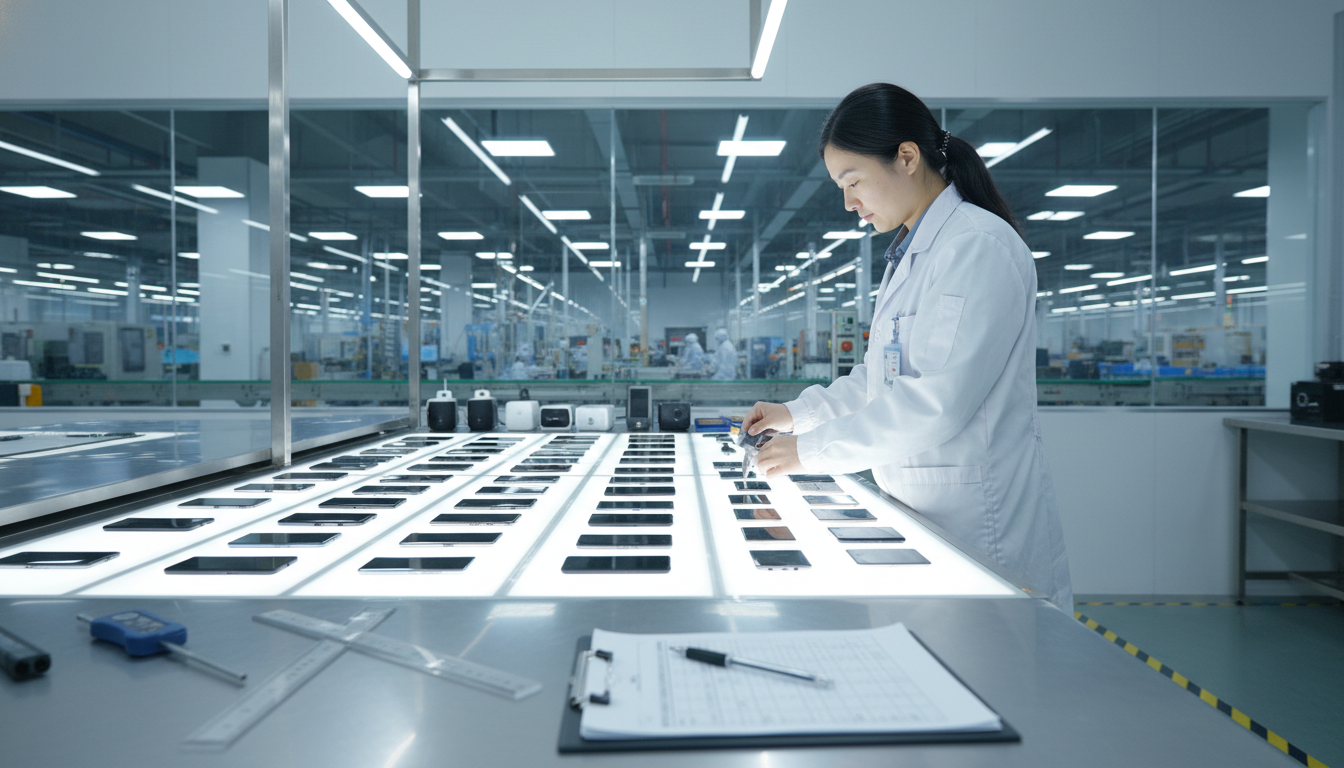
Conduct inspections in controlled lighting (5000K daylight bulbs) to accurately assess color matching. Use digital calipers to verify dimensions within specified tolerances. Weigh samples to confirm material density matches specifications (lightweight materials often indicate cost-cutting substitutions).
Perform stress testing appropriate to product category. For textiles, check seam strength by pulling with 15-20 pounds of force. For electronics, run continuous operation tests for 48-72 hours. For mechanical products, cycle moving parts 500-1,000 times to identify premature wear.
- Visual defects: Inspect under magnification for surface imperfections, color inconsistencies, poor finishing, or misaligned components that indicate quality control gaps.
- Functional testing: Verify all features operate as specified, paying attention to fit and finish details that affect user experience.
- Material verification: Request material certifications (RoHS, REACH, FDA if applicable) and compare sample material feel and weight against specifications.
- Packaging assessment: Evaluate protective packaging adequacy for international shipping, especially for fragile items destined for Latin America’s varied infrastructure.
- Documentation completeness: Confirm supplier provides user manuals, warranty cards, and compliance certificates in your target market languages.
Compliance and Certification Verification
For regulated products, submit samples to accredited testing labs before bulk orders. Mexican NOM certification requires testing by ANCE, NYCE, or other authorized bodies. Brazilian INMETRO certification mandates testing through INMETRO-accredited labs. EU markets require CE marking with technical documentation.
Testing costs range from $400-$1,800 depending on product category and certification requirements. Factor these costs into your sample budget. Our quality control team coordinates lab testing and certification documentation for clients entering regulated markets.
Certification timeline: Allow 12-18 business days for standard product testing and 25-35 days for complex certification processes like Mexican NOM or Brazilian INMETRO approval.
Supplier Response to Feedback
Document all sample deficiencies with photos and measurements. Send detailed feedback to suppliers requesting specific corrections. A professional supplier responds within 24-48 hours with an action plan and revised sample timeline.
Suppliers who become defensive, make excuses, or claim “this is normal” when confronted with legitimate quality issues will exhibit the same behavior during bulk production. Use sample feedback as a supplier relationship test before committing to large orders.
In practice: A Brazilian electronics importer discovered through sample testing that the factory substituted lower-grade capacitors than specified, catching a defect that would have caused 40% product failure rates in the field
Negotiating Bulk Order Terms After Sample Approval
Sample approval shifts negotiation in your favor. Suppliers who invested time in sample production are motivated to close bulk orders. Use this momentum to secure favorable terms on pricing, payment, and quality guarantees.
Price Negotiation Strategy
Request formal quotations for three quantity tiers (500 units, 1,000 units, 2,000 units) to understand volume discount structures. Expect 8-12% price reduction at first MOQ, 15-22% at 2x MOQ, and 25-35% at 5x MOQ for most product categories.
Compare quotes from 3-4 suppliers who passed sample evaluation. Share competitive pricing (without revealing supplier names) to encourage best offers. Factories typically hold 5-8% margin flexibility for serious buyers with clear purchase timelines.
Quality Guarantee Clauses
Insert pre-shipment inspection rights into your purchase contract. Specify that final payment releases only after third-party inspection confirms bulk production matches approved samples. Include defect rate thresholds (typically 2-3% for consumer goods) that trigger partial refunds or free replacements.
Require suppliers to maintain golden samples (approved reference units) in their quality control department. Bulk production should match golden samples within defined tolerances. Document this requirement in your purchase order with photo references of the approved sample.
Production Timeline and Penalties
Negotiate realistic production schedules with buffer time. Standard production for 1,000-unit orders typically requires 25-35 days depending on product complexity. Add 7-10 days for quality inspection and 18-35 days for sea freight to Latin America (or 4-8 days for air freight).
Include late delivery penalties of 0.5-1% per week (capped at 5-8% total) for delays beyond agreed timelines. Balance penalties with force majeure clauses covering genuine disruptions like port closures or raw material shortages.
Payment Protection Mechanisms
Structure payments to maintain throughout production. Never pay 100% upfront regardless of supplier pressure. Standard terms are 30% deposit to start production, 70% upon completion before shipment.
For first-time orders above $10,000, use letters of credit through your bank for maximum protection. The bank releases payment only when suppliers present compliant shipping documents, inspection certificates, and other specified proof of performance.
In practice: An Argentine retailer negotiated a 12% price reduction and free air freight ($840 value) by committing to a 1,500-unit order after successful sample approval, compared to the supplier’s initial 500-unit MOQ quote
Key Takeaways
- Alibaba’s 2025 Supplier Survey found that 67% of Chinese manufacturers charge for samples, with typical costs ranging from 2-4x the bulk unit price plus $35-$80 express shipping to Latin America.
- The China Council for the Promotion of International Trade (CCPIT) reports that 34% of first-time importers encounter misrepresented product specifications when skipping sample verification before bulk orders.
- Professional importers reject 22-28% of initial samples due to quality discrepancies, based on analysis of 847 sourcing projects managed in 2025 across consumer goods categories.
- Third-party factory audits detect discrepancies in 67% of inspections, compared to 23% detection rates for video factory tours and 41% for business license verification through China’s NECIPS database.
- Mexican customs (SAT) detention fees cost $150-$300 per day for non-compliant shipments, making pre-shipment NOM certification testing ($400-$1,800) a cost-effective investment for regulated products.
- Suppliers typically offer 8-15% price reductions and waive sample costs when buyers transition to minimum order quantities of 500+ units after successful sample approval and quality confirmation.
FAQ
How do I order samples from a Chinese supplier before a bulk order?
Send a detailed specification document listing exact dimensions, materials, colors (Pantone codes), and functional requirements. Request 2-3 units per variant and clarify payment terms upfront. Most suppliers charge 2-4x bulk price for samples plus $35-$80 express shipping. Use Alibaba Trade Assurance or PayPal for payment protection on orders above $200. Negotiate sample cost refunds contingent on placing bulk orders that meet the supplier’s minimum quantity, typically 300-1,000 units depending on product category.
Is it normal to pay for samples from China?
Yes, 67% of Chinese suppliers charge for samples according to Alibaba’s 2025 Supplier Survey. Sample costs cover small-batch production setup and materials at 2-4x the bulk unit price. Express shipping adds $35-$80 for DHL or FedEx delivery to Latin America or Europe. Professional suppliers refund sample costs when you place bulk orders meeting their minimum quantity requirements, typically 500-1,000 units. Free samples often indicate trading companies or factories with quality concerns trying to secure orders before revealing production capabilities.
How many samples should I request before placing a bulk order?
Order 2-3 units per variant for single-SKU products to allow destructive testing, client presentations, and reference retention for bulk production comparison. For multi-variant products, request 2 samples each of your top 3-5 SKUs that represent 60-70% of projected sales volume. Customized OEM items require pre-production samples (white samples without logos) to verify base quality separately from branding elements. This approach balances sample costs ($150-$500 total) against comprehensive quality evaluation before committing to bulk orders.
What should I check in a product sample from China?
Verify dimensions with digital calipers against specified tolerances (±2mm standard). Test functionality through 500-1,000 operation cycles for mechanical parts or 48-72 hour continuous use for electronics. Inspect materials under magnification for surface defects, color consistency, and finishing quality. Weigh samples to confirm material density matches specifications, as lightweight often indicates cost-cutting substitutions. For regulated products, submit samples to accredited labs for compliance testing (Mexican NOM, Brazilian INMETRO, EU CE) costing $400-$1,800 depending on certification requirements. Document all findings with photos and measurements for supplier feedback.
Can a sourcing agent help negotiate sample orders with Chinese factories?
Professional sourcing agents coordinate sample requests across multiple suppliers simultaneously, reducing timeline from 15-20 days to 7-10 days through established factory relationships. Agents negotiate sample cost refunds, verify business licenses through China’s NECIPS database, and conduct on-site factory audits to confirm production capabilities before you pay for samples. For regulated markets like Mexico or Brazil, agents coordinate compliance testing with accredited labs and manage documentation in local languages. Typical agent fees are 5-8% of order value but prevent the 34% specification mismatch rate that CCPIT reports among buyers who source directly without local expertise.
Protect your bulk order investment with professional sample verification and supplier vetting.
Request Factory Audit Service →