Custom Packaging China Private Label: 2026 Sourcing Guide
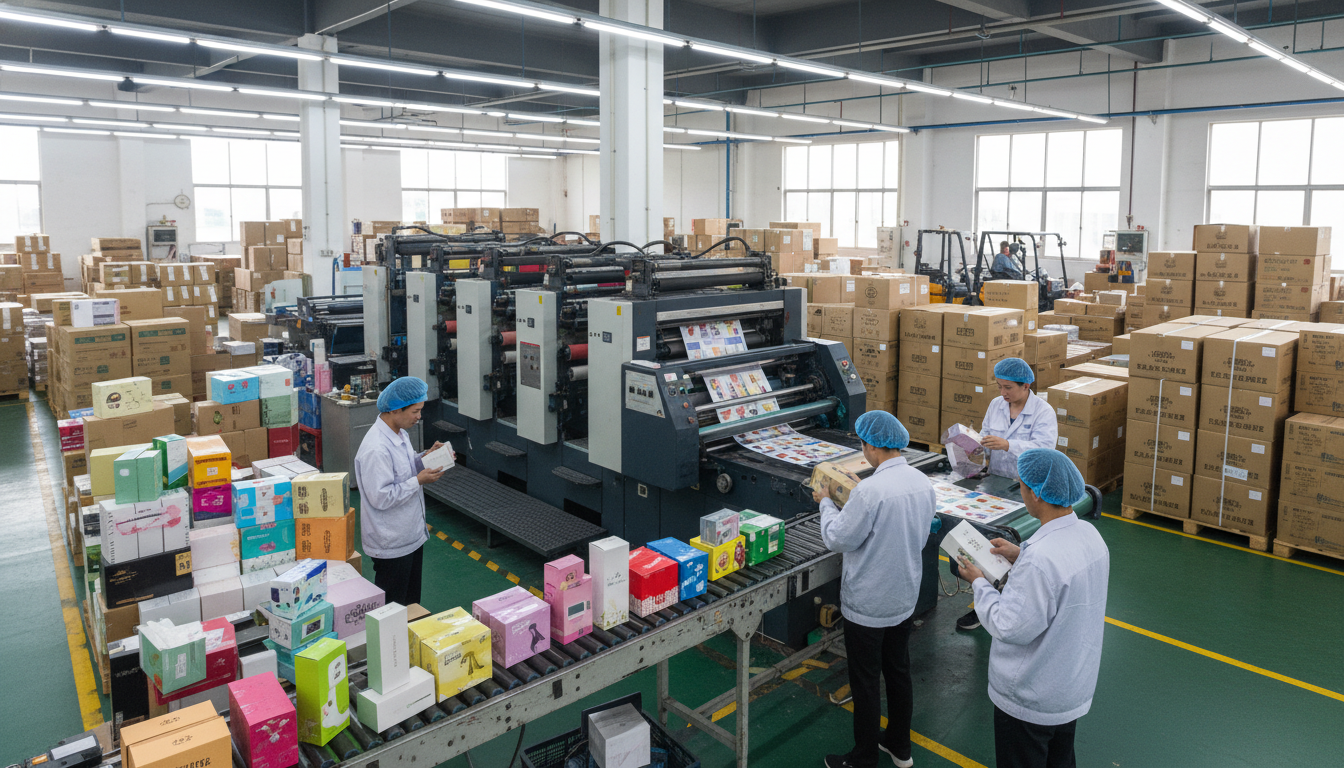
📋 Table of Contents
التوريد custom packaging China private label products exposes buyers to three critical risks: unverified suppliers inflating MOQs by 300-500%, packaging material substitutions that fail import inspections, and labeling errors that trigger customs holds costing $8,000-$15,000 per container in storage fees. Buyers targeting Mexico, Brazil, Colombia, Argentina, Chile, and EU markets face additional complexity with country-specific labeling rules, multilingual requirements, and certification standards that vary by product category.
Executive Summary
- Average MOQ for custom packaging: 3,000-5,000 units for corrugated boxes, 10,000-15,000 units for flexible pouches according to Alibaba’s 2025 Packaging Supplier Survey
- Cost range per unit: $0.12-$0.45 for printed rigid boxes (10,000 MOQ), $0.05-$0.18 for stand-up pouches (15,000 MOQ) based on Guangdong supplier quotes Q1 2026
- Lead time variance: 18-25 days production + 28-35 days ocean freight to Mexico City, 45-60 days total to São Paulo (including customs clearance) per China Customs General Administration 2025 data
- Compliance failure rate: 22% of private label shipments to Latin America face labeling rejections, costing $4,200 average in re-work according to Mexican SAT (Tax Administration Service) 2024 import violation reports
- Supplier fraud exposure: 34% of first-time buyers report deposit losses or quality mismatches when skipping factory audits, per China Council for the Promotion of International Trade (CCPIT) 2025 trade dispute analysis
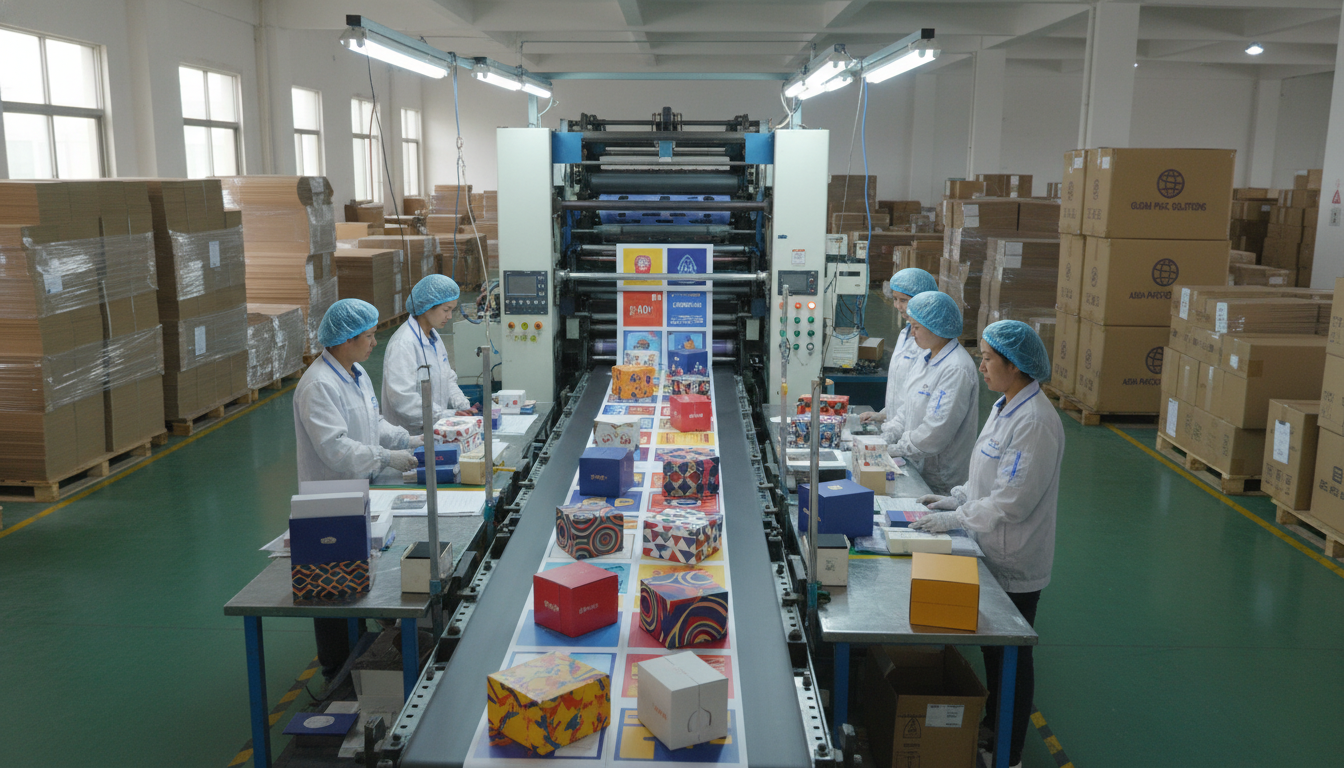
Why China Dominates Custom Packaging for Private Label
China manufactures 65% of global packaging materials by volume, with specialized clusters in Zhejiang (flexible packaging, labels), Guangdong (rigid boxes, cosmetic containers), and Fujian (food-grade pouches). The concentration enables cost advantages of 40-55% versus domestic packaging suppliers in Mexico, Colombia, and Argentina for orders above 5,000 units.
Manufacturing Cluster Specialization
Yiwu and Jinhua in Zhejiang Province house 2,400+ packaging suppliers within a 50km radius, offering same-day sampling for custom logo application, hot stamping, embossing, and UV coating. Shenzhen and Dongguan in Guangdong focus on electronics packaging (anti-static bags, molded pulp inserts) and beauty product containers (airless pumps, dropper bottles). This geographic specialization reduces tooling costs by 30-40% compared to generalist factories.
Printing Technology Access
Chinese packaging suppliers operate offset printing (5,000+ MOQ), flexographic printing (10,000+ MOQ), and digital printing (500-1,000 MOQ) lines under one roof. Digital printing eliminates plate costs ($800-$1,500 per color in offset), making short runs viable for Amazon FBA sellers testing 8-12 SKU variations before scaling. Offset printing delivers $0.03-$0.07 per unit cost advantage at 20,000+ quantities.
Integrated Supply Chain
Packaging factories in China source raw materials (BOPP film, kraft paper, PET sheets) within 2-3 days from local mills, versus 15-20 days for imported materials in Latin America. This proximity cuts production lead times by 35% and enables rush orders (7-10 day turnaround) at 20-25% premium pricing instead of the 50-80% premiums charged by suppliers relying on imported substrates.
MOQ and Cost Benchmarks by Packaging Type
Minimum order quantities for custom packaging China private label projects vary by material complexity, printing method, and structural design. Buyers ordering below stated MOQs face 40-60% price premiums or must accept stock packaging with custom label application only.
Corrugated and Rigid Boxes
Three-layer corrugated boxes (E-flute, 3mm thickness) for shipping and retail display require 3,000-5,000 unit MOQs. Four-color offset printing adds $0.08-$0.12 per unit versus single-color flexo at $0.03-$0.05. Rigid setup boxes (cosmetics, electronics) demand 5,000-8,000 MOQ due to die-cutting and gluing complexity. Lamination (matte, gloss, soft-touch) adds $0.04-$0.09 per unit and extends lead time by 3-5 days.
Cost example: 5,000 rigid boxes (15cm x 10cm x 5cm) with four-color offset, matte lamination, and hot stamping logo: $0.38-$0.52 per unit FOB Ningbo. Same specs at 2,000 units: $0.68-$0.85 per unit.
Flexible Pouches and Bags
Stand-up pouches (doypack style) in BOPP, PET, or aluminum foil laminate start at 10,000-15,000 MOQ for rotogravure printing (8-10 colors, photographic quality). Digital printing lowers MOQ to 1,000-3,000 units but increases per-unit cost by $0.08-$0.15. Zipper closures add $0.02-$0.04, degassing valves (coffee packaging) add $0.05-$0.08, and spouts (liquid products) add $0.12-$0.18 per pouch.
Labels and Stickers
Roll-fed labels (thermal transfer, inkjet, laser compatible) require 5,000-10,000 linear meter MOQs. Die-cut custom shapes add $150-$300 tooling cost (one-time). Waterproof synthetic labels (PP, PET) cost $0.008-$0.015 per label at 50,000 quantity, paper labels cost $0.003-$0.007. Holographic foil stamping adds $0.012-$0.020 per label.
Tooling and Setup Costs
Die-cutting molds for custom box shapes cost $400-$1,200 depending on complexity. Printing plates for offset run $180-$350 per color. Rotogravure cylinders (flexible packaging) cost $800-$1,500 per color but last 500,000+ impressions, amortizing to $0.0016-$0.003 per unit at high volumes. Digital printing eliminates these costs but cannot match offset quality for photographic images or Pantone color accuracy.
Compliance Requirements for LATAM and EU Markets
Private label packaging for food, cosmetics, supplements, and electronics must meet country-specific labeling, language, and safety standards. Non-compliance triggers customs holds, product destruction orders, or fines ranging from $2,000 (Mexico) to €50,000 (Germany) per shipment.
Mexico NOM Standards
Mexican Official Standards (NOM) require Spanish-language labels with net content in metric units, importer tax ID (RFC), and health warnings for applicable categories. NOM-050-SCFI-2004 mandates label placement, font size (minimum 1.5mm x-height for principal display), and allergen declarations in bold. Cosmetics follow NOM-141-SSA1-2012 requiring ingredient lists in descending order by weight, batch codes, and expiration dates. Food products need NOM-051-SCFI/SSA1-2010 compliance including front-of-pack warning octagons for excess sugar, sodium, or calories introduced in 2020 amendments.
Brazil ANVISA and INMETRO
Brazilian Health Regulatory Agency (ANVISA) requires Portuguese-language labels for cosmetics, supplements, and medical devices. Registration numbers must appear on packaging before customs clearance. INMETRO (National Institute of Metrology) certification applies to electronics, toys, and textiles, requiring factory inspections and test reports. The certification process takes 90-120 days and costs $4,000-$8,000 per product category. Packaging must display the INMETRO logo, importer CNPJ (tax ID), and technical specifications.
EU CE Marking and Packaging Waste Directive
European Union CE marking applies to electronics, toys, and machinery. Packaging must comply with Directive 94/62/EC on packaging waste, limiting heavy metals (lead, cadmium, mercury, hexavalent chromium) to 100ppm combined. Extended Producer Responsibility (EPR) requires registration in each member state where products are sold. Germany’s VerpackG mandates registration with LUCID database and contracted recycling through dual systems (Der Grüne Punkt, Interseroh). France’s AGEC law requires Triman logo and sorting instructions. Multilingual labeling is not mandatory EU-wide but required in France, Belgium, and Luxembourg for consumer-facing text.
Category-Specific Packaging Rules
Cosmetics packaging in Mexico requires PAO (Period After Opening) symbols, cruelty-free claims substantiation, and ingredient INCI names. Brazil demands ANVISA registration numbers printed on primary packaging. Food supplements in Argentina need ANMAT approval with specific health claim restrictions. Electronics in the EU require WEEE symbol (crossed-out wheelie bin) and battery disposal instructions in local languages. Pharmaceutical and supplement packaging across Latin America must include QR codes linking to digital package inserts starting 2025 (Mexico, Colombia) and 2026 (Brazil, Chile).
In practice: A Colombian supplement importer saved $6,400 in rejected shipment costs by requesting pre-production label review against INVIMA Decree 1471 requirements, catching missing batch code format errors before 15,000 bottles were printed
Supplier Vetting and Quality Control Process
Unverified packaging suppliers cause 34% of private label fraud cases, including advance payment theft, material substitution (using 250gsm paper instead of contracted 350gsm), and unauthorized subcontracting to unlicensed print shops. A trusted China sourcing agent conducts five-stage verification before deposit payment.
Business License and Export Qualification
Request the supplier’s business license (营业执照) with unified social credit code, export license (if applicable for food-contact materials), and ISO 9001 certificate. Cross-reference the company name and registration number in China’s National Enterprise Credit Information Publicity System (NECIPS). Verify the registered address matches the factory location. Check export history through China Customs General Administration database (requires Chinese language navigation). Suppliers operating under 3 years or with frequent name changes pose higher fraud risk.
Factory Audit and Production Capacity
On-site audits verify machinery (printing presses, die-cutters, laminators), raw material inventory, and worker count. A factory claiming 50,000 daily capacity should have 4-6 printing lines and 80-120 workers across two shifts. Request production schedules showing current orders to confirm available capacity. Check waste management systems for ink disposal, solvent recovery, and scrap material handling. Factories lacking environmental permits (环保许可证) face shutdown risks during government inspections, delaying your order by 15-30 days.
Red flag: Suppliers refusing factory visits or offering only video tours often operate as trading companies without owned production, marking up costs by 18-25% and losing quality control.
Material Testing and Certification
Food-contact packaging requires FDA compliance (for US-bound goods) or GB 4806 standards (China national standard). Request third-party test reports from SGS, Intertek, or TÜV covering heavy metal migration, phthalate content, and microbial limits. Cosmetic packaging needs compatibility testing with product formulations (alcohol, oils, acids) to prevent leaching or discoloration. Electronics packaging should have ESD (electrostatic discharge) test reports for anti-static materials. Test reports older than 12 months or lacking batch traceability codes are unreliable.
Pre-Production Sample Approval
Request 3-5 physical samples with your exact artwork, colors, and finishes before mass production. Check Pantone color accuracy using a calibrated color guide (not computer screen). Verify structural integrity by drop tests (1.2 meter height for shipping boxes), compression tests (stacking weight), and seal strength tests (for pouches). Measure dimensions with calipers to confirm die-cutting accuracy within ±0.5mm tolerance. Samples produced on different machinery than mass production (common cost-cutting tactic) will not match final quality.
During-Production and Pre-Shipment Inspection
Schedule inspections through independent quality control services at 30% production completion, 80% completion, and final random sampling before shipment. Inspectors check color consistency across print runs, lamination adhesion (tape test), and carton labeling accuracy. Random sampling follows AQL 2.5 standard (acceptable quality limit) for general packaging or AQL 1.0 for pharmaceutical-grade. Inspection reports with photo documentation provide evidence for dispute resolution if defects exceed agreed thresholds.
Logistics Coordination and Shipping Timelines
Ocean freight from Ningbo or Shenzhen to Latin America takes 28-35 days to Mexico (Manzanillo, Veracruz), 45-60 days to Brazil (Santos, Rio de Janeiro), 35-42 days to Colombia (Cartagena, Buenaventura), 38-48 days to Argentina (Buenos Aires), and 32-40 days to Chile (Valparaíso, San Antonio). Air freight reduces transit to 5-8 days but costs 6-9 times ocean rates, viable only for urgent reorders or high-value cosmetic packaging.
Shipping Method Selection
Full container load (FCL) for 20ft container holds 10-12 pallets or 22,000-28,000 units of corrugated boxes (depending on size), costing $2,800-$4,200 Ningbo to Manzanillo, $5,500-$7,200 to Santos. Less than container load (LCL) charges by cubic meter, $85-$140/CBM to Mexico, $180-$250/CBM to Brazil. LCL adds 5-7 days for consolidation and deconsolidation. Air freight costs $4.50-$6.80/kg to Mexico City, $6.20-$8.50/kg to São Paulo, with 45kg minimum and volumetric weight calculation (length x width x height in cm ÷ 6000).
Customs Clearance Requirements
Mexico requires a customs broker (agente aduanal) registered with SAT, importer RFC tax ID, and COVE certificate for certain product categories. Duties range from 0-20% based on HS code, plus 16% VAT. Brazil demands import license (Licença de Importação) for many categories, RADAR registration for first-time importers, and SISCOMEX electronic filing. Total import costs reach 60-80% of FOB value (II duty + IPI tax + PIS + COFINS + ICMS). Colombia uses VUCE single-window system, requiring importer RUT number and certificate of origin for preferential duty rates under trade agreements. Argentina’s SIRA import monitoring system adds 30-60 day approval delays for non-automatic licenses.
Incoterms and Payment Terms
FOB (Free On Board) places shipping responsibility on buyer after goods load at Chinese port. CIF (Cost, Insurance, Freight) includes ocean freight and insurance to destination port, adding 8-12% to FOB price. DDP (Delivered Duty Paid) covers all costs including customs duties and delivery to buyer’s warehouse, adding 25-40% to FOB for Latin America destinations. Payment terms of 30% deposit, 70% before shipment protect both parties. Letter of credit (L/C) adds $400-$800 bank fees but provides payment security for orders above $20,000. Suppliers offering 100% payment after delivery often lack financial stability or plan to substitute materials.
Shipping timeline example: 10,000 custom rigid boxes from Yiwu to Mexico City: 18 days production + 3 days domestic transport to Ningbo + 28 days ocean freight + 4-6 days customs clearance + 2 days final delivery = 55-57 days total.
Warehouse Consolidation Benefits
Buyers ordering multiple product types (packaging + products + accessories) save 30-45% on freight by consolidating shipments through a China-based warehouse. Consolidation services in Yiwu or Shenzhen receive goods from multiple suppliers, inspect quantities, repack into optimized cartons, and ship as single consignment. This reduces per-unit shipping cost from $0.85-$1.20 (individual supplier shipments) to $0.35-$0.55 (consolidated container). Consolidation adds 5-7 days but eliminates multiple customs clearance fees ($250-$400 per shipment in Mexico).
In practice: A Chilean Amazon FBA seller reduced per-unit landed cost by $0.42 (18%) by consolidating custom pouches from Fujian with product from Guangdong through Yiwu warehouse, filling a 20ft container instead of two LCL shipments
Insurance and Risk Management
Marine cargo insurance costs 0.3-0.5% of shipment value, covering loss, damage, and general average (shared loss in maritime emergencies). All-risk policies add theft and non-delivery coverage for 0.5-0.8% premium. Packaging shipments face lower risk than electronics but still warrant insurance for orders above $5,000. Supplier default insurance (trade credit insurance) protects against non-delivery or bankruptcy, costing 0.8-1.5% of order value for Chinese suppliers rated below BBB.
Key Takeaways
- China manufactures 65% of global packaging materials by volume, with specialized clusters in Zhejiang (flexible packaging), Guangdong (rigid boxes), and Fujian (food-grade pouches) offering 40-55% cost advantages versus domestic Latin American suppliers for orders above 5,000 units.
- Standard MOQs for custom packaging China private label projects range from 3,000-5,000 units for corrugated boxes, 10,000-15,000 units for flexible pouches, and 50,000 labels for roll-fed applications, with per-unit costs dropping 30-40% when doubling the MOQ according to Guangdong supplier quotes Q1 2026.
- Mexican customs (SAT) rejected 22% of private label shipments in 2024 for labeling non-compliance, costing importers an average of $4,200 in re-work and storage fees per container according to SAT import violation reports.
- Brazil’s INMETRO certification for technical products requires 90-120 days and costs $4,000-$8,000 per product category, with packaging displaying the INMETRO logo, importer CNPJ, and Portuguese-language specifications before customs clearance.
- Ocean freight from Ningbo to Mexico takes 28-35 days transit plus 4-6 days customs clearance, while Brazil requires 45-60 days transit plus 8-15 days clearance, with total lead times of 50-93 days including production according to China Customs General Administration 2025 shipping data.
- Warehouse consolidation in Yiwu or Shenzhen reduces per-unit shipping costs from $0.85-$1.20 (individual shipments) to $0.35-$0.55 (consolidated container), saving 30-45% on freight for buyers ordering packaging plus products from multiple suppliers.
FAQ
How do I find a reliable China sourcing agent for private label products?
Verify the agent’s business license through China’s NECIPS database, request client references with contact details, and confirm they have physical offices in manufacturing hubs like Yiwu or Shenzhen. Reliable agents offer factory audit services, maintain warehouses for quality inspection, and provide transparent pricing (typically 5-8% commission). Check online reviews on Alibaba, Global Sources, or industry forums, and request a paid sample order before committing to full production to test their communication, quality control, and logistics coordination capabilities.
What is the minimum order quantity for custom packaging in China?
Standard MOQs vary by packaging type: 3,000-5,000 units for corrugated boxes with offset printing, 10,000-15,000 units for flexible pouches with rotogravure printing, 5,000-8,000 units for rigid setup boxes, and 50,000 labels for roll-fed applications. Digital printing lowers MOQs to 1,000-3,000 units but increases per-unit costs by $0.08-$0.15. Ordering below standard MOQs results in 40-60% price premiums or requires accepting stock packaging with custom label application only.
Can a China sourcing agent handle packaging, labeling, and shipping?
Experienced sourcing agents coordinate all stages: supplier verification, artwork preparation, material testing, production monitoring, quality inspection, warehouse consolidation, customs documentation, and freight booking. They ensure compliance with destination country labeling requirements (Spanish for Mexico, Portuguese for Brazil, multilingual for EU), arrange barcode printing, apply warning labels, and consolidate packaging with products from multiple suppliers into single shipments. Full-service agents charge 5-8% commission on order value plus inspection fees ($250-$450 per visit) and handle FOB, CIF, or DDP terms based on buyer preference.
How much does custom packaging cost in China?
Costs depend on material, printing method, and quantity. Corrugated boxes (3-layer, 4-color offset) cost $0.18-$0.28 per unit at 3,000 MOQ. Rigid setup boxes with lamination and hot stamping cost $0.38-$0.52 at 5,000 MOQ. Stand-up pouches (BOPP, zipper, 4-color) cost $0.08-$0.14 at 10,000 MOQ. Synthetic roll labels cost $0.008-$0.015 per label at 50,000 quantity. Add tooling costs: $400-$1,200 for die-cutting molds, $180-$350 per color for offset plates, $800-$1,500 per color for rotogravure cylinders (amortized across production run).
What should I check before using a private label supplier in China?
Verify business license and export qualifications through NECIPS database, conduct on-site factory audit to confirm machinery and capacity, request third-party material test reports (FDA, GB 4806, heavy metals, phthalates), approve physical pre-production samples with exact artwork and finishes, schedule during-production inspections at 30% and 80% completion, and arrange pre-shipment inspection with AQL sampling before final payment. Check supplier’s environmental permits to avoid shutdown risks, confirm they own production equipment rather than subcontracting, and review past client references with contact details for direct verification.
Ready to source compliant custom packaging for your private label products with zero fraud risk and full quality control?
Request a Free Supplier Audit →