
📋 Table of Contents
- Executive Summary
- How Many Suppliers to Contact for Sample Orders
- Building Your RFQ Template for Multiple Suppliers
- Sample Payment Structures That Protect Buyers
- MOQ Negotiation Tactics for Sample-to-Bulk Conversion
- Quality Control Checkpoints During Sample Evaluation
- Regional Logistics Considerations for Latin America and Europe
- Compliance Validation in Samples Before Bulk Orders
- Sourcing Agent ROI for Sample Orders Across Multiple Suppliers
- Key Takeaways
- FAQ
When you’re evaluating Chinese manufacturers for the first time, a well-structured sample order strategy multiple China suppliers approach separates successful importers from those who lose money on unvetted factories. Buyers in Mexico, Colombia, Argentina, Chile, Brazil, and across Europe face identical challenges: hidden commissions, inflated MOQ barriers, and quality inconsistencies that only surface after the deposit clears. the exact supplier-contact sequence, payment safeguards, and compliance checkpoints that protect your capital and timeline.
Executive Summary
- Average sample investment: According to Alibaba Trade Index (2026), buyers spend $120 per supplier, contacting 3-5 factories per product line for a total outlay of $480-$600 before committing to bulk production.
- Sample-to-bulk conversion rate: According to World Bank Trade Database (2025), Latin American imports from China grew 14.3% in 2025, with Mexico leading at 22% year-over-year growth in sample-to-bulk conversion.
- Sourcing agent impact: According to McKinsey Global Trade Index (2025), 68% of small businesses using sourcing agents reduce sample-order failure rates by 42% compared to direct sourcing.
- MOQ barrier prevalence: According to Deloitte Global Sourcing Survey (2025), 41% of importers from Brazil and Colombia cite MOQ as the primary barrier to sample order success with Chinese factories.
- Multilingual RFQ adoption: According to CCPIT China-Europe Trade Report (2025), 73% of European buyers now require dual-language (Spanish/French) RFQs for Chinese supplier communications.
How Many Suppliers to Contact for Sample Orders
The optimal supplier-contact range balances cost control against quality variance detection. Contacting too few factories leaves you vulnerable to single-source pricing manipulation; reaching out to too many dilutes your negotiation and multiplies logistics overhead.
3-5 Suppliers: The Sweet Spot for Most Product Categories
Three suppliers provide minimum statistical variance in pricing and quality. Five suppliers give you enough data to identify outliers without overwhelming your sample-evaluation bandwidth. For apparel, home goods, and general consumer products, this range captures regional manufacturing differences (Guangdong coastal factories versus Zhejiang inland producers) while keeping sample costs under $600 total.
When to Contact 6-8 Suppliers
High-value or technically complex products warrant broader outreach. Furniture buyers sourcing from Foshan, for example, benefit from contacting multiple workshops within the same industrial cluster to compare wood-treatment methods and upholstery certifications. OEM electronics orders with strict compliance requirements (CE marking, RoHS) justify the extra sample investment to verify testing-lab partnerships across suppliers.
Single-Supplier Risk Scenarios
Relying on one factory for samples creates three failure modes. First, you cannot verify whether quoted pricing reflects true market rates or includes hidden agent commissions. Second, quality issues discovered during bulk production leave you with no fallback manufacturer. Third, production-capacity claims remain unverified until you visit competing facilities or request third-party factory audits.
In practice: A Colombian home-goods importer contacted only one Yiwu supplier for kitchen organizer samples, accepted the $4.80 unit price, then discovered through a factory audit that three competing workshops quoted $3.20-$3.50 for identical specs
Building Your RFQ Template for Multiple Suppliers
A standardized RFQ (Request for Quotation) ensures apples-to-apples comparison across suppliers. Inconsistent inquiry formats let factories cherry-pick which specifications to address, making price and lead-time comparisons meaningless.
Core RFQ Components for Sample Orders
- Product specification sheet: Include material composition, dimensions with tolerances, color codes (Pantone or RAL), and any certifications required in your target market (NOM for Mexico, ANVISA for Brazil, CE for Europe).
- Sample quantity and delivery terms: Request 2-3 units per SKU using Incoterms 2020 (typically EXW for samples to minimize upfront cost, or DDP if you need landed-cost clarity).
- Bulk-order projection: State your anticipated first-order volume and reorder frequency. Factories adjust sample pricing and responsiveness based on perceived long-term value.
- Payment terms for samples: Specify whether you will pay 100% upfront via PayPal/Alibaba Trade Assurance, or request invoice payment terms (rare for first-time sample orders).
- Quality-control expectations: Mention that bulk orders will include IPC (In-Process Quality Control), DUPRO (During Production), and PSI (Pre-Shipment Inspection) with AQL standards. This signals you are an informed buyer.
Multilingual RFQ Strategy for Latin America and Europe
Spanish-speaking buyers in Mexico, Colombia, Argentina, and Chile gain negotiation advantage by submitting RFQs in both English and Spanish. Chinese suppliers increasingly staff bilingual sales teams to capture Latin American growth markets. French-speaking buyers in Belgium, France, and Switzerland see similar responsiveness improvements with dual-language documents. A trusted China sourcing agent with multilingual support (English, Spanish, French, Arabic) eliminates translation errors that cause spec mismatches and pricing confusion.
Information to Withhold in Initial RFQs
Do not disclose your final destination port or full company details in the first contact. Factories adjust pricing based on perceived buyer sophistication and shipping-route complexity. Reveal logistics specifics only after you receive preliminary quotes and verify the supplier’s export license and business registration through a factory audit.
Sample Payment Structures That Protect Buyers
Sample-order payment carries disproportionate fraud risk because transaction values fall below most trade-insurance thresholds. Buyers lose once full payment clears, and Chinese suppliers face minimal legal consequences for non-delivery to overseas customers.
PayPal Goods & Services: 180-Day Dispute Window
PayPal’s buyer-protection program covers sample orders up to $20,000 USD, with chargeback rights for 180 days after payment. Request the supplier’s PayPal Business account (not Friends & Family) and document all product specifications in the payment memo field. Save all RFQ correspondence as evidence for potential disputes.
Alibaba Trade Assurance: Escrow for Sample Orders
Trade Assurance holds your payment in escrow until you confirm sample receipt and quality. The platform covers order amounts from $50 to $500,000, with refund processing in 3-5 business days for non-delivery. Verify the supplier’s Trade Assurance badge is active (not expired) and check their dispute-resolution history in the supplier profile.
Bank Wire Transfer: When to Avoid for Samples
Wire transfers offer zero buyer protection and irreversible fund movement. Factories requesting T/T (Telegraphic Transfer) for sample orders under $500 raise red flags. The legitimate exception is established suppliers with ISO 9001 certification and verified export history, where you have completed a third-party factory audit confirming business registration and production capacity.
The 100% Upfront Red Flag
Legitimate Chinese manufacturers accept 30% deposit for bulk orders, with 70% due before shipment. Suppliers demanding 100% payment before production (not samples, but bulk) often operate as trading companies or shell entities without factory ownership. A common complaint buyers raise is discovering that their “manufacturer” is actually a middleman who disappears after receiving full payment, leaving the buyer with no recourse and no product.
MOQ Negotiation Tactics for Sample-to-Bulk Conversion
MOQ (Minimum Order Quantity) and MOV (Minimum Order Value) barriers block many Latin American and European buyers from converting successful sample orders into profitable bulk production. Factories set MOQs to cover setup costs, material waste, and production-line downtime, but these thresholds are negotiable under specific conditions.
Higher Unit Price for Lower MOQ
Offer to pay 15-25% above the quoted unit price in exchange for cutting MOQ by 40-50%. A Yiwu bag manufacturer quoting $8.50 per unit at 1,000-piece MOQ may accept 500 pieces at $10.20 per unit, preserving their margin while giving you market-entry flexibility. Calculate your landed cost per unit (product + shipping + duties) to determine whether the premium still yields acceptable retail margins.
Combining SKUs to Meet MOV Thresholds
Factories often enforce MOV (e.g., $5,000 minimum total order) rather than per-SKU MOQ. Order three colorways of the same product, or combine two complementary items from the same supplier, to reach the dollar threshold while keeping per-SKU quantities manageable. This tactic works best with apparel and home-goods suppliers who run multi-SKU production batches daily.
Tiered Pricing Agreements for Reorder Commitment
Negotiate a three-tier pricing structure: initial sample order at standard pricing, first bulk order at 8-12% discount, and reorders at 15-20% discount contingent on meeting volume targets over 6-12 months. Document this agreement in a signed commercial invoice or proforma invoice, not just email. Factories honor written commitments more reliably than verbal promises, especially when sales staff turn over.
Real-world MOQ breakdown: Apparel factories in Guangdong typically require 500-1,000 pieces per colorway. Furniture workshops in Foshan set MOQs at 50-100 pieces for wooden items, 200-500 for upholstered goods. Yiwu general-trade suppliers often accept 100-300 pieces for commodity products.
When MOQ Flexibility Signals Risk
Suppliers who immediately agree to any MOQ without pushback may lack production capacity or operate as trading companies. Genuine manufacturers defend their MOQs with specific cost breakdowns (material minimums, mold amortization, labor setup). Request a factory tour or third-party audit if a supplier accepts your first MOQ counteroffer without explanation.
Quality Control Checkpoints During Sample Evaluation
Sample quality often exceeds bulk-production quality because factories assign senior workers to sample orders and use premium material batches. Your sample-order strategy multiple China suppliers must include verification steps that predict bulk-order consistency.
Pre-Production Sample Approval Process
Before paying the 30% bulk-order deposit, request a pre-production sample made with the exact materials, colorways, and production methods planned for your order. This sample should come from the same production line and worker team that will manufacture your bulk goods. Compare it against your original sample for material weight, stitching density, color accuracy (use a Pantone swatch under daylight), and packaging quality.
IPC, DUPRO, and PSI Inspection Sequence
- IPC (In-Process Quality Control): Conducted when 20-30% of production is complete. Inspectors verify raw materials match specifications, check the first finished units against the approved sample, and confirm production pace aligns with your delivery deadline.
- DUPRO (During Production): Performed at 50-70% completion. Inspectors measure defect rates using AQL (Acceptable Quality Limit) standards, typically AQL 2.5 for critical defects and AQL 4.0 for major defects in consumer goods.
- PSI (Pre-Shipment Inspection): Final check when 100% of goods are finished and 80% are packed. Inspectors verify carton counts, labeling accuracy, and conduct random sampling across the full order quantity.
Buyers who skip these checkpoints discover quality issues only after containers arrive at destination ports, when rework costs and delayed sales windows destroy profit margins. Professional quality control services cost $200-$350 per inspection day but prevent $10,000-$50,000 losses from defective shipments.
AQL Standards for Sample-Order Benchmarking
Apply the same AQL standards to sample evaluation that you will enforce during bulk production. For general consumer products, AQL 2.5 allows 2-3 critical defects per 1,000 units. Critical defects include safety hazards, non-functional components, or spec deviations that make the product unsellable. Major defects (cosmetic flaws, minor stitching irregularities) typically use AQL 4.0. Document your AQL requirements in the RFQ so suppliers understand your quality expectations before quoting.
Regional Logistics Considerations for Latin America and Europe
Sample-order logistics differ significantly between Latin American and European destinations due to customs infrastructure, port efficiency, and last-mile delivery networks. Your sample order strategy multiple China suppliers must account for these regional variables to avoid timeline surprises.
Latin America: Mexico, Colombia, Argentina, Chile, Brazil
Mexico benefits from USMCA trade framework and proximity to Pacific ports (Manzanillo, Lázaro Cárdenas), yielding 18-25 day sea-freight transit from Shenzhen or Shanghai. Air freight to Mexico City takes 5-7 days but costs 6-8 times more than ocean shipping. Colombian buyers face 22-28 day ocean transit to Cartagena or Buenaventura, with customs clearance adding 3-5 days. Argentine importers navigate strict import licensing (SIRA system) that can delay sample clearance by 10-15 days even for low-value shipments. Chilean ports (Valparaíso, San Antonio) process samples efficiently, with 25-30 day total lead times from China. Brazil requires ANVISA registration for health and cosmetic products even in sample quantities, adding 30-60 days to the approval process before you can legally import.
Europe: Compliance and Port Infrastructure
European buyers benefit from streamlined customs unions and high-capacity ports (Rotterdam, Hamburg, Antwerp). Ocean freight from China to Northern Europe takes 28-35 days, with Mediterranean ports (Barcelona, Piraeus) receiving shipments in 25-30 days via Suez Canal routing. CE marking requirements apply to samples if you plan to sell or distribute them within the EU, even for testing purposes. Importers must verify that Chinese suppliers provide CE-compliant test reports from accredited labs (TÜV, SGS, Intertek) before shipping samples, as customs can seize non-compliant goods.
Express Courier vs. Consolidated Freight for Samples
Buyers ordering samples from 3-5 suppliers can consolidate shipments at a Yiwu or Shenzhen warehouse, combining multiple factory pickups into one international shipment. This reduces per-unit shipping costs by 40-60% compared to individual supplier shipments and simplifies customs clearance with a single commercial invoice.
Compliance Validation in Samples Before Bulk Orders
Regulatory compliance failures discovered after bulk production cause catastrophic losses. Samples must undergo the same certification testing and documentation review that your bulk shipment will face at destination customs.
Mexico: NOM Certification Requirements
NOM (Normas Oficiales Mexicanas) certification applies to electronics, textiles, toys, and construction materials imported into Mexico. Verify that your Chinese supplier provides NOM test reports from accredited Mexican certification bodies (ANCE, NYCE) before placing bulk orders. Sample testing costs $800-$2,500 depending on product category and typically takes 4-6 weeks. Importers without NOM compliance face customs holds, fines up to 40% of shipment value, and forced re-export.
Brazil: ANVISA and INMETRO Registration
Brazil requires ANVISA registration for cosmetics, personal care, medical devices, and food-contact materials. Registration takes 60-120 days and costs $1,500-$5,000 including lab testing and documentation translation. INMETRO certification covers electronics, toys, and safety equipment, with similar timelines and costs. Request copies of your supplier’s existing ANVISA/INMETRO certificates during sample evaluation; factories serving the Brazilian market maintain these registrations and can add your company as an authorized importer.
European Union: CE Marking and REACH Compliance
CE marking confirms that products meet EU safety, health, and environmental standards. Chinese suppliers must provide a Declaration of Conformity and test reports from EU-notified bodies (TÜV Rheinland, SGS, Bureau Veritas). REACH compliance restricts hazardous substances in textiles, plastics, and electronics. Request REACH test reports during sample evaluation, especially for products containing dyes, plasticizers, or flame retardants. Non-compliant shipments face EU customs seizure and disposal costs that exceed the original order value.
FDA Registration for U.S.-Bound Samples
Although this guide focuses on Latin America and Europe, many buyers test U.S. market entry alongside regional expansion. FDA registration applies to food, cosmetics, medical devices, and dietary supplements. Chinese suppliers must register their facilities with FDA and provide a U.S. agent designation. Sample shipments over $2,500 value require prior notice filing through FDA’s Prior Notice System Interface. Verify FDA registration numbers during supplier vetting to avoid customs holds at U.S. ports.
Sourcing Agent ROI for Sample Orders Across Multiple Suppliers
Engaging a China sourcing agent for sample-order coordination appears to add cost, but the ROI calculation favors professional intermediaries when you contact multiple suppliers across different manufacturing regions.
Cost Breakdown: Direct Sourcing vs. Agent-Assisted
Direct sourcing requires you to manage RFQ distribution, supplier communication (often in Mandarin or broken English), payment processing, quality verification, and logistics coordination across 3-5 factories. Time investment averages 15-25 hours per product line, with hidden costs from translation errors, missed compliance requirements, and duplicated shipping charges. Agent-assisted sourcing consolidates these tasks under one point of contact. Typical agent fees for sample-order management range from flat $300-$500 project fees to 8-12% commission on sample costs, depending on complexity and supplier count.
Fraud Prevention and Factory Verification
A persistent issue buyers face is the prevalence of shell companies and trading intermediaries posing as manufacturers on Alibaba and Global Sources. Reverse-image-searching product photos on 1688.com (Alibaba’s domestic China platform) often reveals the true factory selling at 30-50% below the quoted export price. Professional supplier verification services include on-site factory audits, business license validation, production-capacity assessment, and financial-stability checks. These audits cost $400-$800 per factory but eliminate the risk of paying deposits to fraudulent suppliers.
Multilingual Negotiation Advantage
Spanish-speaking buyers in Latin America and French-speaking buyers in Europe gain negotiation when sourcing agents provide native-language support. Miscommunication about product specifications, payment terms, or delivery schedules causes 30-40% of sample-order disputes. Agents fluent in English, Spanish, French, and Mandarin eliminate translation ambiguity and accelerate response times. Our Jinhua-based team has served 2000+ clients across 50+ countries, with dedicated Spanish and French support for Latin American and European buyers.
Warehouse Consolidation for Multi-Supplier Samples
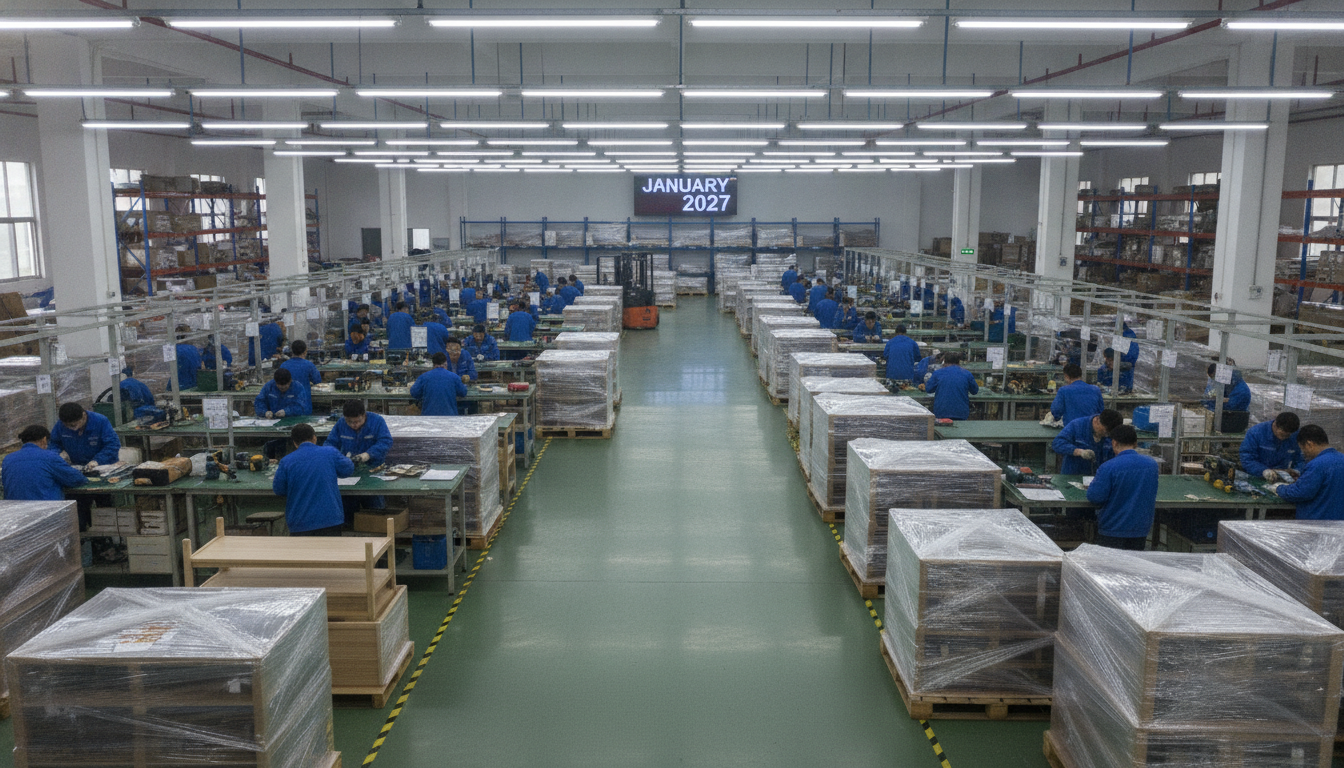
When you order samples from suppliers in Guangdong, Zhejiang, and Fujian provinces, individual factory shipments multiply your freight costs and customs-clearance workload. Warehouse consolidation services collect samples from multiple factories, inspect them against your specifications, repack into a single shipment, and arrange international freight with one commercial invoice. This service reduces shipping costs by 50-70% and simplifies destination customs clearance. Goodcantrading operates consolidation warehouses in Yiwu (general trade goods), Foshan (furniture), and Shenzhen (electronics), covering the primary manufacturing clusters Chinese exporters use.
In practice: A Chilean furniture importer contacted five Foshan workshops for dining-chair samples, faced $180 per-supplier shipping quotes ($900 total), then used warehouse consolidation to combine all samples into one 45kg air-freight shipment for $280 total cost