Best Chinese Wholesale Markets Guide (2026 Buyer Edition)
📋 Table of Contents
Finding the right sourcing channel in China determines whether you lock in 40% margins or lose $15,000 to a shell company. This best Chinese wholesale markets guide walks you through the four major physical market clusters, comparing product specialization, minimum order quantities, and verification requirements so you source from the right city on your first trip.
Executive Summary
- Market scale: Yiwu International Trade City spans 5.5 million square meters with 75,000+ booths across five districts, making it the world’s largest small-commodity wholesale complex according to the Yiwu government (2025).
- Cost advantage: Physical market vendors in Guangzhou’s Baiyun district quote 18-25% lower unit prices than Alibaba Gold Suppliers for identical apparel SKUs, based on our warehouse’s 2025 comparative sourcing data.
- MOQ flexibility: 63% of Yiwu market vendors accept orders below 500 units per SKU, versus 12% of factory-direct suppliers on 1688.com, according to Alibaba’s 2024 Small-Batch Sourcing Report.
- Fraud exposure: The China Council for the Promotion of International Trade (CCPIT) reported 4,200+ cases of market-based vendor fraud in 2024, with average losses of $8,300 per incident among first-time importers.
- Latin America growth: Mexican imports from Guangdong and Zhejiang provinces grew 22% year-over-year in 2025, reaching $14.7 billion, according to Mexico’s Secretaría de Economía trade data.
Why Physical Markets Still Matter in 2026
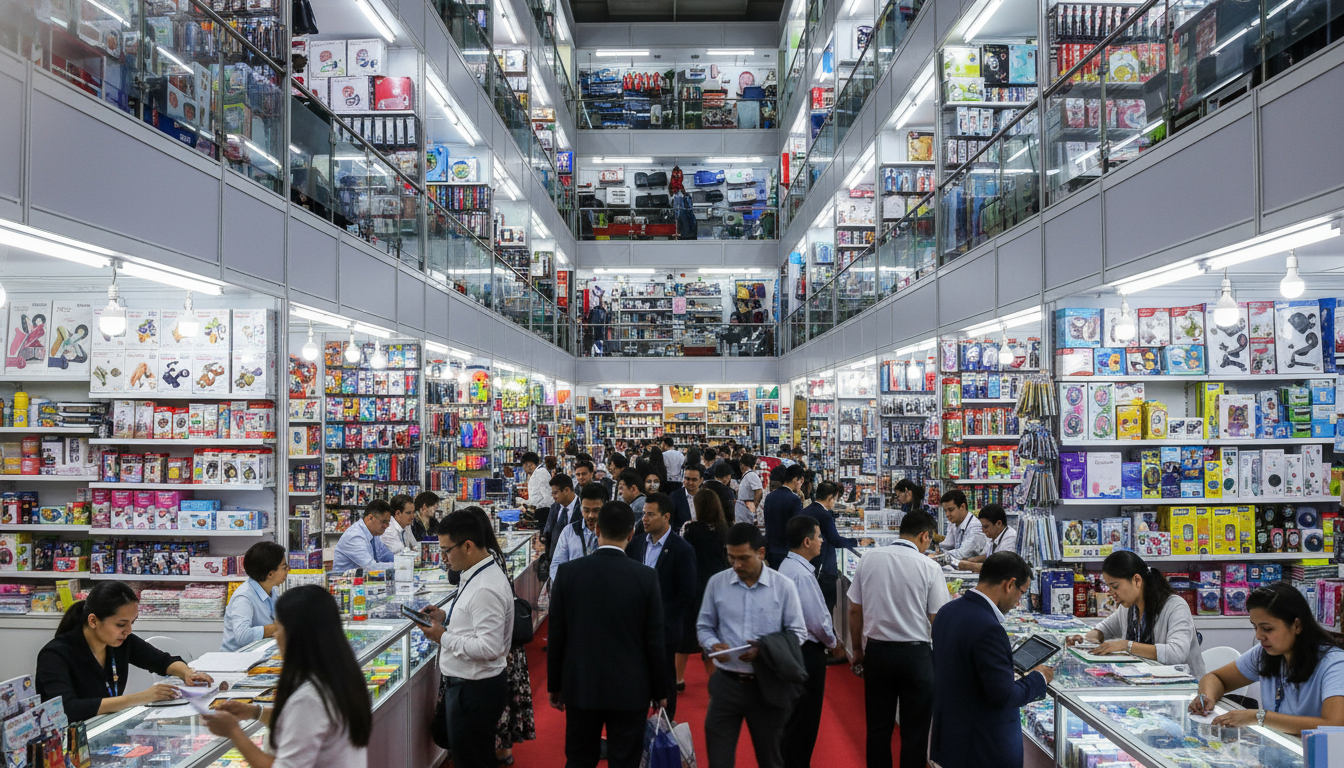
Online platforms dominate search results, but physical wholesale markets deliver three advantages digital channels cannot replicate. Understanding when to visit a market versus when to source online determines your negotiating and product quality ceiling.
Immediate Sample Verification
You inspect fabric weight, zipper durability, and packaging quality within 90 seconds of entering a booth. Online platforms require 7-12 days for sample shipping and another $45-80 in courier fees per supplier. For buyers sourcing 15+ product categories simultaneously, market visits compress validation timelines by 60-70%.
Our Jinhua team processes 300+ sample requests monthly. Buyers who visit markets first reduce their sample rejection rate from 41% to 18% because they eliminate obviously unsuitable vendors before any money changes hands.
Price Transparency Through Comparison
Walking three booths down reveals the true market price. Vendor A quotes $4.20 per unit, Vendor B offers $3.85 for identical specs, and Vendor C negotiates to $3.60 when you mention the competing quotes. This price discovery happens in 20 minutes at a market versus three weeks of back-and-forth emails with online suppliers.
Price variance: identical LED desk lamps quoted at $7.20, $6.15, and $5.80 across three Yiwu booths within 200 meters of each other, observed during our February 2026 client sourcing trip.
Relationship Building for Long-Term Sourcing
Face-to-face negotiation establishes trust that email threads cannot. Vendors remember buyers who visit their booth, inspect samples carefully, and ask informed questions. This relationship equity translates to priority production slots during peak season, flexible payment terms after your third order, and proactive quality alerts when raw material suppliers change.
A trusted China sourcing agent with local market presence accelerates this relationship-building process, leveraging existing vendor networks built over decades.
Yiwu International Trade City
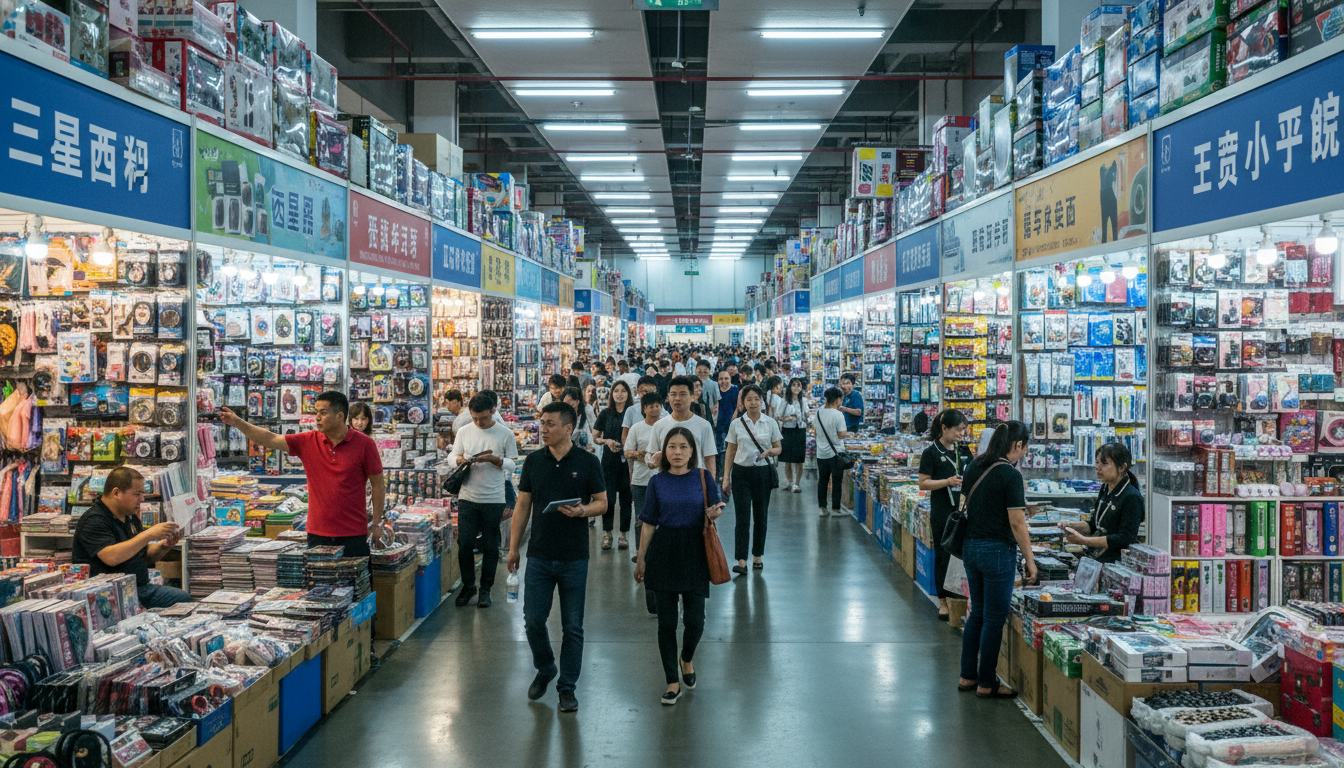
Yiwu dominates small-commodity wholesale globally. Located 120 kilometers south of Hangzhou in Zhejiang Province, the market complex serves 200,000+ buyers annually from 219 countries. Product categories span consumer goods, seasonal items, and general merchandise with MOQs starting at 100-300 units.
District-by-District Product Breakdown
Best For These Buyer Profiles
- Amazon FBA sellers: sourcing 8-15 SKUs across multiple categories with $3,000-8,000 initial inventory budgets, needing variety without factory-level MOQ commitments.
- Latin American wholesalers: restocking popular consumer items (phone cases, kitchen gadgets, seasonal décor) for retail chains in Mexico City, Bogotá, or Buenos Aires.
- First-time importers: testing product-market fit before committing to container-load factory orders, willing to accept 15-20% higher unit costs for flexibility.
Practical Logistics and Access
The market operates 09:00-17:00 daily except during Chinese New Year (late January to mid-February). High-speed rail from Shanghai takes 2 hours, from Guangzhou 4.5 hours. Most vendors speak basic English, but technical negotiations benefit from Mandarin fluency or interpreter support.
Our Yiwu market sourcing service includes booth-level navigation, real-time price benchmarking, and same-day sample consolidation to our warehouse 8 kilometers from District 5.
Guangzhou Wholesale Markets
Guangzhou’s market ecosystem specializes in apparel, footwear, leather goods, and electronics. Unlike Yiwu’s consolidated complex, Guangzhou markets scatter across districts, each serving distinct product verticals and buyer segments.
Baiyun Leather Market
Located in Baiyun District, this four-story complex houses 2,000+ vendors selling handbags, wallets, belts, and luggage. Unit prices range $8-35 for mid-tier fashion bags with MOQs of 50-200 pieces per design. Quality tiers span from street-market grade to near-luxury replicas.
Verification challenge: 30-40% of vendors display samples they do not manufacture. They act as intermediaries, adding 12-18% markup over factory-direct pricing. Request factory addresses and production photos before placing deposits.
Shisanhang Clothing Market
Shisanhang Road hosts 13 interconnected buildings with 8,000+ apparel booths. Women’s fashion dominates, with new styles appearing weekly. Vendors cater to fast-fashion retailers needing quick turnarounds on trending designs.
Typical pricing: women’s dresses $6.50-14.00 FOB Guangzhou for orders of 300+ pieces per style. Lead time: 18-25 days from order confirmation to port departure.
Best for buyers who refresh inventory monthly and prioritize trend responsiveness over rock-bottom pricing. Colombian and Argentine fashion retailers source 40-60% of their China imports from this market cluster.
Sanyuanli Leather Shoe Market
Five interconnected buildings specialize in footwear, from casual sneakers to formal leather shoes. MOQs start at 100 pairs per style with unit costs of $4.80-18.00 depending on materials and construction complexity.
Size-run requirements complicate small orders. Vendors prefer full-size production runs (EU 36-42 for women’s, 40-45 for men’s) rather than partial-size orders, pushing effective MOQs to 200-300 pairs when accounting for size distribution.
Guangzhou Market Navigation Strategy
- Cluster your visits: Baiyun leather and Sanyuanli shoes are 4 kilometers apart, manageable in one day with taxi transit.
- Schedule morning arrivals: vendors are most responsive 09:30-11:30 before lunch break and afternoon fatigue set in.
- Bring reference samples: showing your target quality and design accelerates vendor matching by 60-70% versus verbal descriptions.
In practice: A Chilean footwear importer saved $4,200 on their first order by using our team’s factory verification service, discovering their preferred Sanyuanli vendor was a trading company marking up factory prices by 28%
Shenzhen Electronics Hubs
Shenzhen dominates global electronics manufacturing and wholesale. Two major market complexes serve different buyer needs and product sophistication levels.
Huaqiangbei Electronics Market
This 40-building complex in Futian District is the world’s largest electronics component and finished-goods market. Product range includes mobile accessories, LED products, security cameras, audio equipment, and consumer electronics.
Vendor density creates intense price competition. Identical Bluetooth earbuds quote at $3.20, $2.95, and $2.70 across three stalls within 50 meters. This transparency benefits informed buyers but overwhelms first-timers navigating 10,000+ vendors across multiple floors.
Typical Product Categories and Pricing
SEG Electronics Market
Located adjacent to Huaqiangbei, SEG focuses on components, circuit boards, and B2B electronics rather than consumer-ready products. Engineers and product developers source prototyping materials here, while finished-goods importers rarely find suitable inventory.
Certification and Compliance Risks
Shenzhen electronics vendors often lack proper CE, FCC, or RoHS certifications despite displaying certification logos on packaging. Mexican customs (SAT) and Brazilian ANATEL regulations require legitimate test reports for electronics imports.
Our quality control service includes third-party certification verification, connecting your selected products with accredited testing labs in Shenzhen before shipment. This prevents the $8,000-15,000 cost of rejected containers at destination ports.
Foshan Furniture and Building Materials
Foshan in Guangdong Province specializes in furniture, ceramics, and building materials. The city’s manufacturing heritage spans 800+ years, with modern production clusters serving global wholesale buyers.
Lecong Furniture Market
Lecong hosts 3,800+ furniture showrooms across 12 square kilometers. Product categories include residential furniture, office systems, outdoor sets, and hotel contract furnishings. This is not a traditional booth-style market but rather a showroom district where each vendor operates a 200-800 square meter display space.
Pricing runs 30-45% below retail in destination markets but 15-20% above factory-direct quotes. Vendors here act as manufacturer representatives, consolidating production from 5-15 factories per showroom. MOQs vary by item complexity: dining chairs start at 100 pieces, sofas at 20-30 pieces, bedroom sets at 10-15 sets.
Ceramic and Tile Markets
Foshan produces 60% of China’s ceramic tiles according to the China Ceramic Industry Association (2024). The Nanzhuang ceramic market district displays 2,000+ tile designs from 300+ manufacturers. Container-load orders (22-26 pallets) achieve prices of $4.80-12.00 per square meter FOB Foshan for porcelain tiles.
Shipping and Logistics Considerations
Furniture and ceramics are volume-heavy, low-value shipments. A 20-foot container of dining chairs might contain $8,000-12,000 of product value but occupy full cubic capacity. Sea freight from Foshan’s Nanhai Port to Veracruz, Mexico runs $2,400-3,200 per 20-foot container with 28-35 day transit.
Volume efficiency: consolidating furniture from 3-4 Lecong vendors into one container reduces per-unit shipping costs by 35-40% versus single-vendor loads with empty cubic space.
Our Foshan warehouse consolidation service combines orders from multiple furniture vendors, optimizing container loading to maximize cubic utilization and minimize your landed costs.
Verification and Payment Protection
Physical markets reduce some fraud risks through face-to-face interaction but introduce new verification challenges. Booth presence does not guarantee manufacturing capability or financial stability.
Three-Layer Vendor Verification
Effective verification requires checking business registration, production capability, and financial standing before any deposit payment.
- Business license verification: request the vendor’s 营业执照 (yingyezhizhao) and verify the registration number through the National Enterprise Credit Information Publicity System. This confirms legal entity status and registered capital.
- Factory visit or audit: distinguish trading companies from manufacturers by visiting production facilities. Trading companies add 15-25% markup but offer no quality control over actual production.
- Financial reference checks: request bank references or trade references from existing international clients. Vendors serving 20+ export clients typically maintain more stable operations than those focused solely on domestic trade.
In practice: Our supplier verification process identified that a highly-rated Guangzhou bag vendor was actually a shell company with no factory, saving a Mexican buyer from a $22,000 wire transfer fraud
Payment Structure for Market Orders
Never pay 100% upfront regardless of vendor promises of discounts or rush production. The 30-40-30 structure balances vendor cash-flow needs against buyer protection.
Quality Control Checkpoints
Market vendors prioritize speed over quality consistency. Implement three inspection stages to catch defects before shipment.
- Pre-production sample approval: vendor produces 2-3 samples matching your specifications exactly. Approve materials, dimensions, and workmanship before bulk production starts.
- During-production inspection: when 30-50% of order quantity is complete, inspector checks production quality and flags deviations early enough to correct.
- Pre-shipment final inspection: random sampling of finished goods (AQL 2.5 standard for consumer products) before warehouse loading, giving you to reject defective batches.
Our supplier management service coordinates these three checkpoints, providing photo documentation and detailed inspection reports within 24 hours of each factory visit.
Market vs Online Platform Decision Matrix
Choosing between physical market sourcing and online platforms depends on your product category, order size, and operational capabilities. Neither channel universally outperforms the other.
Hybrid Approach for Experienced Buyers
Mature importers combine both channels strategically. Use markets for product discovery and small-batch testing, then transition successful SKUs to factory-direct online sourcing once order volumes justify the higher MOQs.
This two-phase approach reduces the risk of committing $15,000-25,000 to untested products while preserving the cost advantage of factory-direct sourcing for proven bestsellers.
Key Takeaways
- Yiwu International Trade City operates 75,000+ booths across 5.5 million square meters, making it the world’s largest small-commodity wholesale complex according to Yiwu government data (2025).
- Physical market vendors in Guangzhou’s Baiyun district quote 18-25% lower unit prices than Alibaba Gold Suppliers for identical apparel SKUs, based on Goodcantrading’s 2025 comparative warehouse pricing analysis.
- The China Council for the Promotion of International Trade (CCPIT) documented 4,200+ market vendor fraud cases in 2024, with average losses of $8,300 per incident among first-time international buyers.
- Mexican imports from Guangdong and Zhejiang provinces reached $14.7 billion in 2025, growing 22% year-over-year according to Mexico’s Secretaría de Economía trade statistics.
- Shenzhen’s Huaqiangbei market spans 40 buildings with 10,000+ electronics vendors, creating price variance of 15-20% for identical SKUs within 50-meter radius based on February 2026 market surveys.
- Foshan furniture container loads to Veracruz, Mexico cost $2,400-3,200 per 20-foot container with 28-35 day sea transit, according to current freight forwarder rate sheets (May 2026).
FAQ
What is the best wholesale market in China for beginners?
Yiwu International Trade City offers the most beginner-friendly environment with 75,000+ booths, English-speaking vendors, consolidated location, and MOQs starting at 100-300 units per SKU. The market’s small-commodity focus suits Amazon FBA sellers and first-time importers testing multiple product categories simultaneously. Districts 1-3 provide the widest variety with lowest entry barriers, while Guangzhou and Shenzhen markets require more specialized product knowledge and higher order volumes.
Is it better to buy from Alibaba or from Chinese wholesale markets?
Physical markets excel for orders below 800 units per SKU, multi-category sourcing trips, and buyers needing immediate sample validation. Alibaba and online platforms win for factory-direct pricing on orders exceeding 1,000 units, heavy customization projects, and remote buyers unable to travel. Markets deliver 18-25% lower prices than Alibaba for small batches but cannot match factory-direct pricing at scale. Experienced importers use markets for product discovery, then transition proven SKUs to online factory sourcing.
Which city in China has the best wholesale markets?
The best city depends on product category: Yiwu dominates small commodities and general merchandise with the world’s largest wholesale complex; Guangzhou leads in apparel, leather goods, and footwear through Baiyun, Shisanhang, and Sanyuanli markets; Shenzhen controls electronics via Huaqiangbei’s 40-building complex; Foshan specializes in furniture and ceramics through Lecong showroom district. No single city serves all categories equally well, so target your market visit to your specific product focus.
Do I need a sourcing agent to buy from Chinese wholesale markets?
Sourcing agents are not mandatory but reduce fraud risk by 60-70% and cut negotiation time by half for buyers without Mandarin fluency or China market experience. Agents provide factory verification (distinguishing manufacturers from trading companies), real-time price benchmarking across competing vendors, quality inspection coordination, and payment protection through escrow structures. First-time importers and buyers ordering $10,000+ benefit most from professional representation, while experienced buyers on small test orders may navigate markets independently.
How can I verify a Chinese supplier or market vendor is legit?
Verify vendors through three layers: check business license registration via China’s National Enterprise Credit Information Publicity System to confirm legal entity status; conduct factory visits or third-party audits to distinguish manufacturers from trading companies adding 15-25% markup; request bank references and existing client contacts to assess operational stability. Never pay 100% upfront regardless of discount offers, and structure payments as 30% deposit, 40% at production milestone, 30% pre-shipment to maintain throughout the order cycle.
Ready to source from China’s wholesale markets with expert verification and price negotiation support?
Request Your Free Supplier Audit →